Thailand has no shortage of gorgeous temples. From centuries-old Buddhist temples to extravagant modern creations featuring dragons, giant Buddhas and three-headed elephants, you could spend weeks visiting them and still barely scratch the surface.
But unless temple-hopping is the sole purpose of your trip, you'll probably need to narrow it down! After visiting temples across Bangkok, Chiang Rai and beyond, here's my personal ranking of the most impressive and unusual temples in Thailand - based largely on how memorable and visually spectacular I found them.
Note: Thailand takes temple etiquette seriously, so make sure to wear clothes covering both your shoulders and knees, and this applies to both men and women. Some temples have shawls or sarongs you can borrow, but not all do, so it's better to come prepared.
1. Big Buddha at Wat Paknam - Bangkok
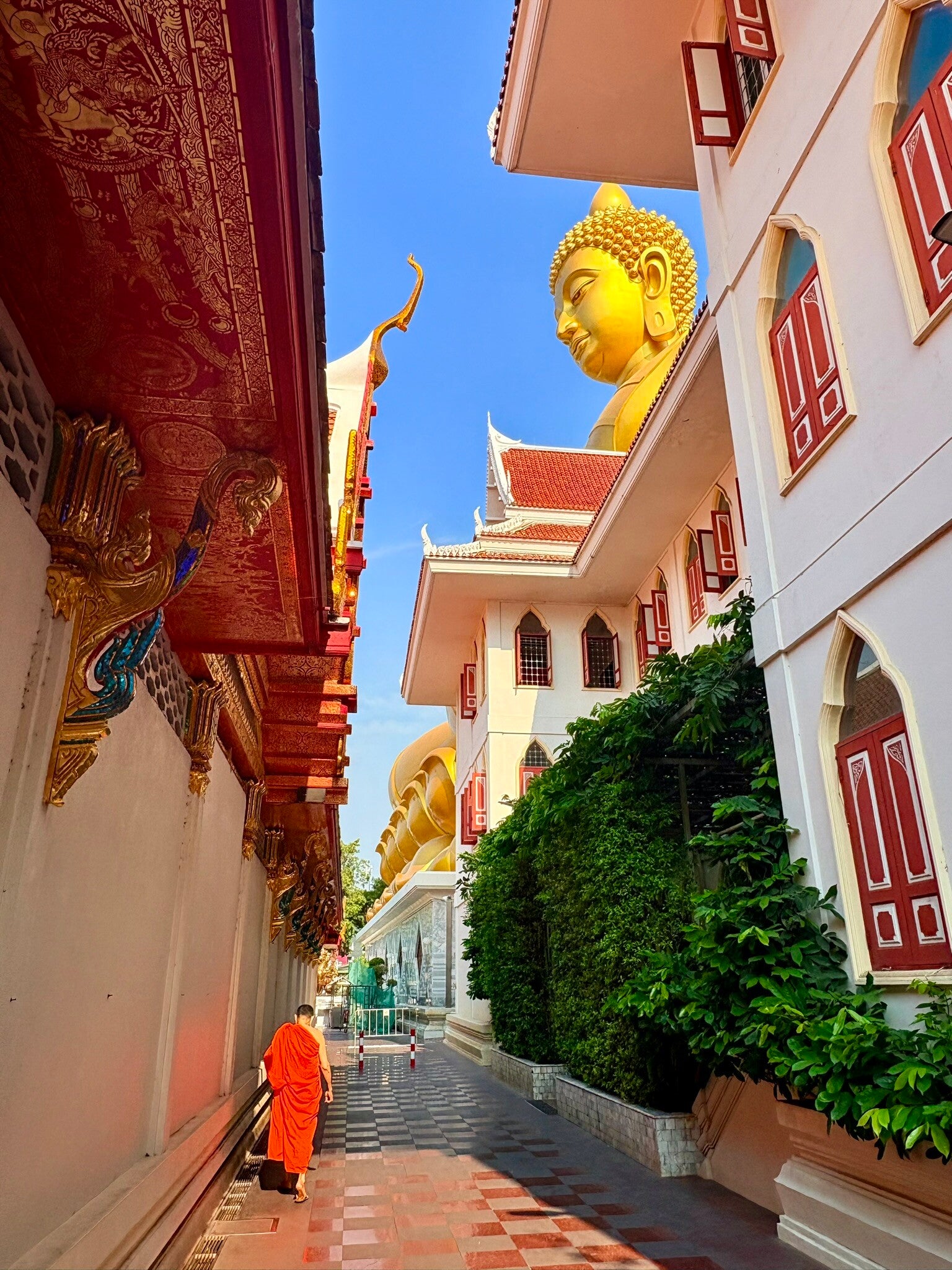
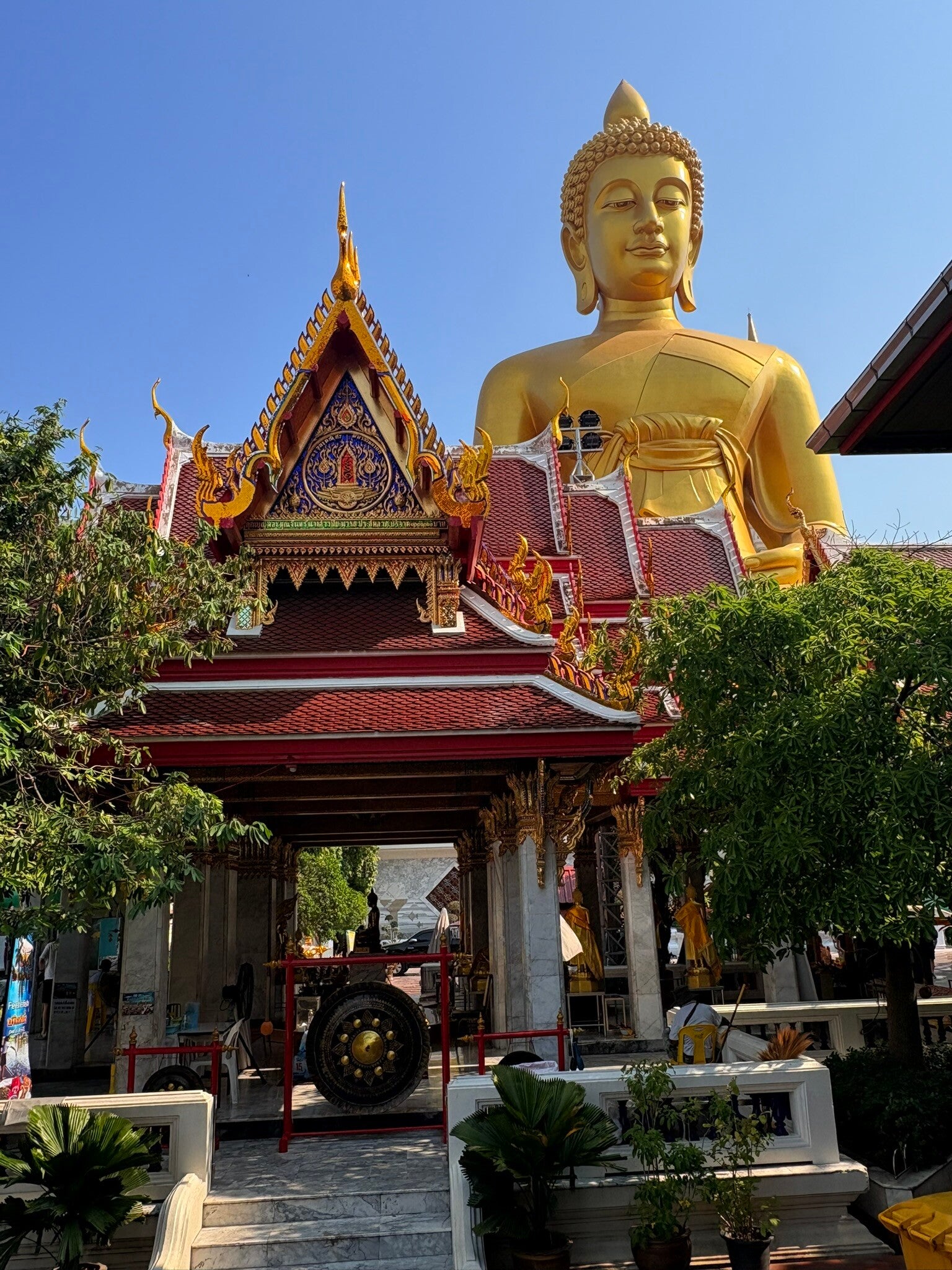
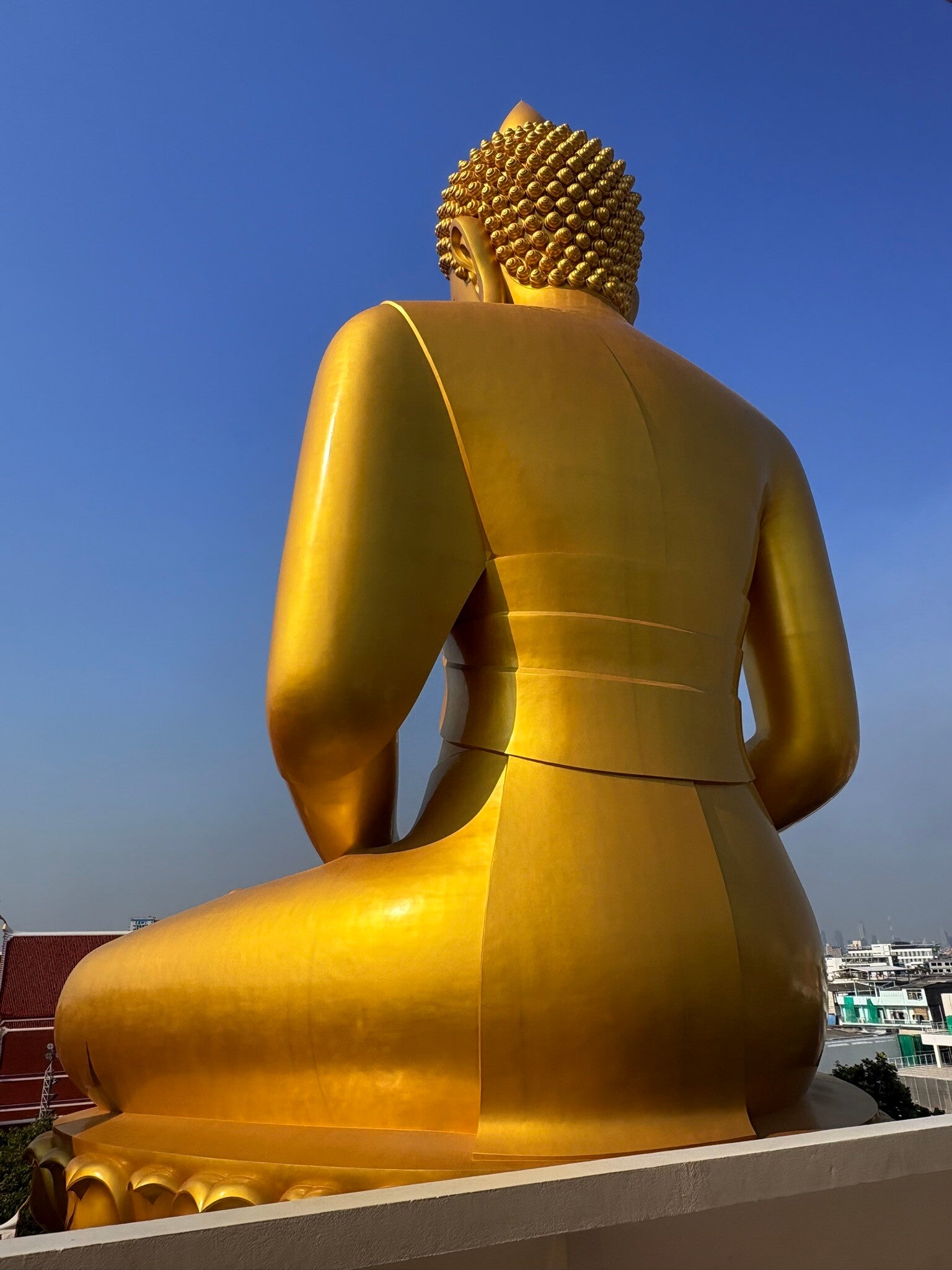
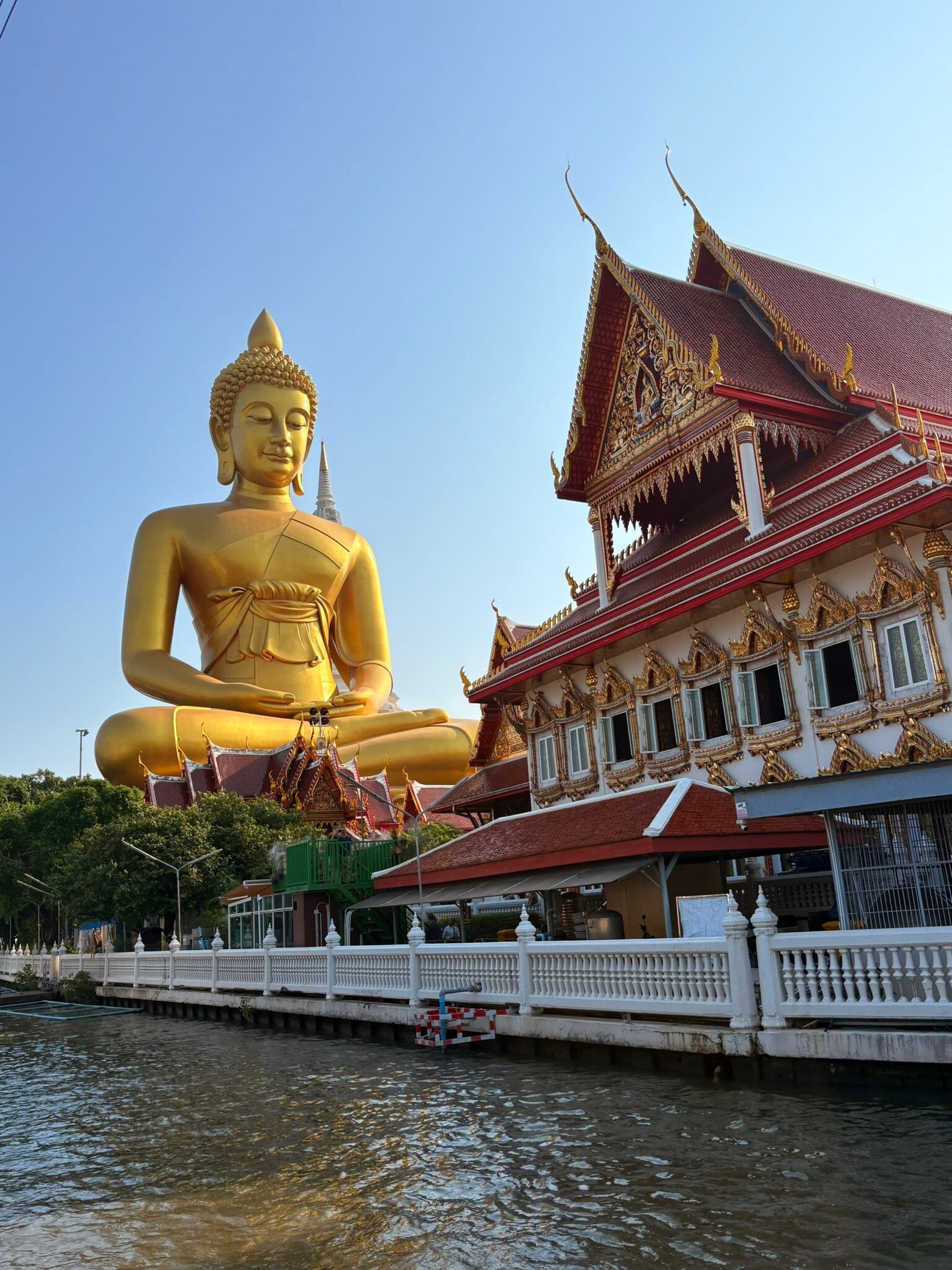
Bangkok's Big Buddha at Wat Paknam Phasi Charoen takes the top spot on my list because the entire complex is incredibly visually impressive, both inside and out.
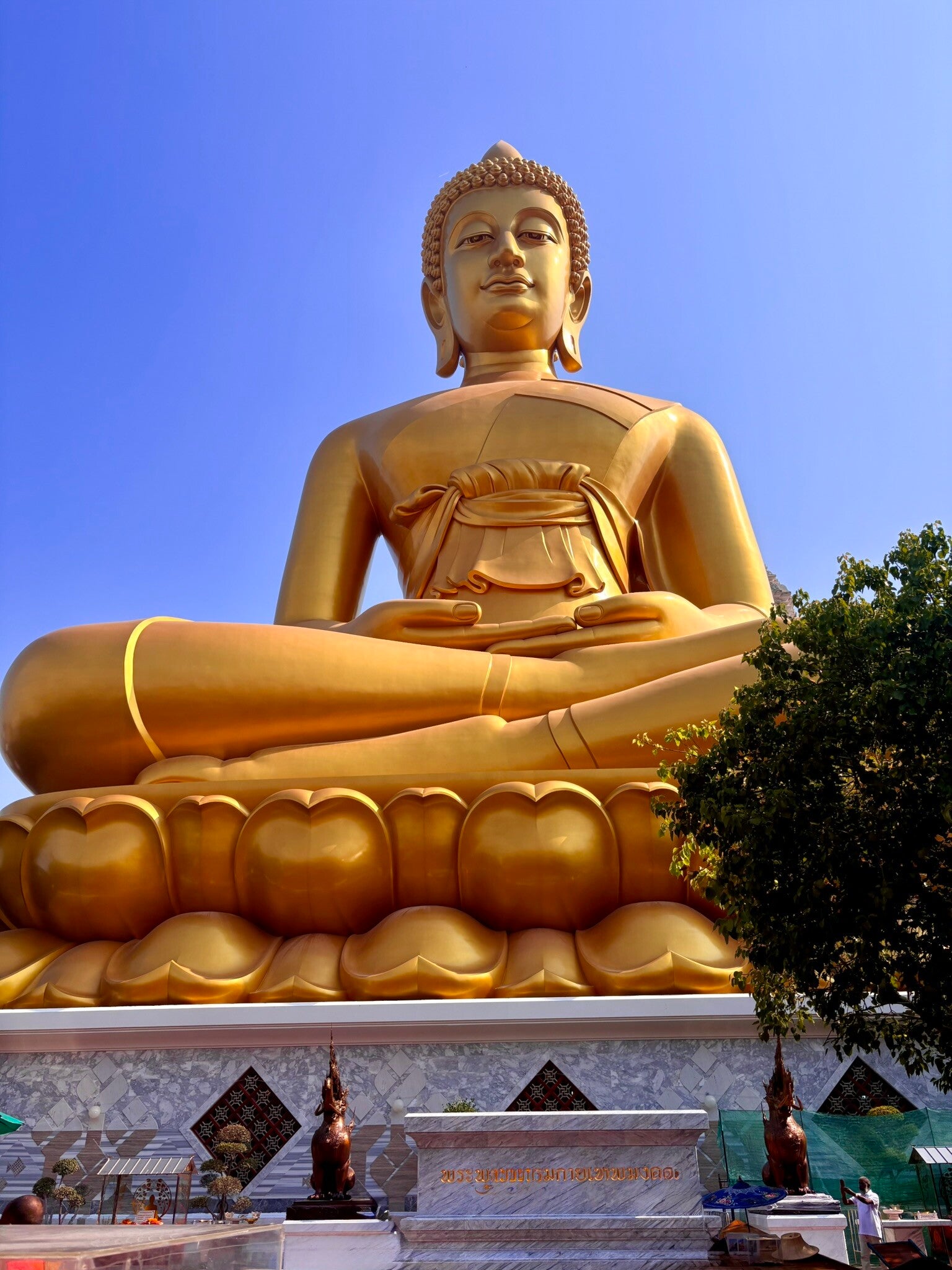
The Buddha itself is a relatively recent addition to Bangkok's skyline. Construction began in 2017, and the finished bronze statue stands a whopping 69 metres tall and 40 metres wide - roughly the height of a 20-storey building.
Wat Paknam is more than just the giant Buddha, though. The temple complex feels almost like a small neighbourhood, where you can wander through the streets, grab a bite to eat or a coffee and occasionally see the Buddha's enormous head poking out above the surrounding buildings.
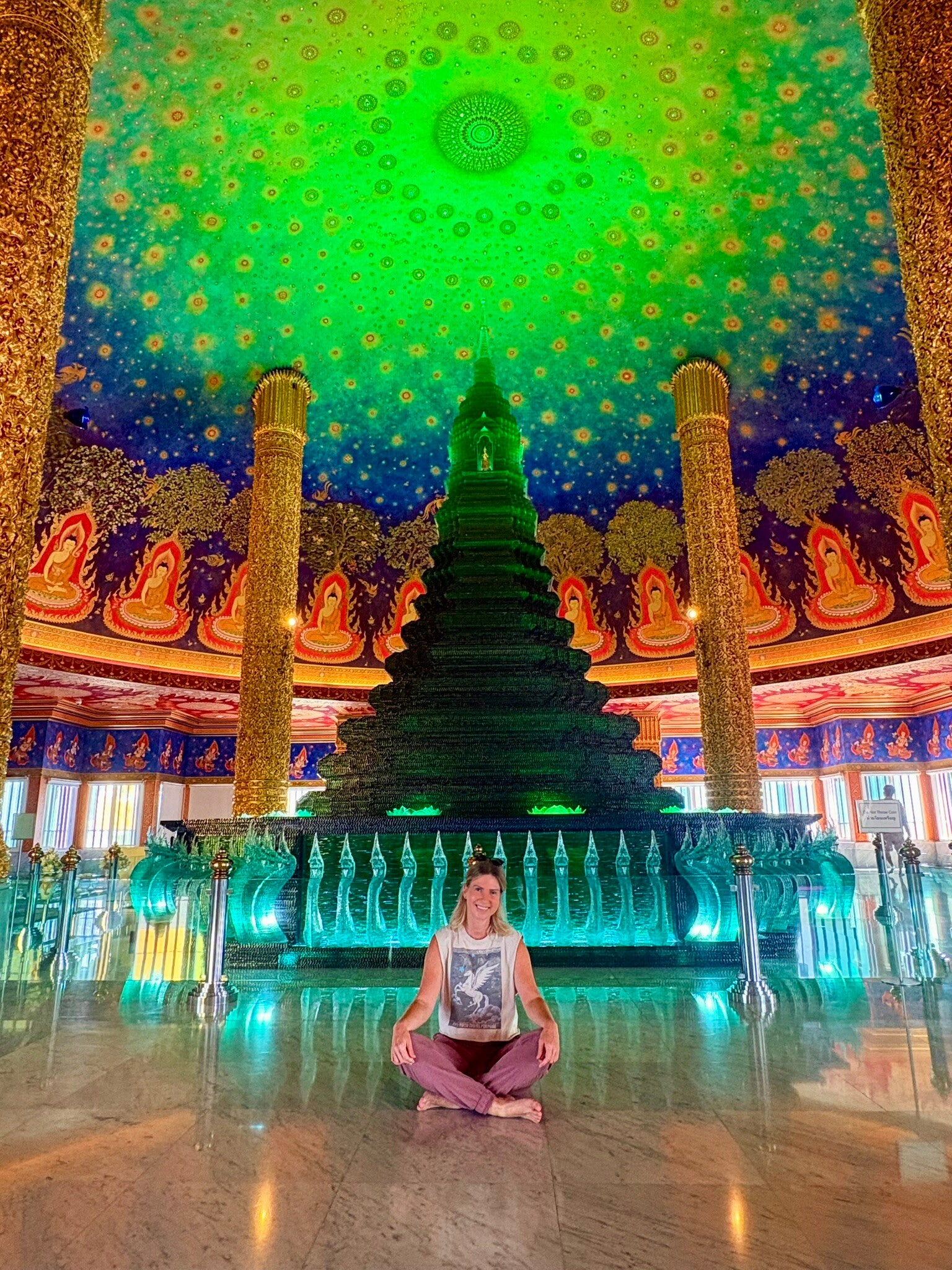
Don't skip Phra Maha Chedi Maha Ratchamongkhon, the huge white stupa next to the Buddha. Difficult name aside, its top floor contains an incredible emerald-green glass pagoda surrounded by a psychedelic ceiling depicting the Buddhist cosmos. The climb is absolutely worth it - the ceiling alone will leave you breathless.
Where to get the best views of the Big Buddha
There are several great vantage points:
- Directly in front of the statue - the best place to fully appreciate its sheer scale.
- The elevated viewing platform within the temple complex - search Google Maps for “Big Buddha Viewing Platform.”
- Across the canal - search for “Photo Spot for the Big Buddha at Paknam Temple” on Google Maps for one of the best wider views.
- From the water - you can also take a local longtail boat through the surrounding canals, giving you a completely different perspective as the enormous Buddha appears above the houses. Short shared boat rides cost around 200 THB (~6 USD) per person, although prices vary depending on where you board and the route. You can usually arrange a boat either around Wat Paknam itself or from the photo spot across the canal.
2. Sanctuary of Truth - Pattaya
The Sanctuary of Truth is around three hours from Bangkok by bus, but even if you're otherwise not planning to visit Pattaya, I think it's absolutely worth the day trip. Once you arrive at Pattaya bus station, simply take a Grab to the Sanctuary of Truth - it's quick and easy.
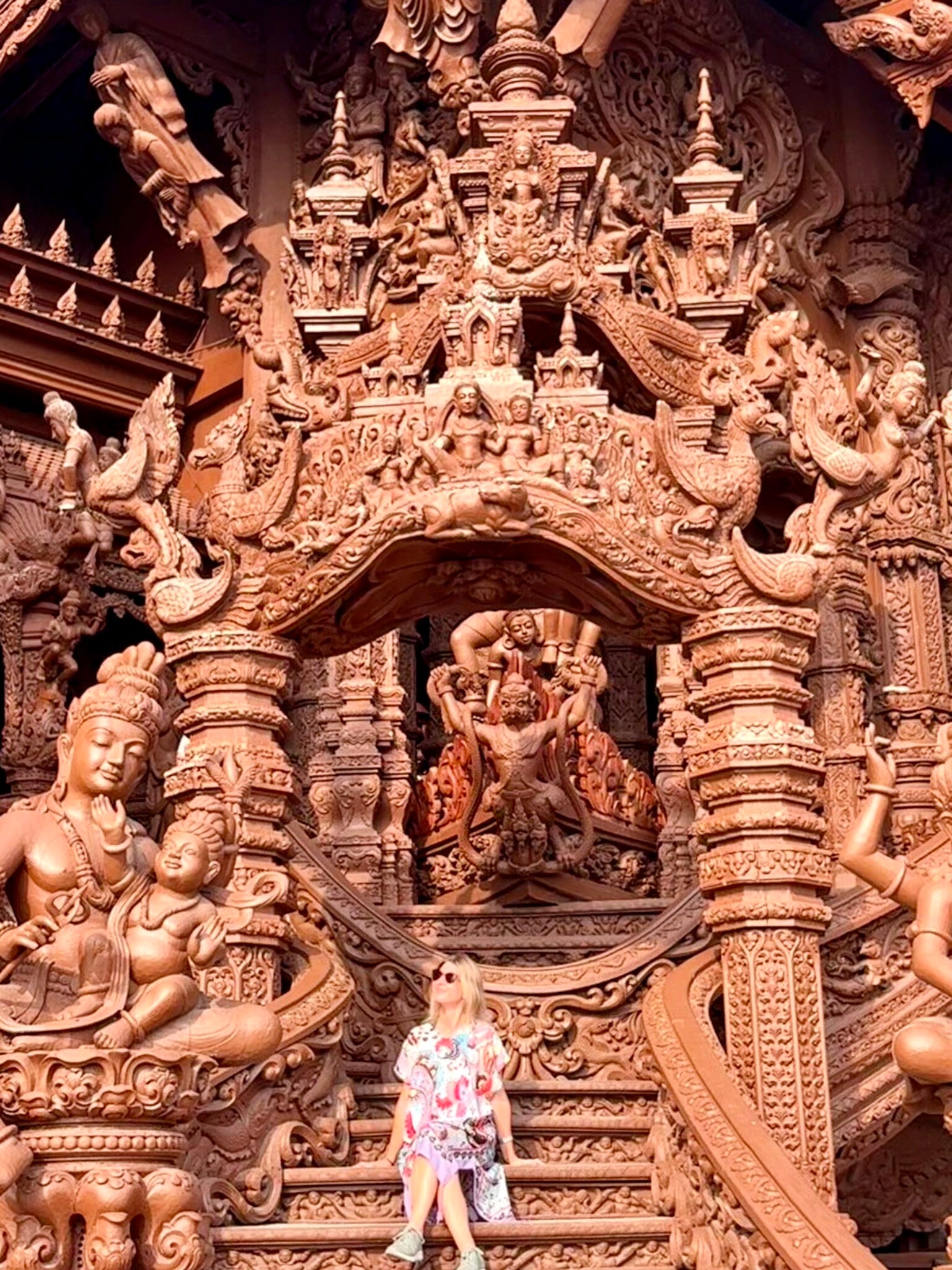
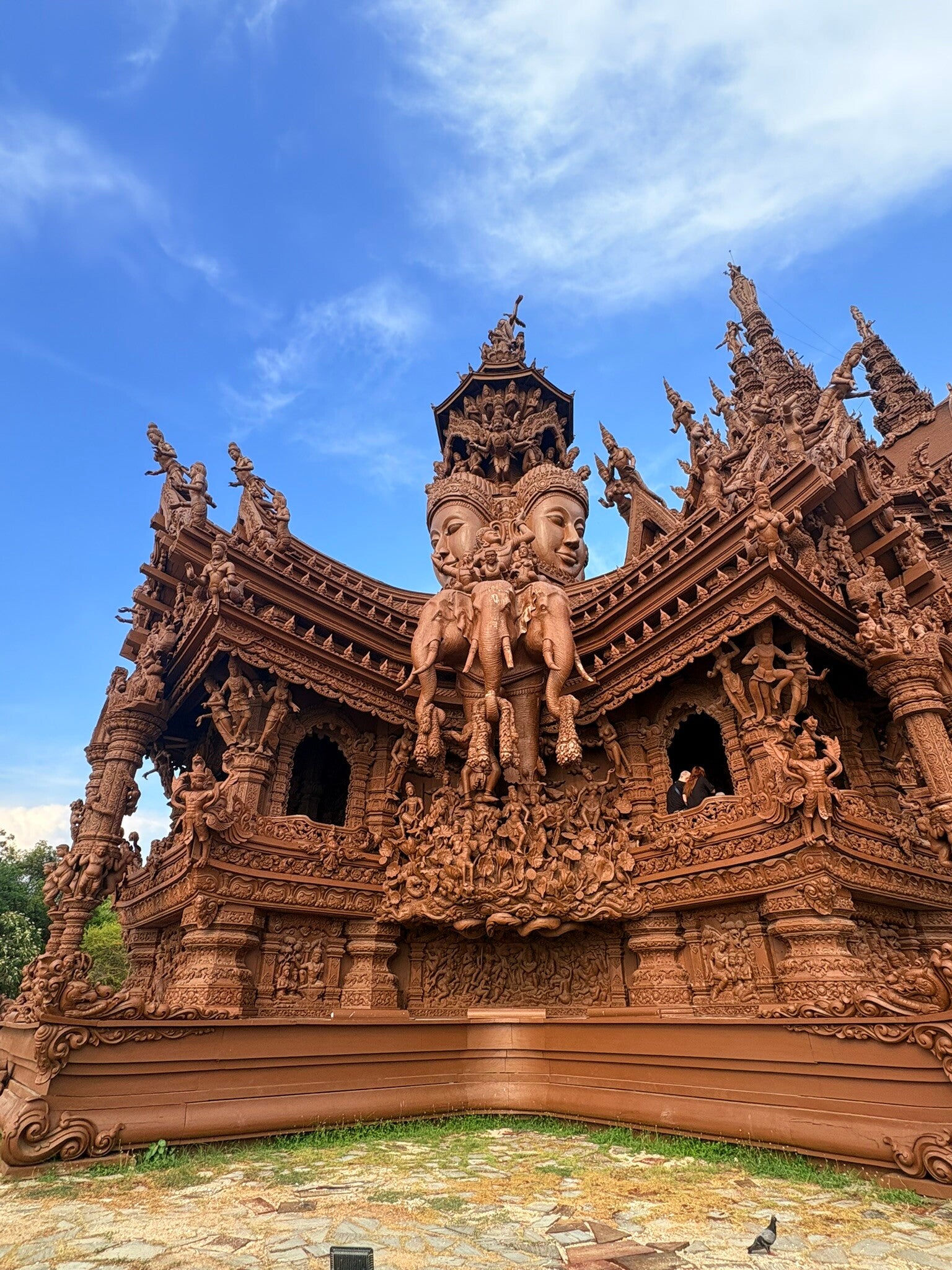
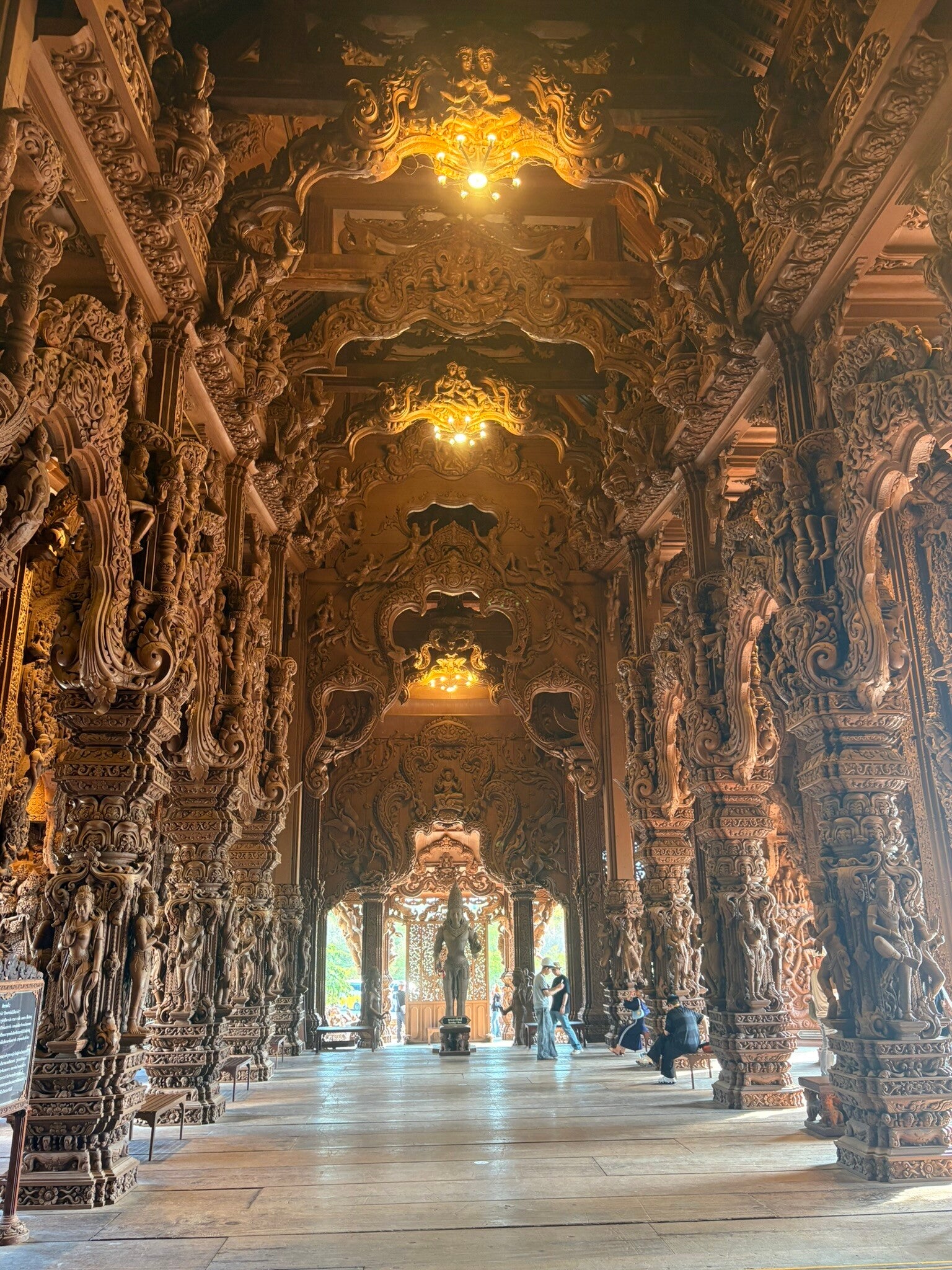
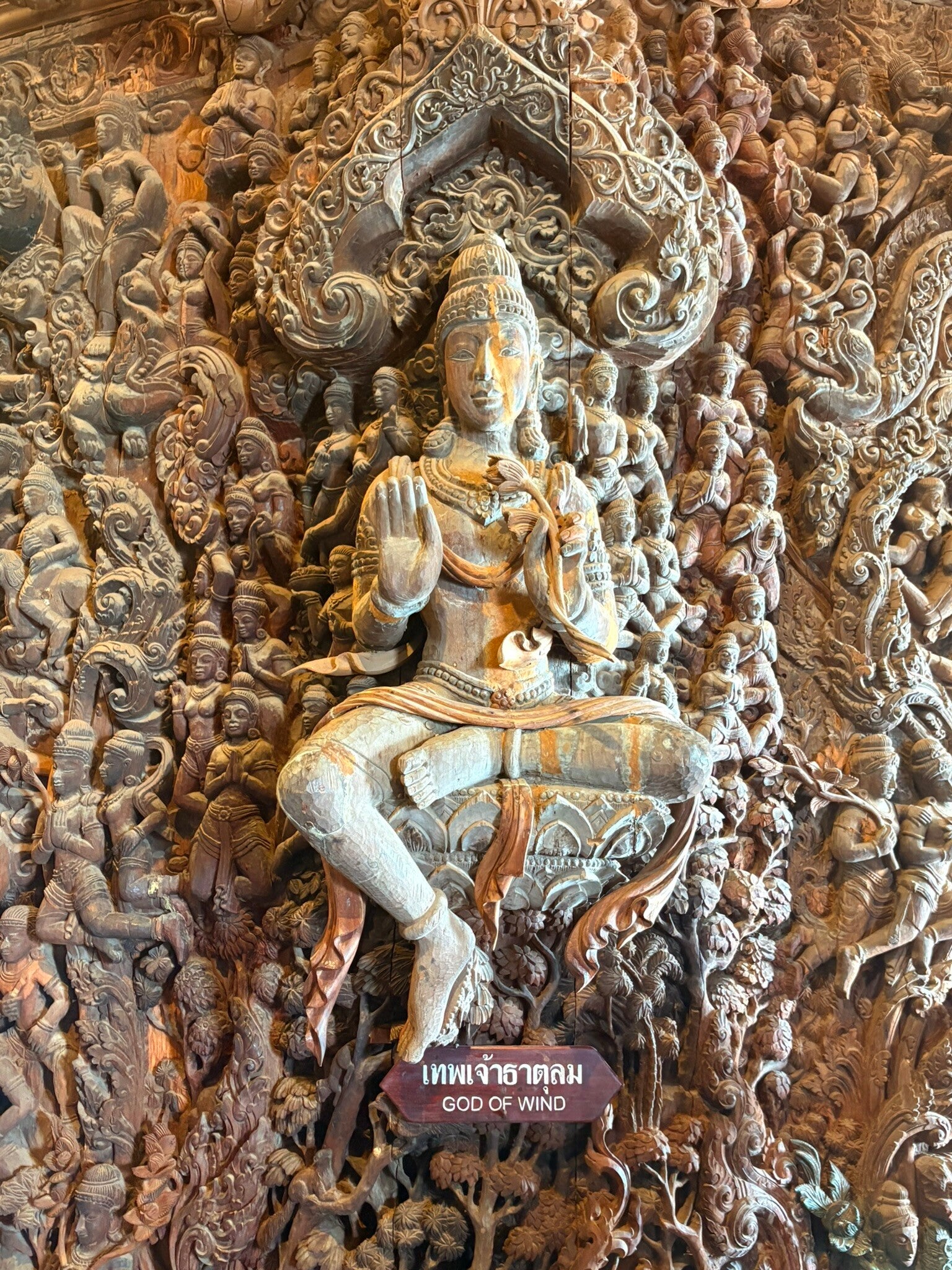
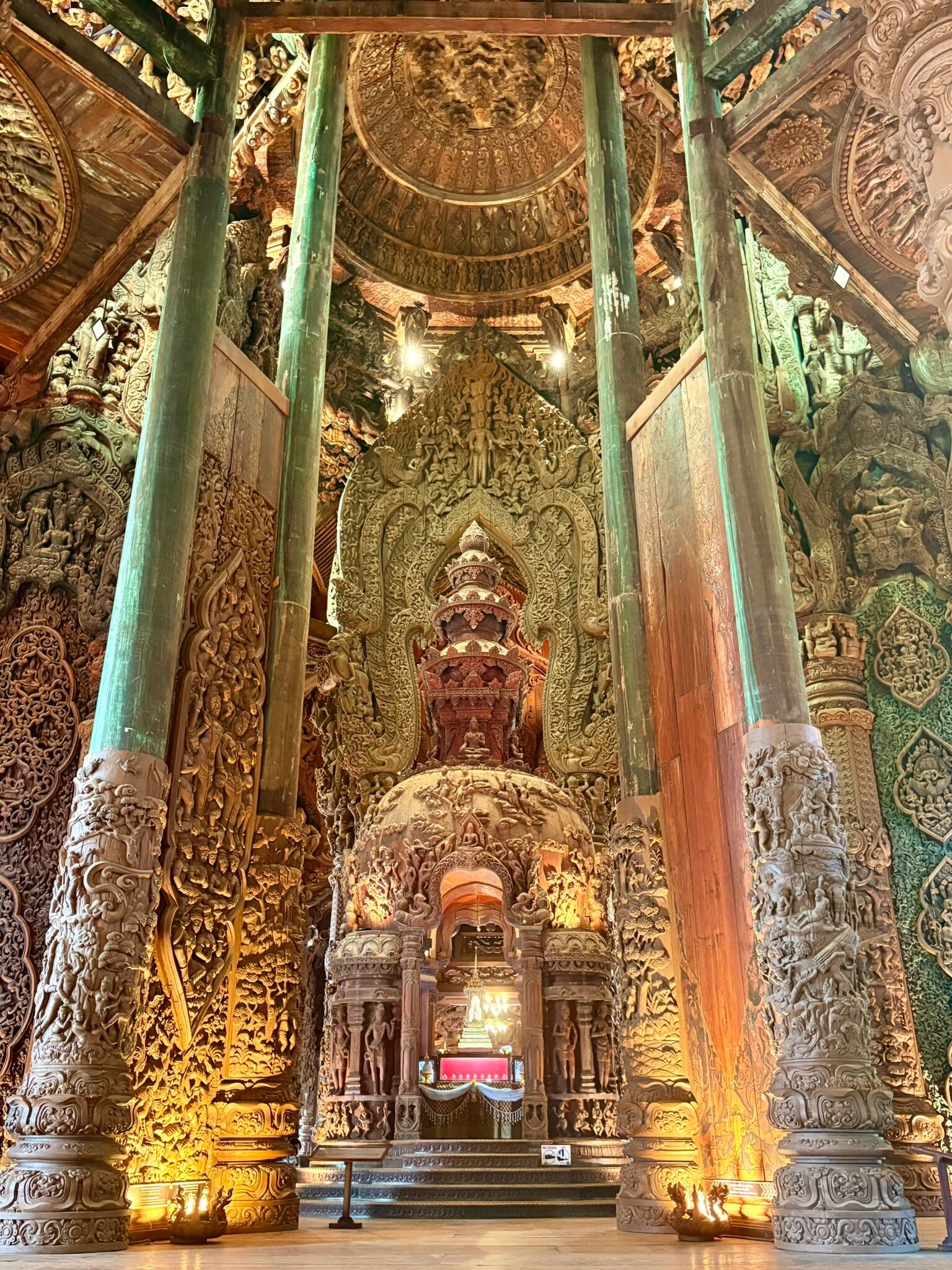
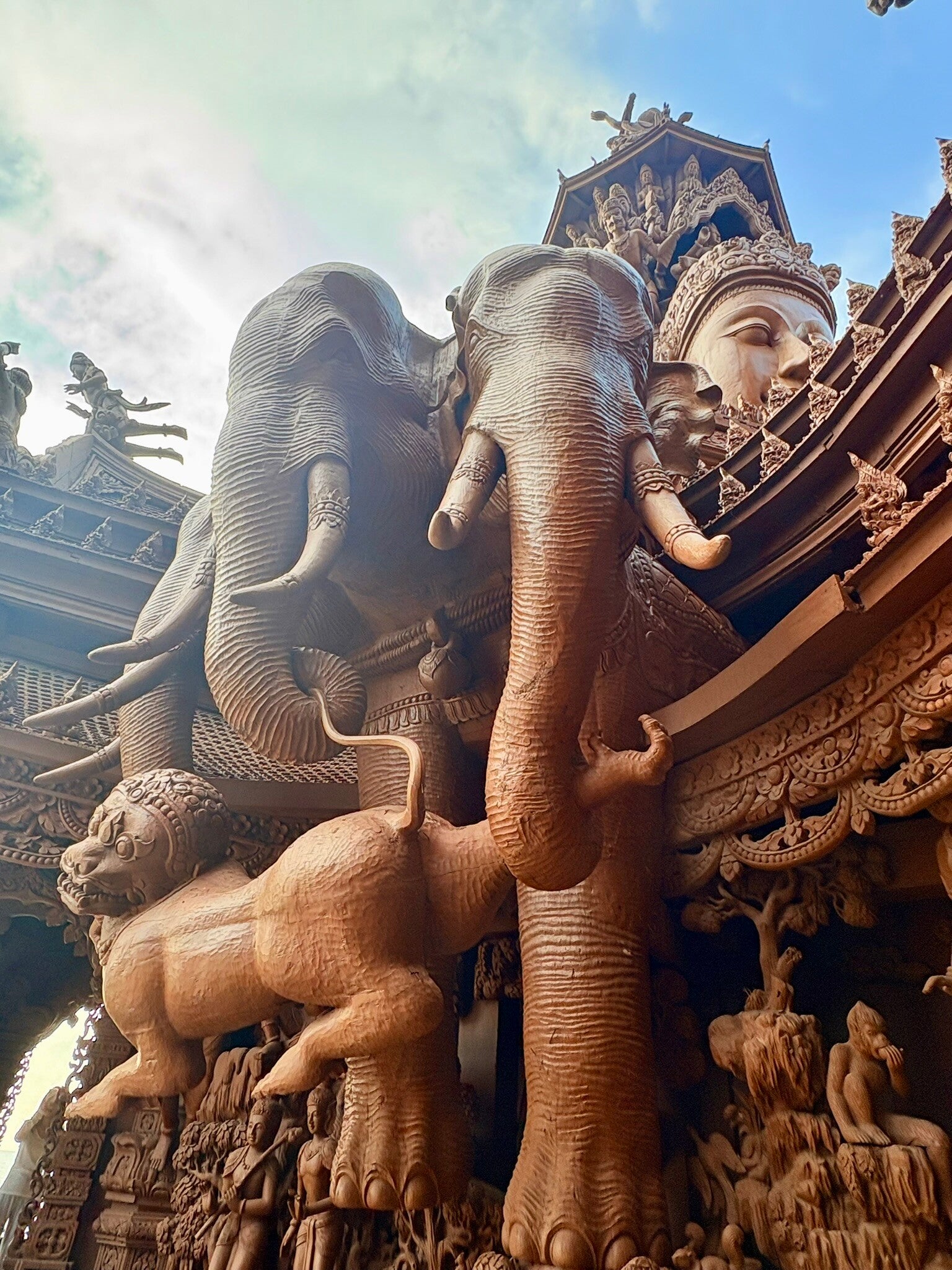
The Sanctuary is an enormous wooden structure overlooking the sea, with construction beginning in 1981 and continuing to this day. Almost every visible surface is covered in intricate hand-carved sculptures inspired by Buddhist and Hindu philosophy.
The building is constructed using traditional wooden joinery techniques rather than relying on modern metal nails for its main structure. Seeing how the individual pieces fit together is almost as impressive as the finished carvings. A recurring theme throughout the Sanctuary is duality and balance: male and female, sun and moon, good and evil, material and spiritual life. Its four wings explore different philosophical ideas about humanity, family, religion and our relationship with the universe.
The entrance fee in 2026 is 500 THB (~15-16USD) and includes a guided visit. Tours take roughly 45 minutes and explain both the symbolism of the carvings and the unusual construction techniques, then you have the free time to wander on your own.
3. Wat Arun - Bangkok
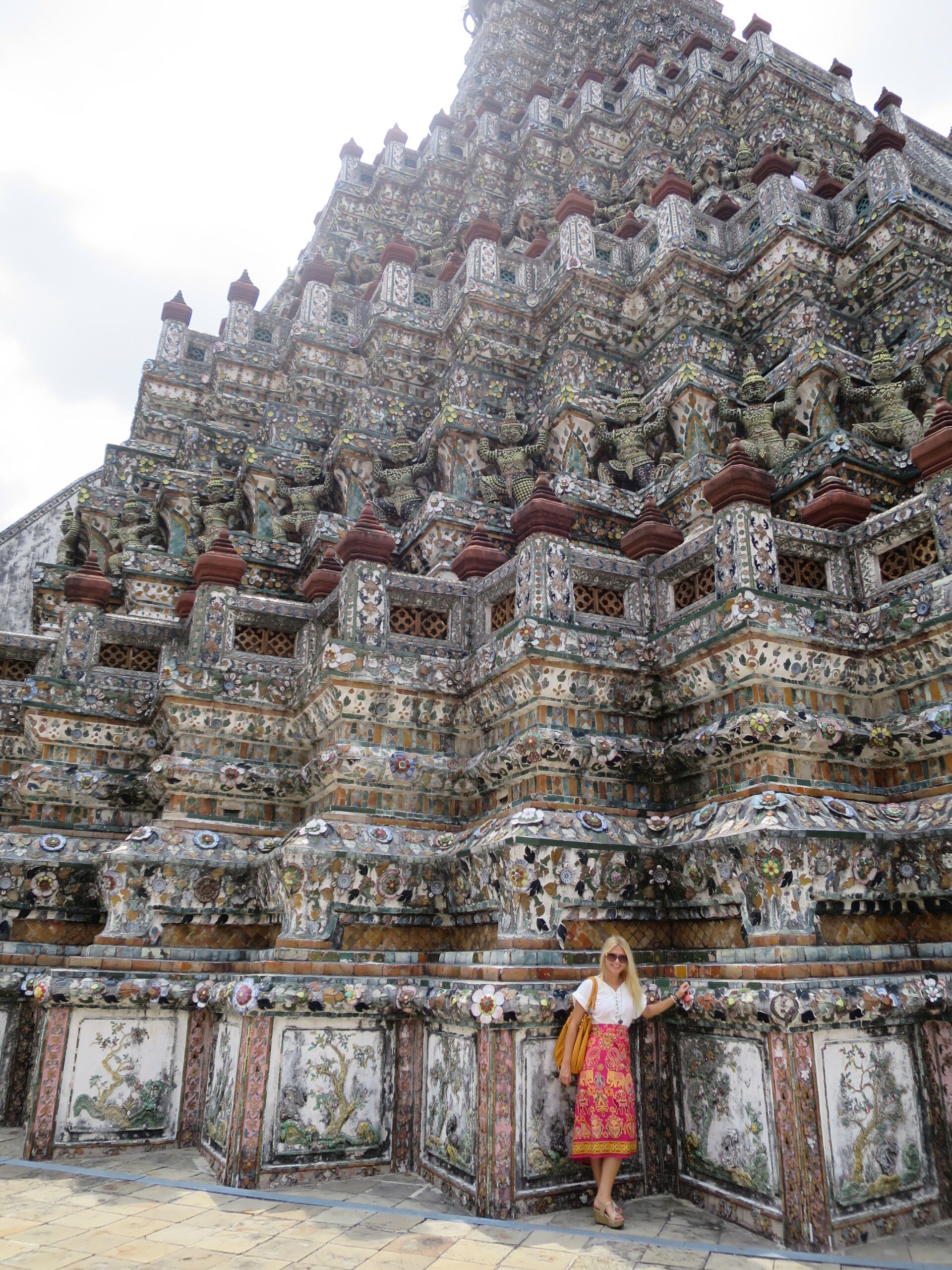
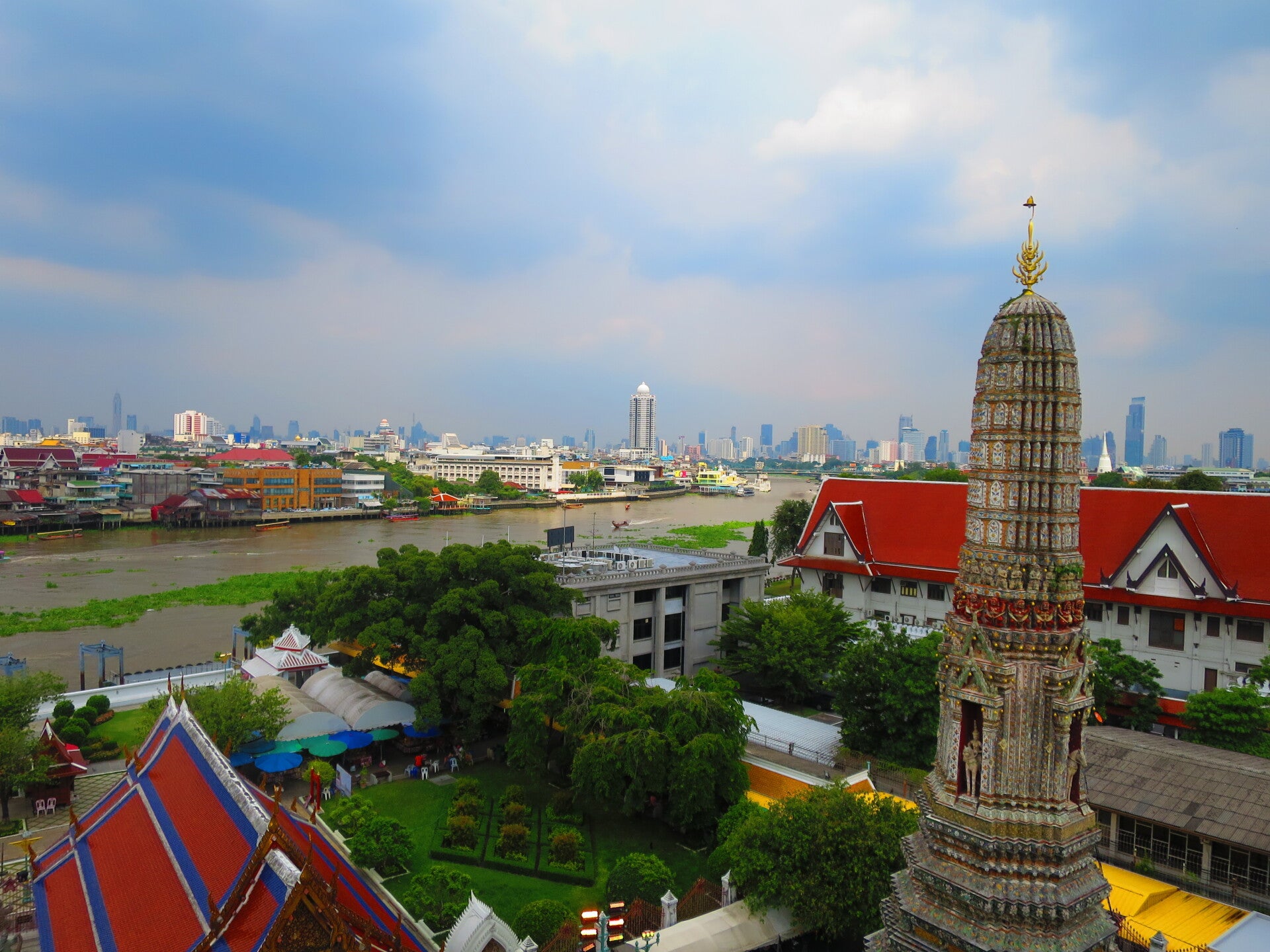
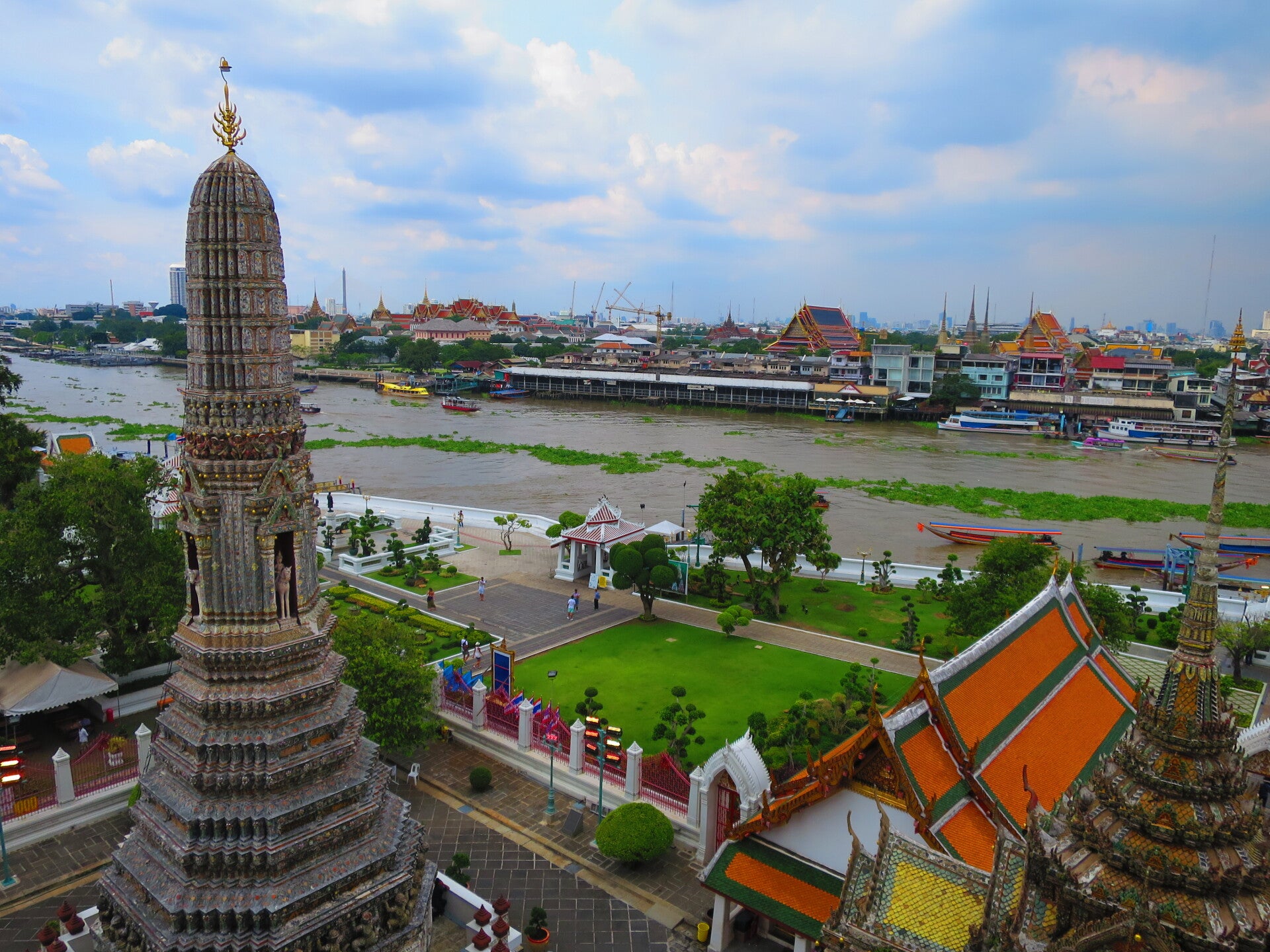
Wat Arun, or the Temple of Dawn, is one of Bangkok's most recognisable landmarks, sitting directly on the banks of the Chao Phraya River.
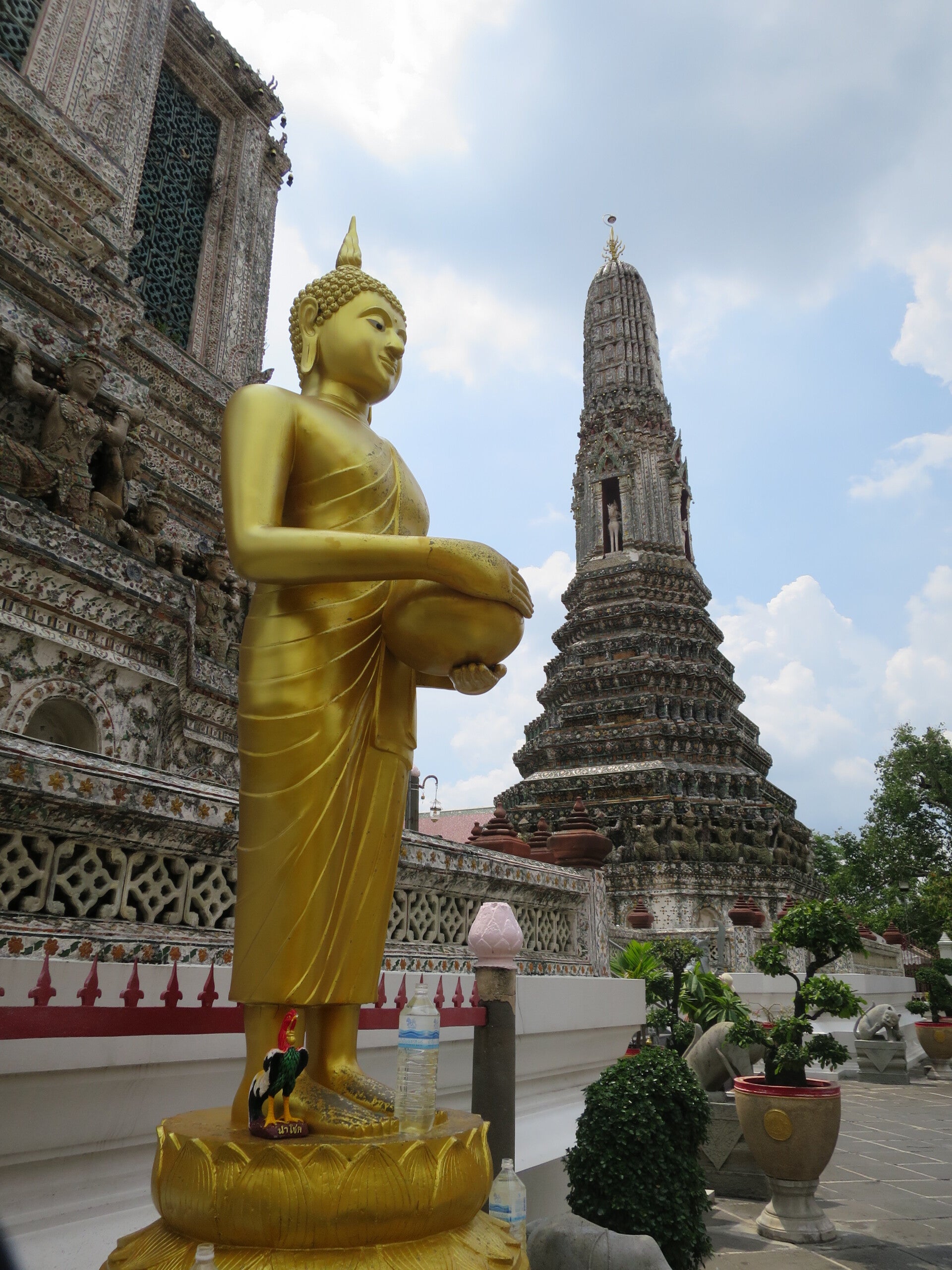
Its defining feature is the enormous central prang - a tall, tower-like structure - surrounded by four smaller towers and covered in intricate floral mosaics made from colourful porcelain and seashells. Much of the porcelain originally arrived in Thailand as ballast aboard Chinese trading ships.
You can climb partway up the central prang for a closer look at the decorations and views across the river, but don't just visit the famous tower and leave. The temple's ordination hall is also worth seeing, with beautiful murals depicting the Buddha's life and a large golden seated Buddha statue.
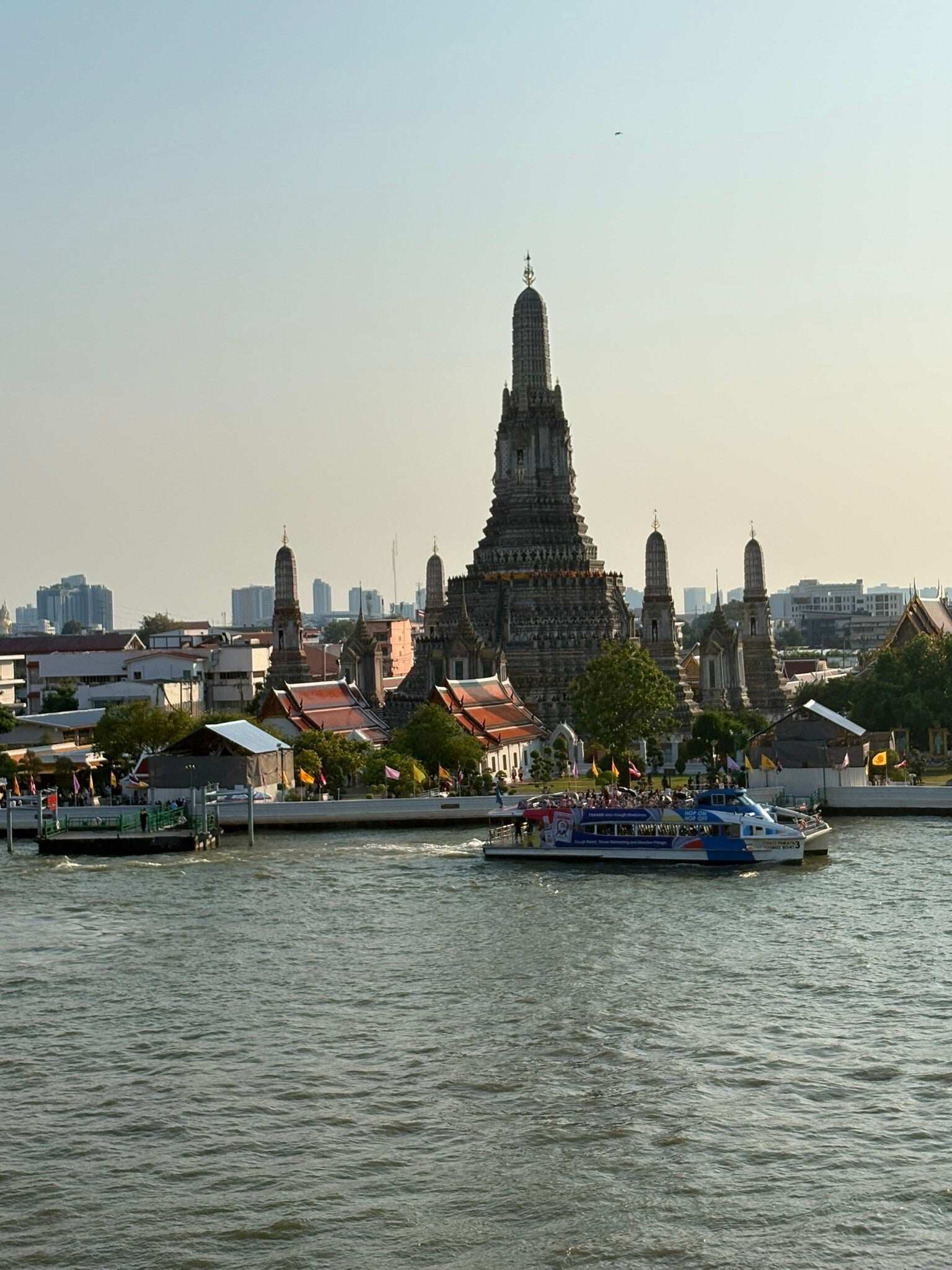
Tip: see Wat Arun at sunset from across the river
For a completely different view, head across the Chao Phraya river to Eagle Nest Rooftop Bar, where you can watch the sun set behind Wat Arun while having a drink.
Try to arrive well before sunset if you want one of the coveted seats directly overlooking the river. The view changes beautifully as the sun sets and Wat Arun becomes illuminated, so don't rush away as soon as the sun disappears.
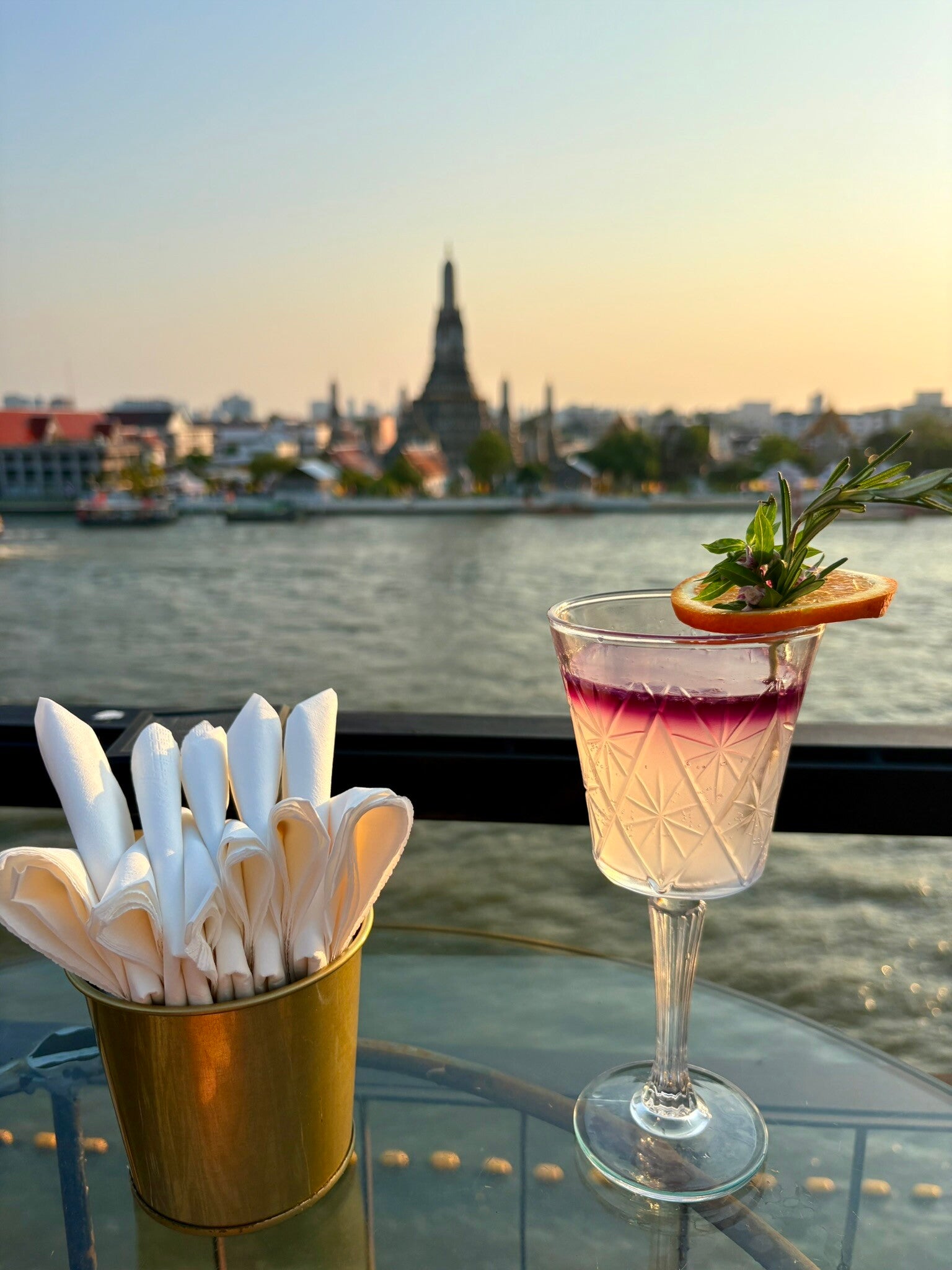
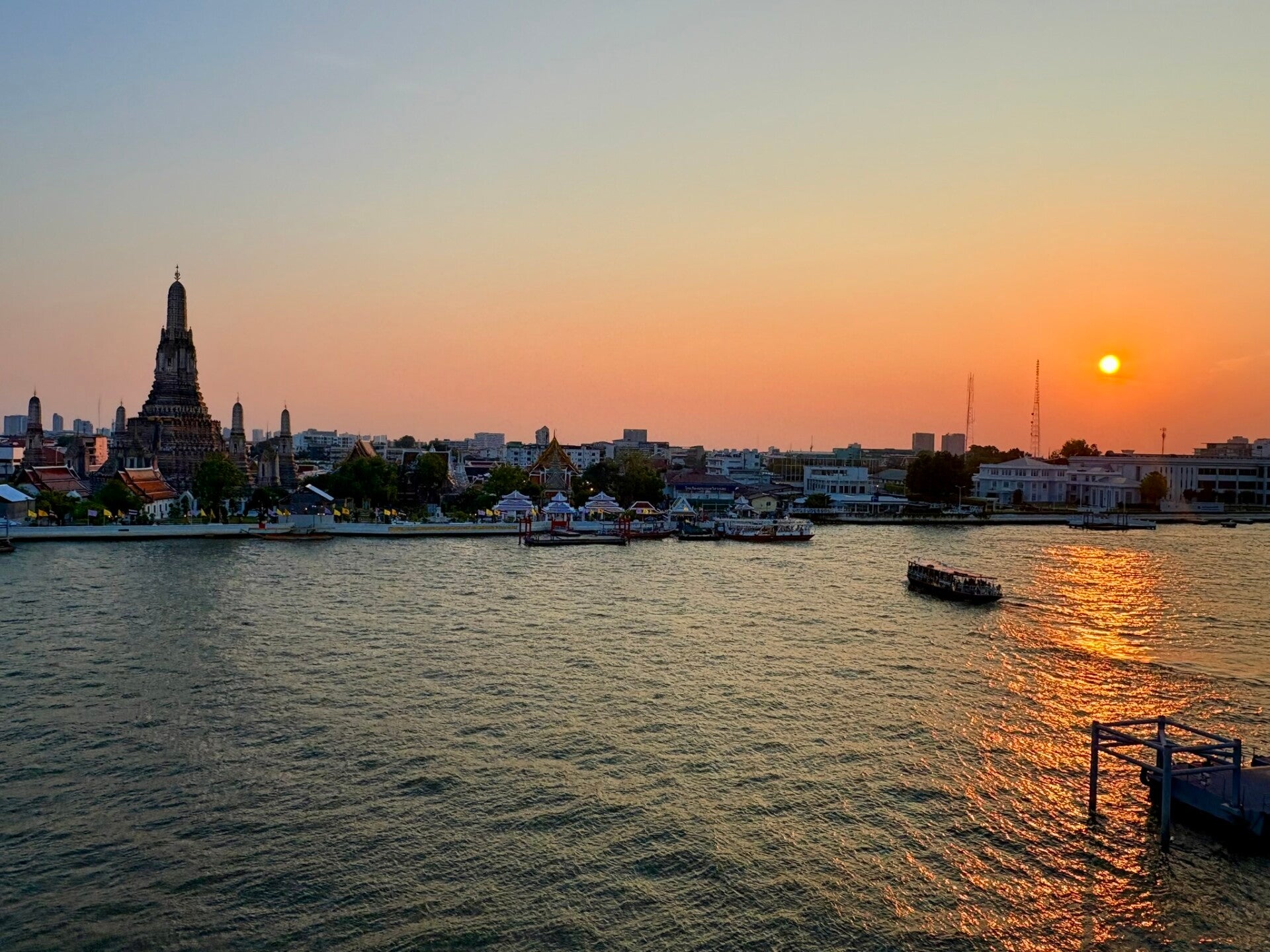
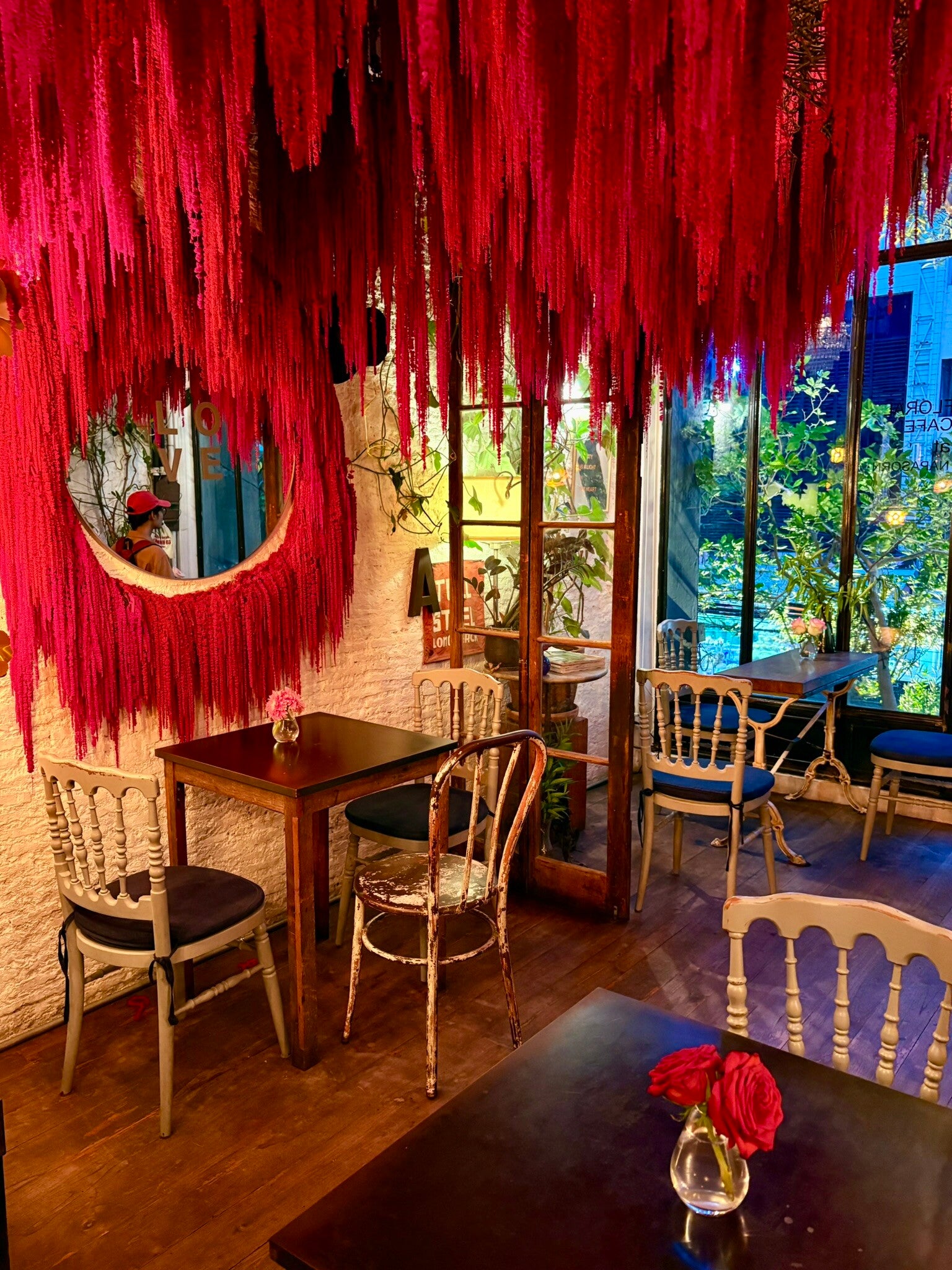
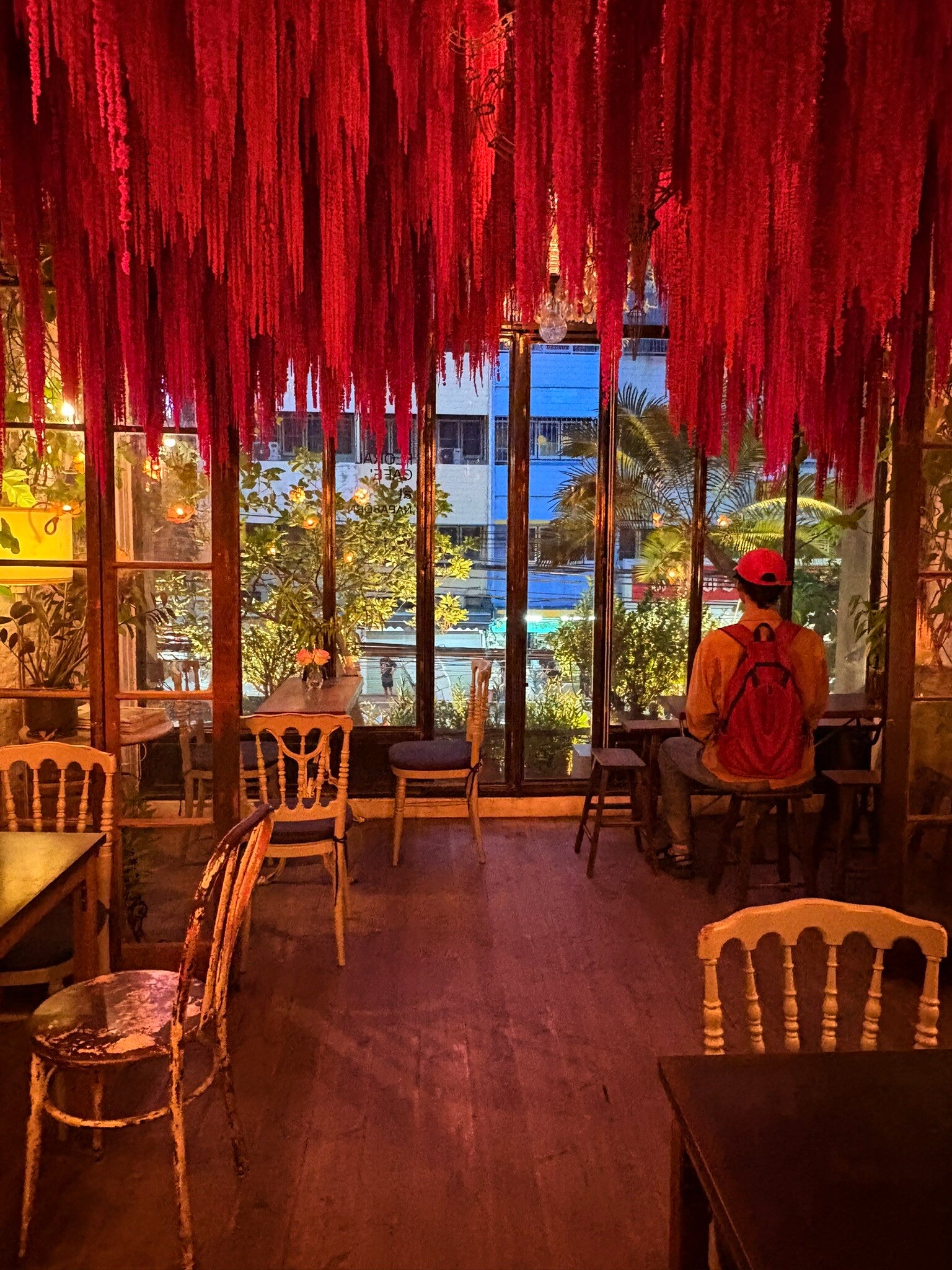
Nearby: Floral Café at Napasorn
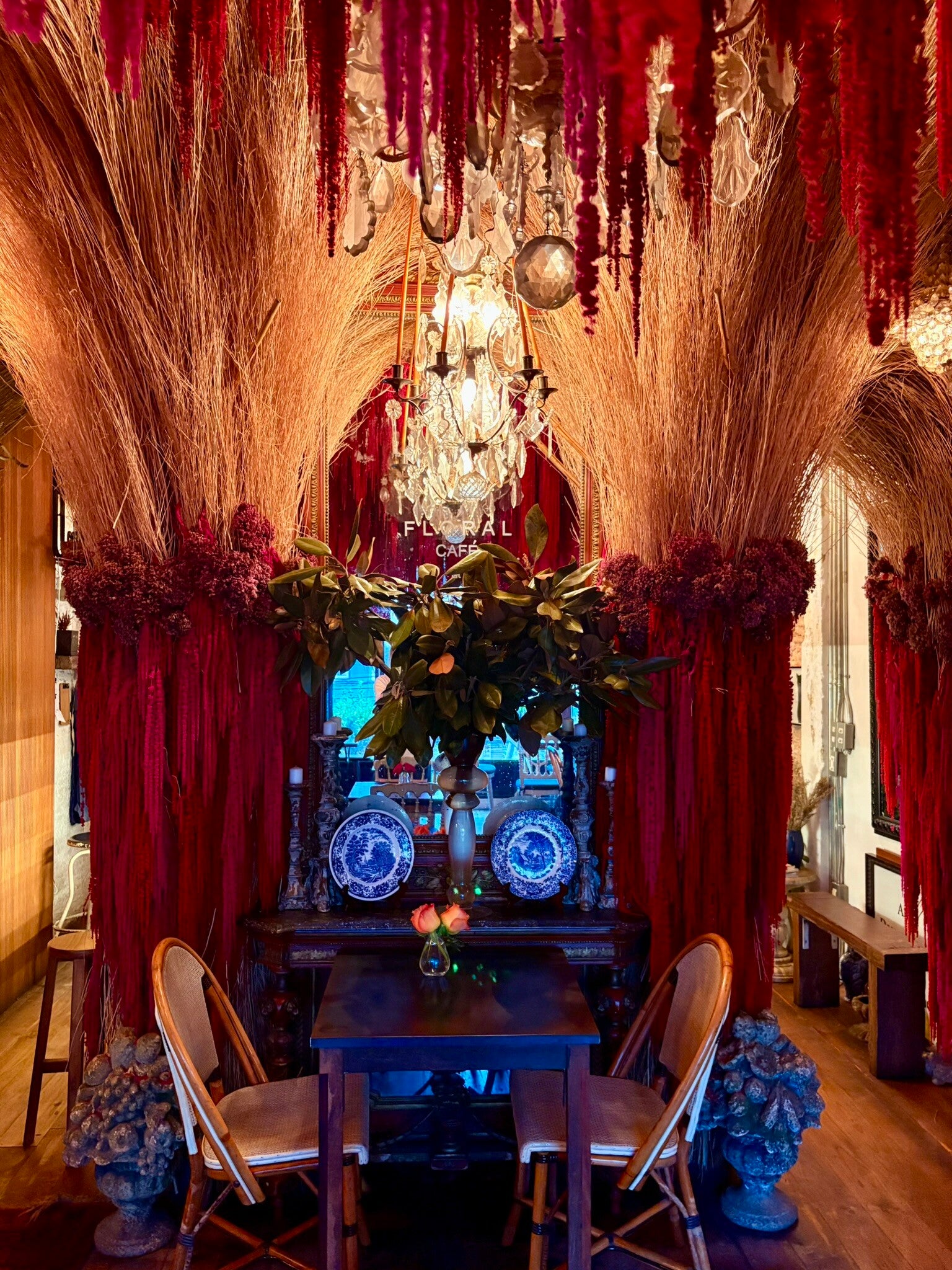
If you visit Wat Arun during the daytime, take a quick 10–15-minute Grab ride afterwards to Floral Café at Napasorn, near Bangkok's famous flower market.
Part florist, part café, the interior is covered in elaborate floral arrangements, greenery and vintage decorations. Even the desserts and teas incorporate flowers, making it one of Bangkok's most atmospheric cafés and a great air-conditioned break after temple-hopping.
4. Blue Temple (Wat Rong Suea Ten) - Chiang Rai
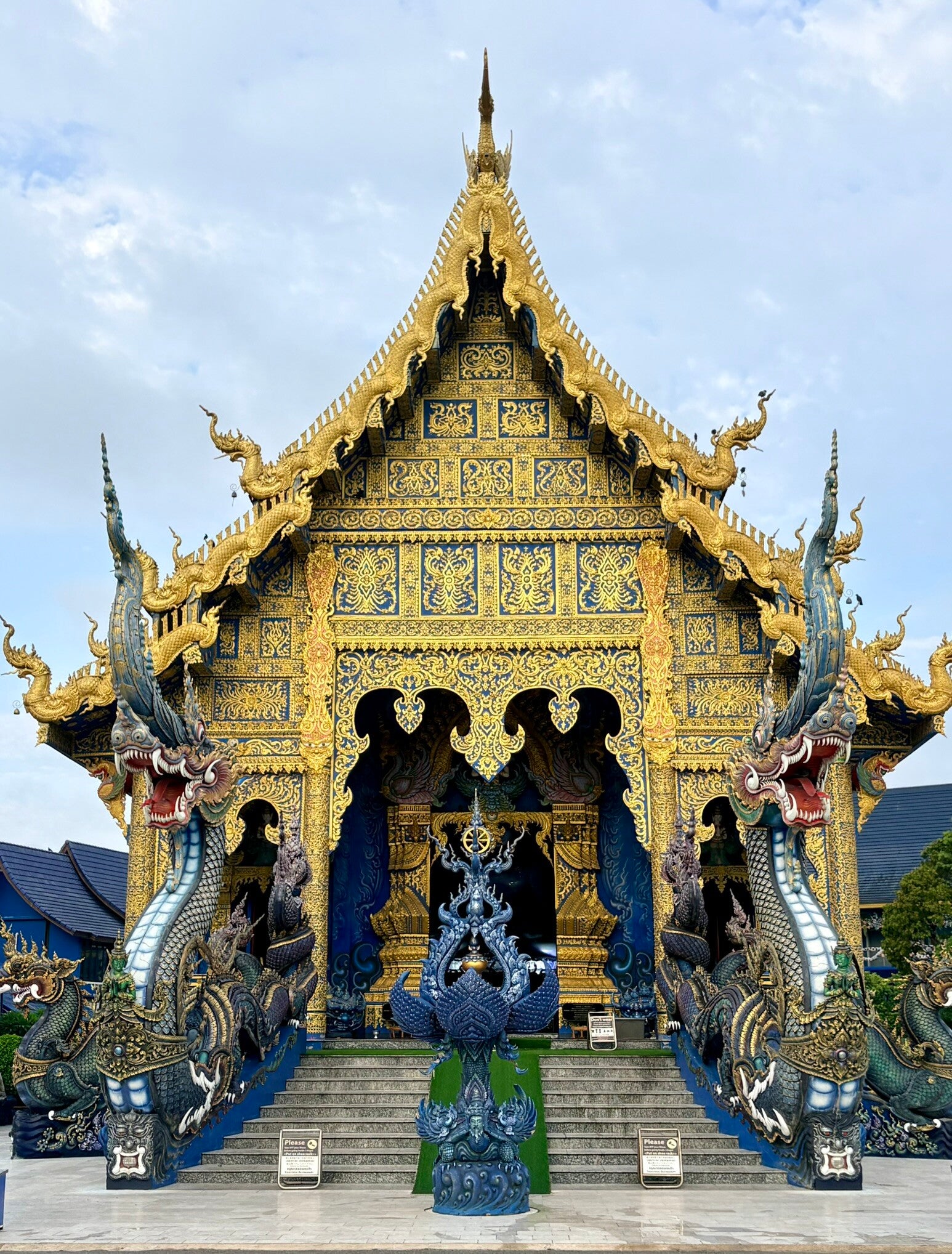
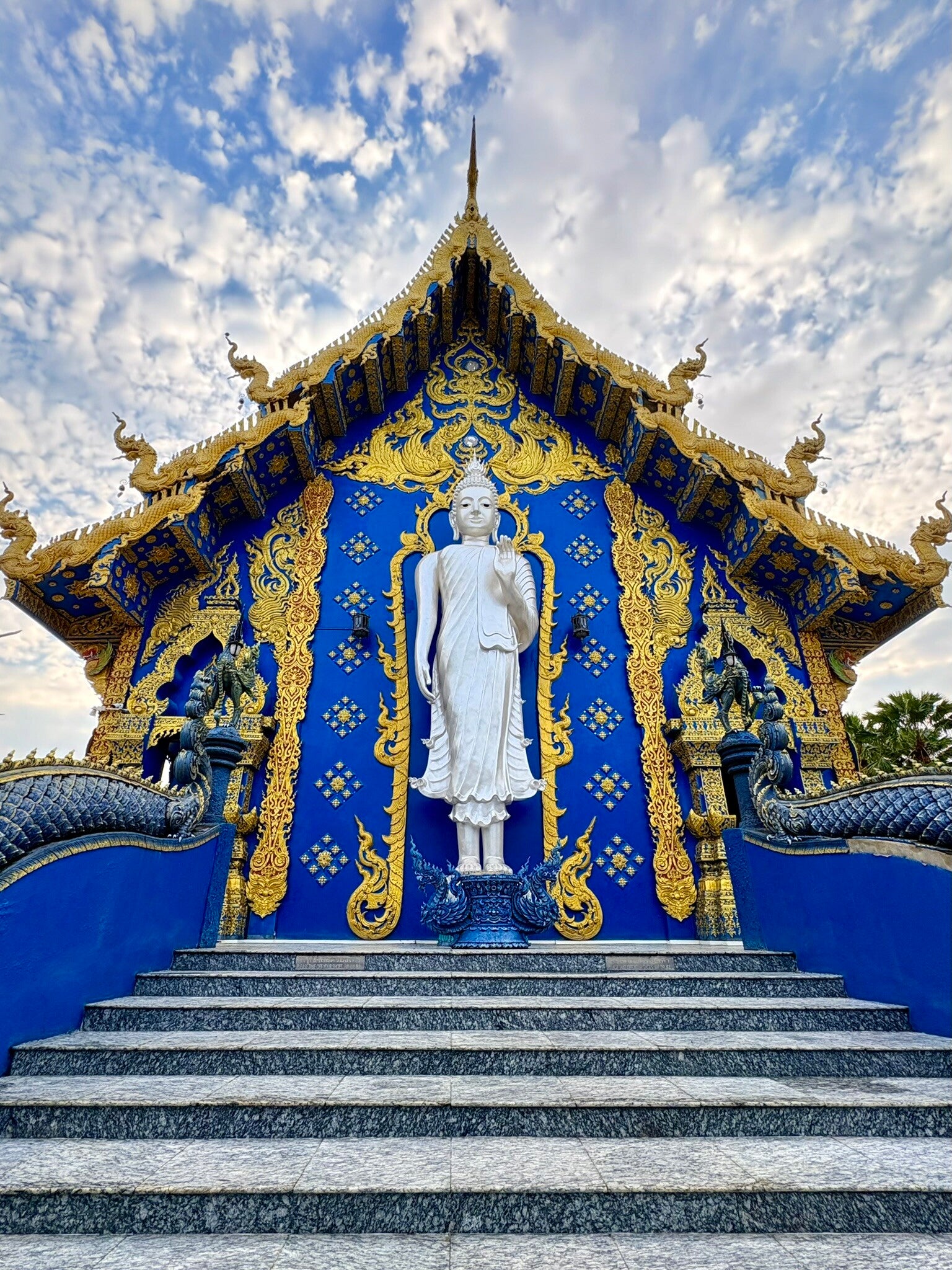
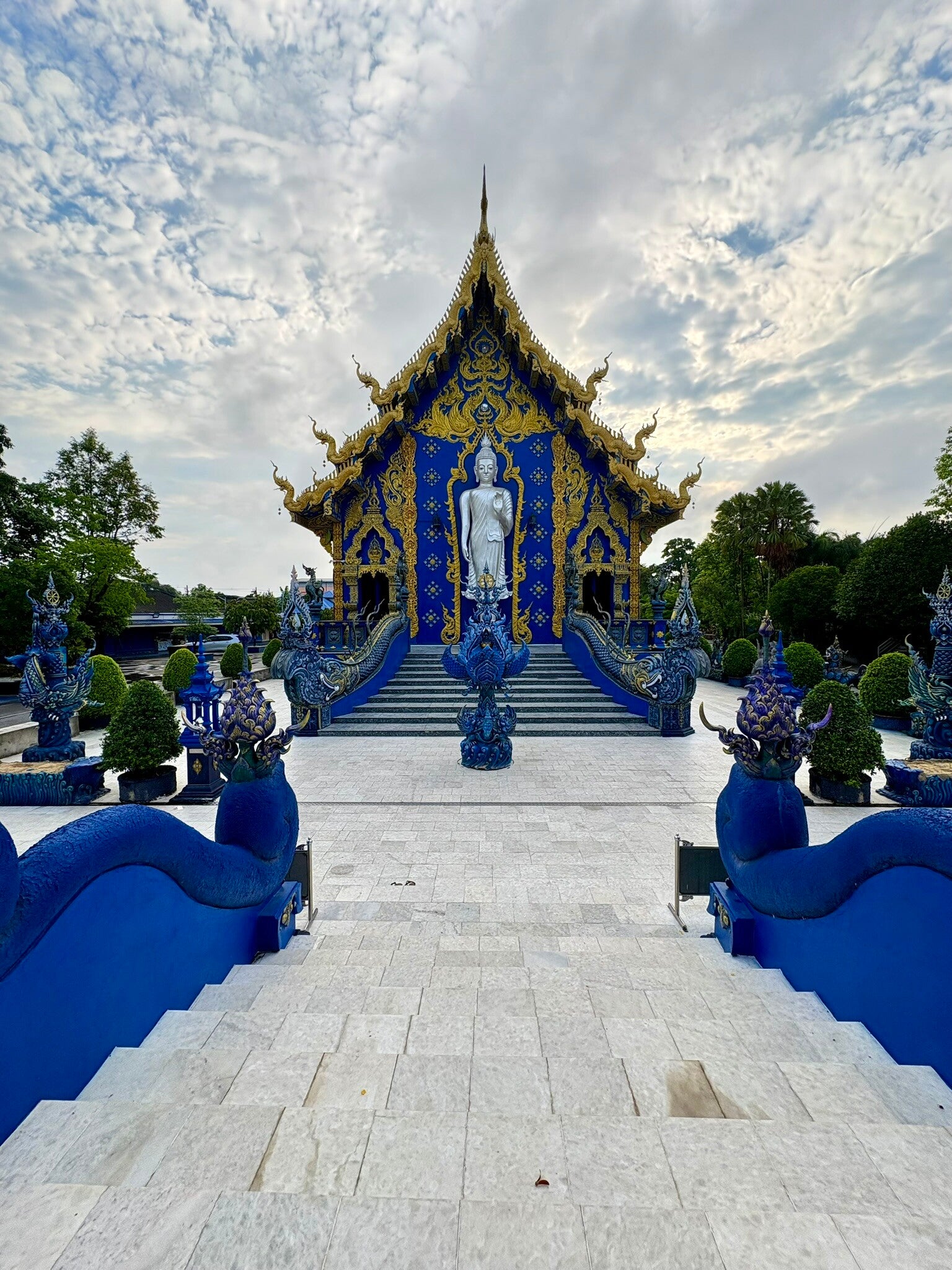
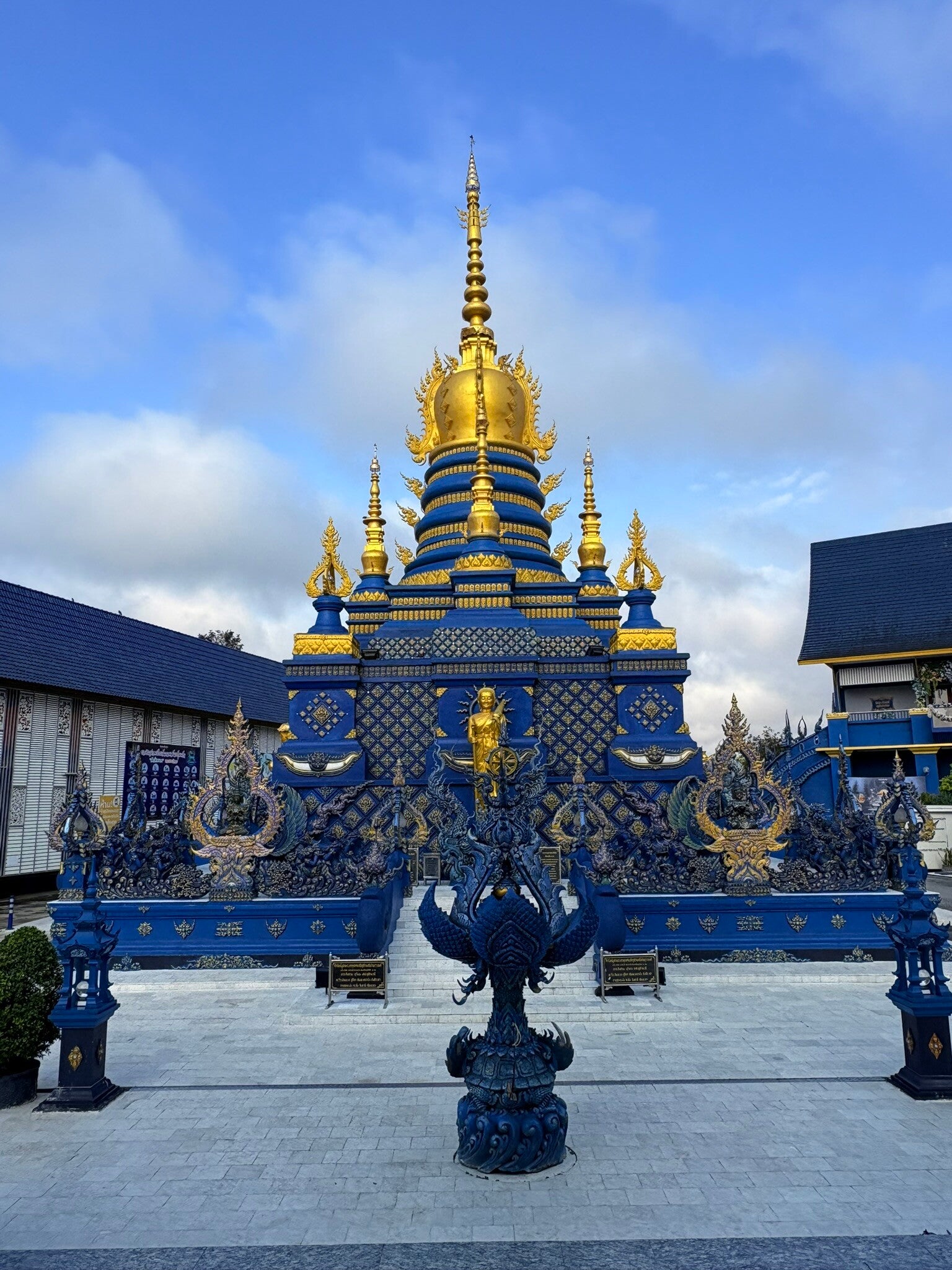
The Blue Temple, or Wat Rong Suea Ten, is one of Chiang Rai's most famous temples and my personal favourite of the city's colourful trio.
It's a relatively new temple, with the main hall completed in 2016. It was designed by local artist Phuttha Kabkaew, who previously worked under Chalermchai Kositpipat, the artist behind Chiang Rai's famous White Temple (further down the list).
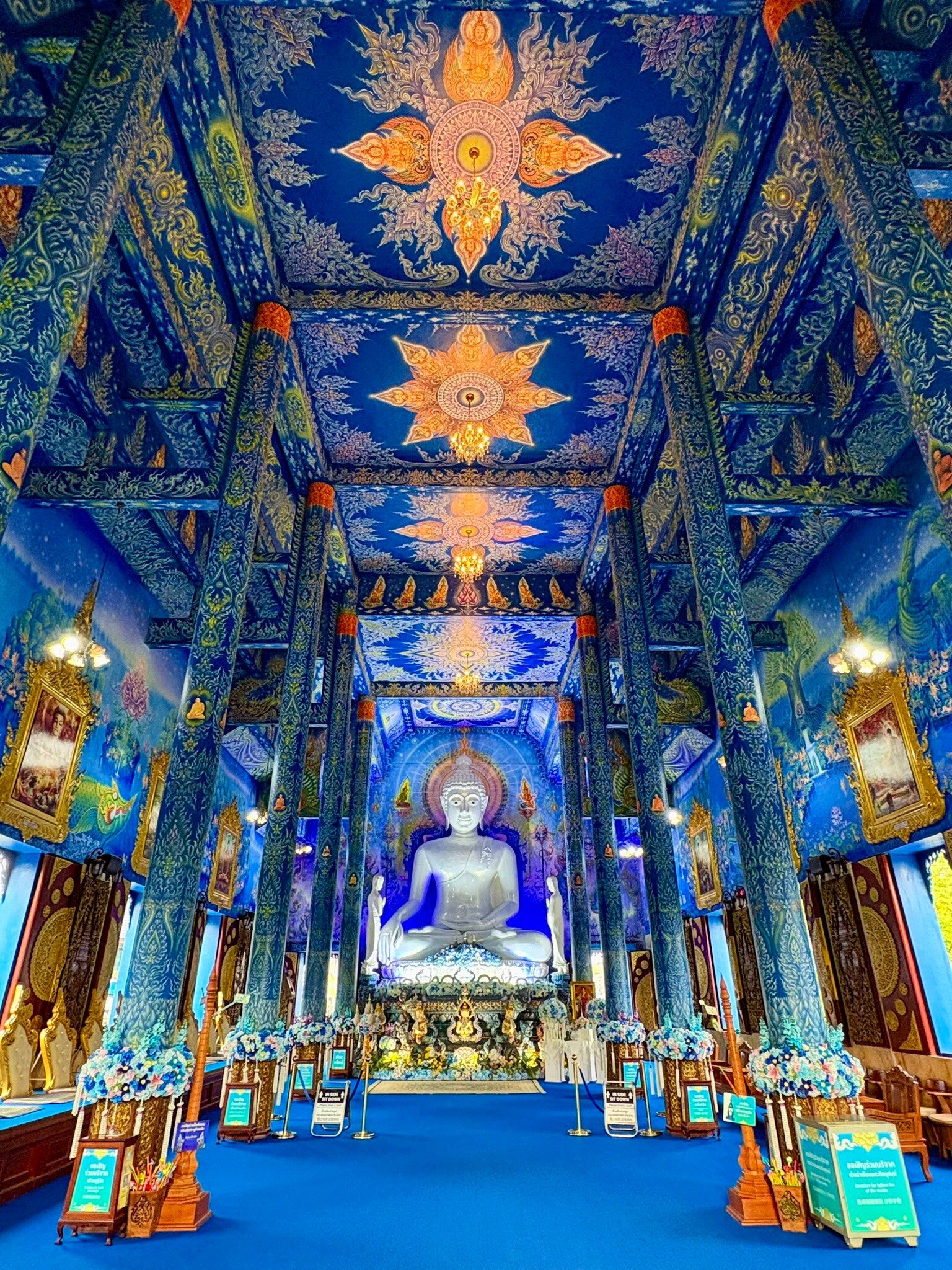
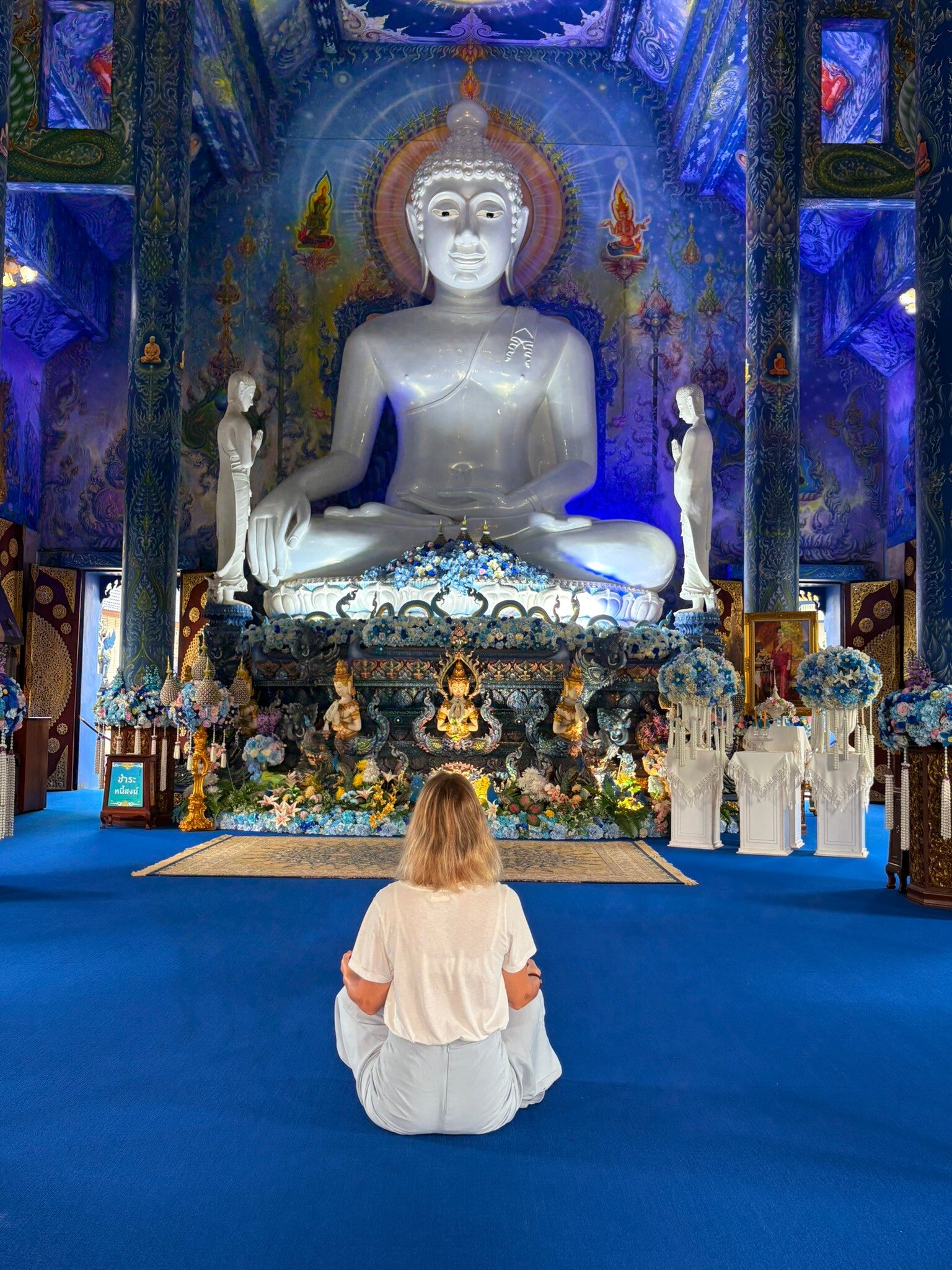
While I don't find the exterior quite as impressive as its White Temple cousin, the interior takes the prize for me. Almost the entire space is overtaken by intense shades of blue, contrasted with elaborate golden details. Blue represents the ideas of wisdom, purity and infinity. At the far end, a huge white Buddha almost appears to glow against the deep-blue surroundings.
Turn around before leaving and you'll see fierce guardian imagery surrounding the exit. The contrast is very deliberate: Buddhist temple art frequently uses intimidating guardians and mythical creatures to protect sacred spaces and symbolically keep the evil outside.
Unlike the White Temple, this is a functioning Buddhist temple and entrance is free. It's also easy to reach from central Chiang Rai by Grab.
Wat Huay Pla Kang - Chiang Rai
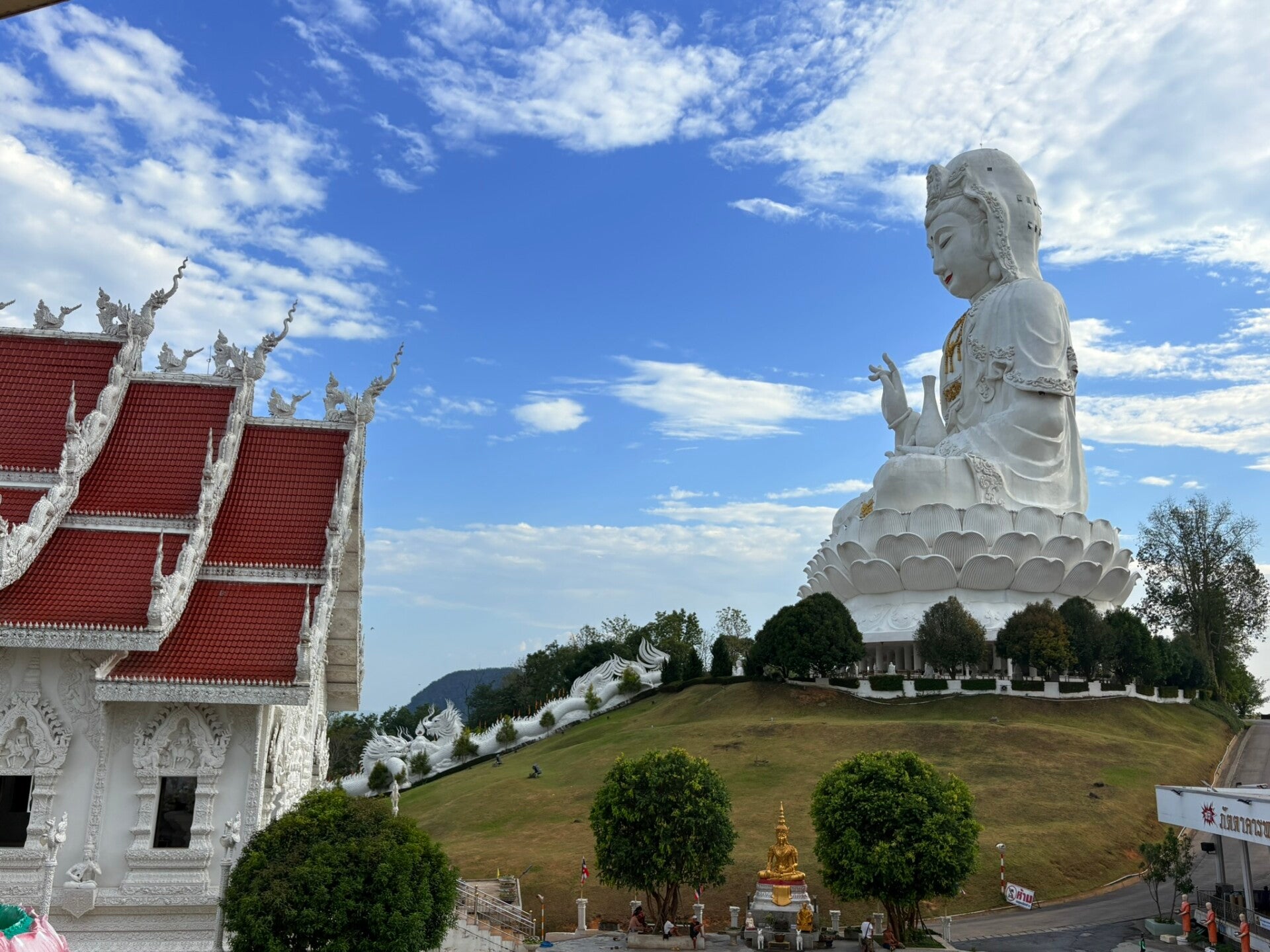
Wat Huay Pla Kang temple complex is sometimes mistakenly referred to as Chiang Rai's “Big Buddha” because of the enormous white statue dominating the area. But it's actually Guan Yin, known in Chinese Buddhism as the Goddess of Mercy and a symbol of compassion. The statue is impressive enough from ground level, but for a small fee you can take an elevator up inside Guan Yin's head, for a panoramic views across the surrounding countryside.
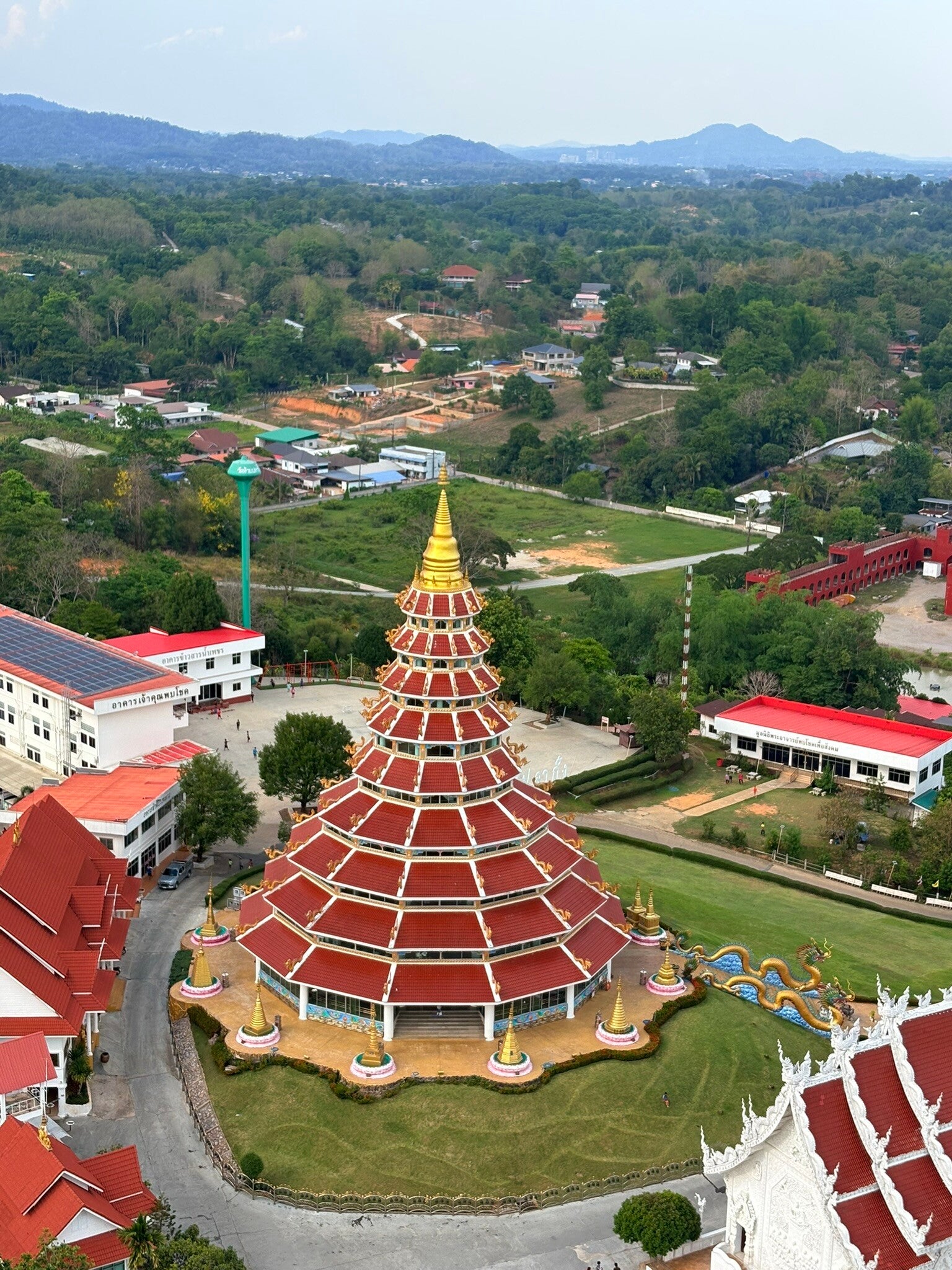
While you're there, don't miss the striking nine-storey pagoda right next to Guan Yin. Different levels contain Buddha and Guan Yin images, while a huge wooden Guan Yin dominates the first floor.
Finally, step inside Wat Huay Pla Kang's white temple itself. Its sparkling, almost entirely white interior feels almost ephemeral - completely different from the intense colours of the nearby Blue Temple. This was by far my favourite temple of this complex.
Entrance to the main complex is free, although the elevator inside Guan Yin carries a small fee.
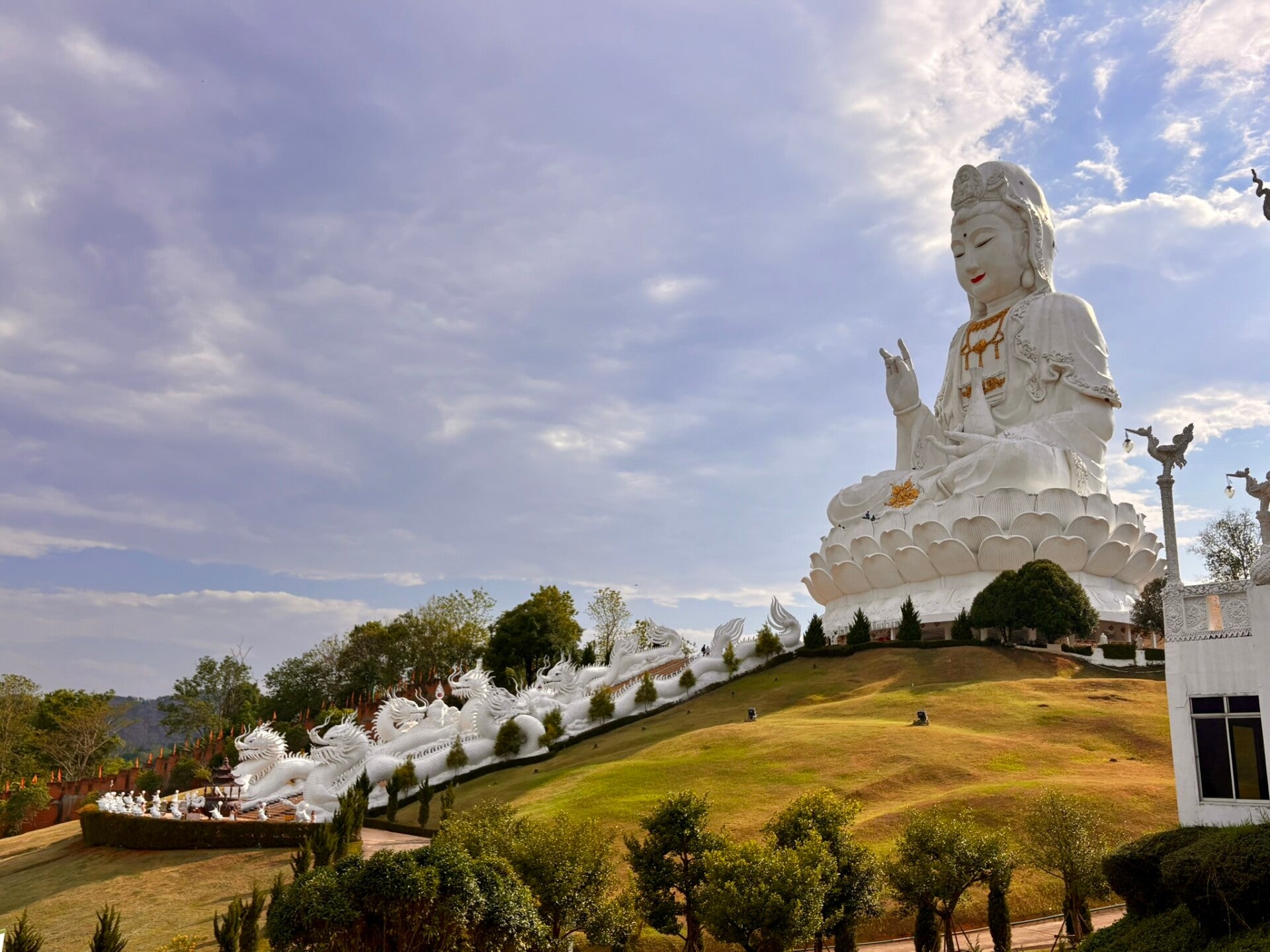
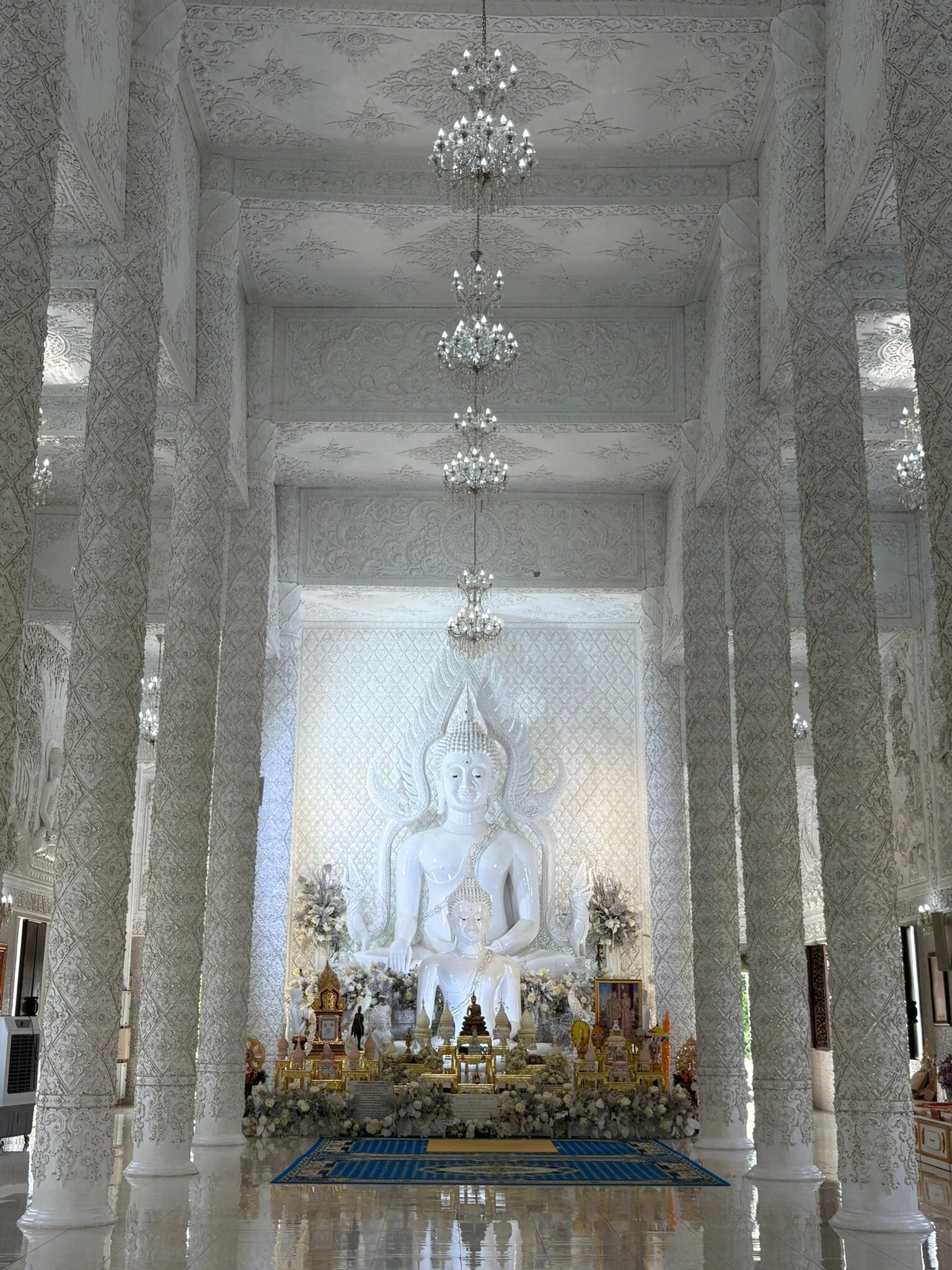
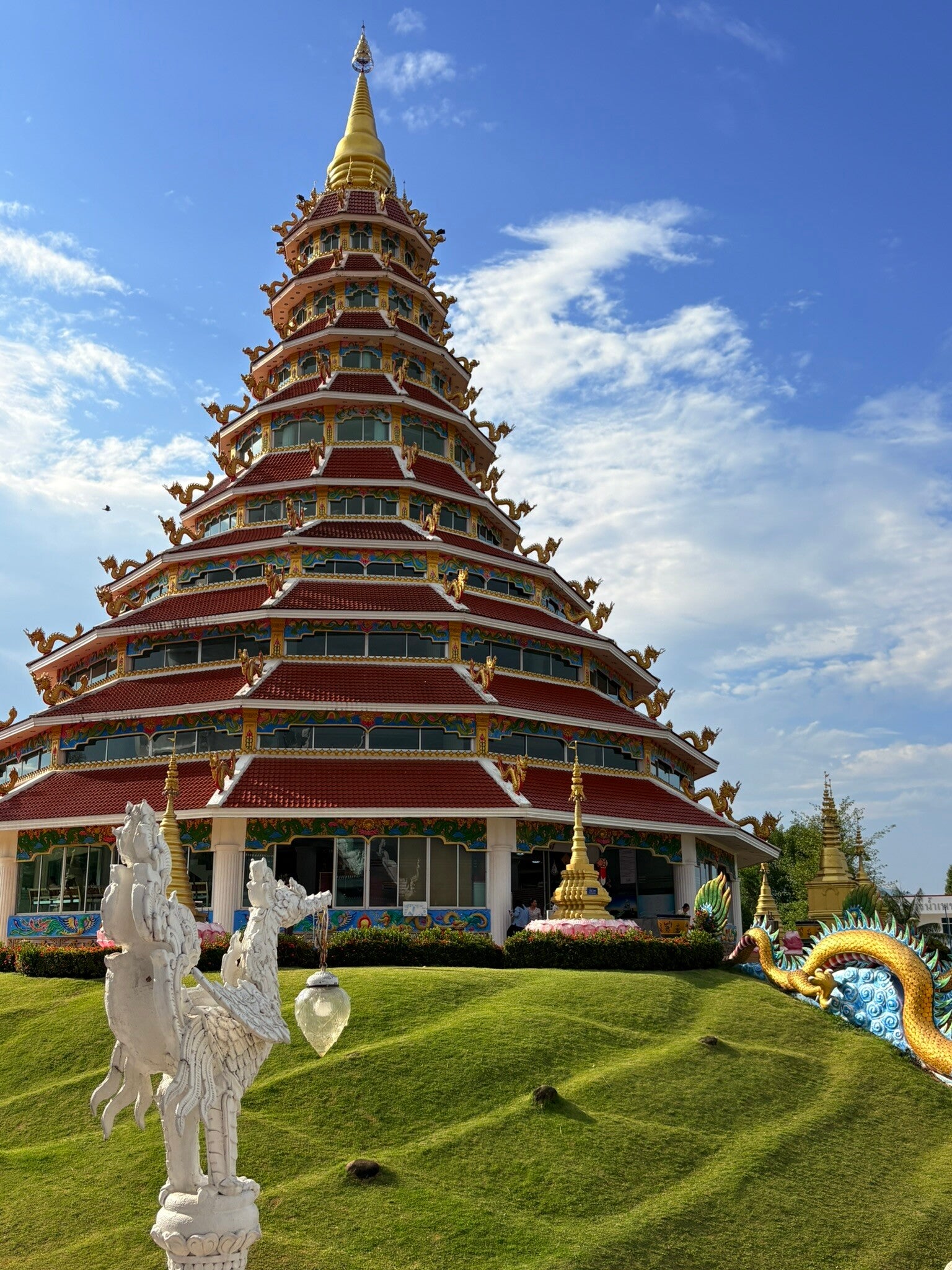
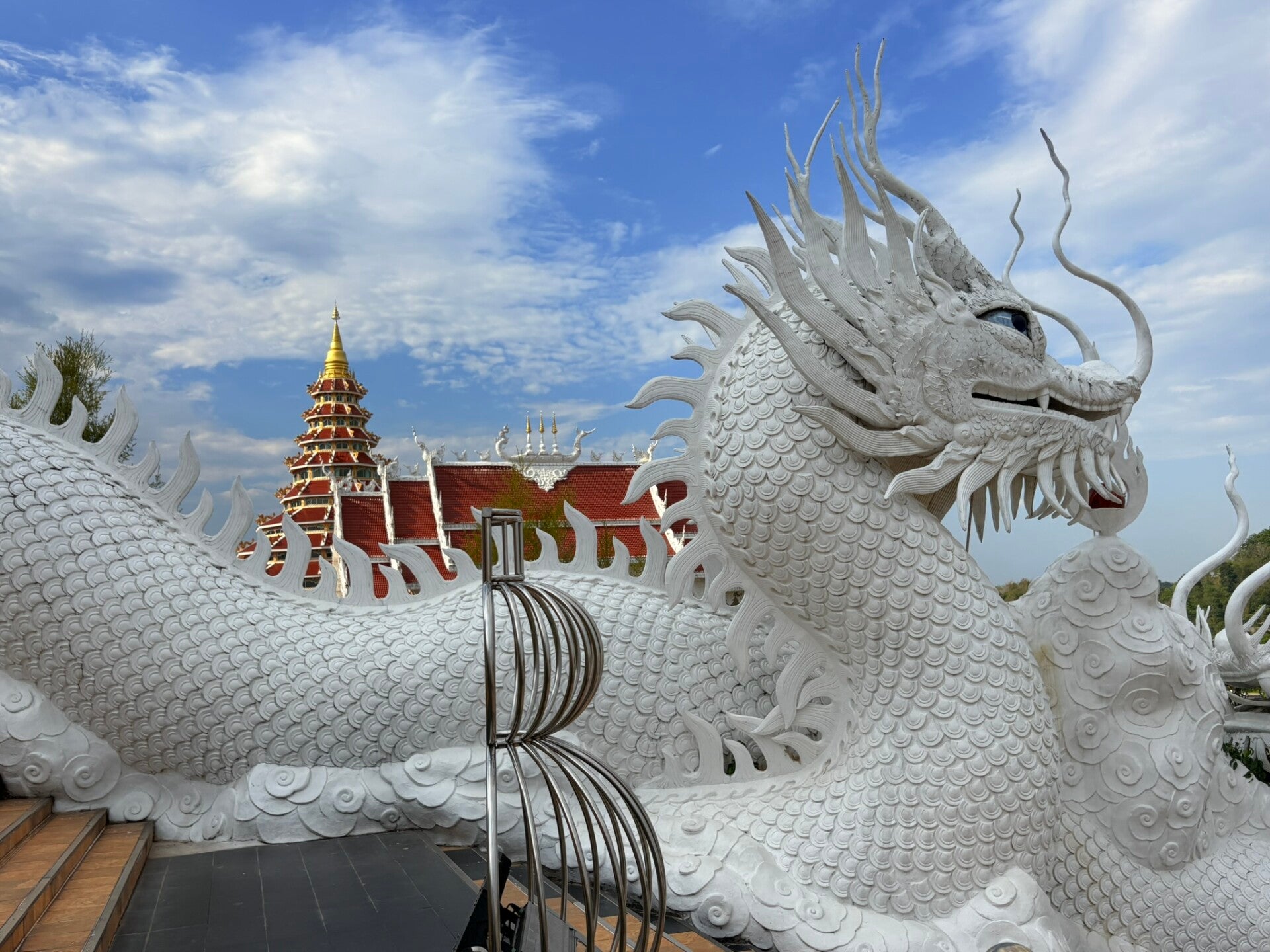
Nearby: Lalitta Café
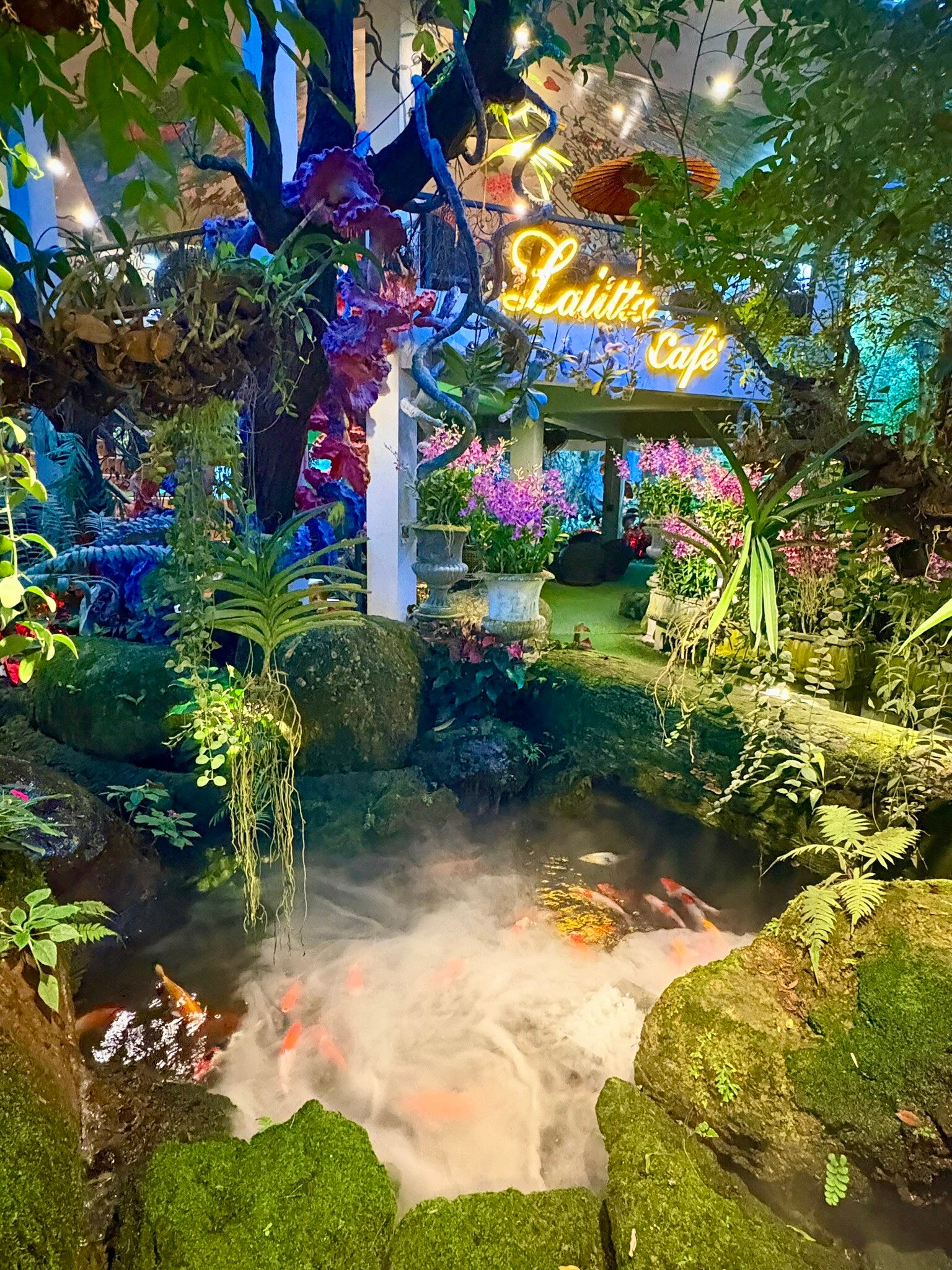
While it's definitely not a temple, Lalitta Café is another Chiang Rai stop that's worth adding to the itinerary if you like photogenic places.
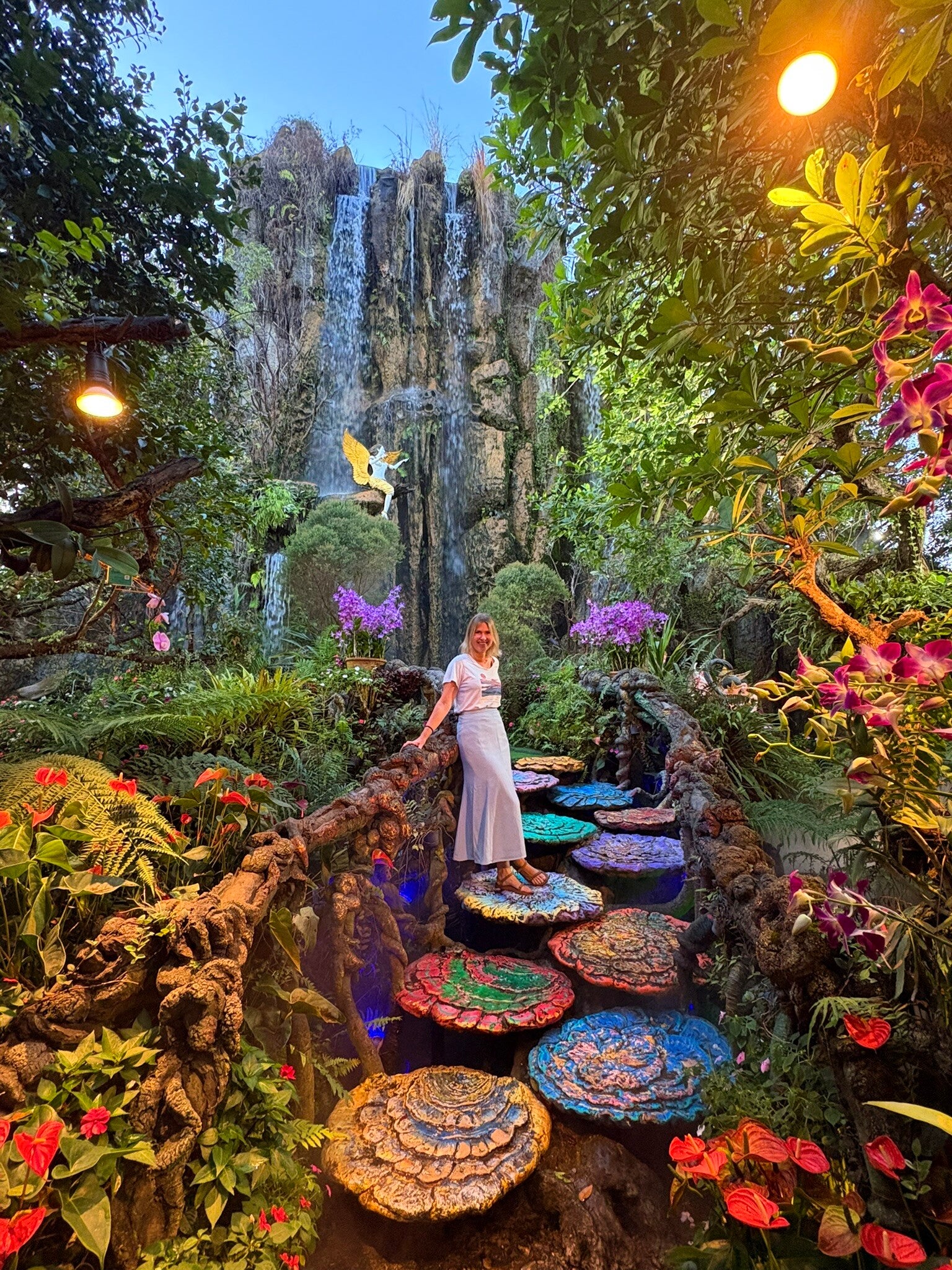
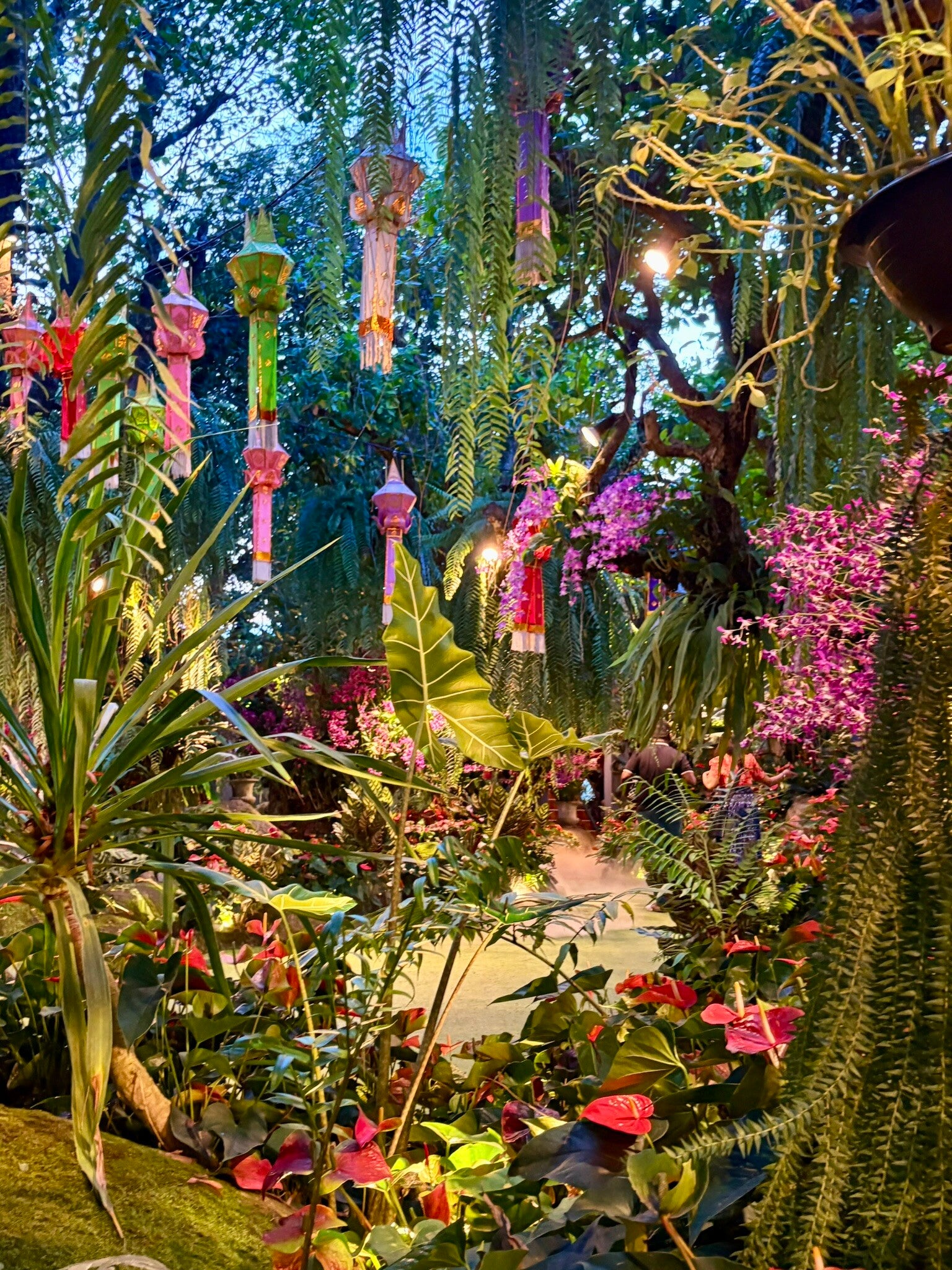
Calling it simply a café doesn't really do it justice. You enter what feels like an artificial enchanted rainforest, complete with dense greenery, flowers, mist, waterfalls, bridges and fantasy-inspired decorations.
In 2026, the entrance fee is around 60 THB (~2 USD), separate from whatever you order at the café. Even if you're not hungry, it's worth visiting for the ridiculously photogenic gardens alone.
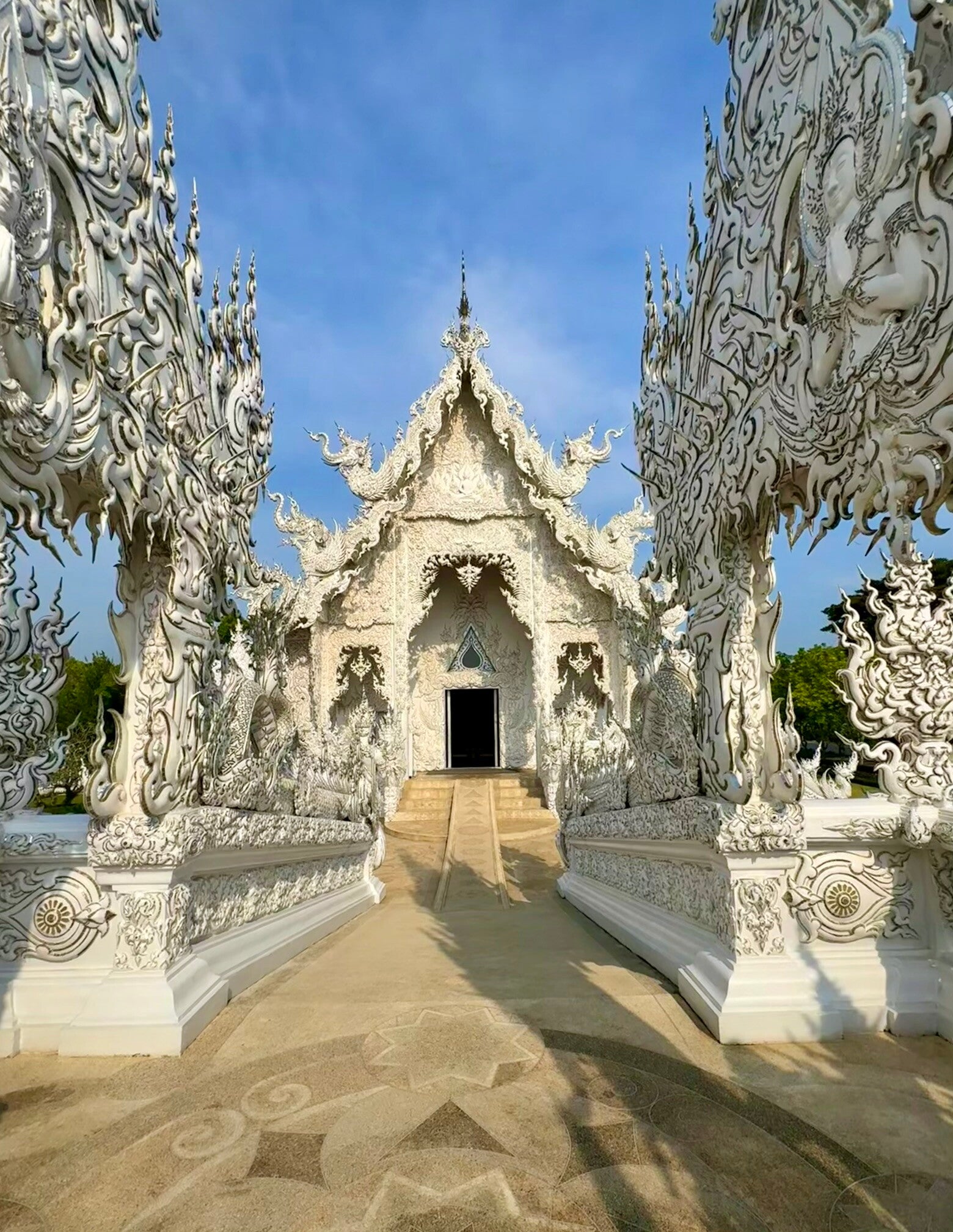
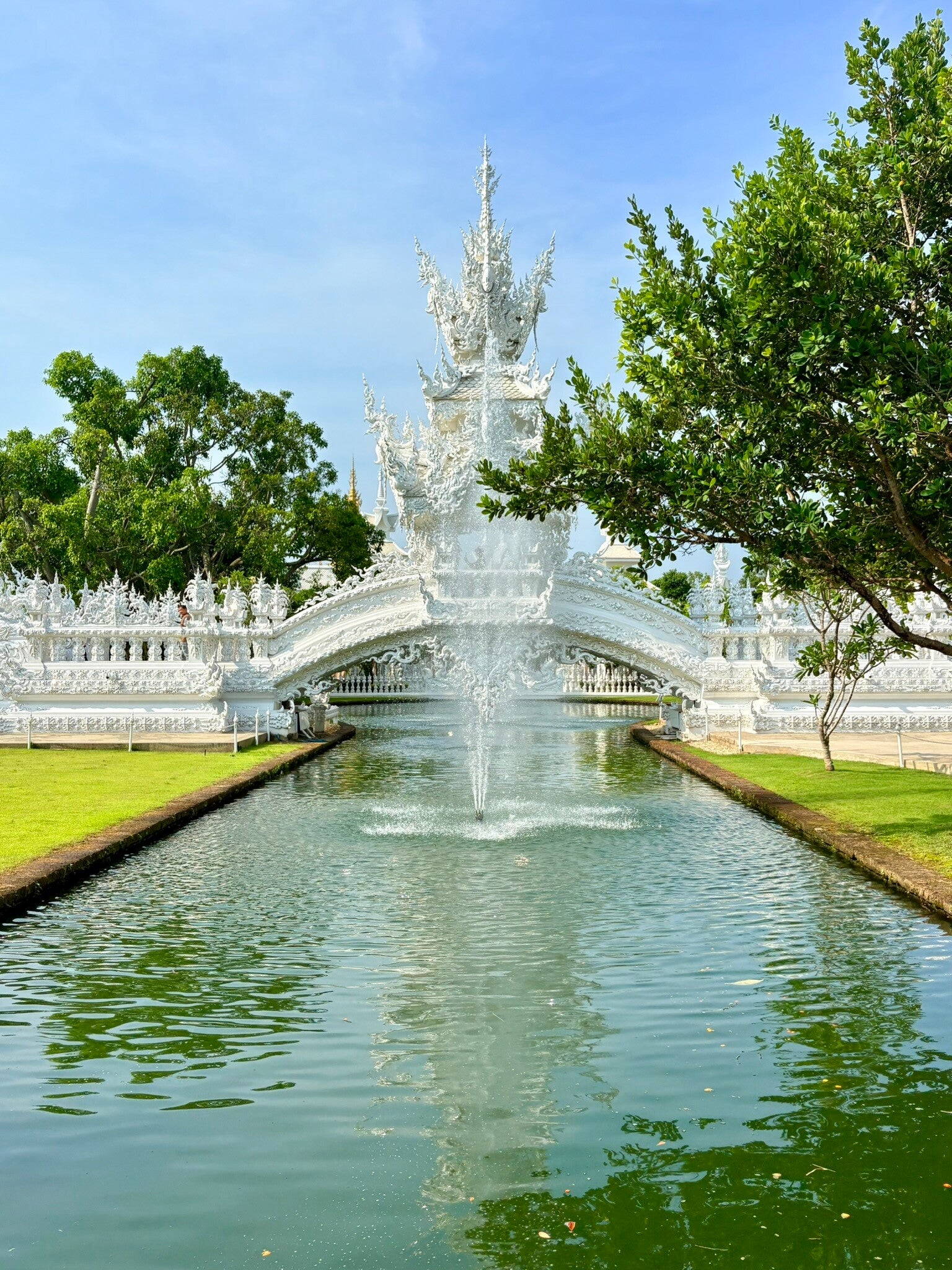
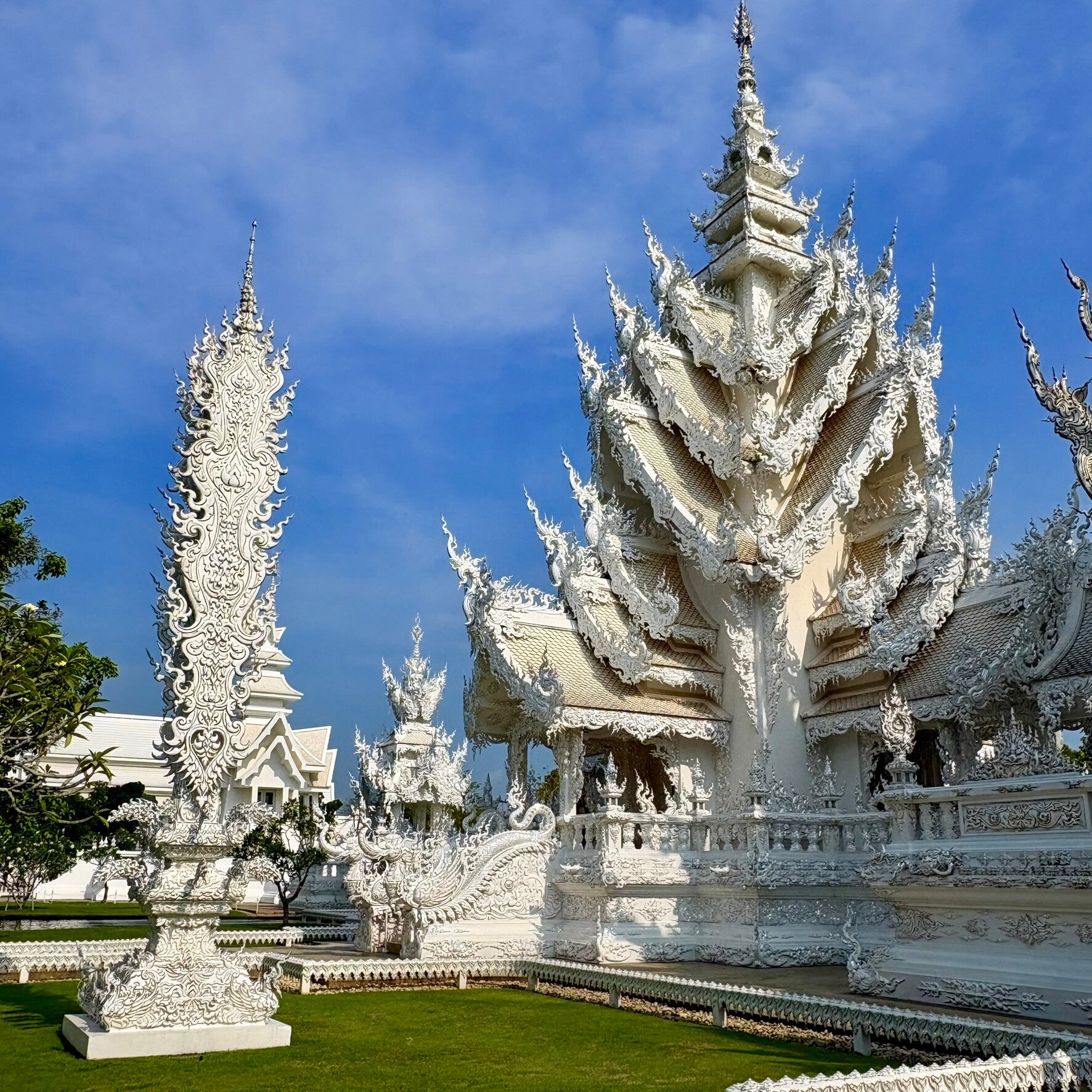
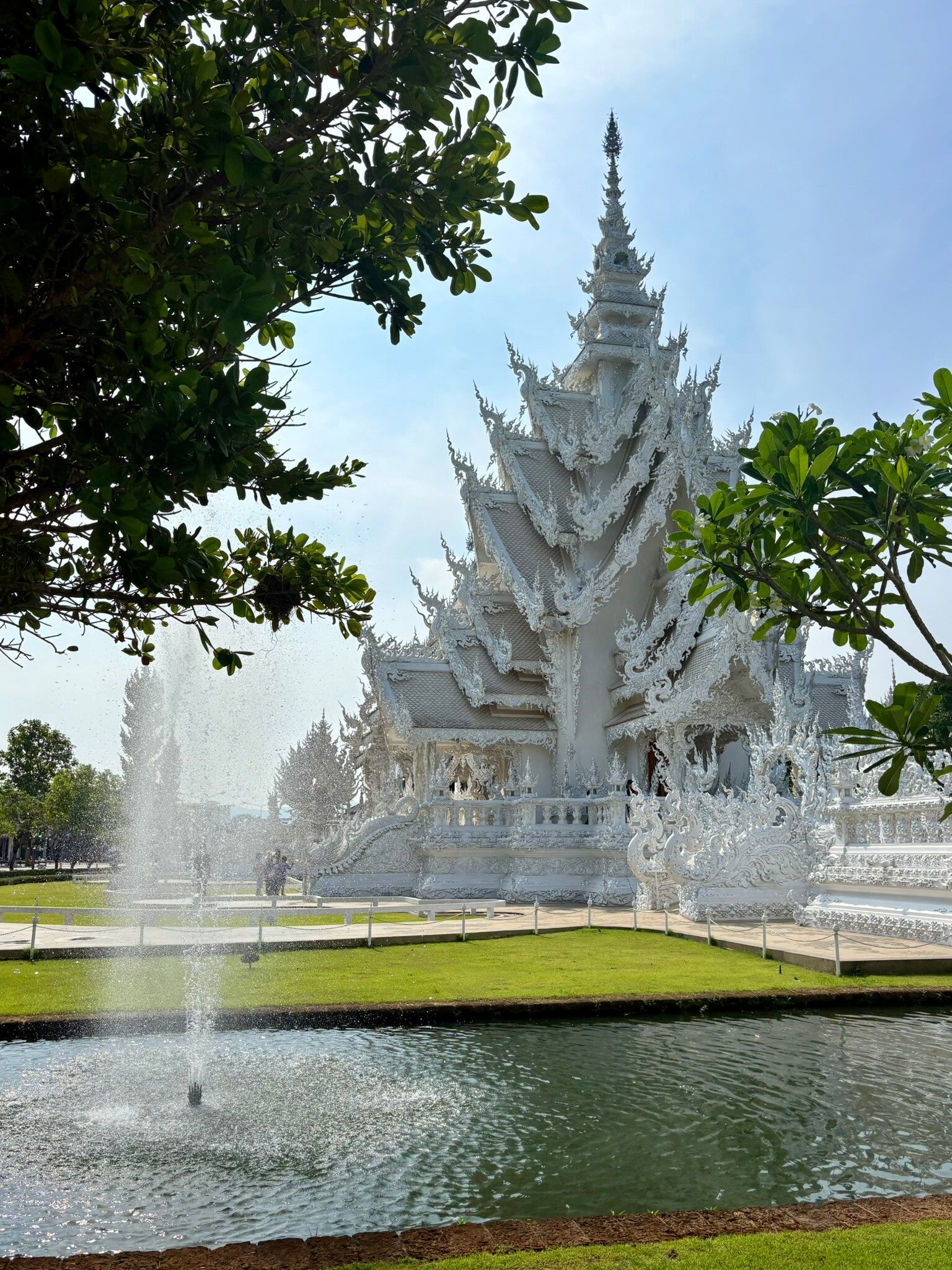
6. White Temple (Wat Rong Khun) - Chiang Rai
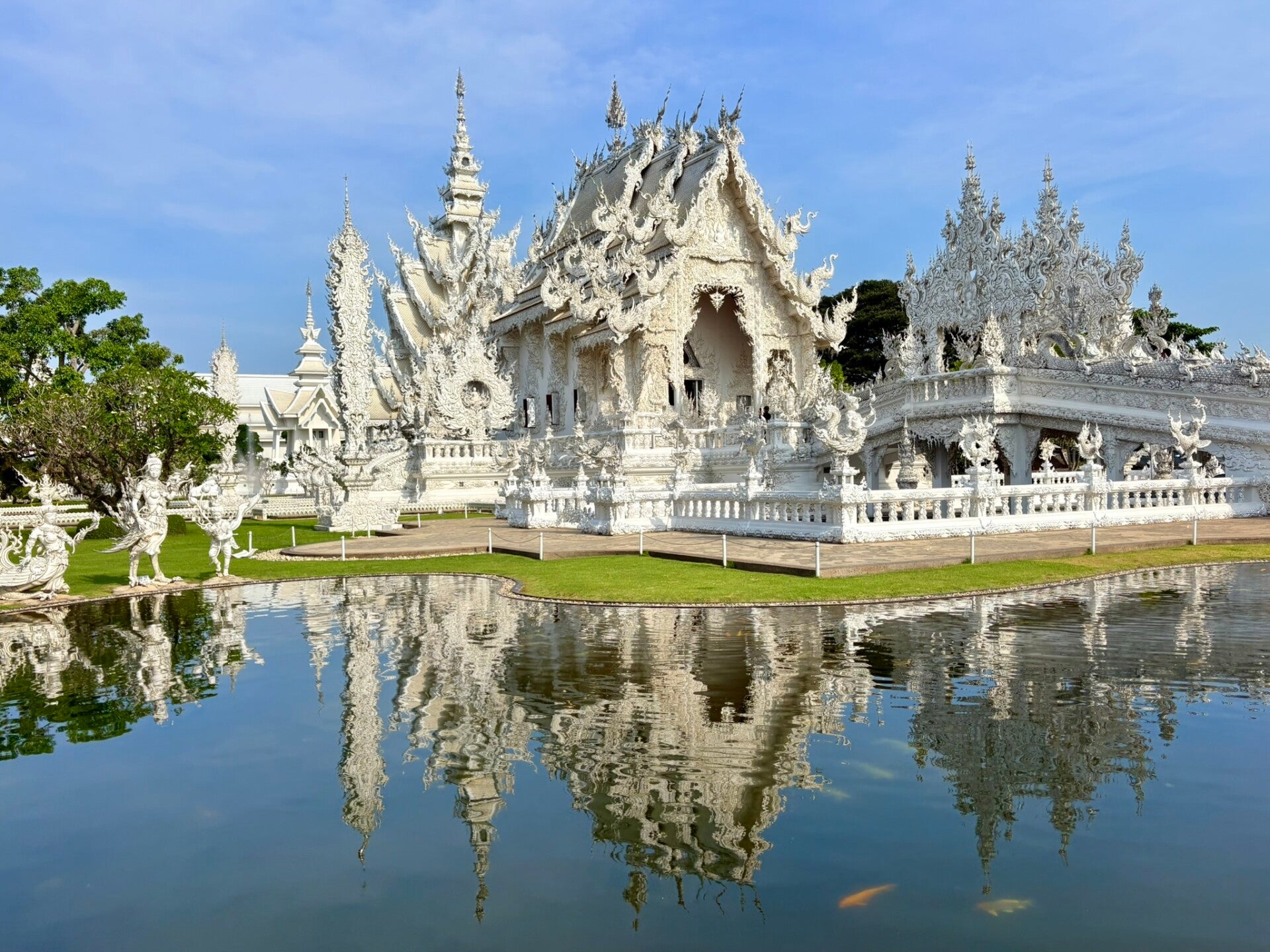
The White Temple, or Wat Rong Khun, is probably Chiang Rai's most famous attraction. Yet it doesn't make the top of my ranking because it feels more like an elaborate art installation designed for visitors than a traditional temple.
However, that doesn't mean it's not spectacular. It was built by Thai artist Chalermchai Kositpipat in 1997 as his own interpretation of a Buddhist temple and an artistic expression of the path from worldly desire towards enlightenment.
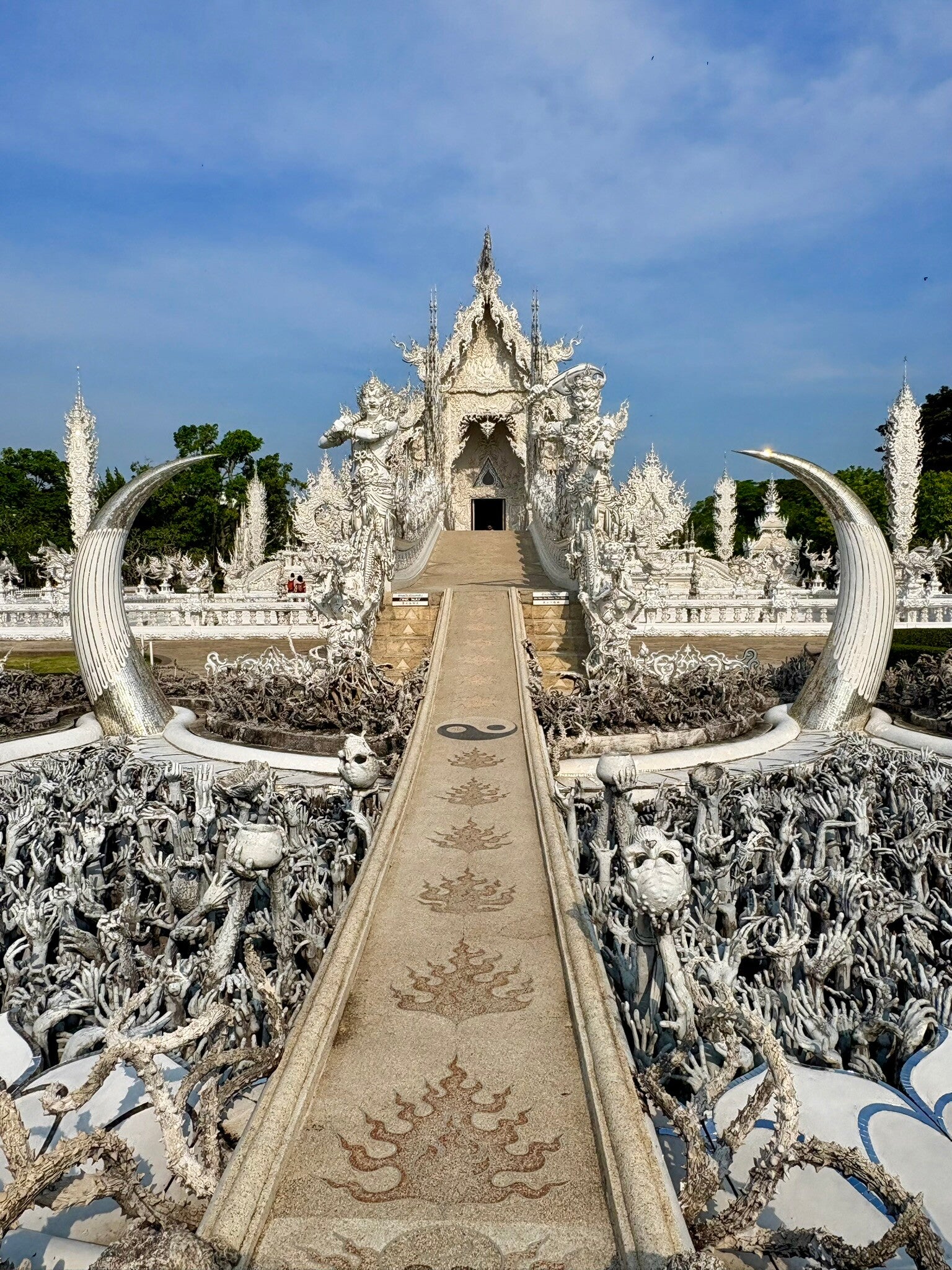
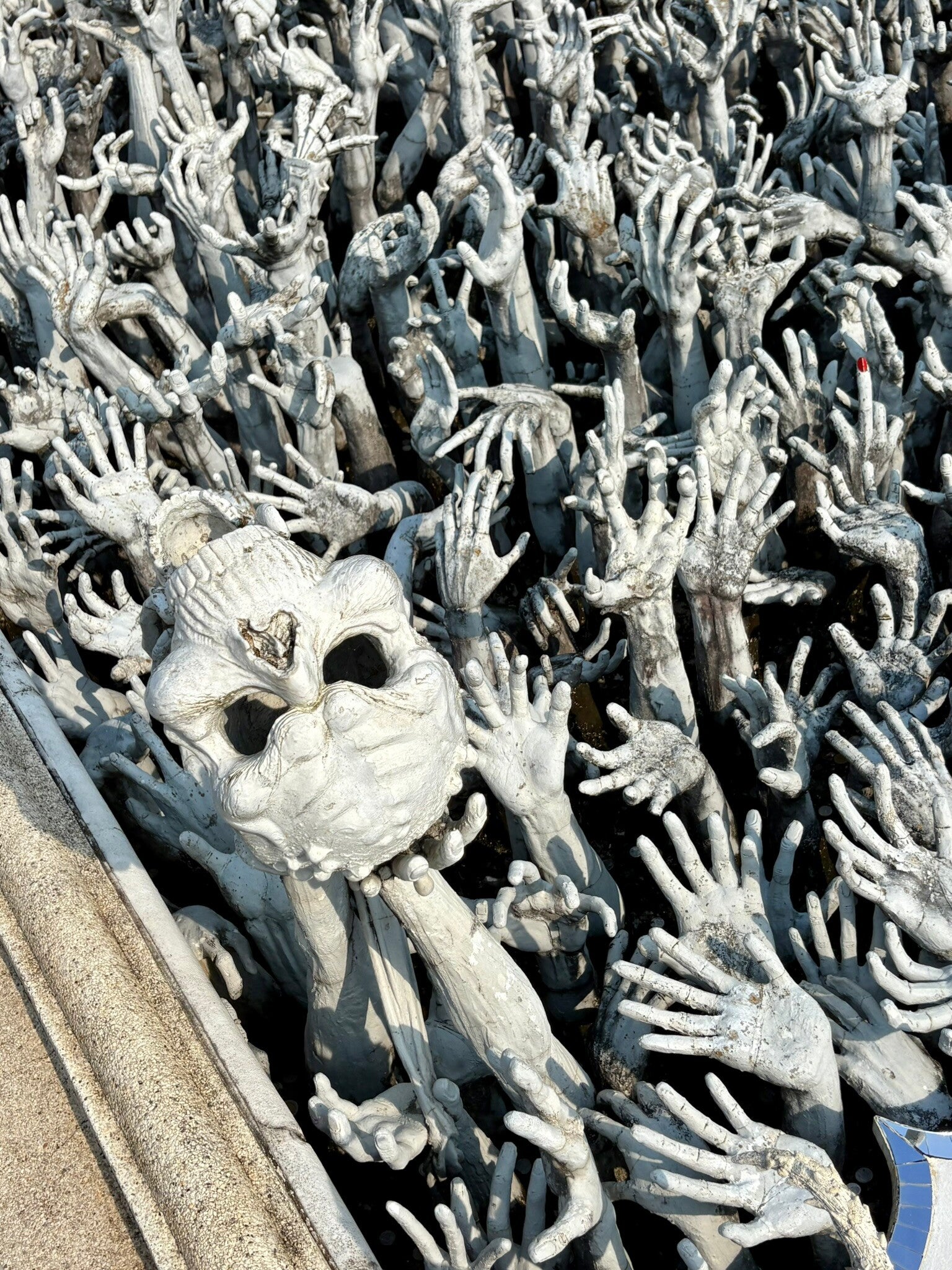
Its completely white exterior represents the purity of the Buddha, while thousands of tiny mirrored pieces embedded into the surface represent the Buddha's wisdom shining throughout the universe. The result looks somewhere between a Buddhist temple, an ice palace and a Disney castle. Even getting inside is symbolic. You cross the famous Bridge of the Cycle of Rebirth, passing hundreds of desperate hands reaching upwards, representing human desire, greed and suffering on the journey towards enlightenment.
In contrast to the Blue Temple and Wat Huay Pla Kang, I found the White Temple's interior surprisingly simple. Photography isn't allowed inside, but, in all fairness, you won't be missing much.
The temple is extremely popular, so expect crowds and some queuing at the main photo spots. One option is to arrive when it opens at 8 am, although I found the light at that hour rather harsh and not particularly ideal for pictures.
Entrance for foreign visitors in 2026 is 200 THB (~6 USD) and also includes access to the nearby Cave of Art.
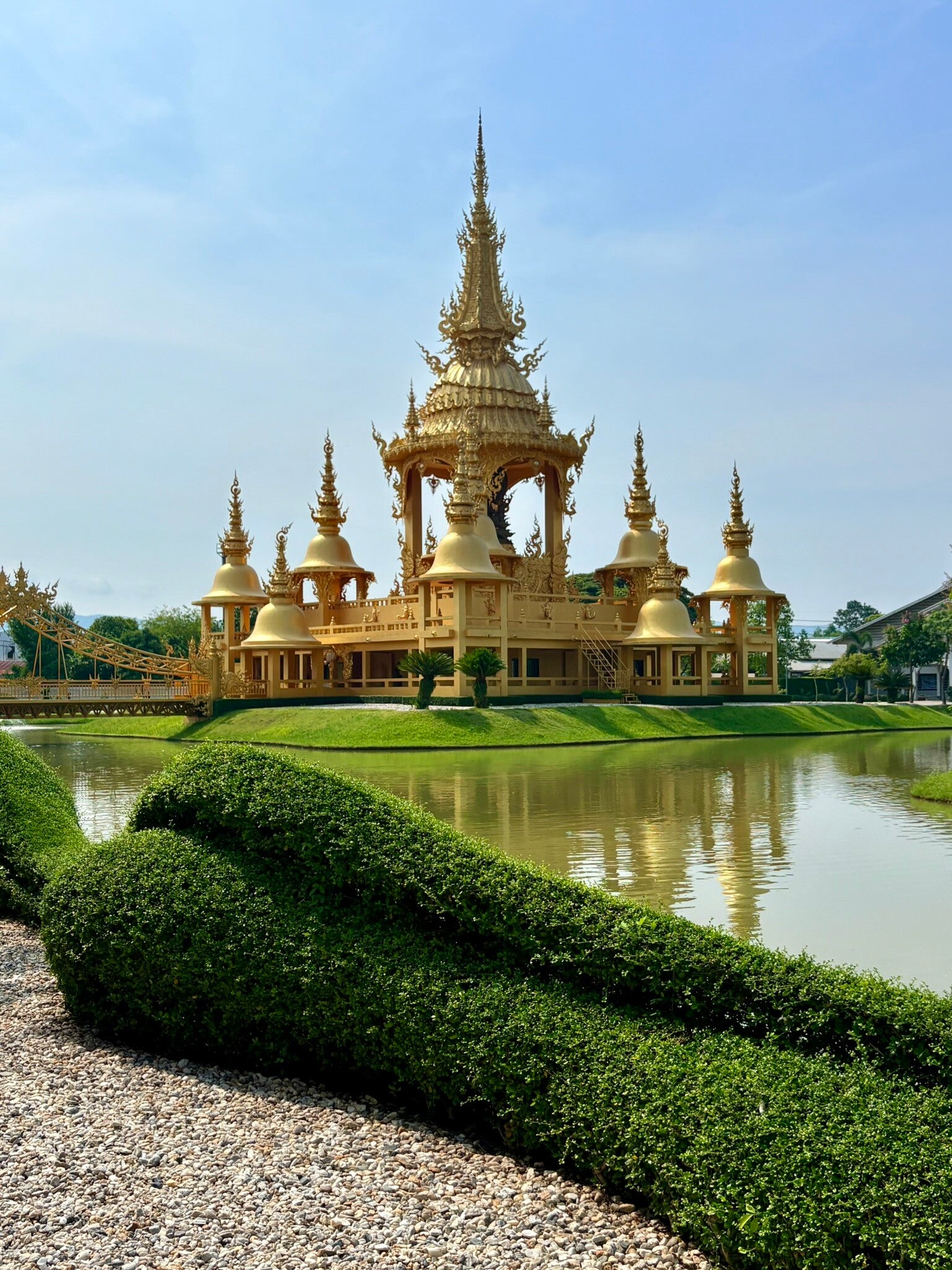
Nearby: Chalermchai Kositpipat's art gallery
Next to the White Temple is a completely underrated free gallery dedicated to Chalermchai Kositpipat's art. His paintings combine traditional Thai Buddhist and mythological imagery with surreal, highly detailed fantasy landscapes. Unfortunately, pictures were not allowed so you have to take my word for it!
Nearby: Jan'UR Café Chiang Rai
If you need some refreshments afterwards, stop at Jan'UR Café Chiangrai, just a few minutes' walk from the White Temple. It has a gorgeous garden filled with tropical plants, mist and a small waterfall, creating at cloud-forest like atmosphere. And, importantly, the coffee is actually really good too!
Also in Chiang Rai: Baan Dam Museum
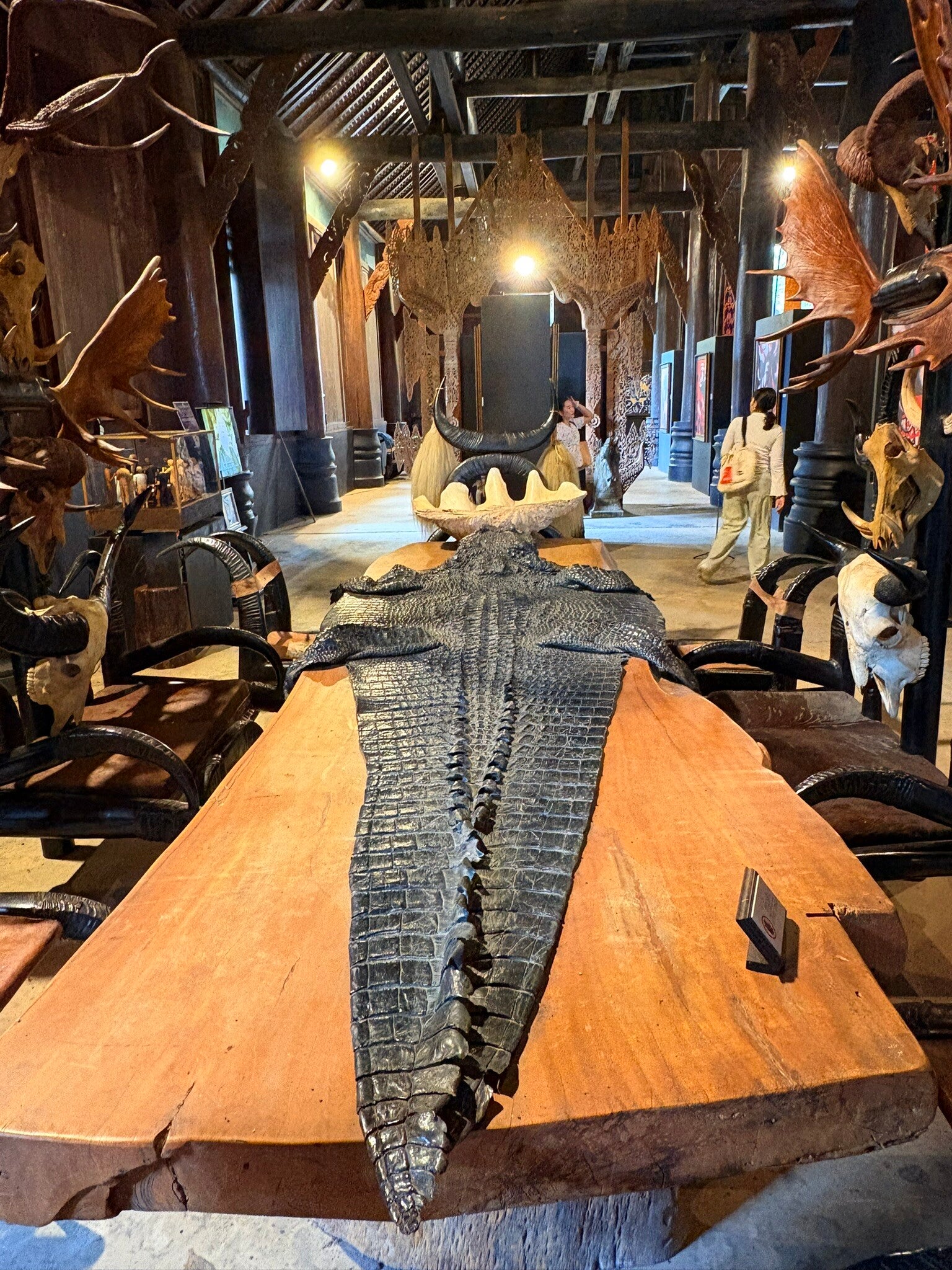
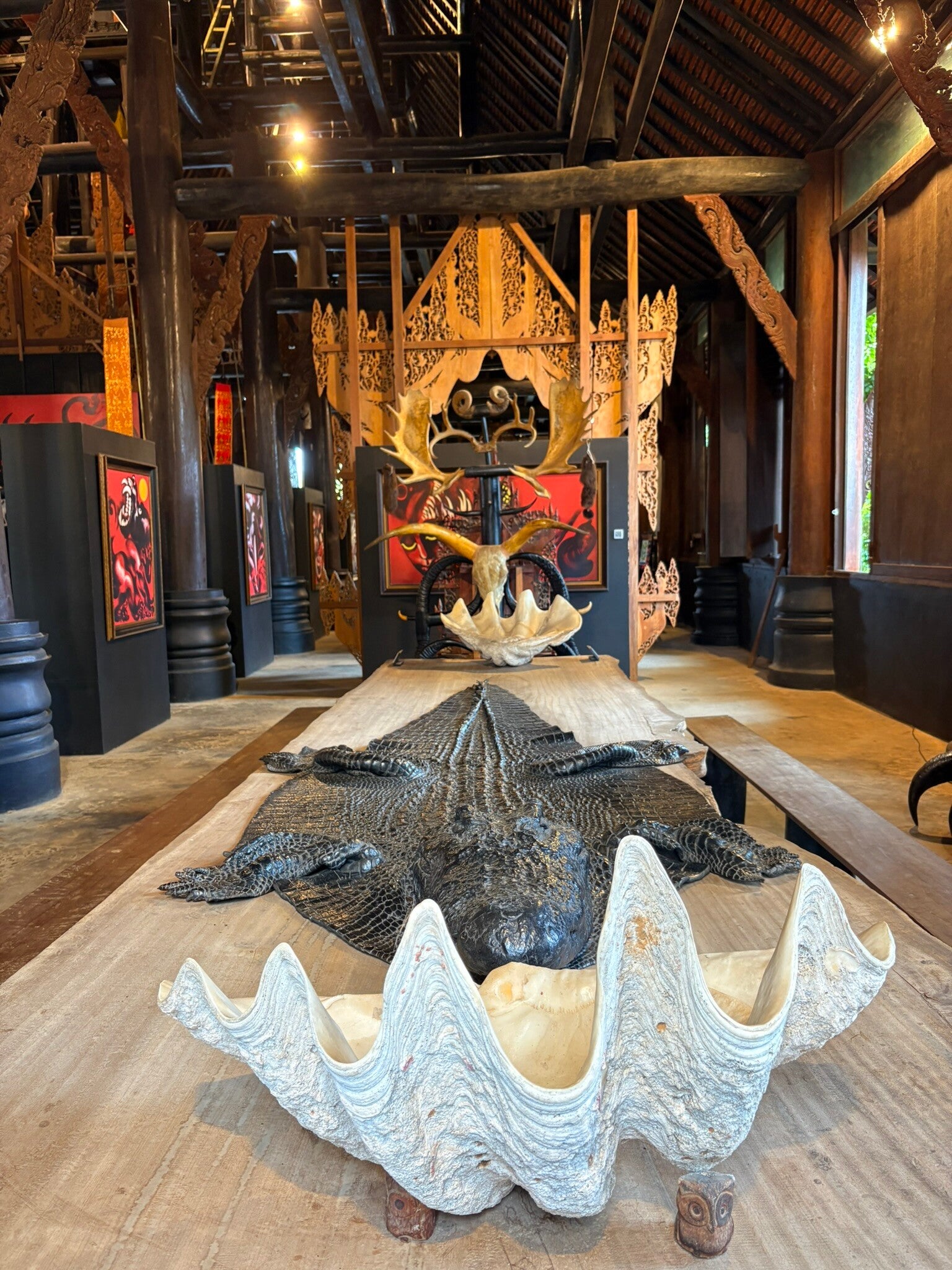
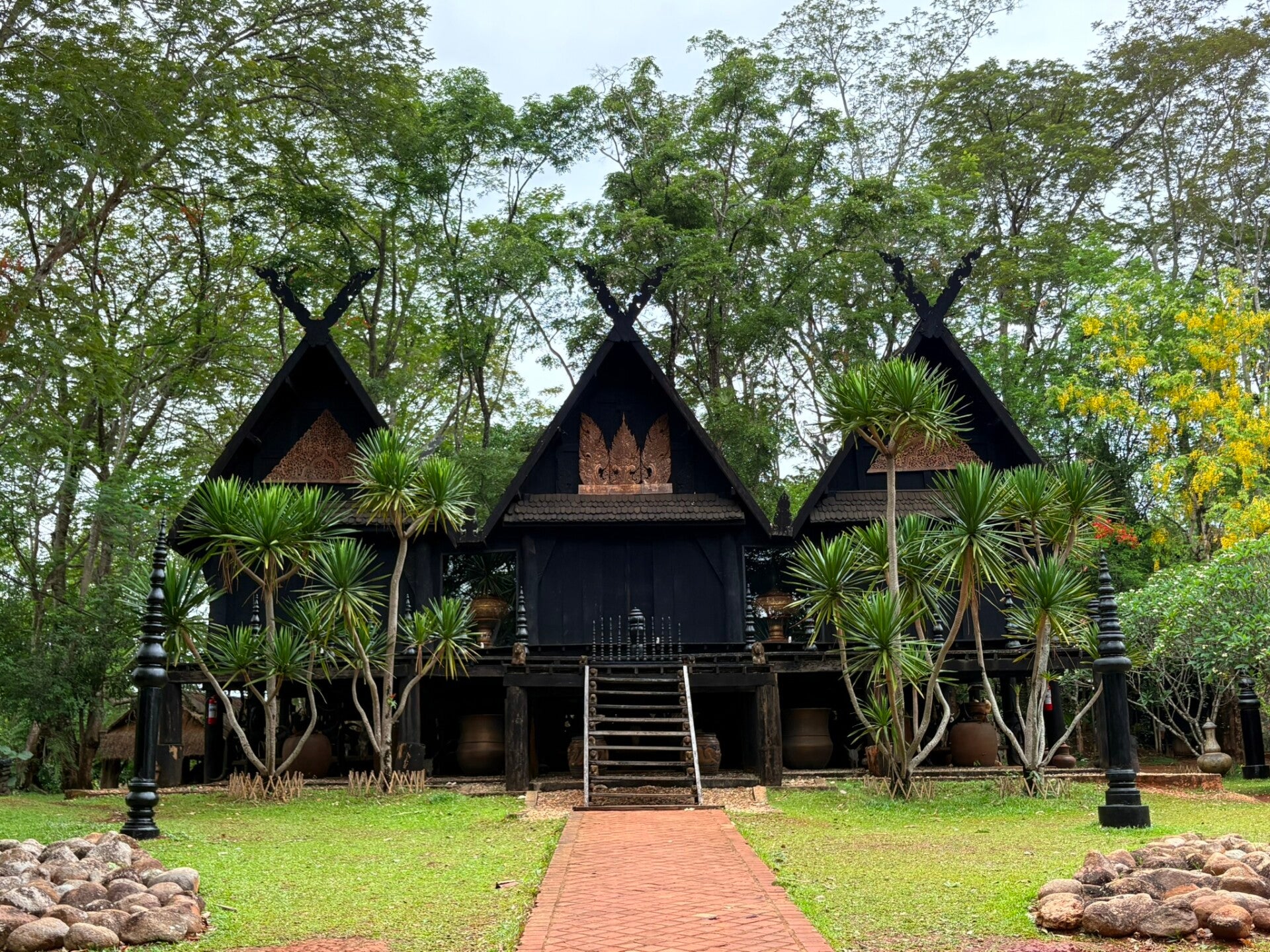
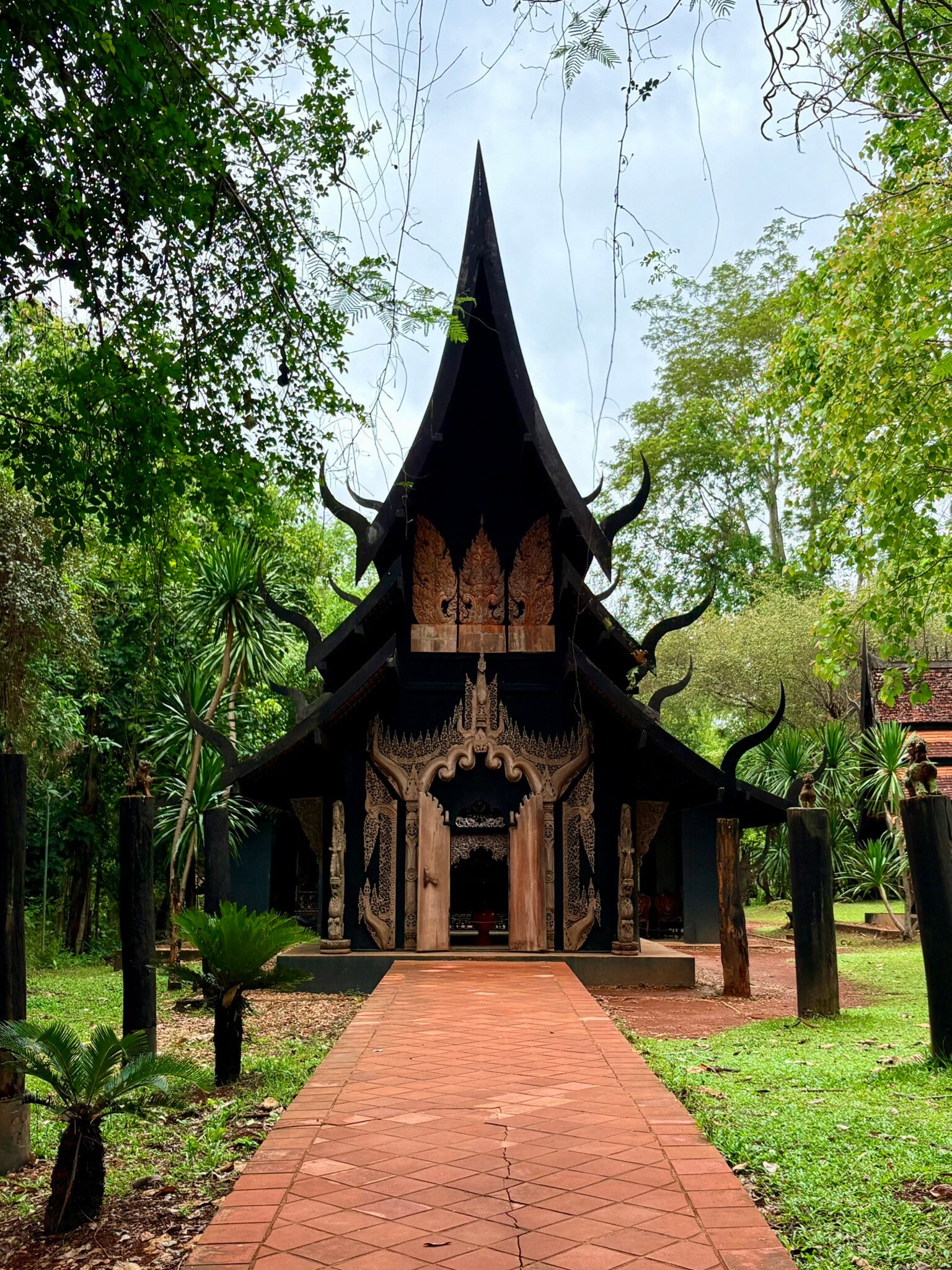
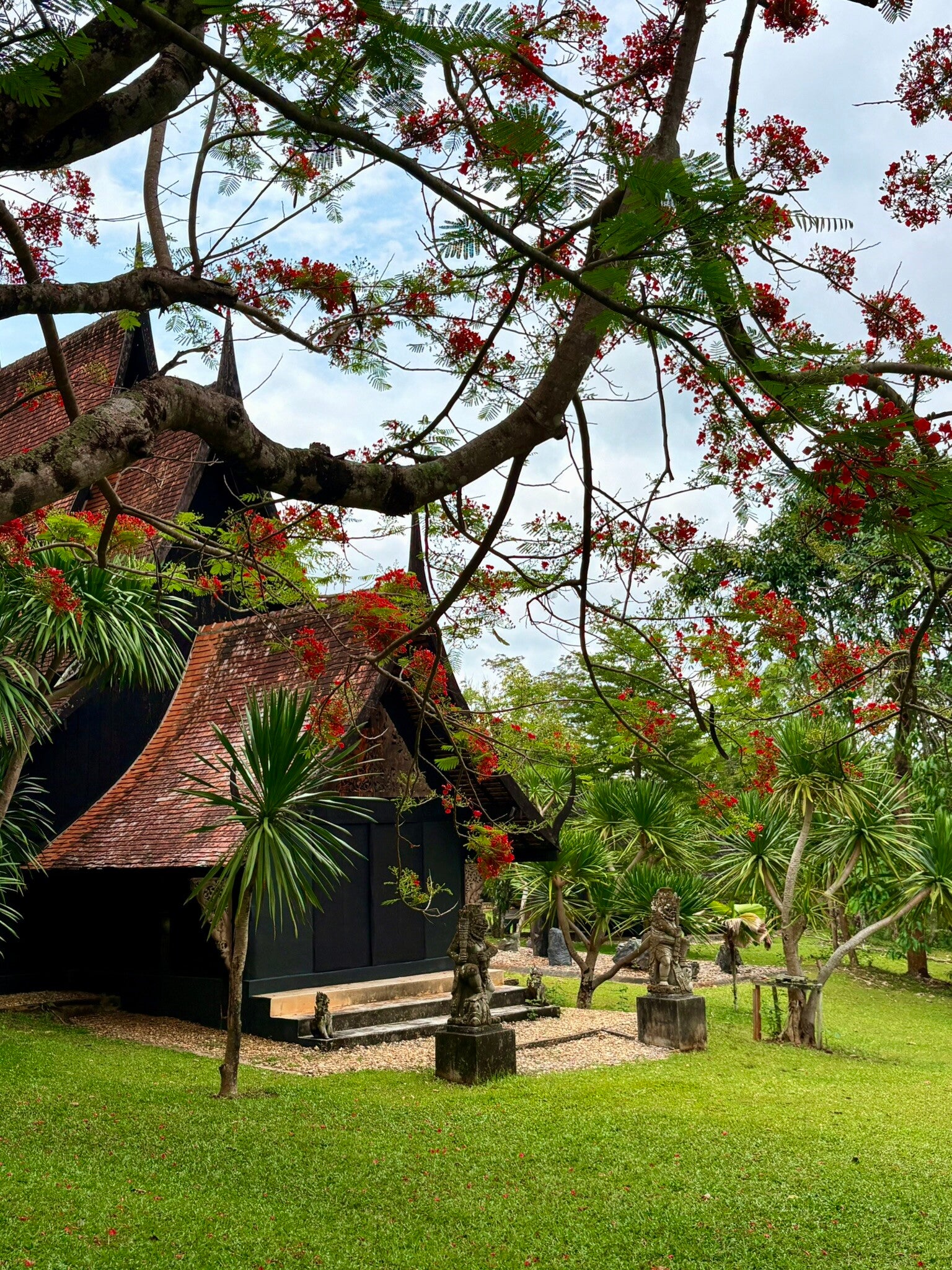
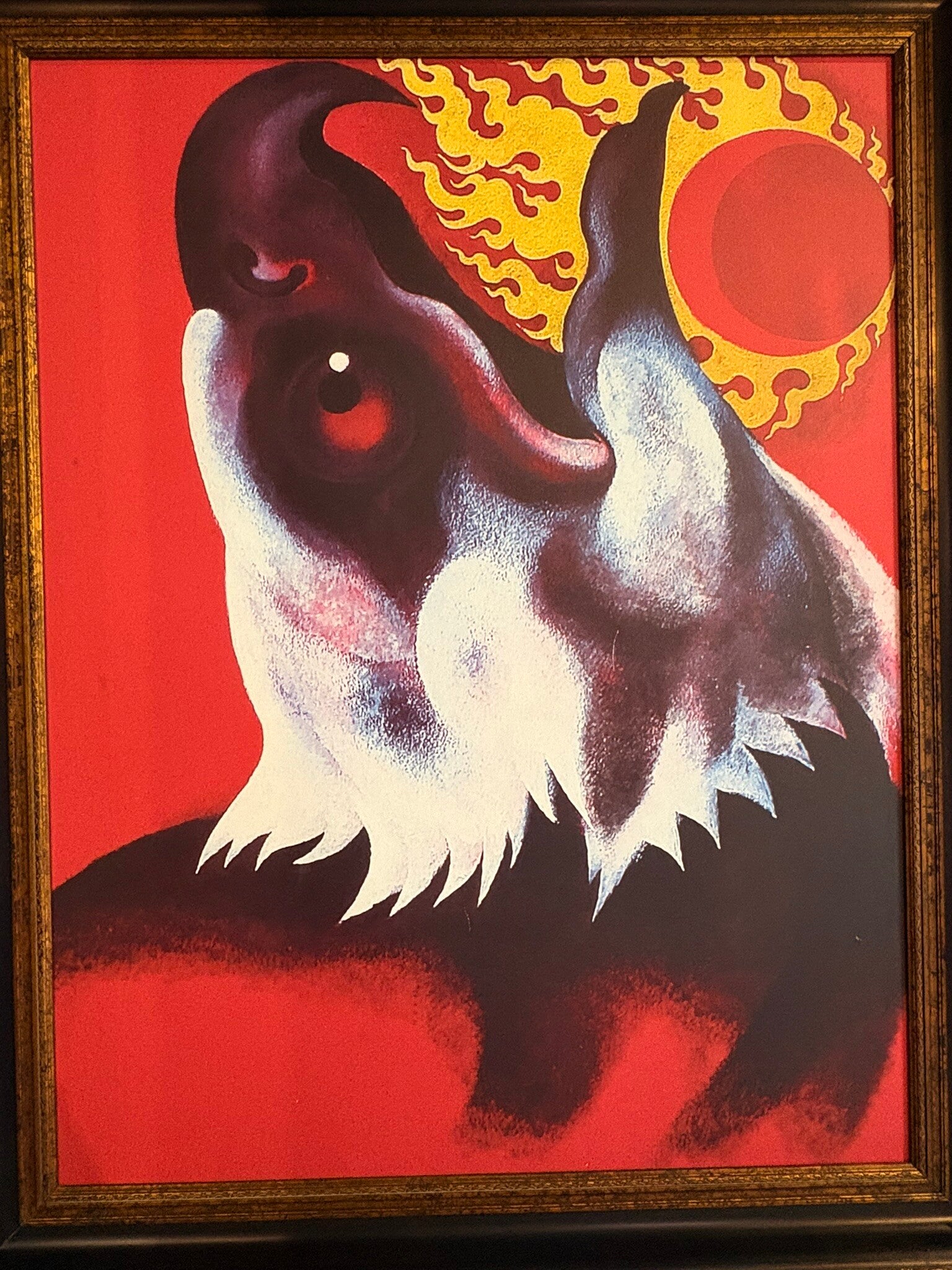
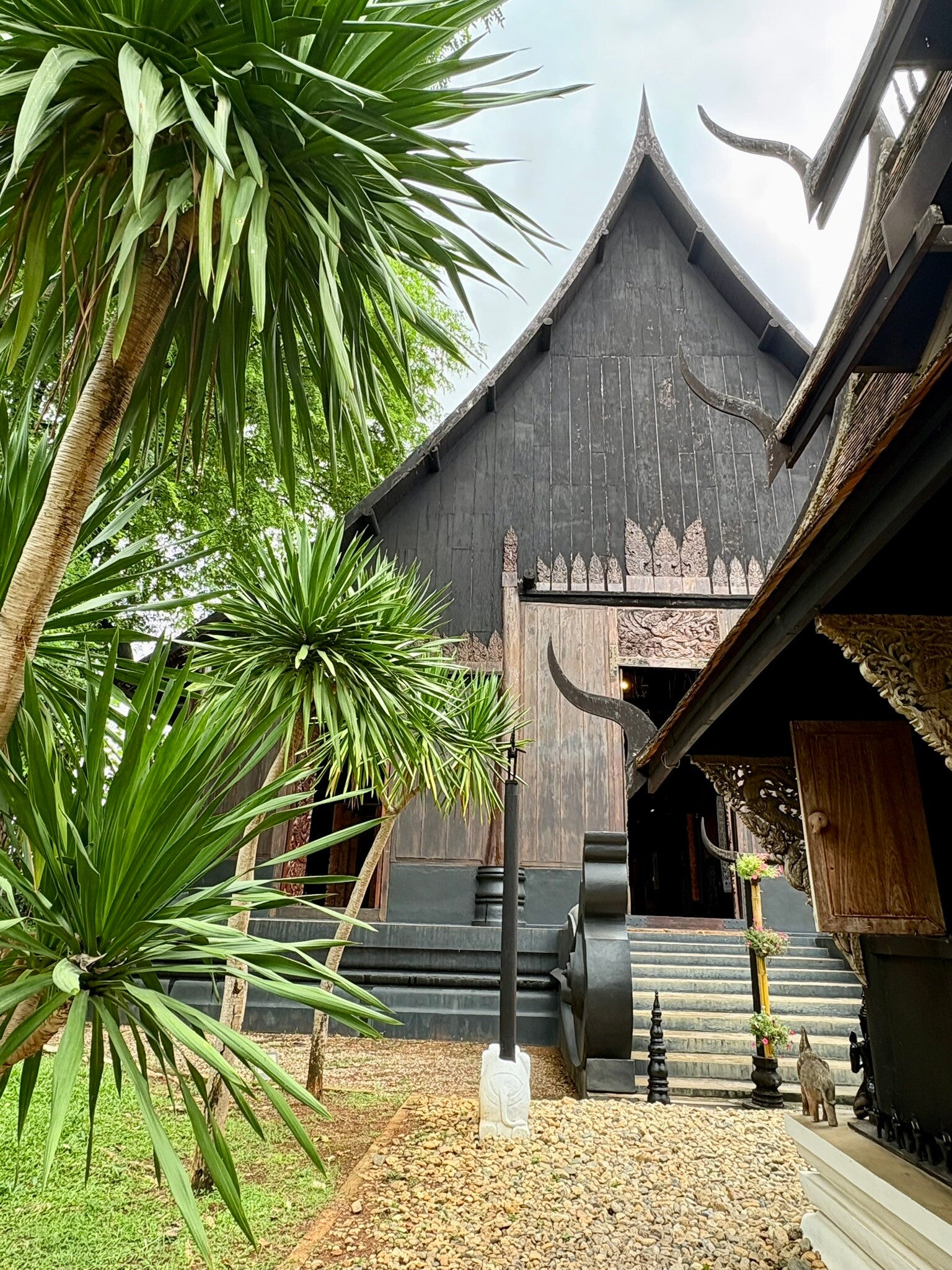
If you need to balance all that white with something considerably darker (literally and figuratively), consider visiting Baan Dam Museum (the Black House).
It's not a temple but an art complex created by Thai artist Thawan Duchanee, filled with dark wooden buildings, animal skins, bones, horns and artwork exploring themes such as death, nature and human instinct.
7. Erawan Museum - Bangkok
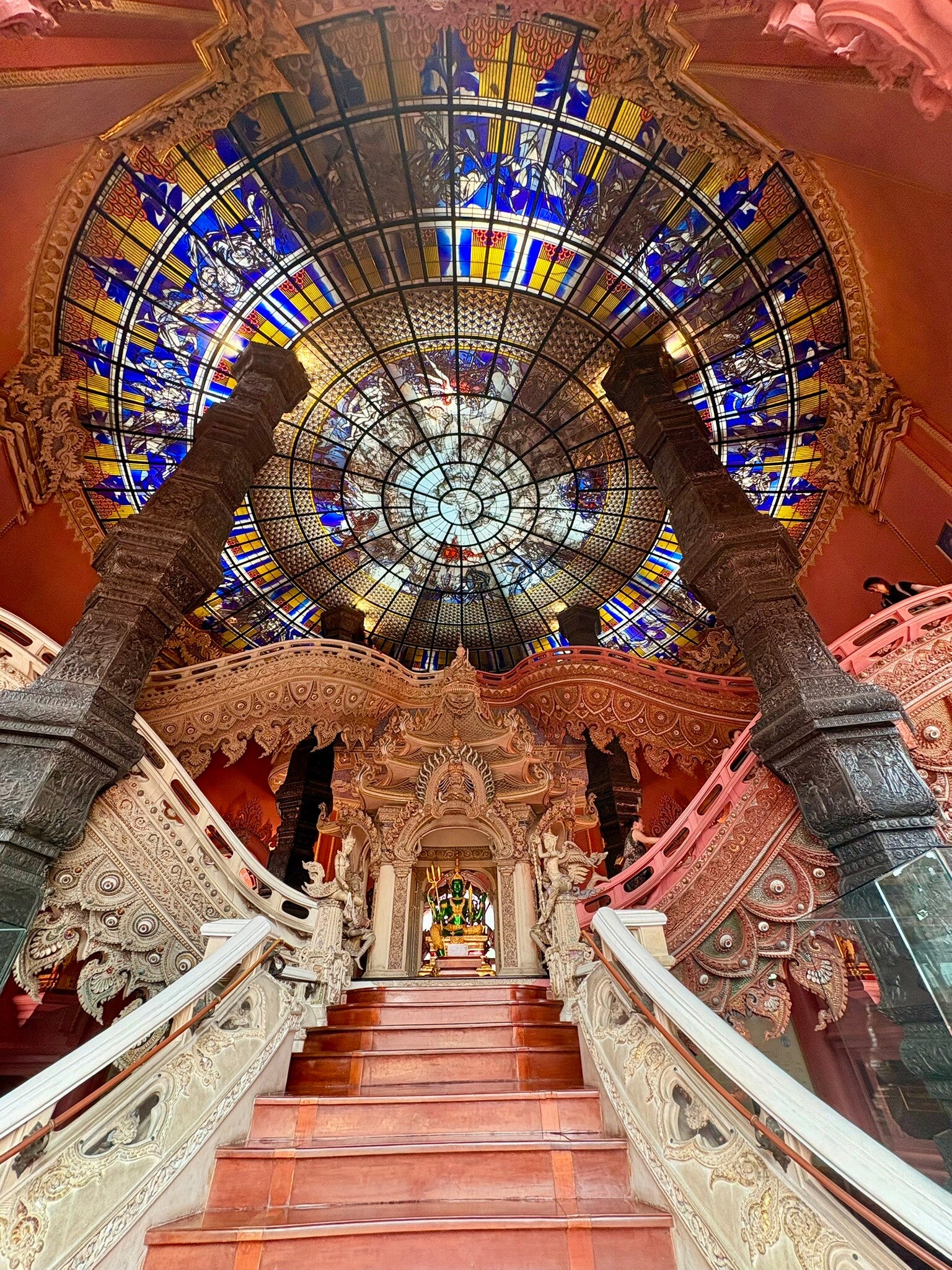
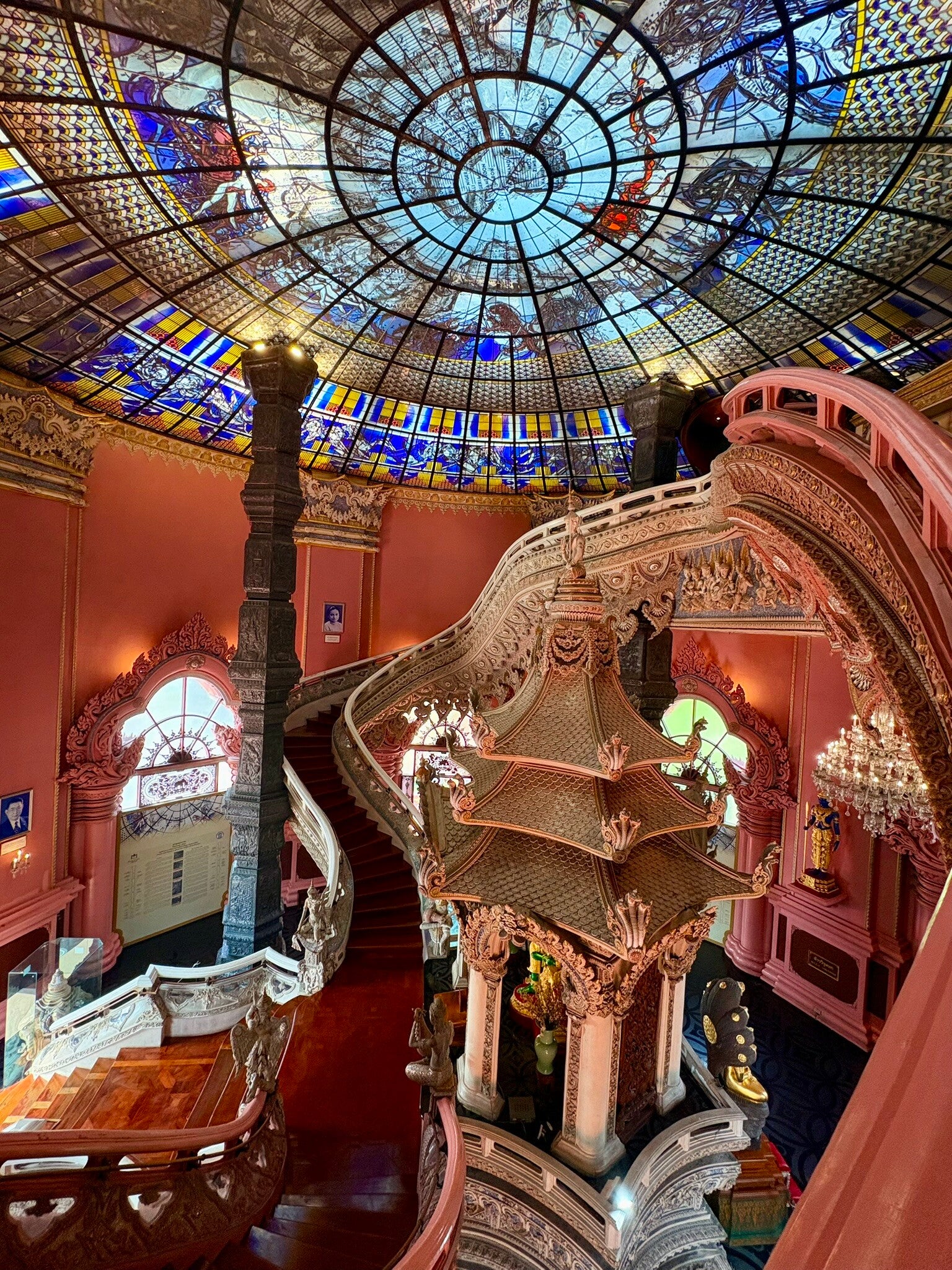
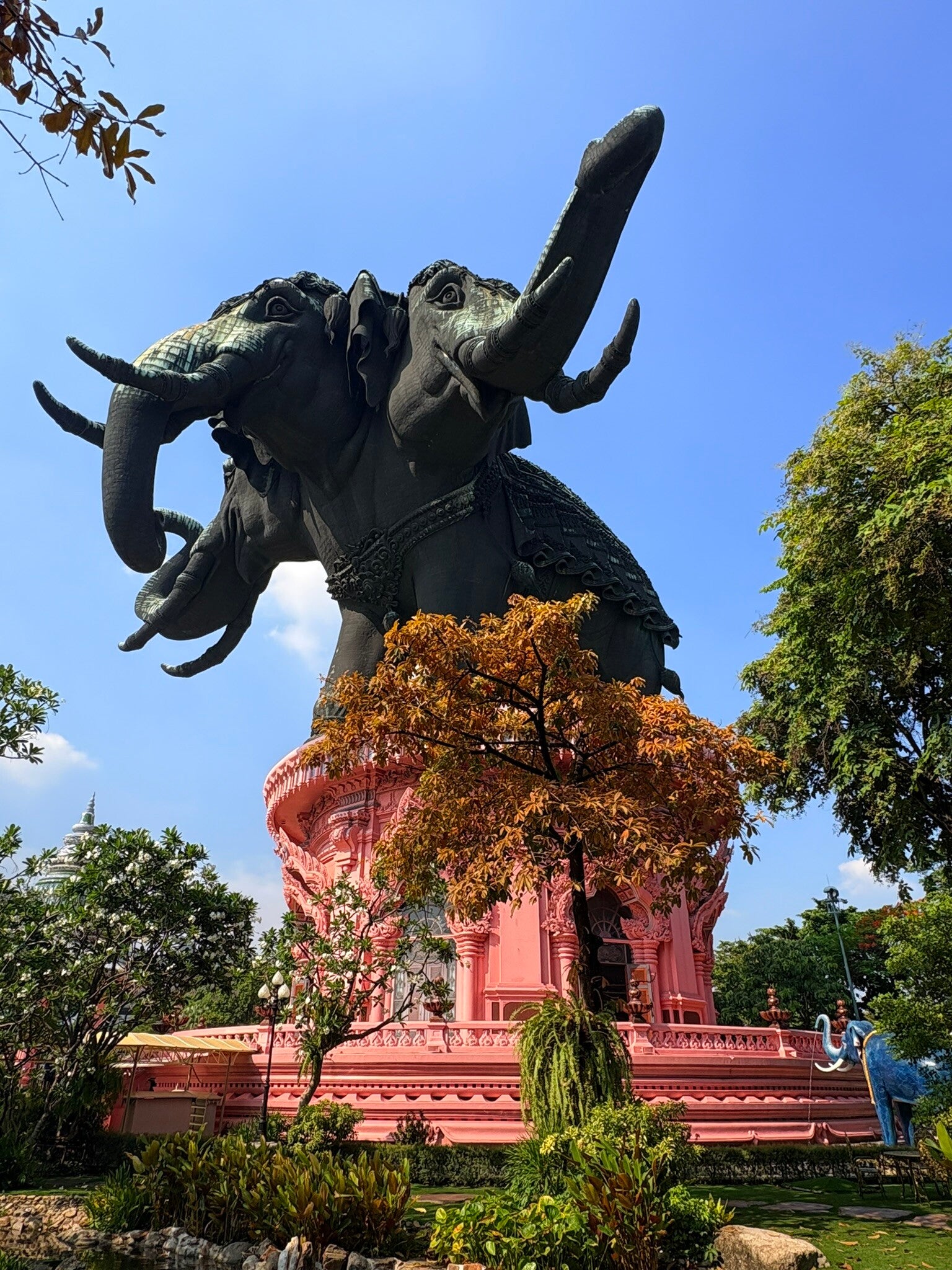
Erawan museum opened in 2003 after almost a decade of construction and is impossible to miss thanks to the enormous three-headed elephant standing on top of it. The entire structure reaches around 44 metres (144 ft) high, while the elephant itself weighs roughly 250 tonnes.
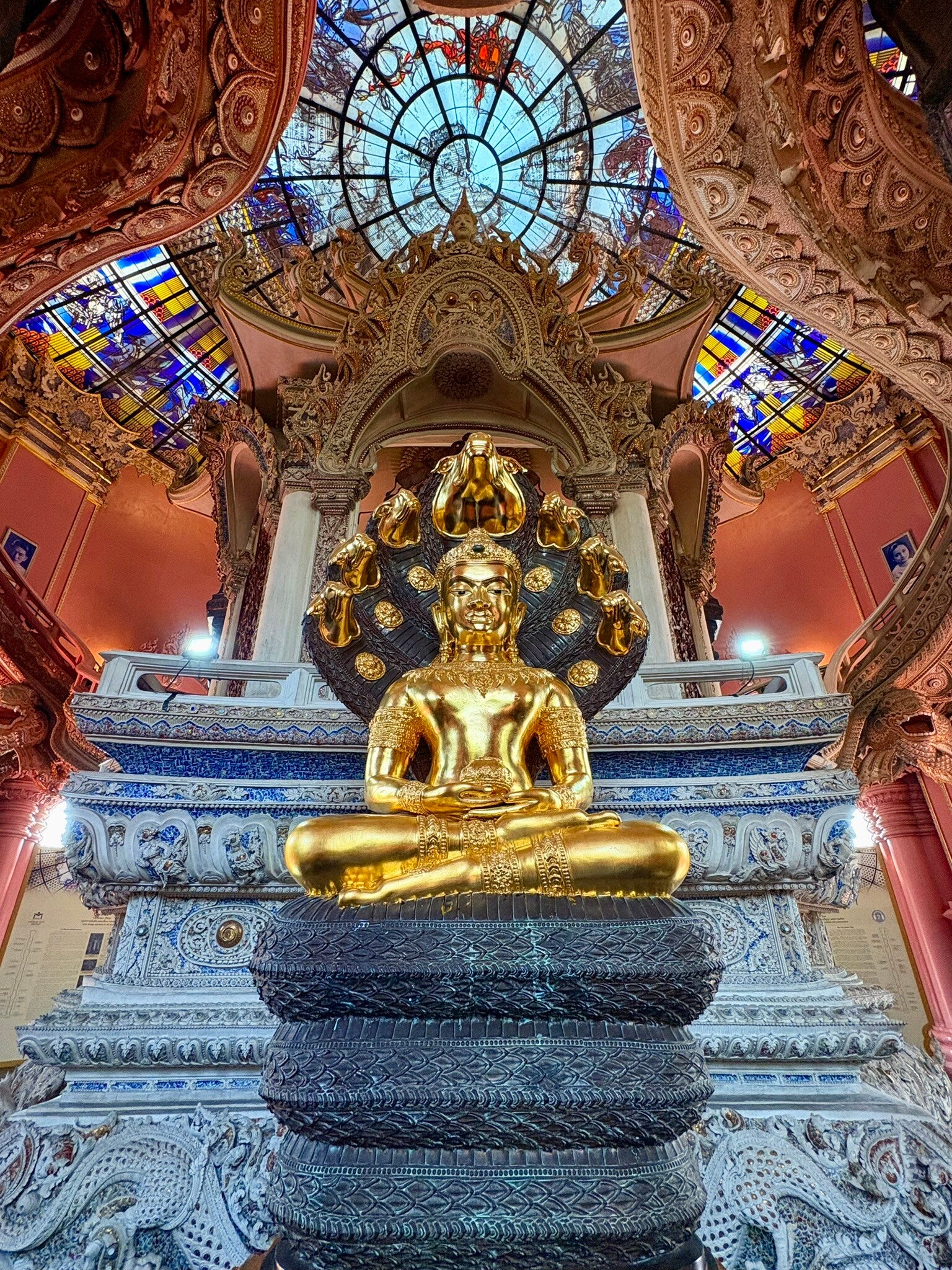
The elephant represents Erawan, the mythological elephant associated with the Hindu god Indra, and the symbolism continues throughout the entire museum (which is still a religious site, so dress appropriately!).
Inside, the building is divided into three symbolic levels :
- The Underworld displays various antiques and ceramics from the collection of museum's founder
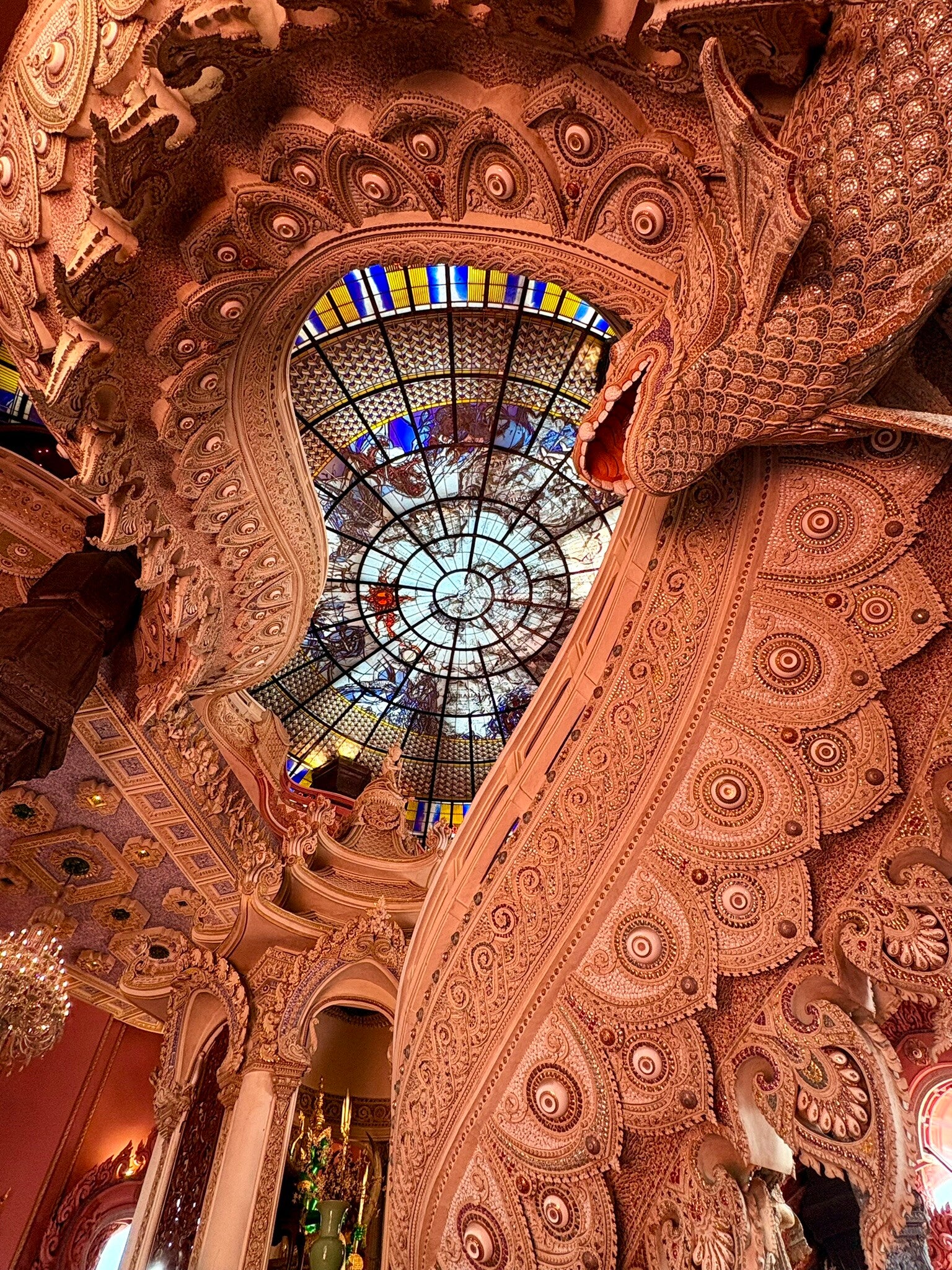
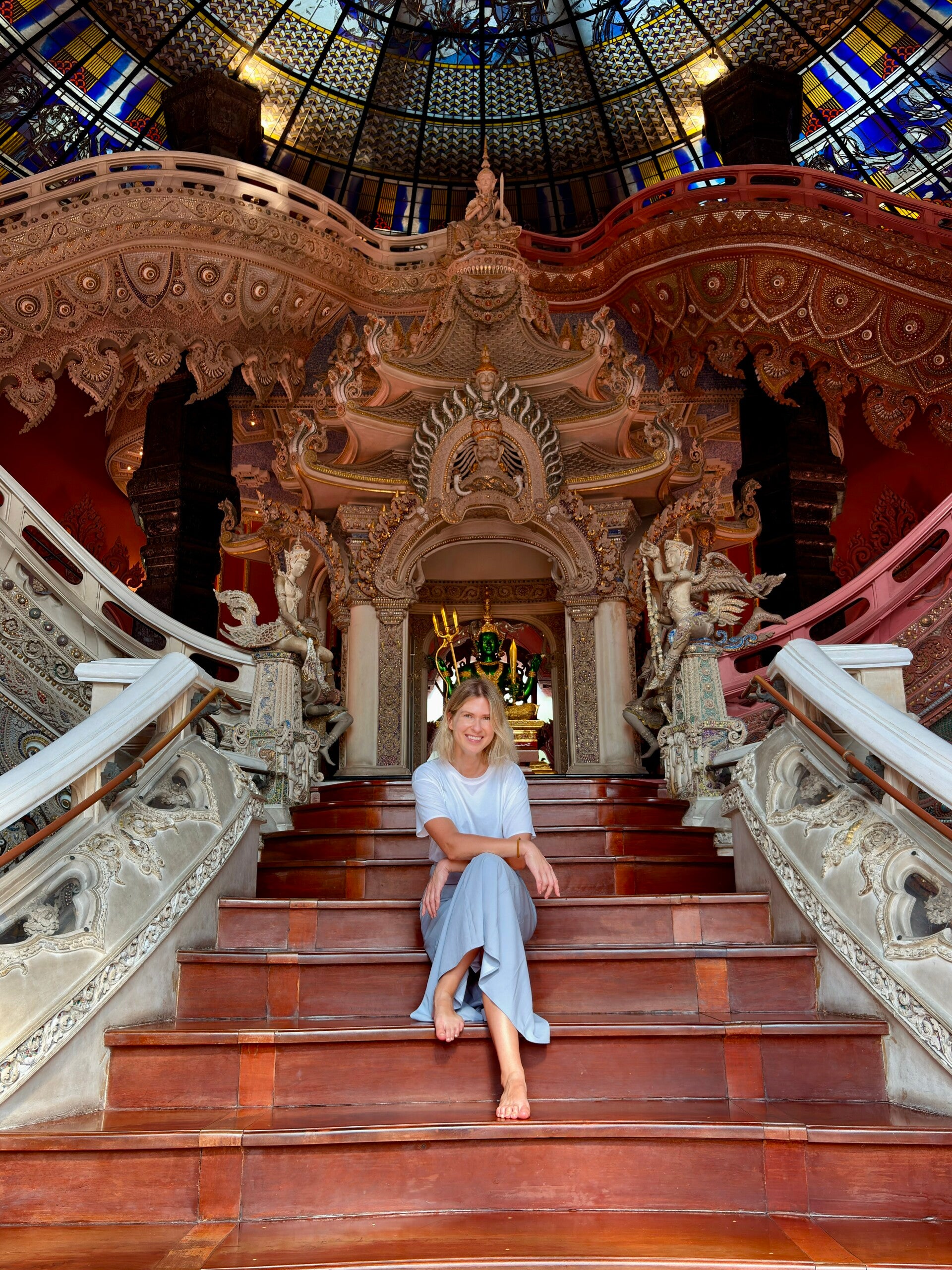
- Next comes Human Earth, easily the most photogenic part of the museum. Four huge decorated pillars support the elephant above, while an incredible stained-glass dome represents the Earth and the four elements: earth, water, wind and fire.
- Finally, you can climb the staircase through one of the elephant's legs into its body, representing the Cosmos or Heaven. Here everything is dark blue and celestial, with images of planets and the universe surrounding rows of Buddha statues.
After visiting the inside of the temple, take some time to stroll around the pristine gardens and admire the sheer scale of the three-headed elephant from different angles.
Foreign admission fee in 2026 is 500 THB (~15-16 USD).
Tip: When ordering a Grab, make sure to enter “Erawan Museum" and not just "Erawan". Bangkok has plenty of other places with Erawan in their names, including hotels, shopping centres and Erawan Shrine and you really don't want to end up at the wrong one!
Wat Sam Phran - the Dragon Temple near Bangkok
Wat Sam Phran, around 40 km west of Bangkok in Nakhon Pathom Province, is another Instagram favourite.
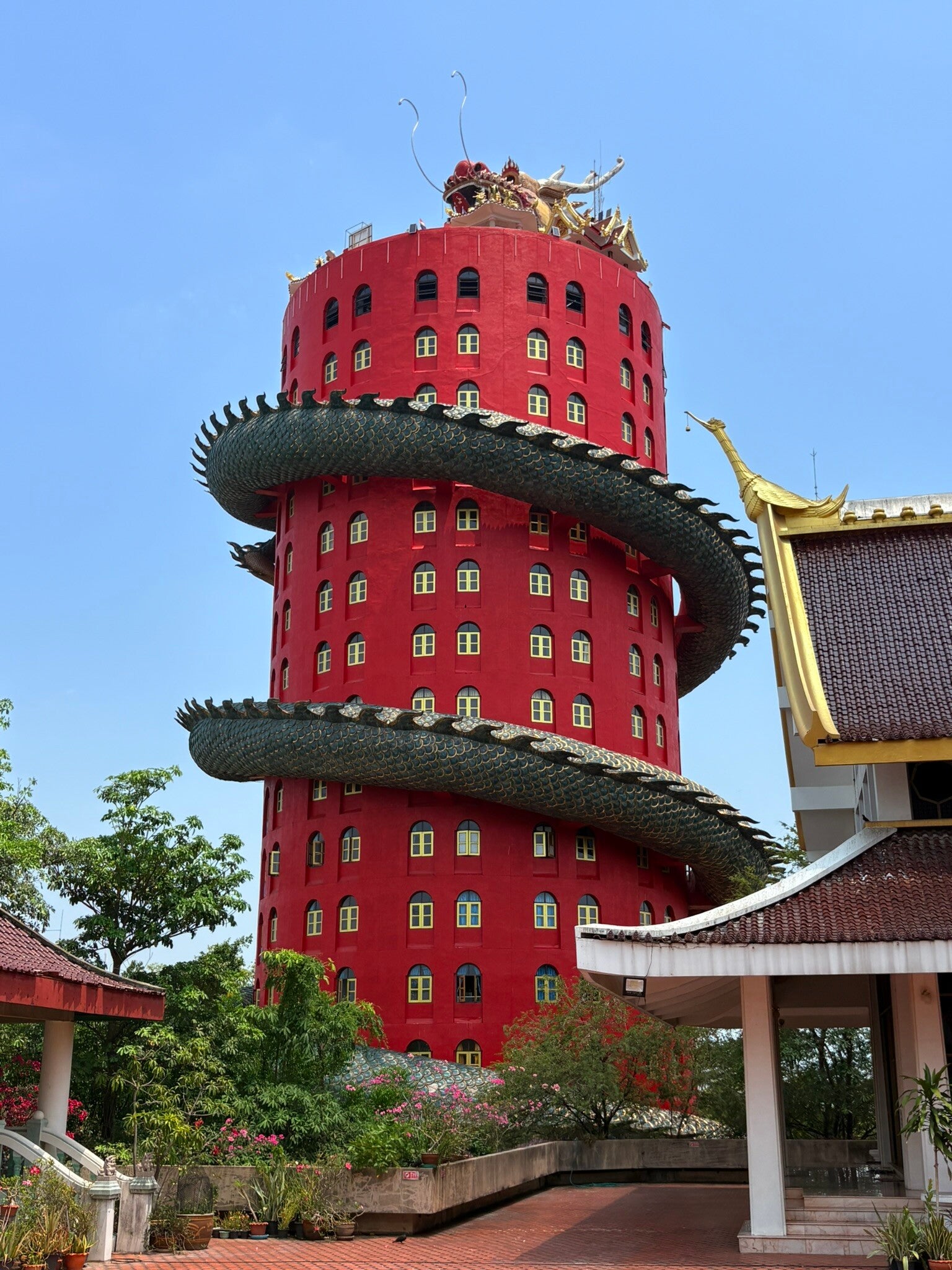
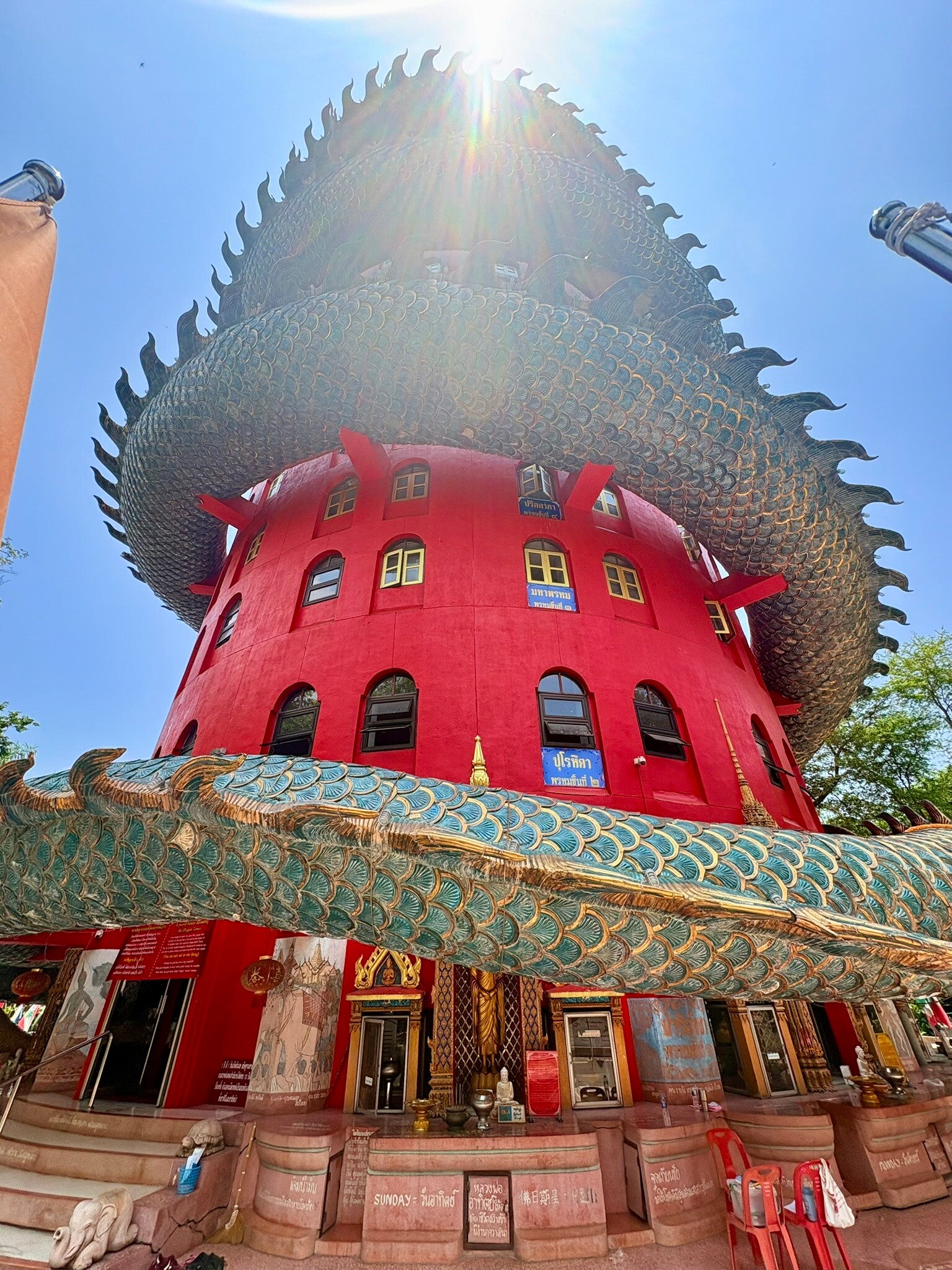
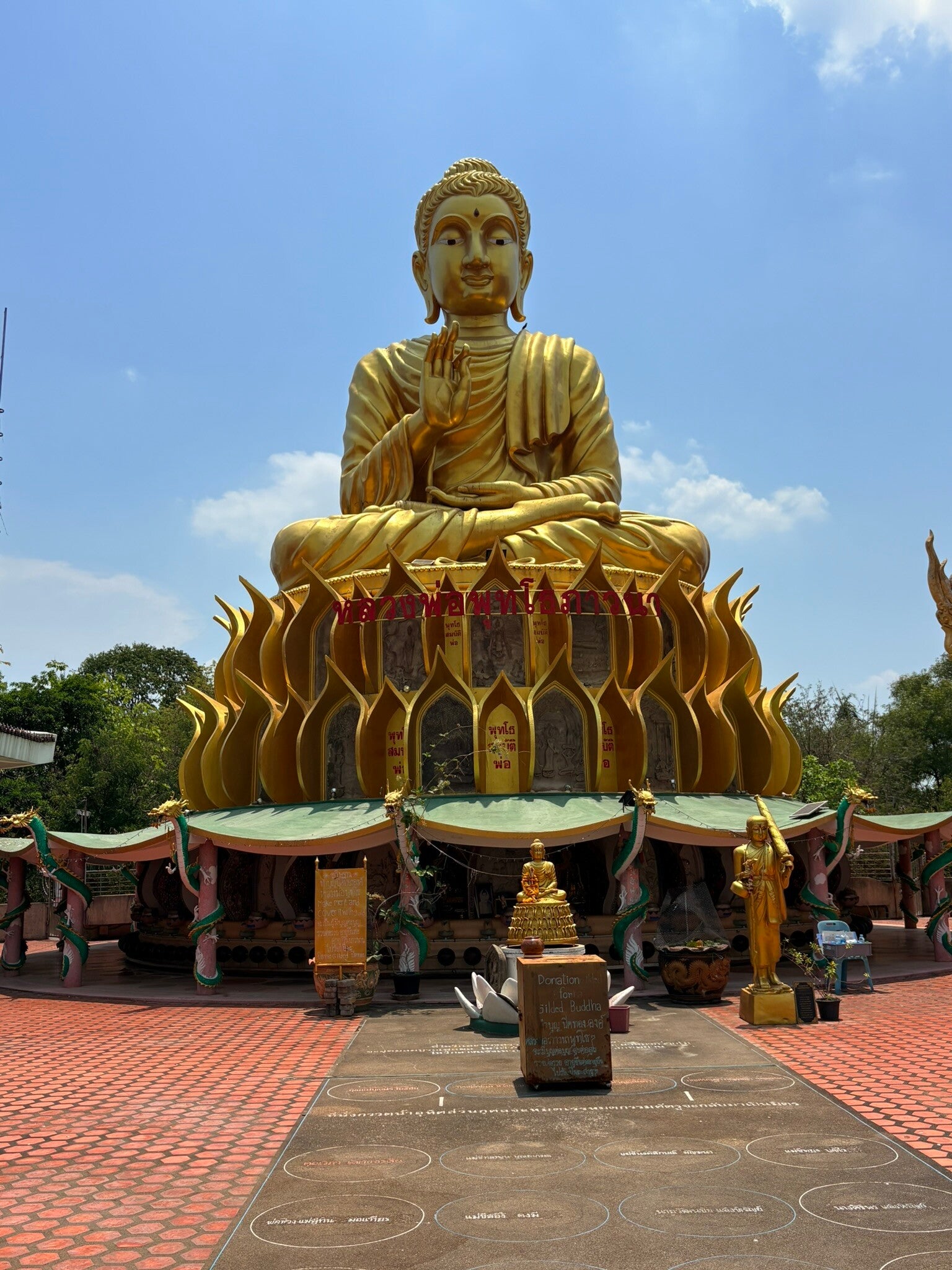
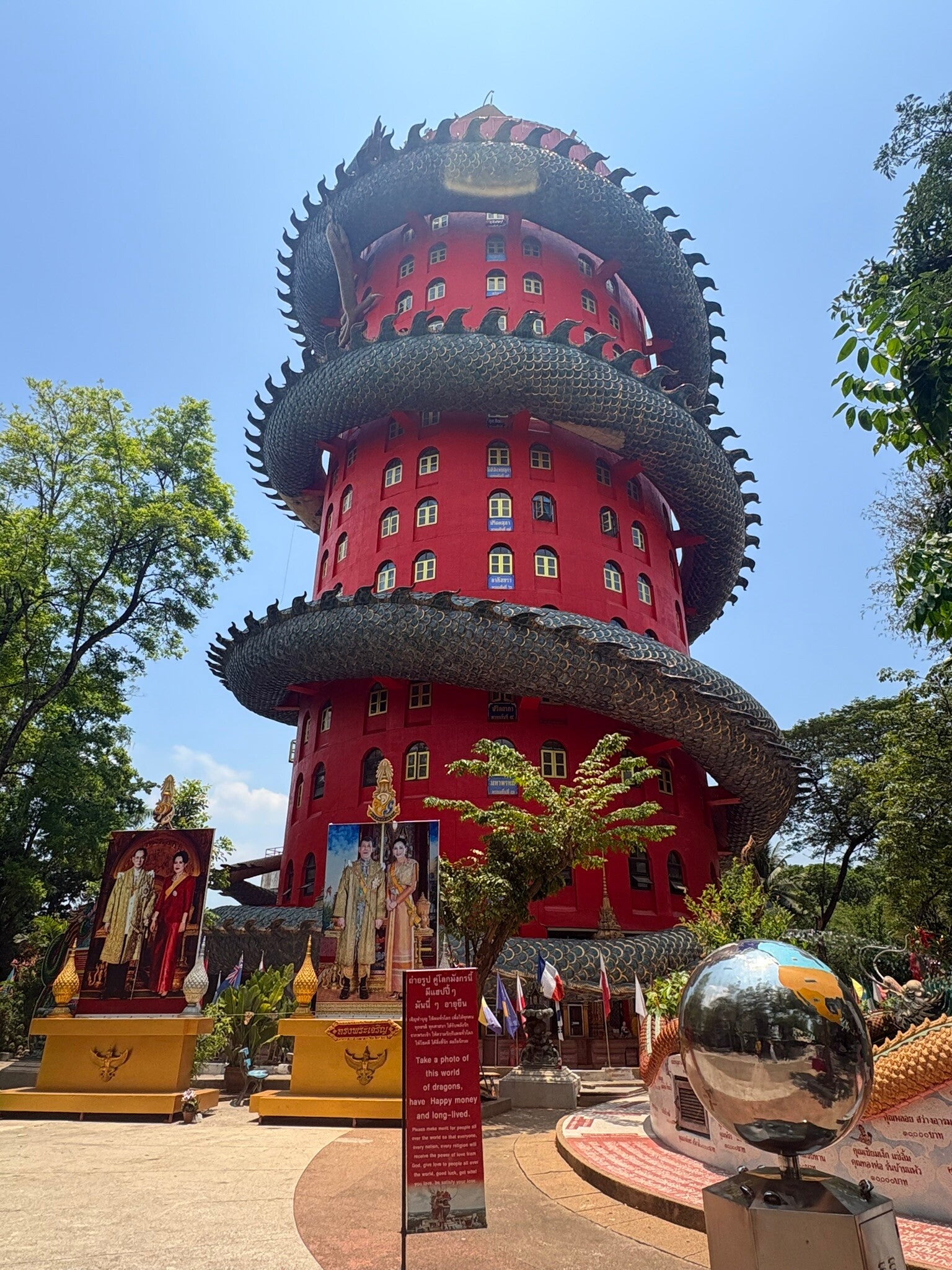
This temple features an enormous dragon wrapped around a 17-storey, 80 meter (262 ft) high tower. The tower was historically known for its pink colour, although when I visited it had been repainted a much brighter red, making the green dragon stand out even more dramatically.
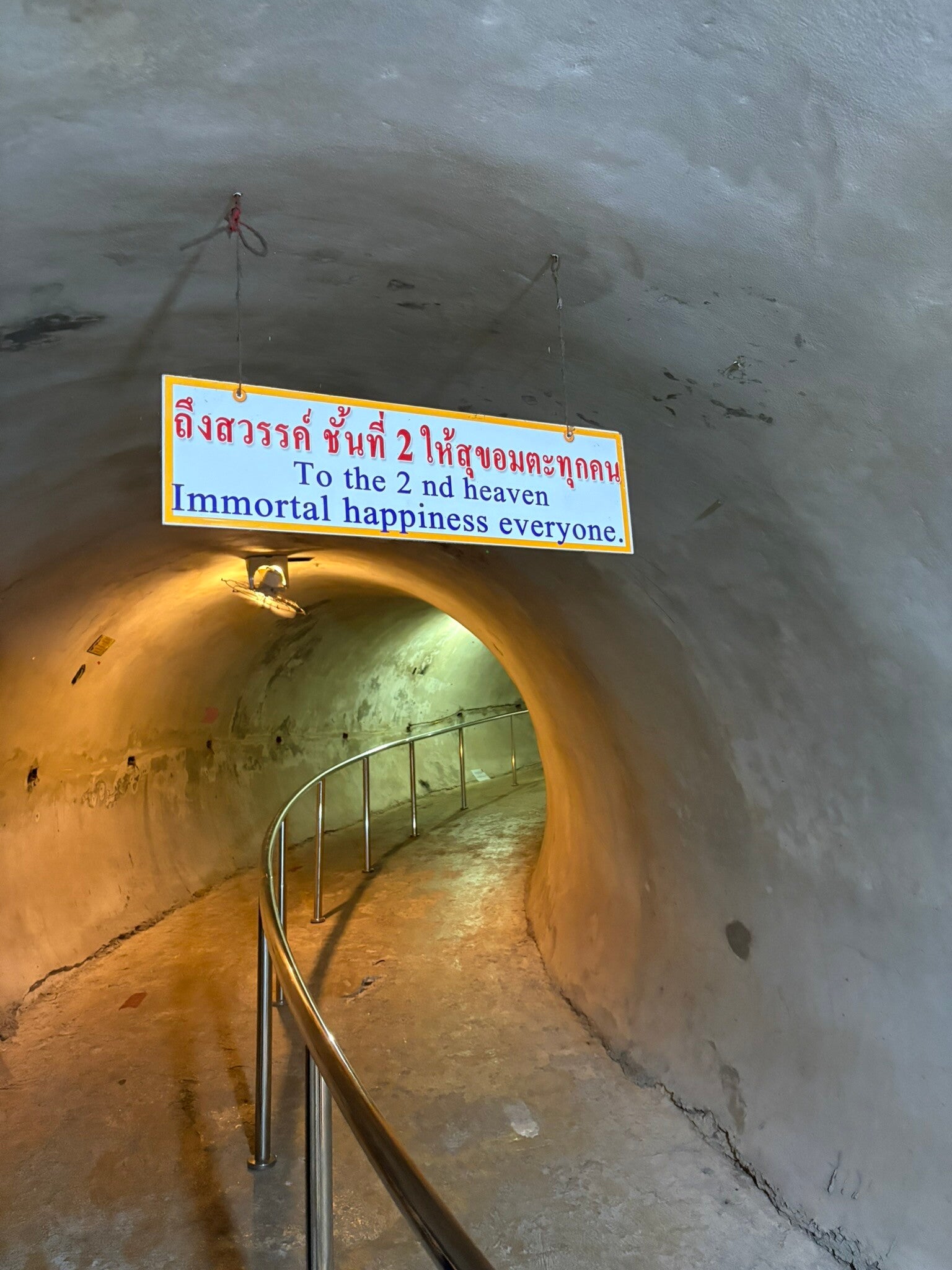
The best part is that the dragon isn't purely decorative: you can actually walk through its hollow body, following the spiralling tunnel all the way towards the top of the tower. Visiting the dragon costs only a symbolic 20 THB (~0.6 USD) donation. The climb represents a spiritual journey towards enlightenment, while the tower's 80 meter height is associated with the Buddha's age at death.
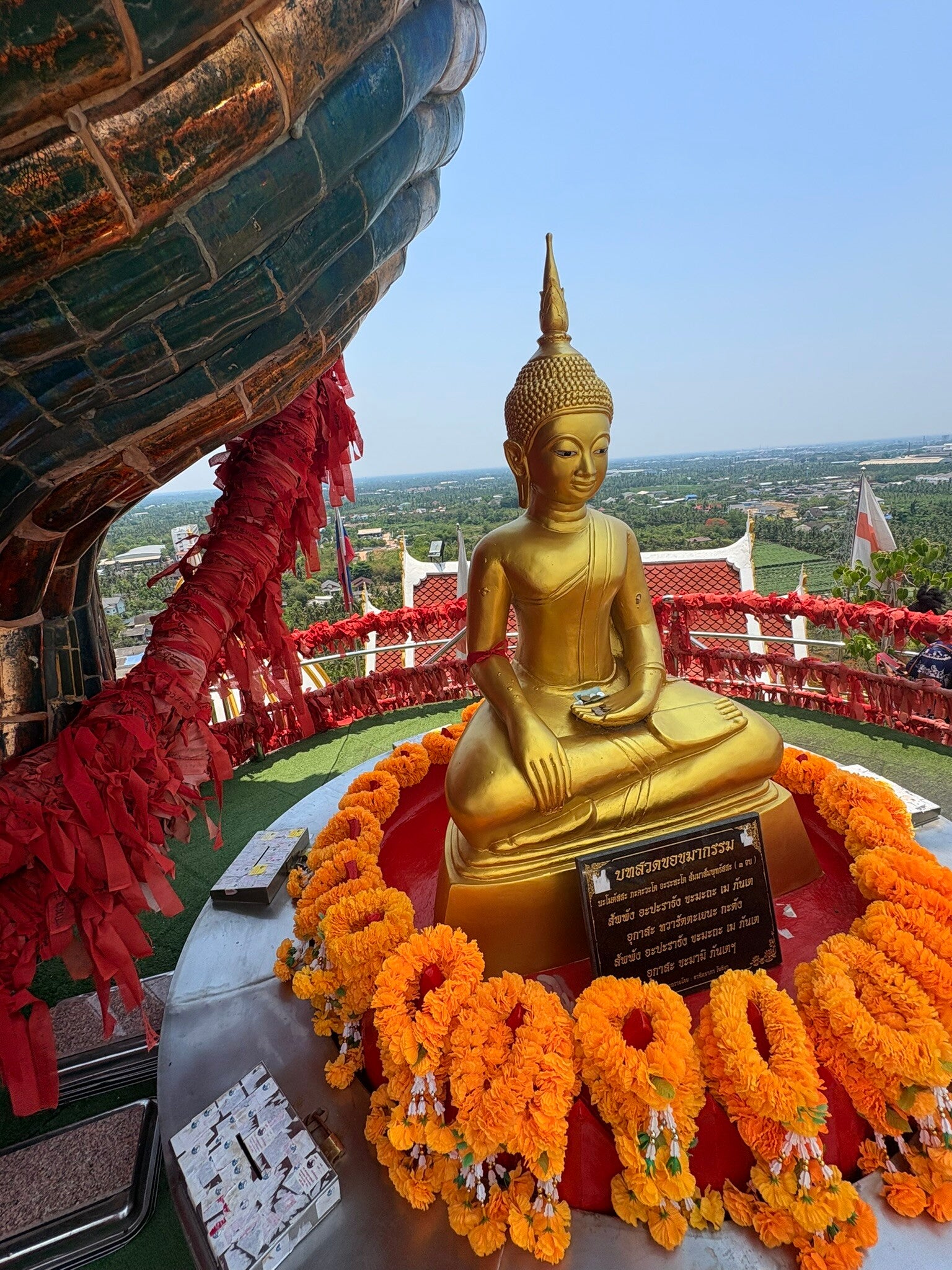
Once you reach the top, you can step outside for panoramic views of the surrounding area and see the dragon's enormous head up close.
Tip: The rooftop is completely exposed to the sun and can get extremely hot. Since shoes are not allowed, bring socks unless you fancy frying the soles of your feet!
How to get to Wat Sam Phran from Bangkok
Wat Sam Phran is a little inconvenient to reach by public transport. The easiest option is simply taking a taxi or Grab from Bangkok, with the journey normally taking around an hour depending on where you're staying and Bangkok traffic.
A cheaper option is to take the MRT Blue Line to Lak Song and get a taxi or Grab from there. Budget roughly 350–450 THB (~11-14 USD) one way from central Bangkok for this combination. If you're really travelling on a budget, local buses can get you there for under 100 THB (~3 USD), but expect the journey to take around two hours or more with transfers.
Wat Saman Rattanaram - the Pink Ganesha near Bangkok
Wat Saman Rattanaram, in Chachoengsao Province, comes last on my ranking - not because it isn't visually striking, but because it's a couple of hours outside Bangkok and takes a bit more effort to reach.
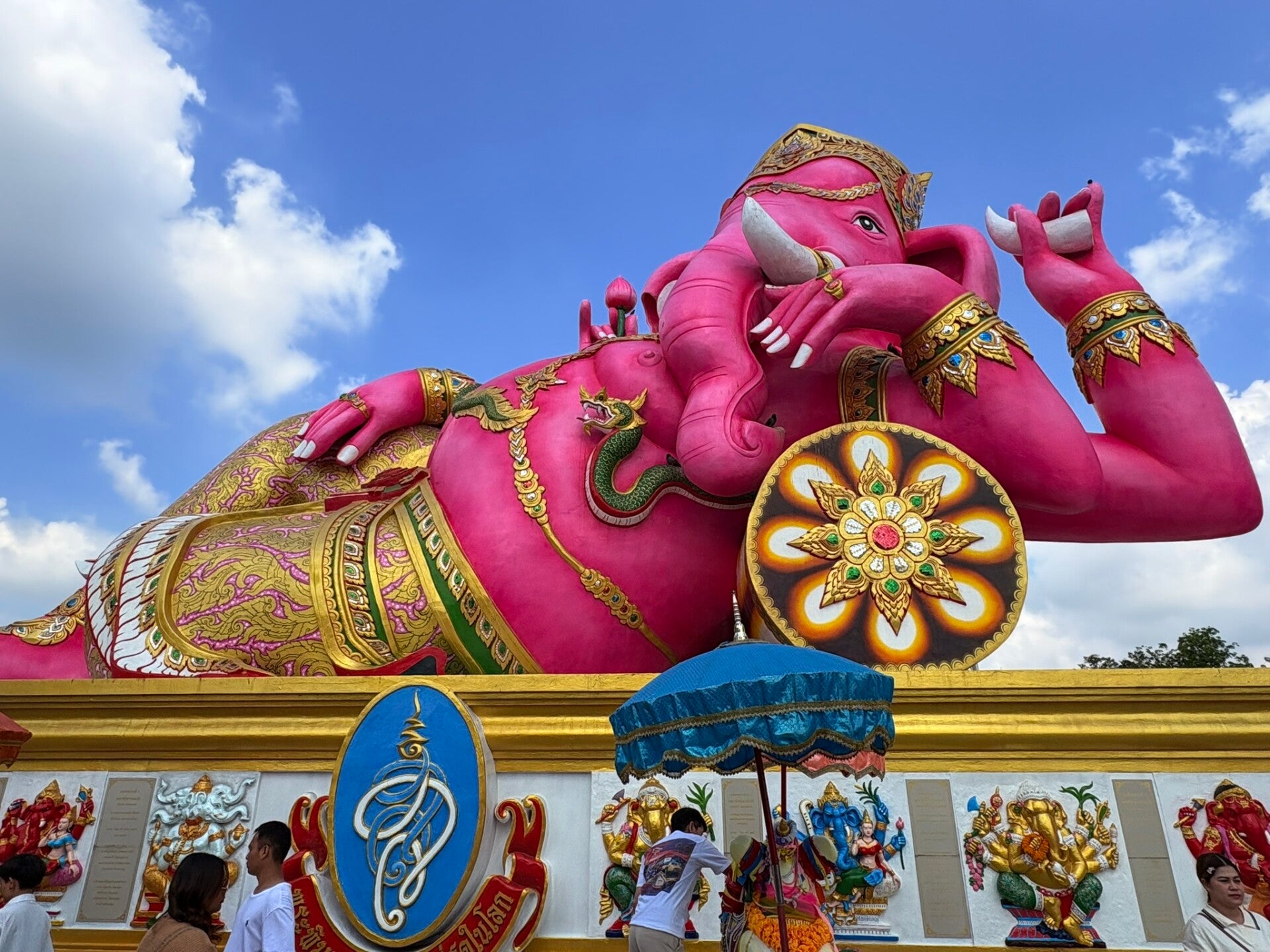
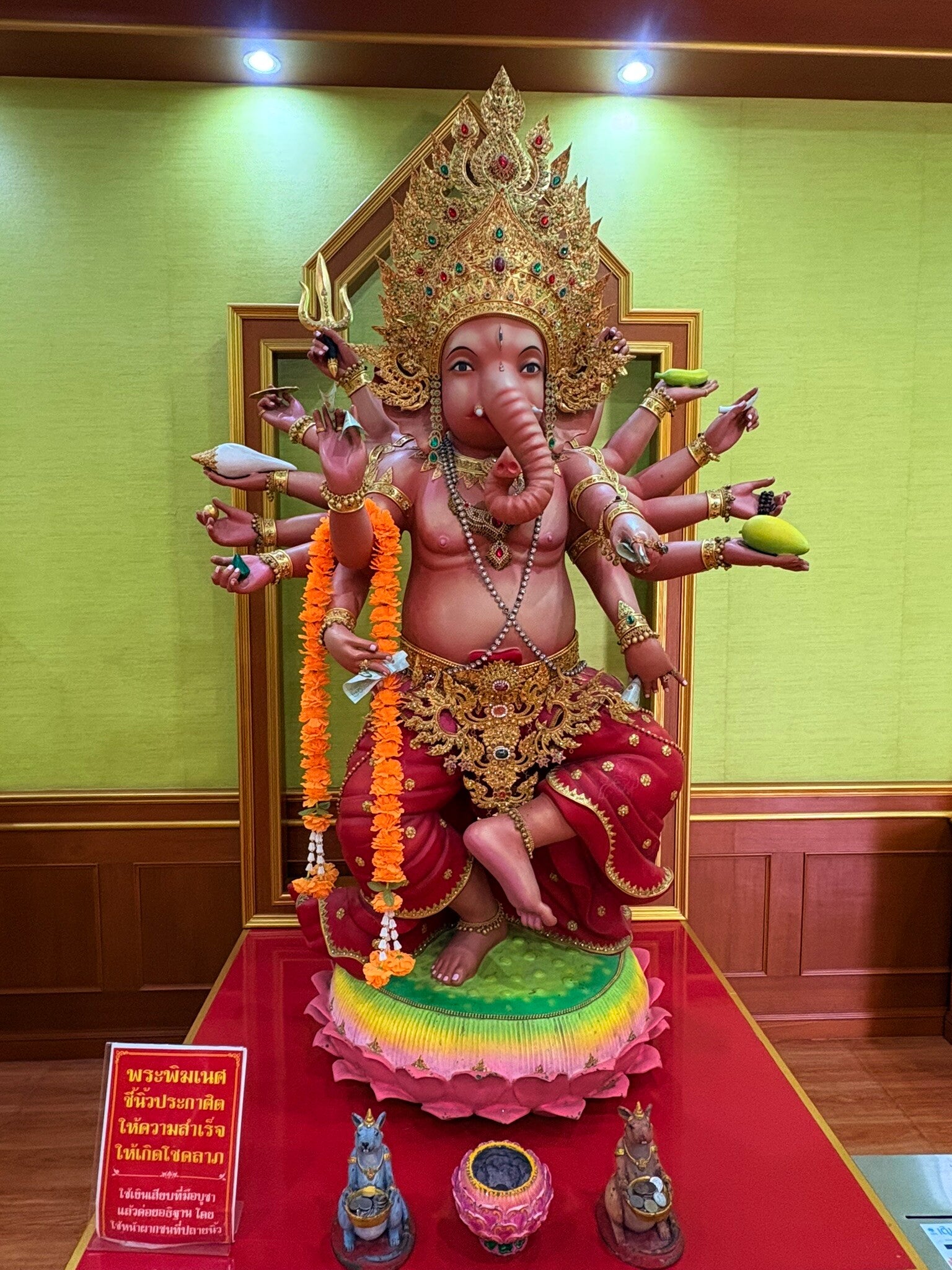
The star attraction is impossible to miss: a huge pink reclining Ganesha, approximately 16 meters (52 ft) high and 22 meters (72 ft) long. Ganesha is the Hindu god associated with prosperity and removing obstacles. At his feet you'll find mouse statues, where locals whisper wishes into one ear while covering the other so the wish doesn't “escape”!
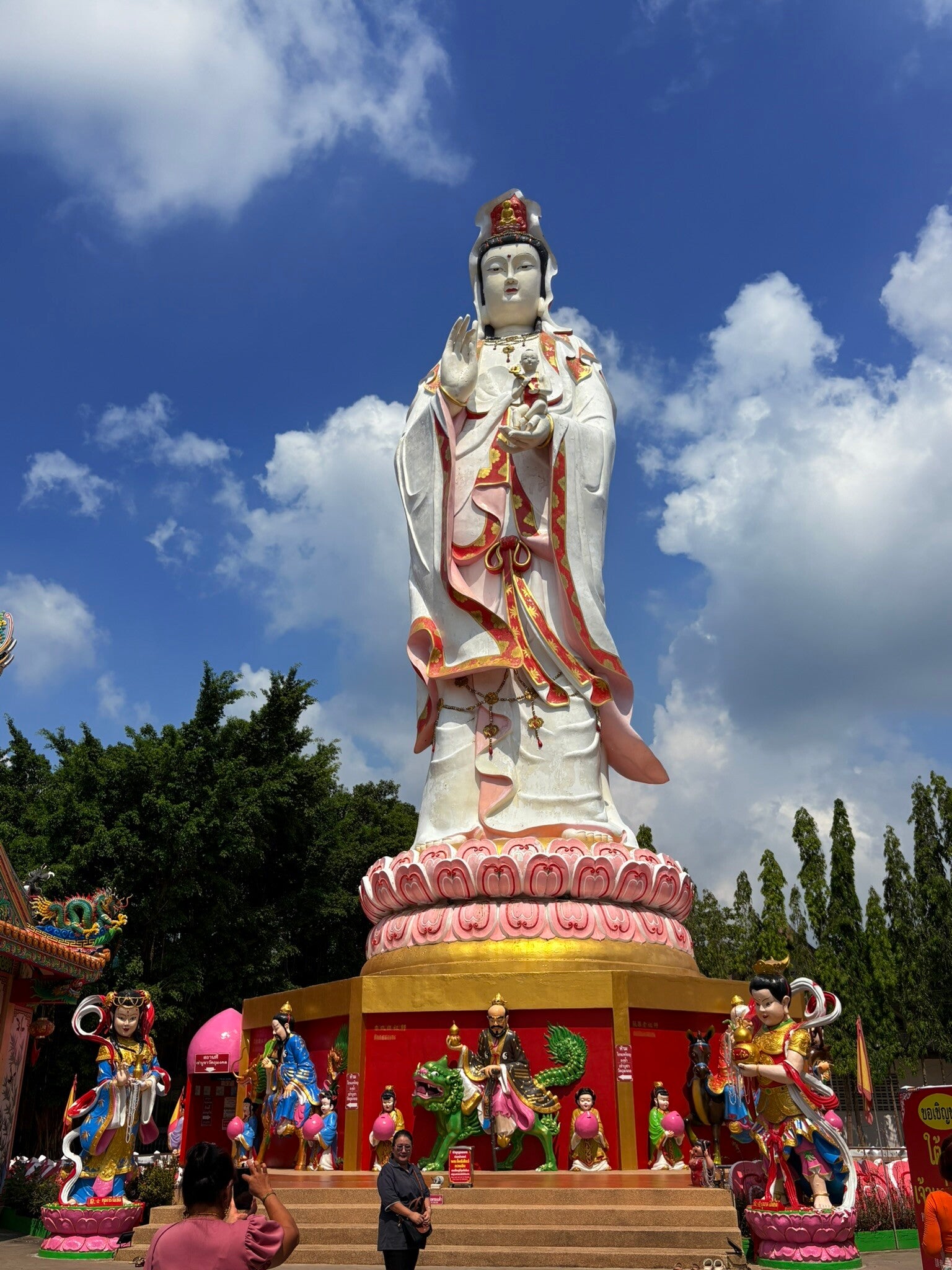
And Wat Saman isn't only about the Pink Ganesha. The sprawling complex also features a huge Guan Yin – yes, the same Goddess of Mercy represented at Wat Huay Pla Kang in Chiang Rai – alongside Buddhist, Hindu and Chinese shrines.
The whole place feels like a combination of temple complex, food market and mini amusement park, with plenty of food stalls and colourful attractions for kids. So while it ranks last on my temple list, it could actually make for a fun day trip if you're travelling with children.
How to get to Wat Saman Rattanaram from Bangkok
I took the train from Bangkok to Chachoengsao, a roughly 1.5-hour journey that cost an almost ridiculous 13 THB (~USD 0.40)! The catch is that it's a basic commuter train with no air-conditioning, and the open windows and fans only do so much against the Thai heat. From Chachoengsao station, take a motorbike taxi or regular taxi for another 20–30 minutes.
If sweating on a commuter train doesn't sound appealing, you can also take a taxi or Grab directly from Bangkok, which takes around 1.5–2 hours and costs roughly 1,000–1,500 THB (30-45 USD) each way. Consider arranging a return trip with the same driver, as finding a ride back can be more difficult.
So, which temples in Thailand are actually worth visiting?
If I could only pick three, I'd choose Wat Paknam's Big Buddha for its sheer scale, the Sanctuary of Truth for its incredible craftsmanship, and Wat Arun for the classic Bangkok temple experience.
For the most variety, though, Chiang Rai is hard to beat – the Blue Temple, White Temple and Wat Huay Pla Kang are all completely different and easy to combine.
Ultimately, pick the temples that genuinely appeal to you. After a while, even the most beautiful golden stupas can start blending together!
Add comment
Comments