Puglia is one of those regions where a relatively short trip can pack in a surprising amount of variety: tiny stone trulli, whitewashed hill towns, dramatic Adriatic cliffs and some of the best food in southern Italy. Add a detour across the regional border to the ancient cave city of Matera, and you have a pretty spectacular one-week itinerary.
This route starts and finishes in Bari and takes you through Alberobello, Matera and Ostuni, with a day trip to Polignano a Mare. While you can technically cover the main highlights in six days, I've added a flexible seventh day that you can use to slow down, spend some time at the beach or simply stay longer in whichever place you like the most.
Getting to Puglia
If you're travelling by air, the easiest way to get to Puglia is by flying into either Bari or Brindisi airport. Alternatively, Italy is very well connected by train, making Puglia relatively easy to reach from other major Italian cities.
Getting around Puglia
By far the easiest way to follow this itinerary is by renting a car at the airport. However, Italians can drive rather aggressively, so if you're not a confident driver, this itinerary can also be done by public transport. Just expect some of the transfers to take considerably longer.
Day 1 - Arrive in Puglia and discover Alberobello's trulli
Alberobello is a small town that has become world-famous for its extraordinary trulli - traditional dry-stone dwellings topped with distinctive conical roofs.
The construction technique uses local limestone without mortar and dates back at least to the 14th century. According to a popular local legend, trulli were built this way partly to avoid property taxes: because they could be dismantled relatively easily, buildings could be taken down when tax collectors arrived and therefore deemed unfinished. Today, Alberobello contains more than 1,500 trulli, concentrated mainly in the districts of Rione Monti and Aia Piccola. Many of those in the town centre have been converted into cafés, shops and accommodations, while others remain residential.
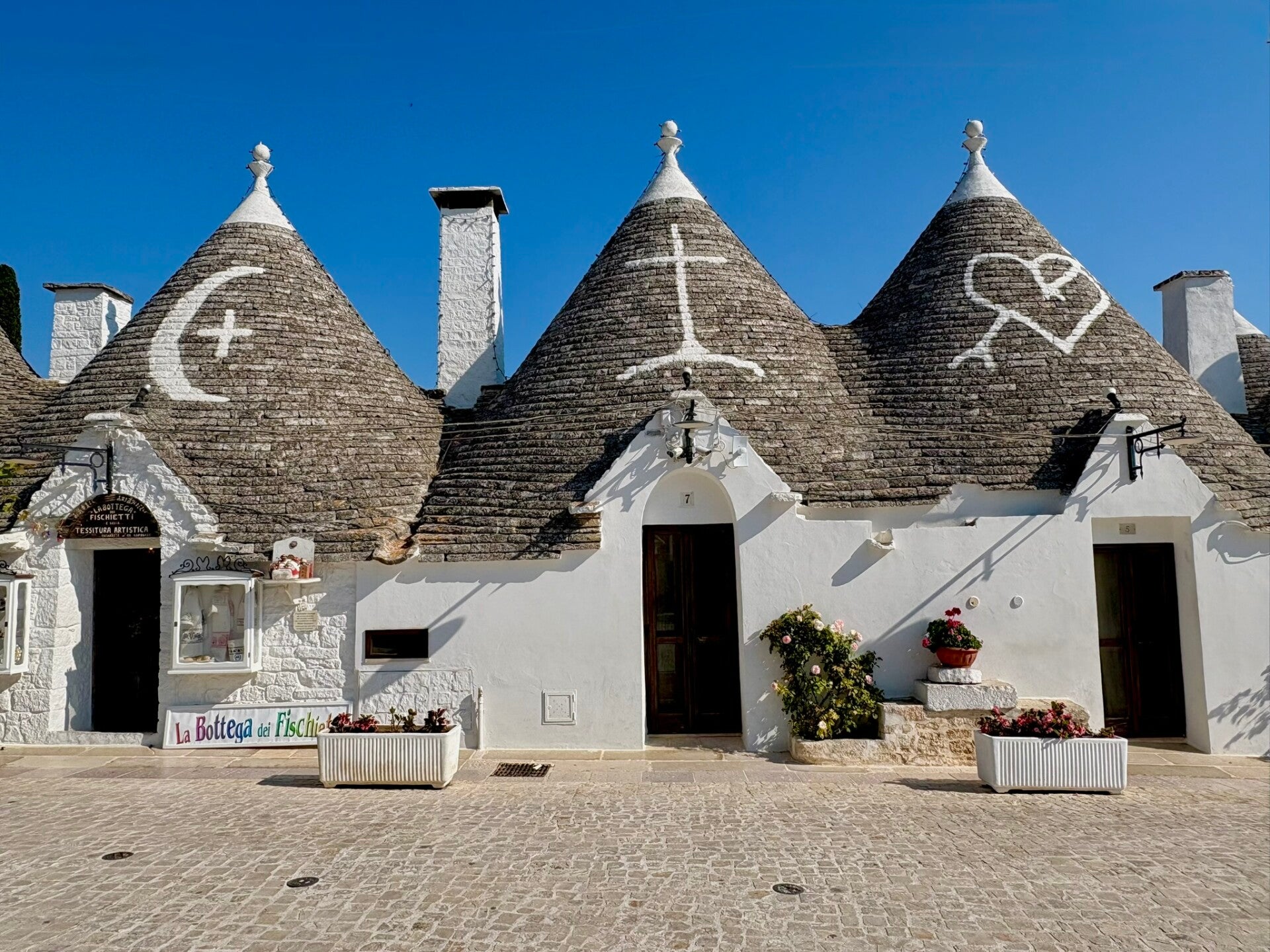
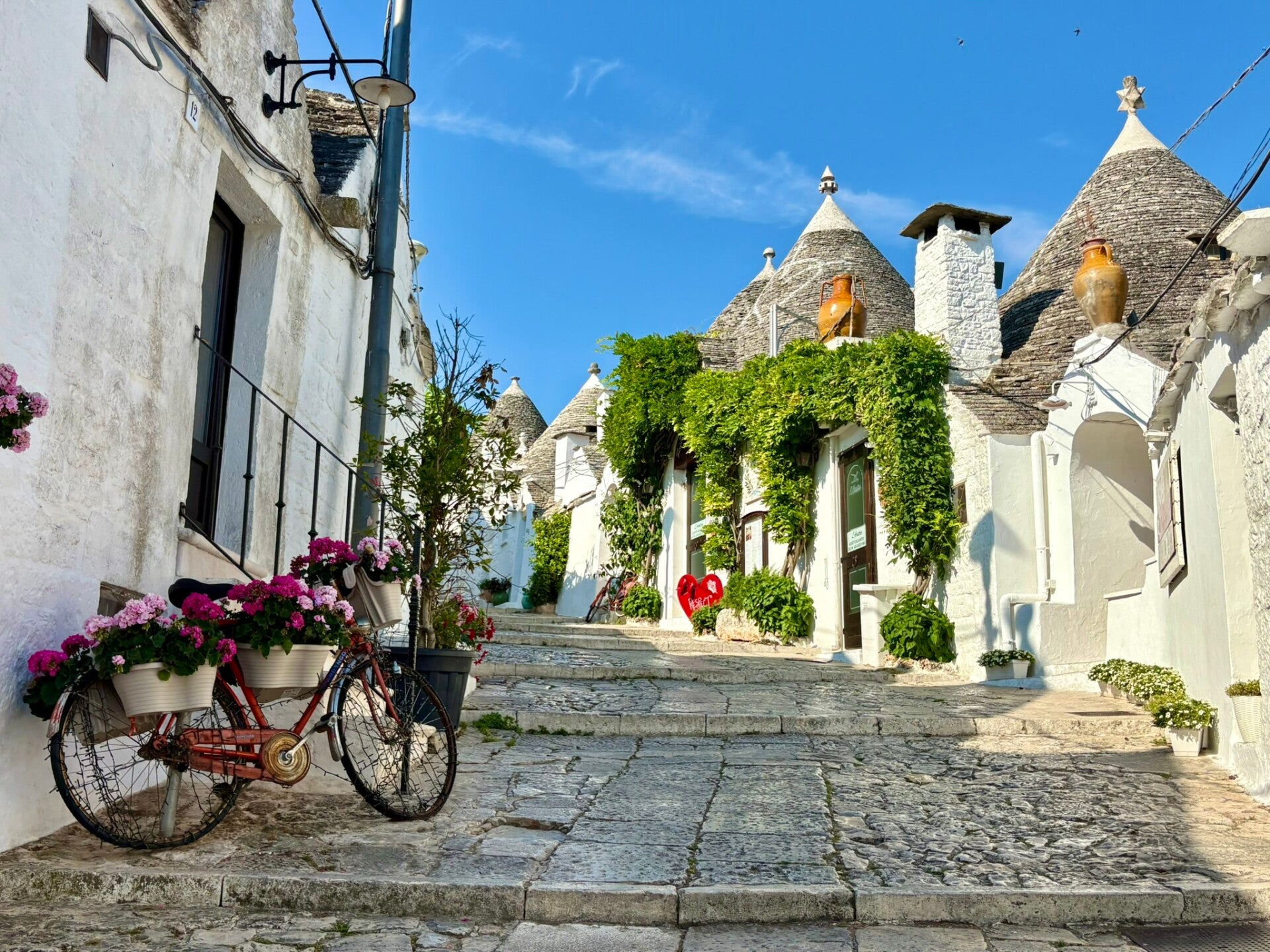
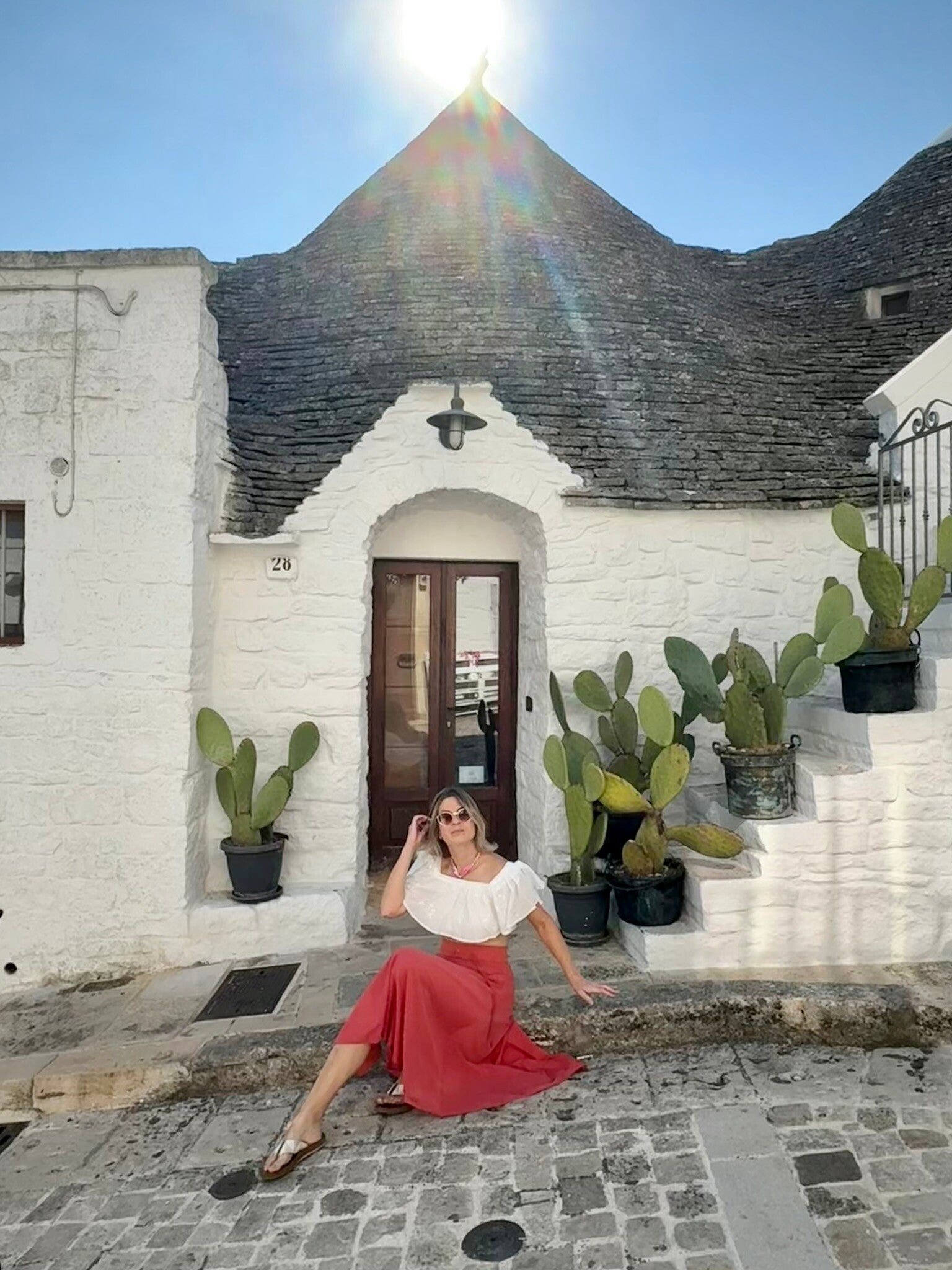
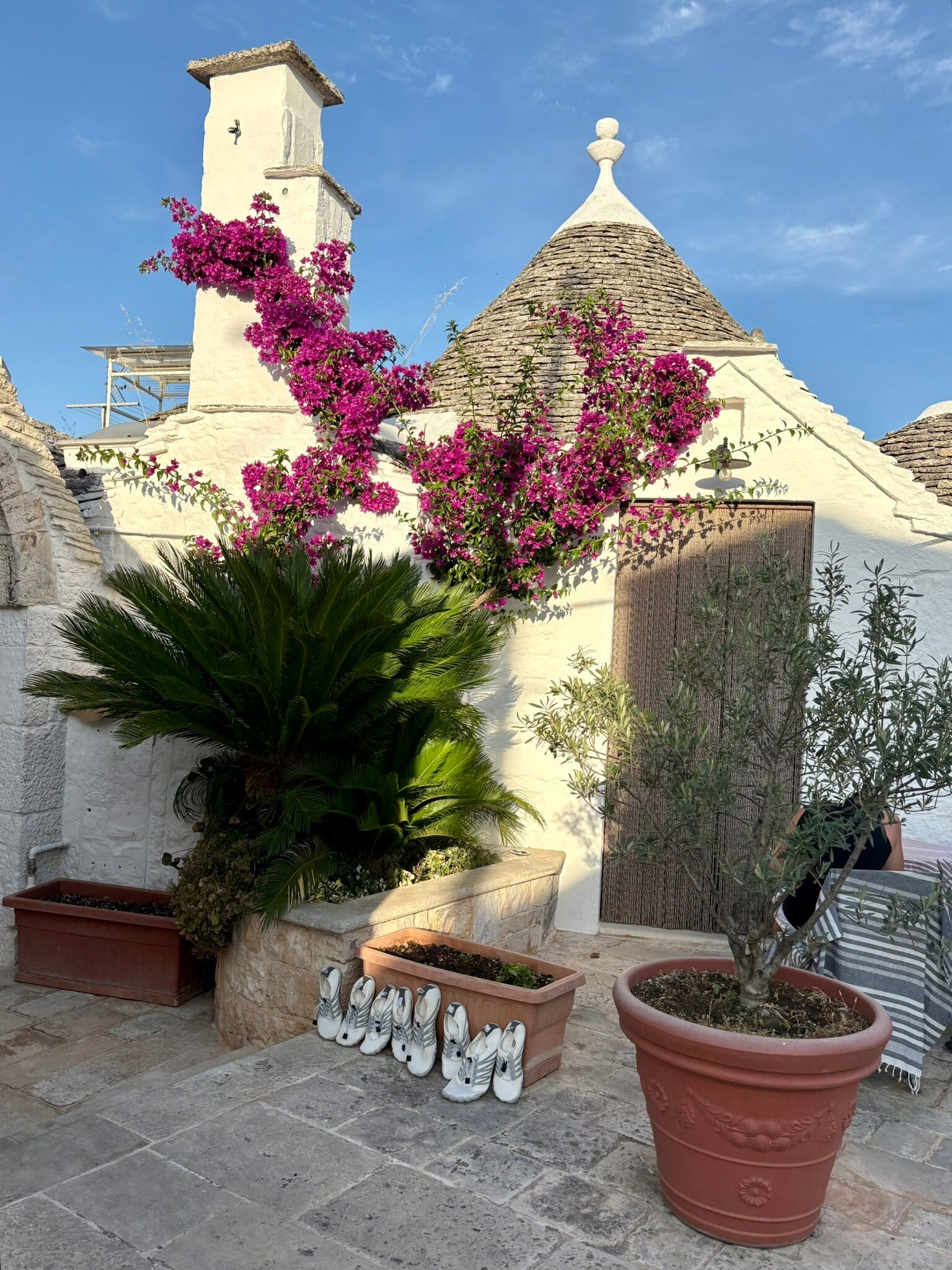
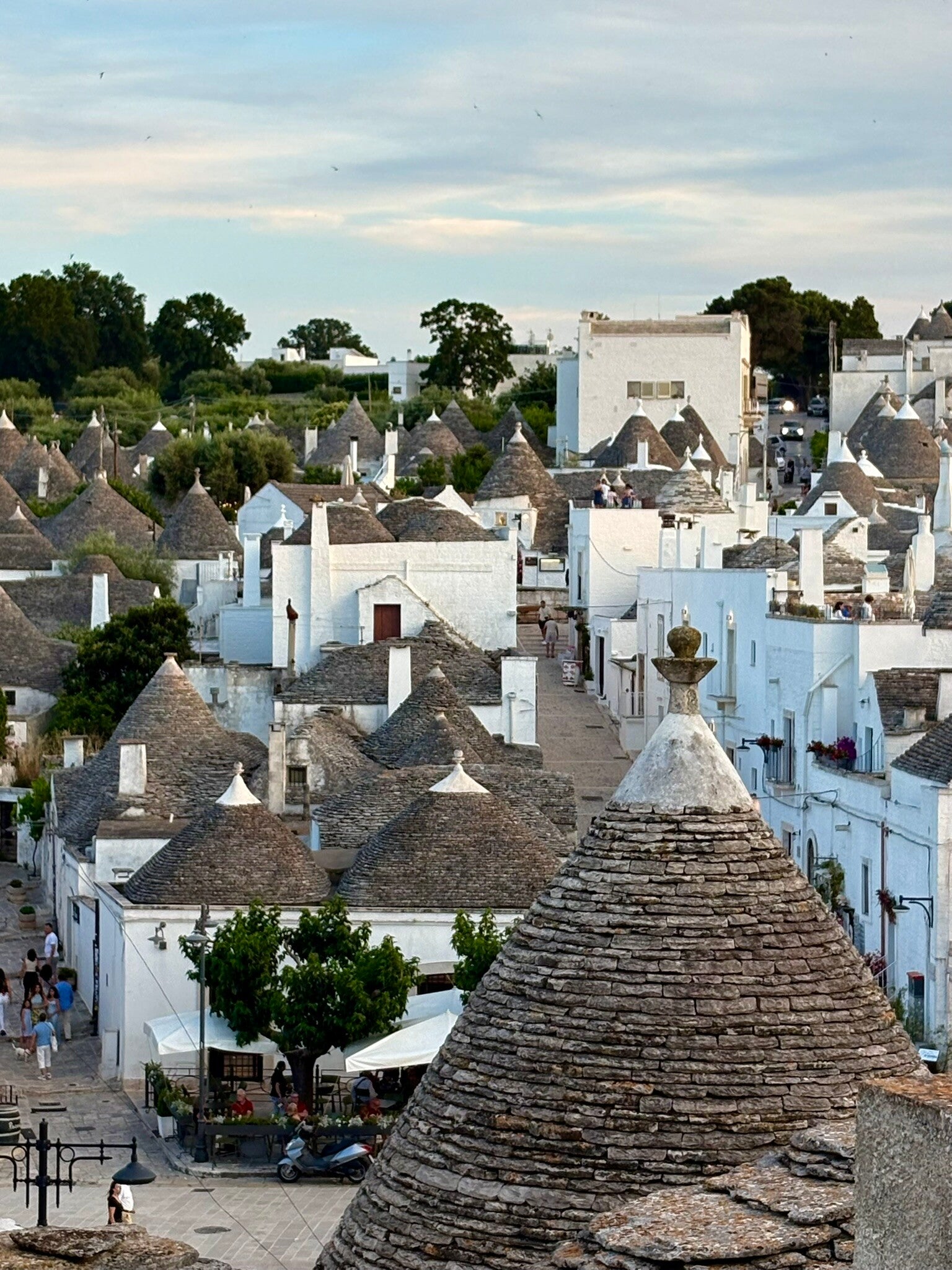
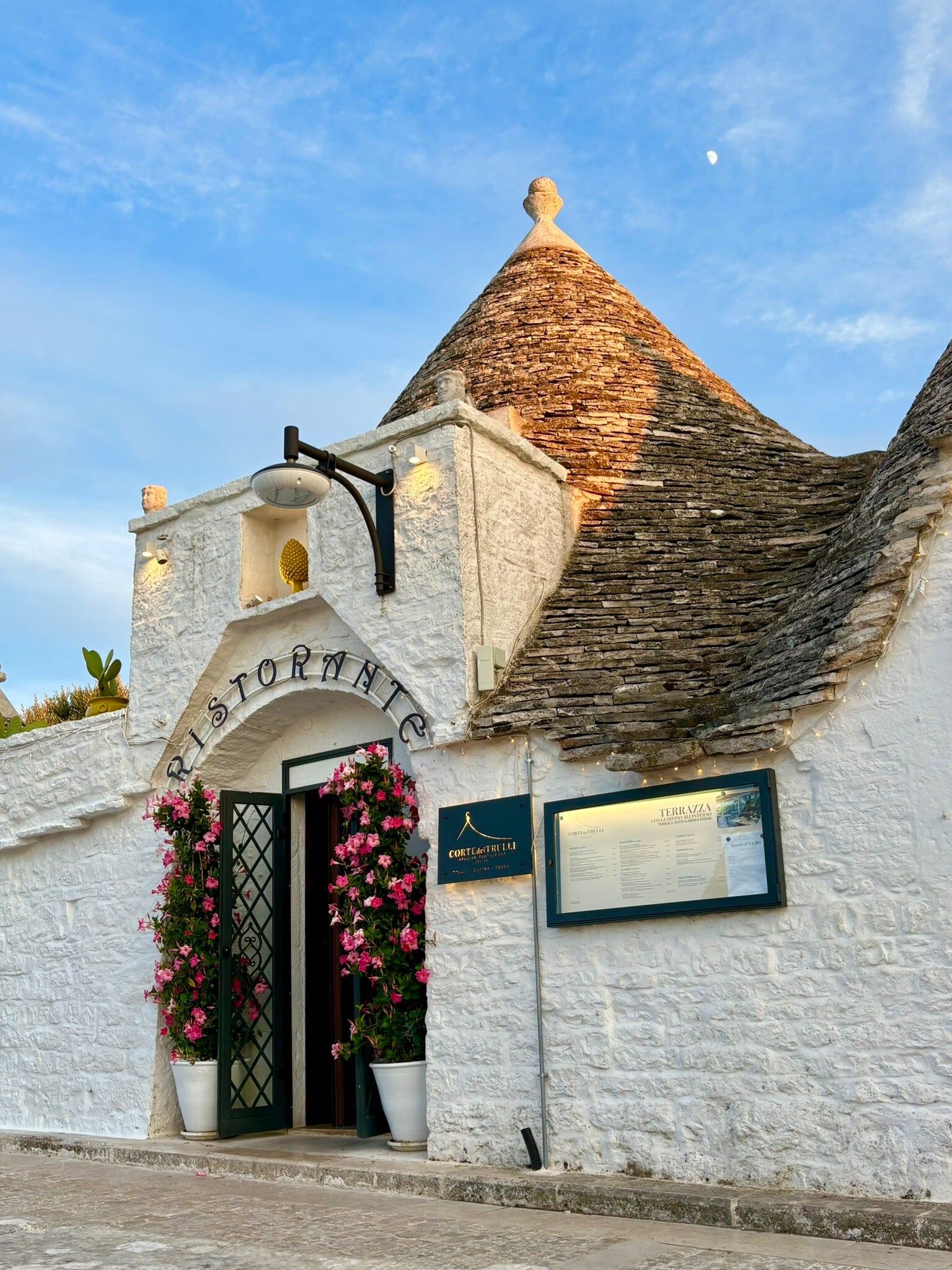
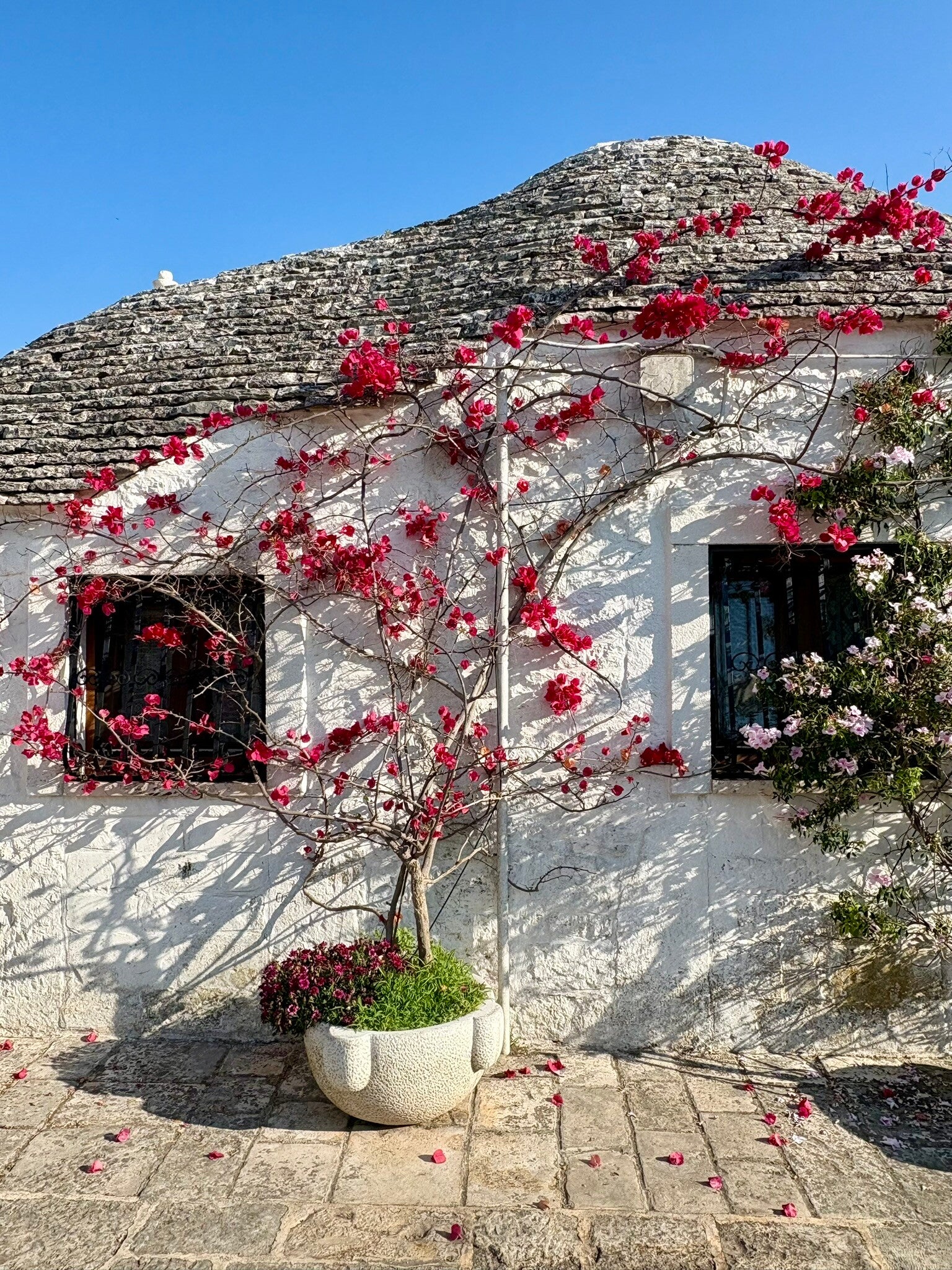
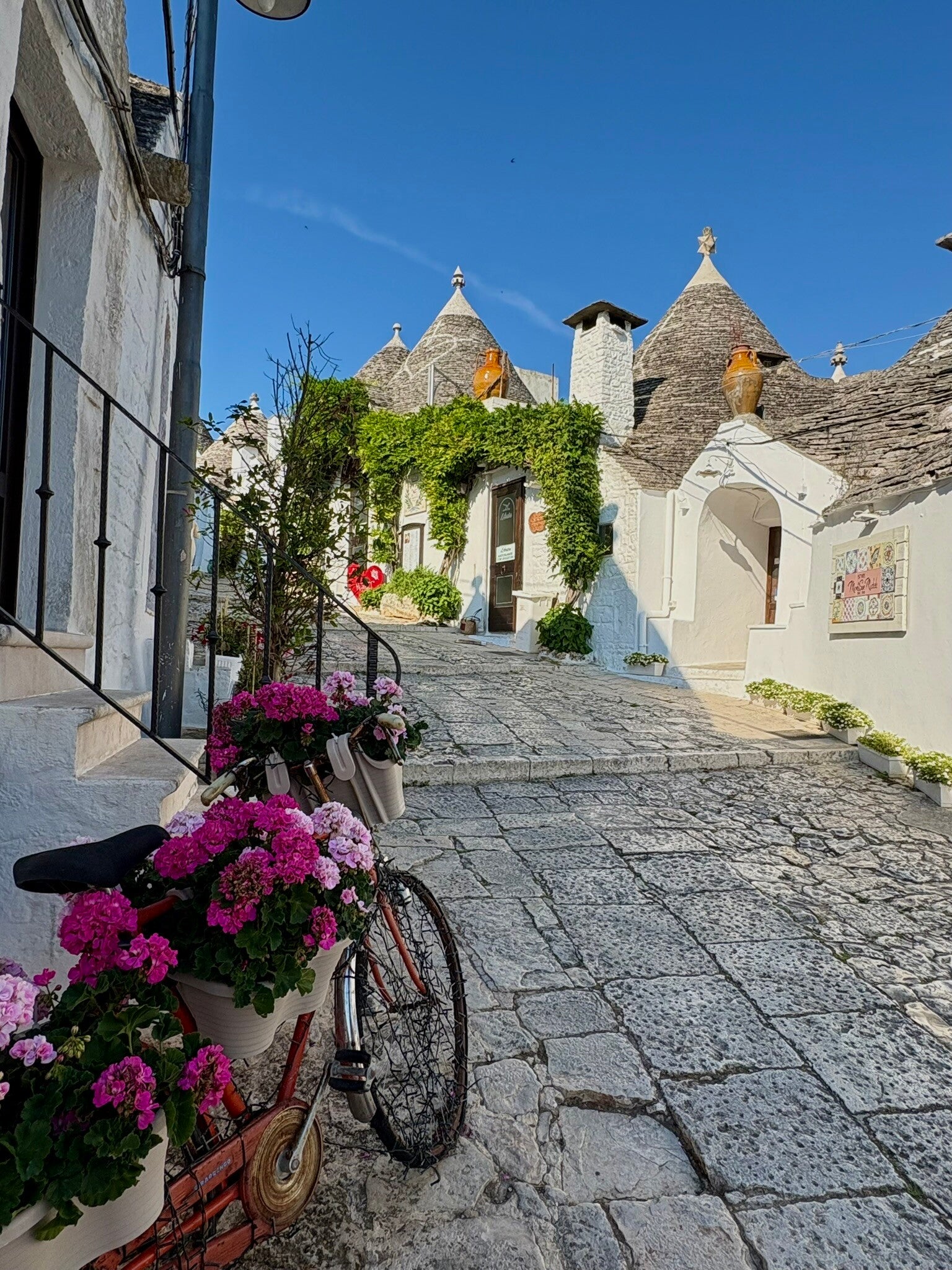
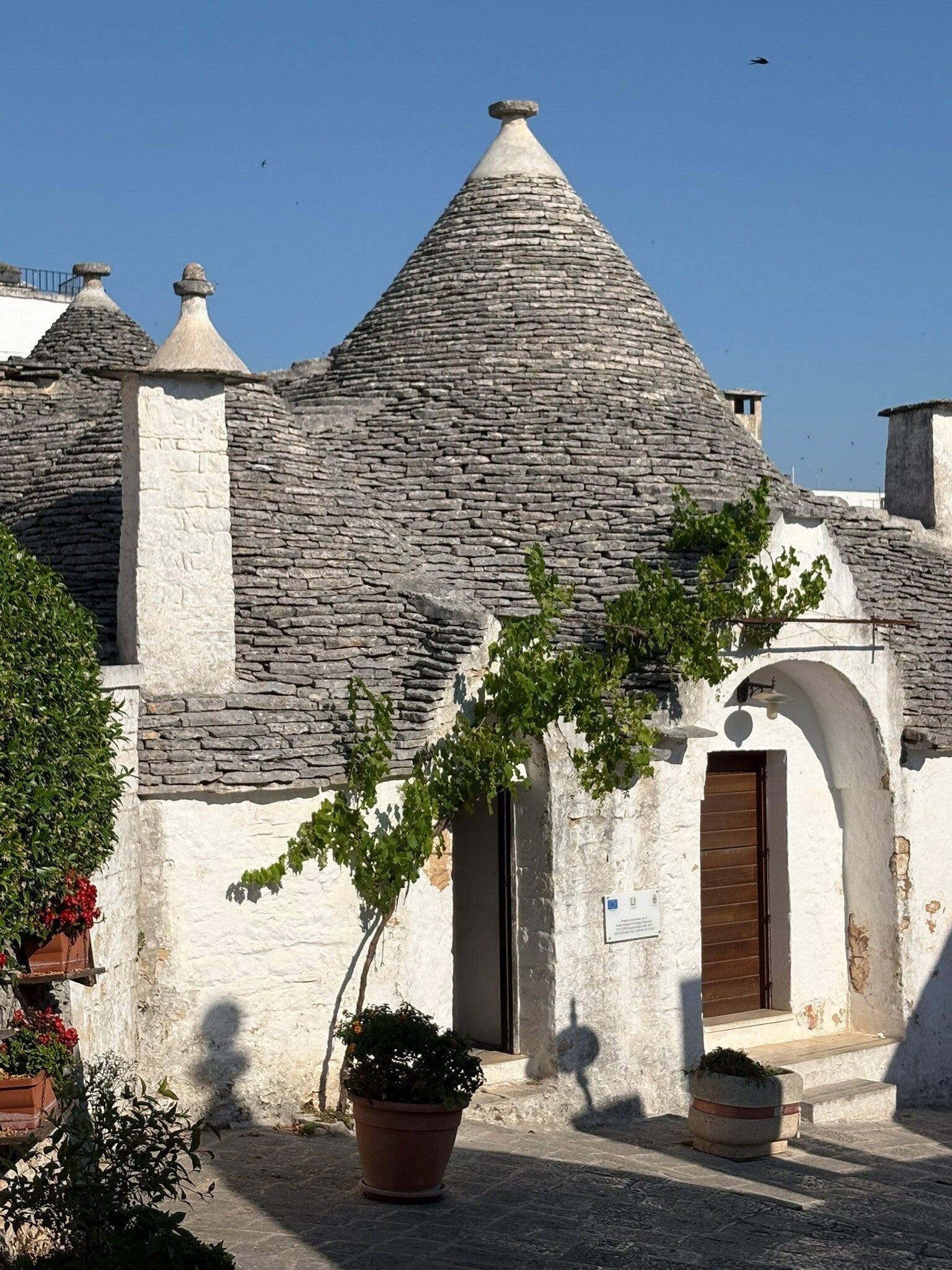
Visiting Alberobello is particularly easy if you're flying into Bari, as it's only around an hour's drive or a 2 h bus ride away. Spend your first afternoon and evening strolling through Rione Monti, the largest and most visited of Alberobello's trulli districts. It's especially photogenic towards sunset, when the crowds start thinning out.
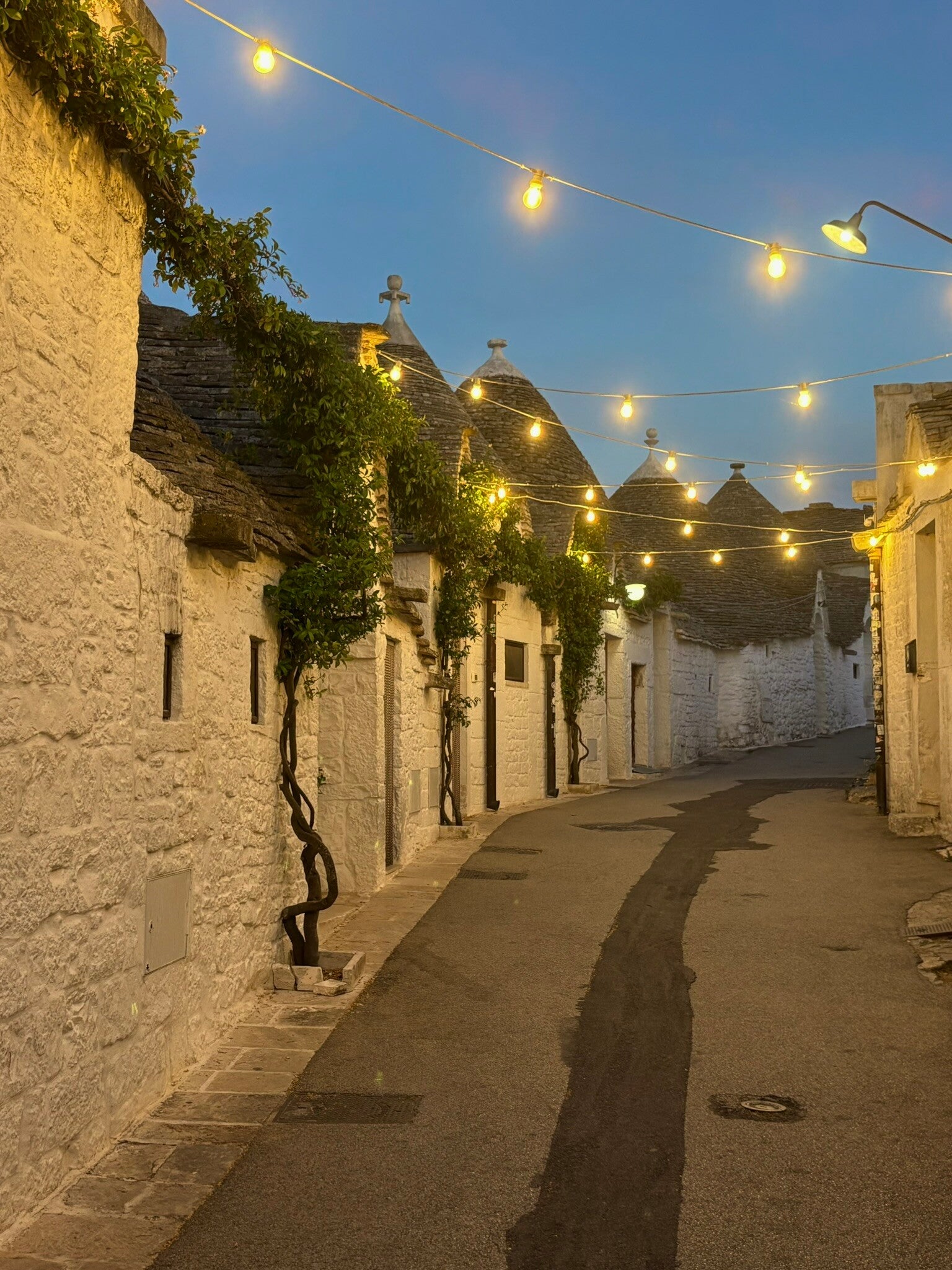
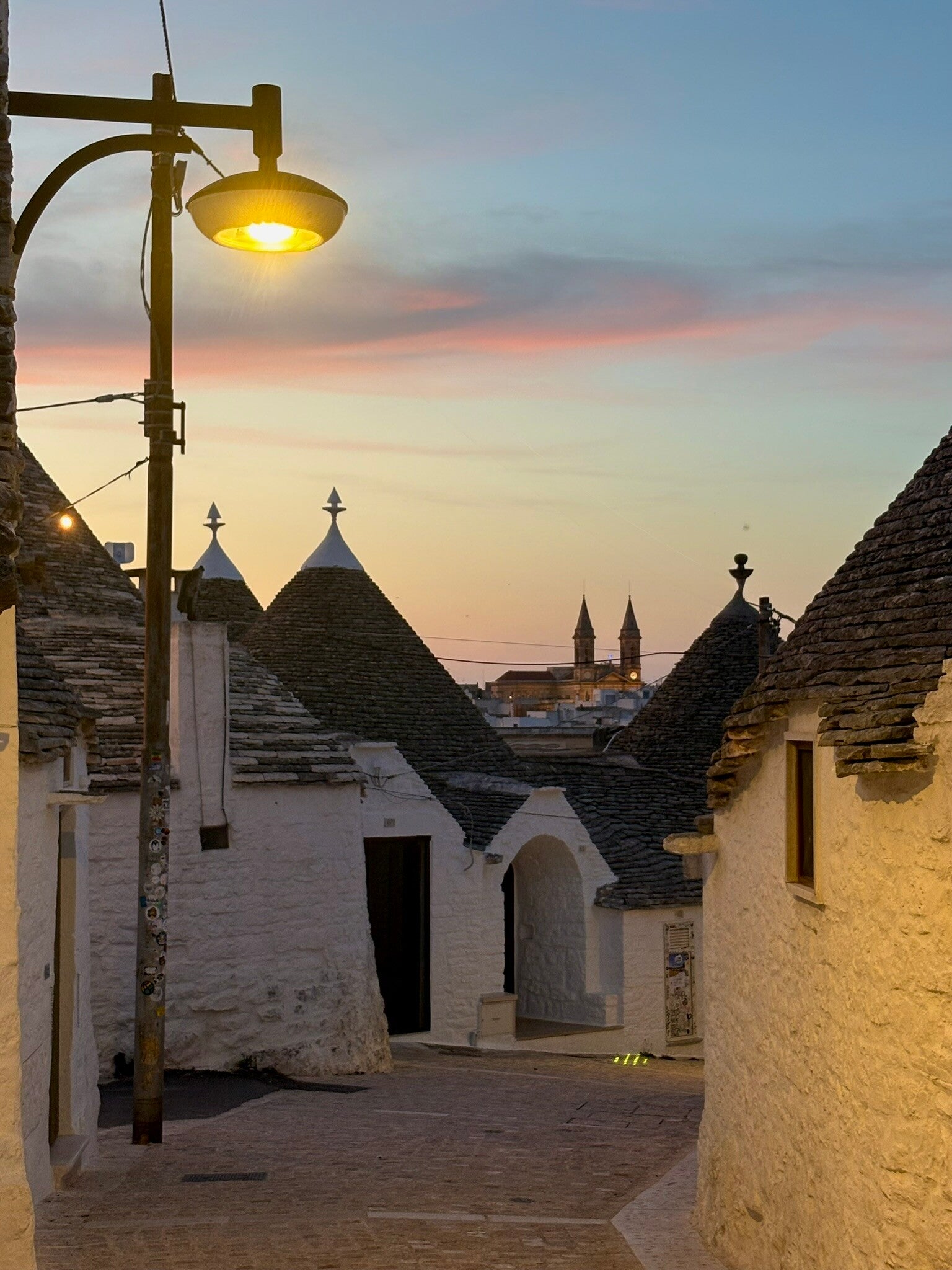
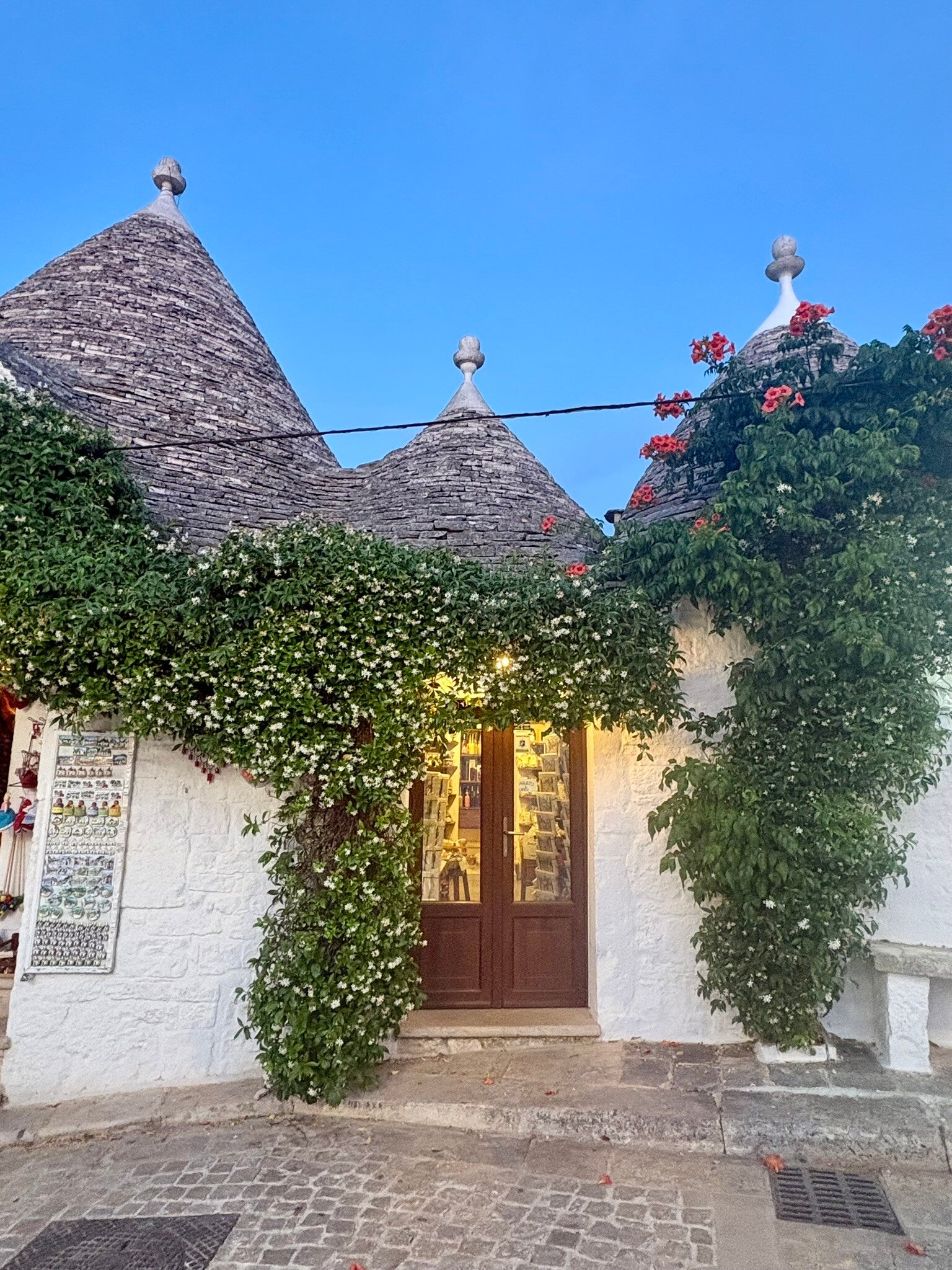
Stop for a dinner at one of the many restaurants tucked inside the trulli or even spend the night inside one: many trulli have been converted into guesthouses and holiday rentals. This is particularly appealing during the hot Italian summer, as the thick stone walls keep the interiors naturally cool and fresh.
Day 2 - Explore Aia Piccola before heading to Matera
Start the morning slowly with a cappuccino and a brioche before exploring Alberobello's second major trulli district, Aia Piccola. It feels completely different from Rione Monti. While Monti is packed with souvenir shops and visitors, Aia Piccola remains much more residential, giving you a better idea of what Alberobello looks like beyond its tourist centre. This is also where you can still see people actually living in trulli.
Another optional stop is Trullo Sovrano, Alberobello's famous two-storey trullo, which has been turned into a museum. Check the current opening hours before visiting, as they vary throughout the year.
Once you feel you've explored Alberobello sufficiently, continue to Matera - one of the oldest continuously inhabited cities in the world!
PS: While Matera isn't actually in Puglia, it's just across the regional border in Basilicata and makes sense to include in this Puglia itinerary.
Getting from Alberobello to Matera
Matera is around 1 hour 15 minutes from Alberobello by car, however if you're traveling by bus, you will first need to transfer back to Bari and from there catch another bus to Matera, taking around 3-3,5 h in total.
Matera
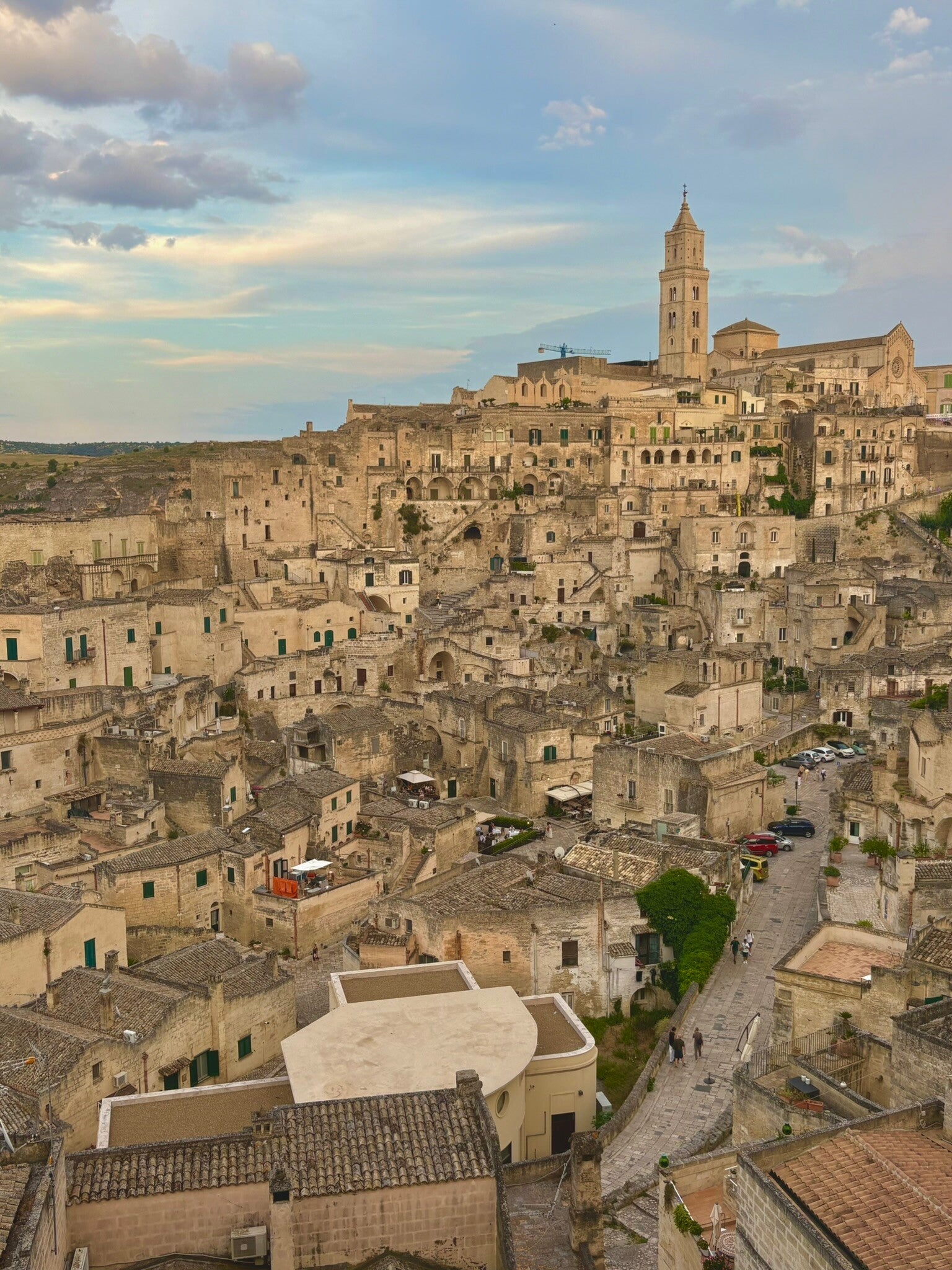
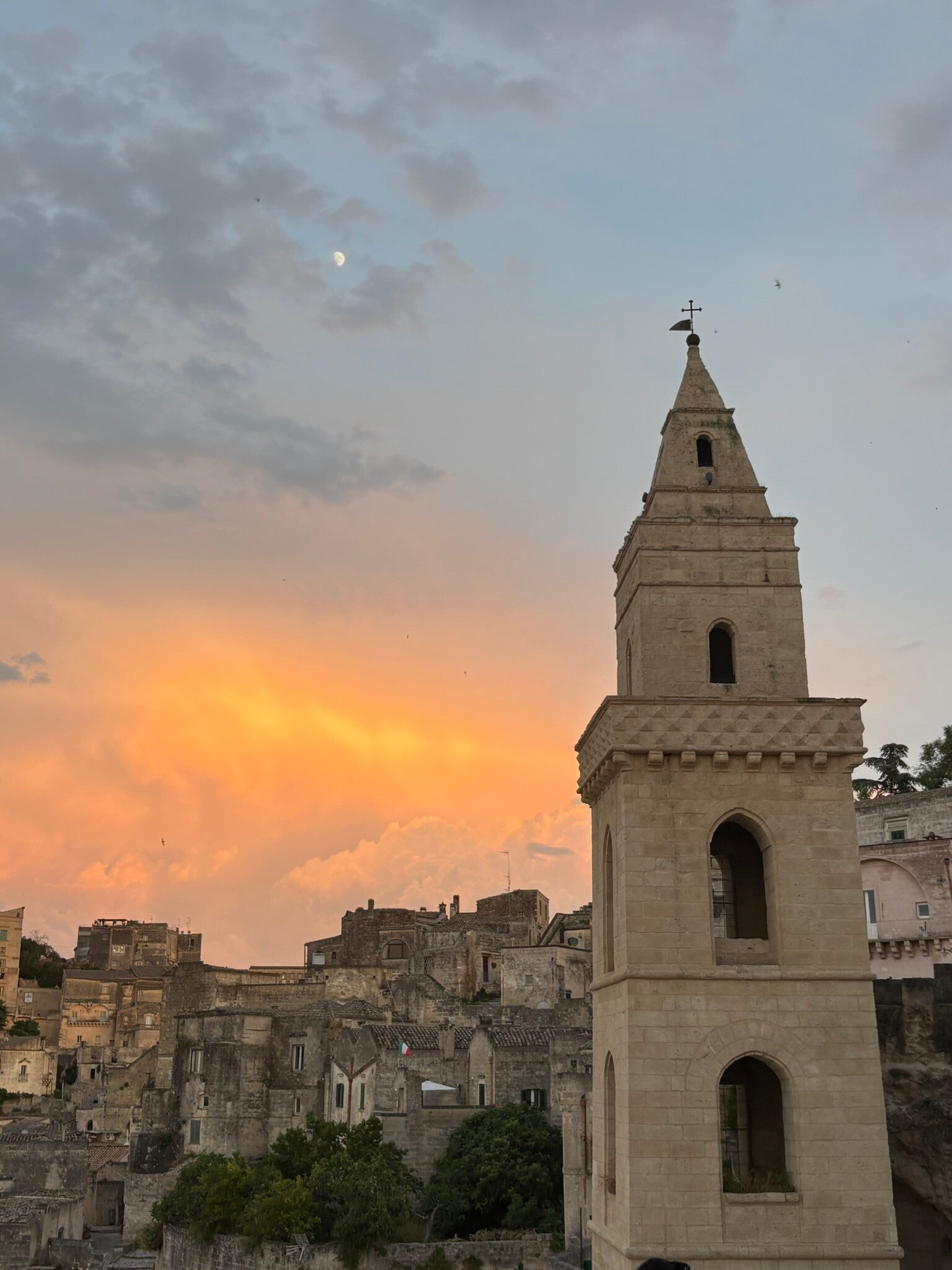
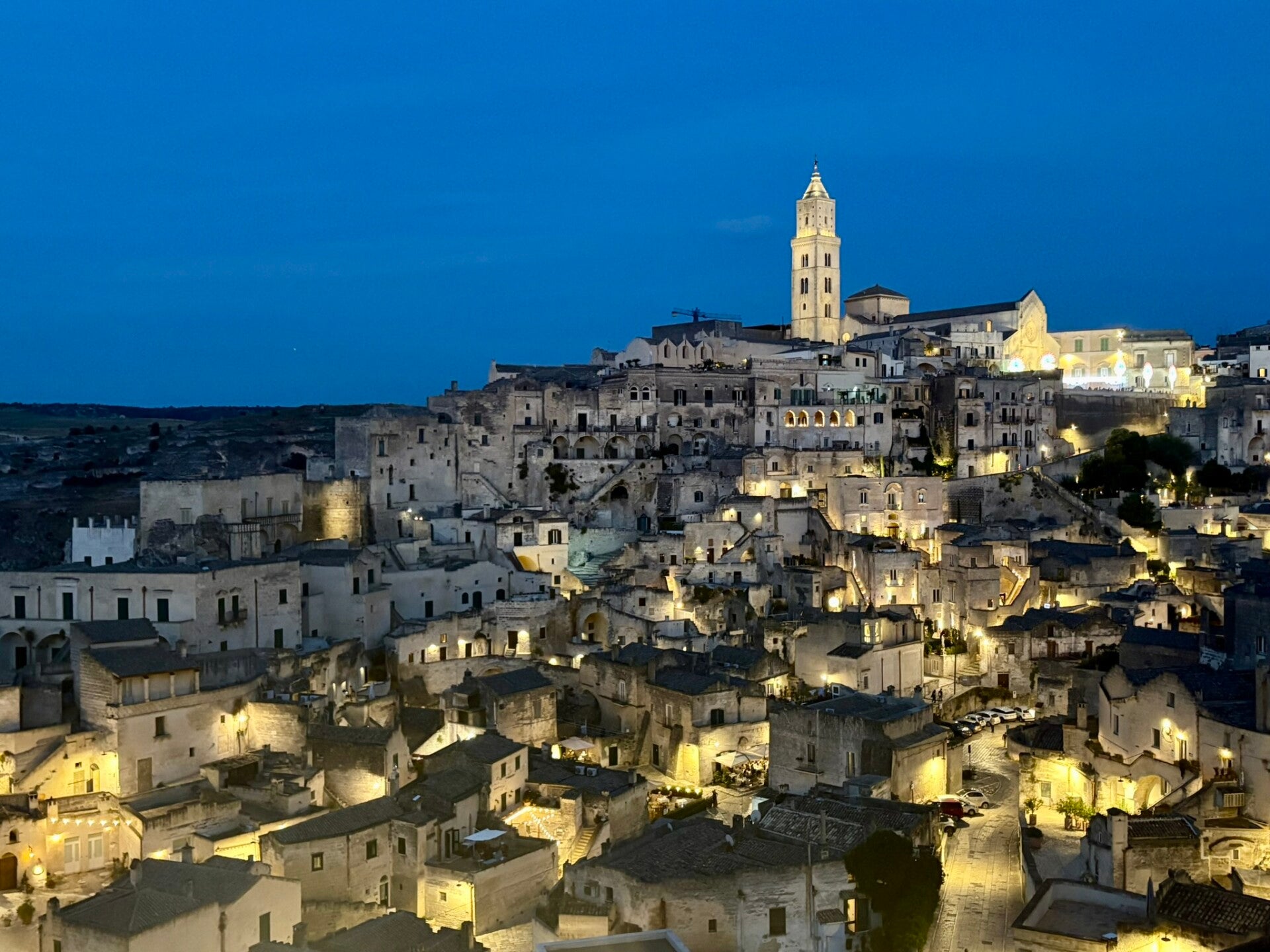
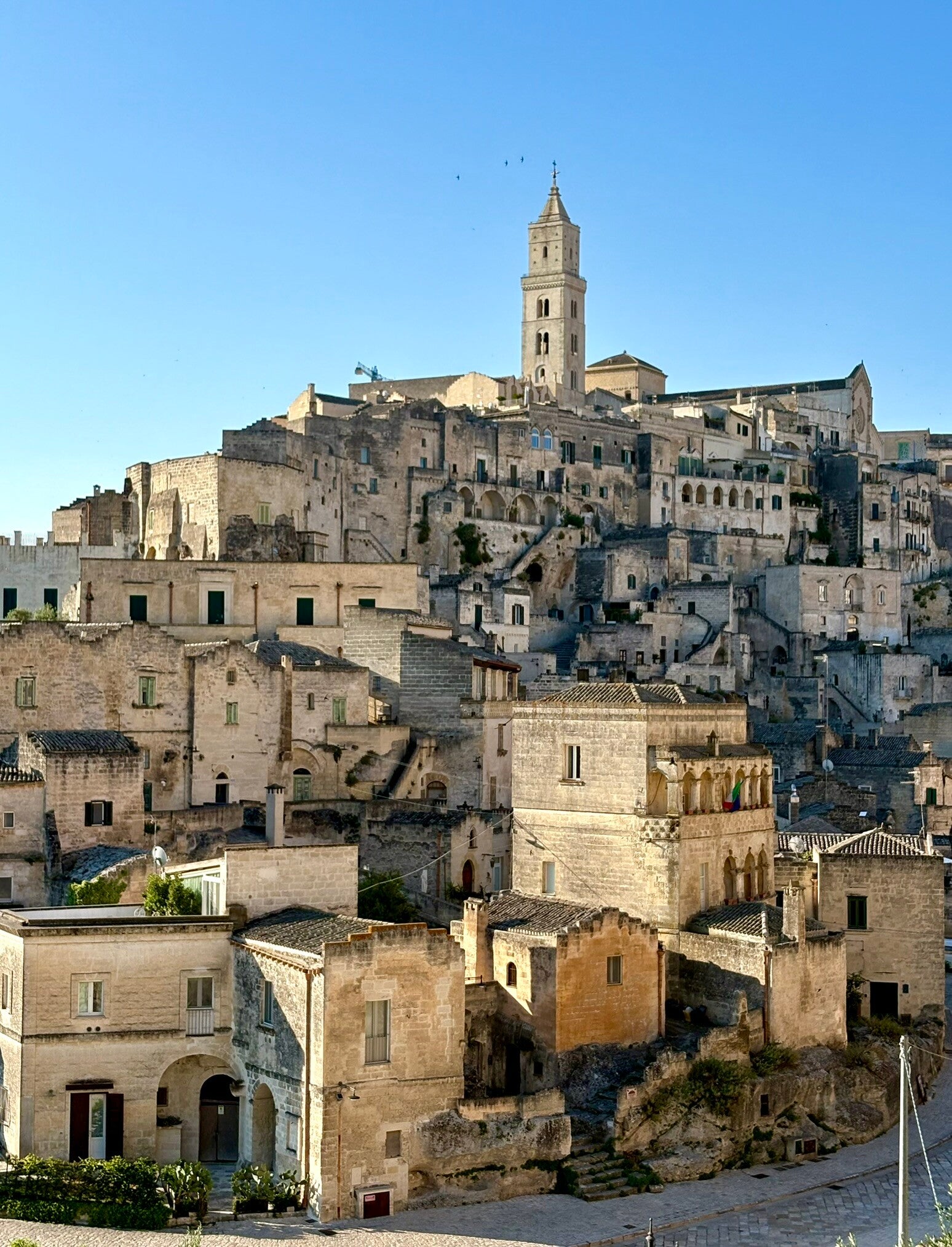
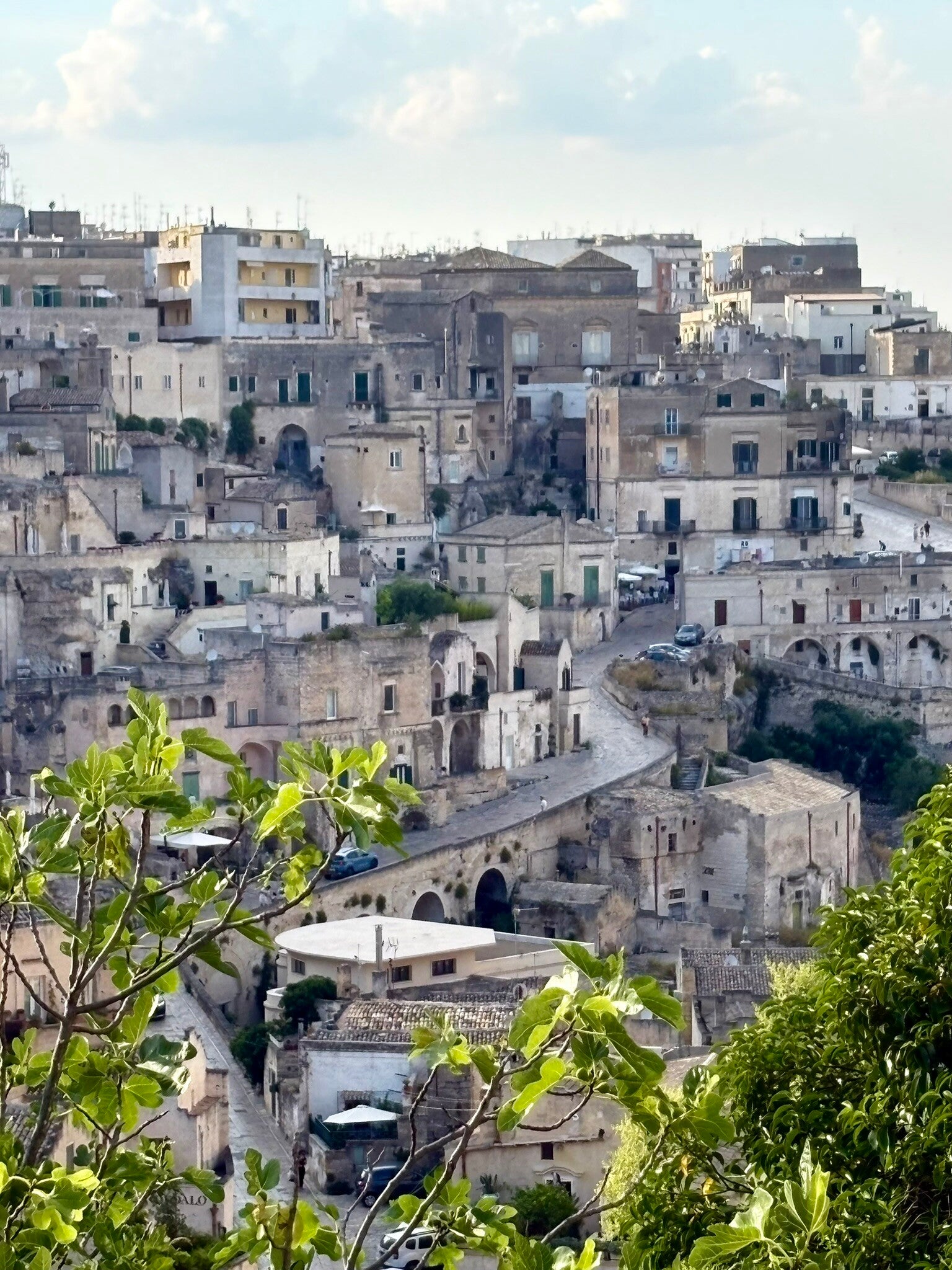
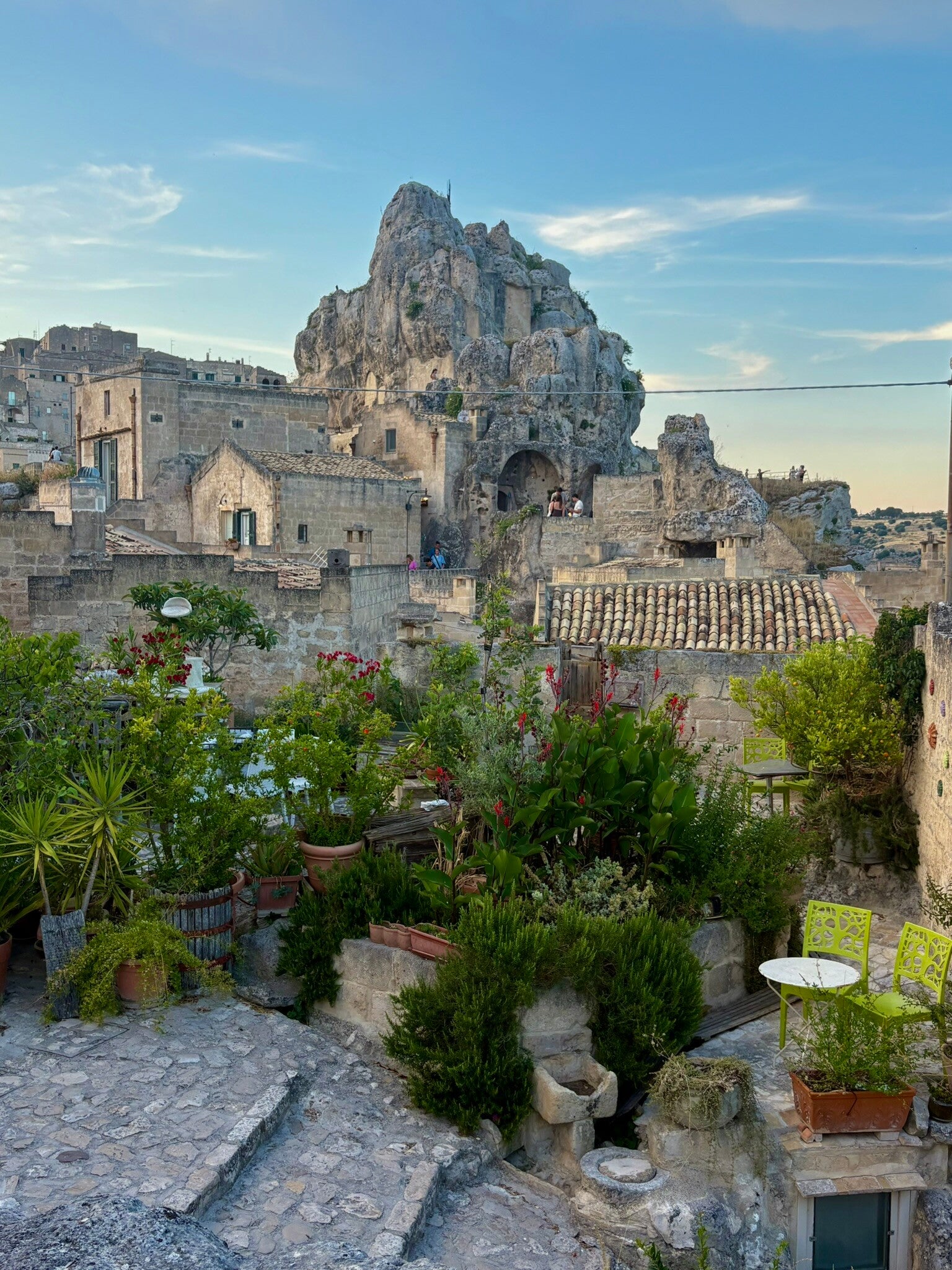
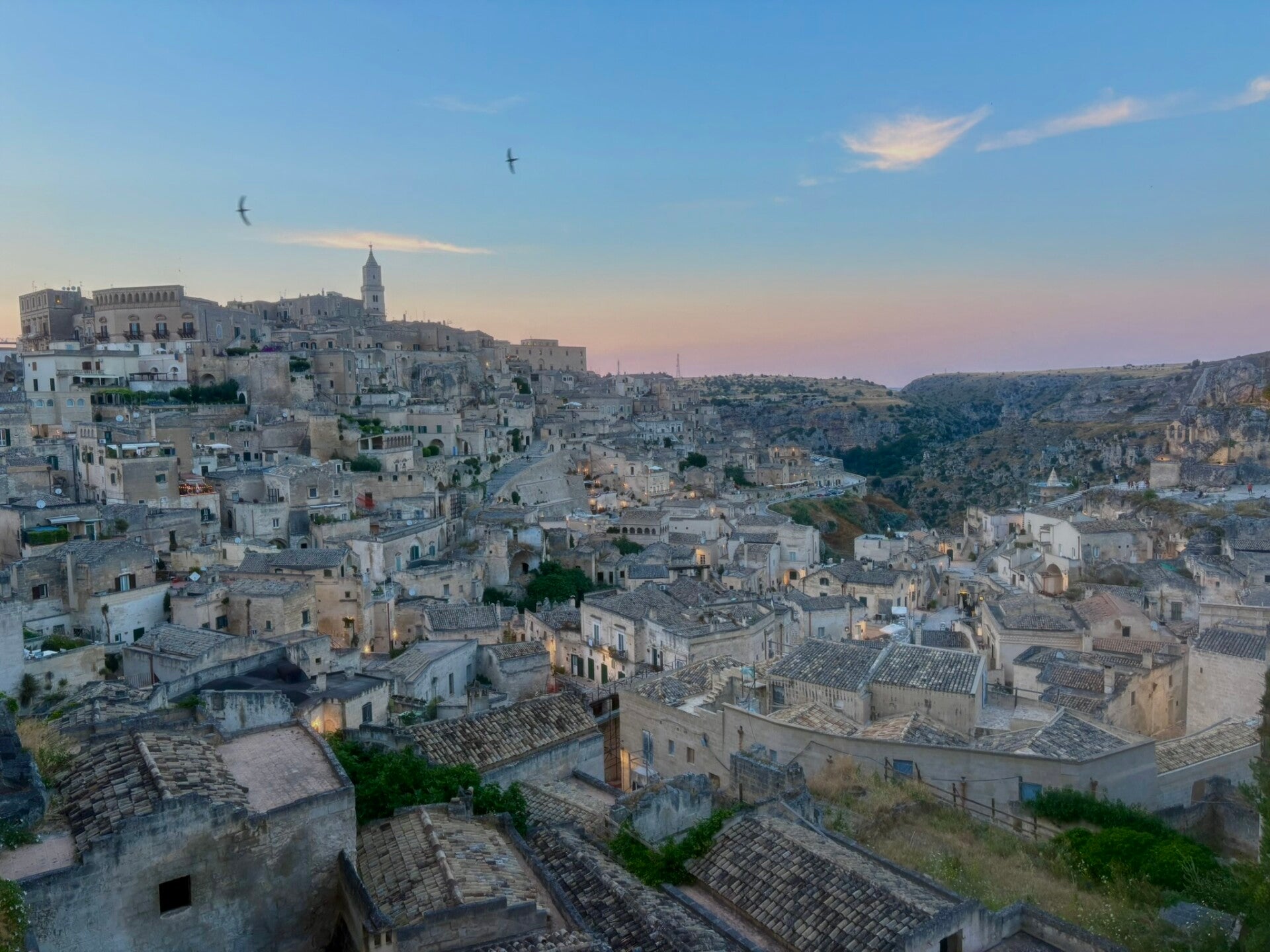
You'll need much more time to explore Matera than Alberobello, as its historic centre is huge and incredibly impressive. Matera is famous for the Sassi - ancient cave dwellings carved directly into the rock and inhabited for thousands of years. People continued living in the caves until the 1950s!
By the mid-20th century, living conditions in parts of the Sassi had become extremely poor and unsanitary. In the 1950s, residents were relocated as part of a government programme and many of the caves were abandoned.
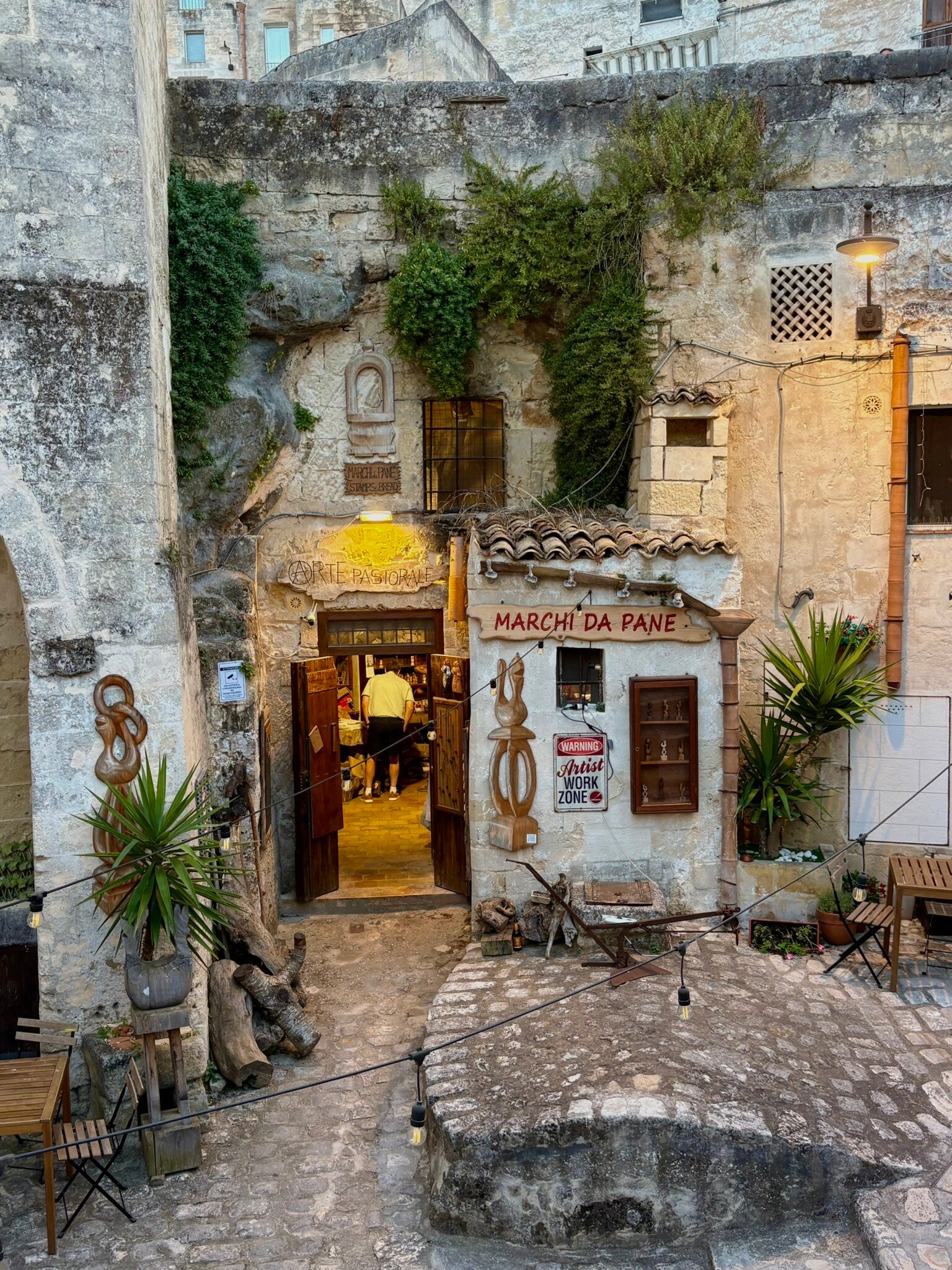
Today, the Sassi are a UNESCO World Heritage Site and many former cave dwellings have been transformed into hotels, restaurants, museums and private homes.
There are two main Sassi districts to explore:
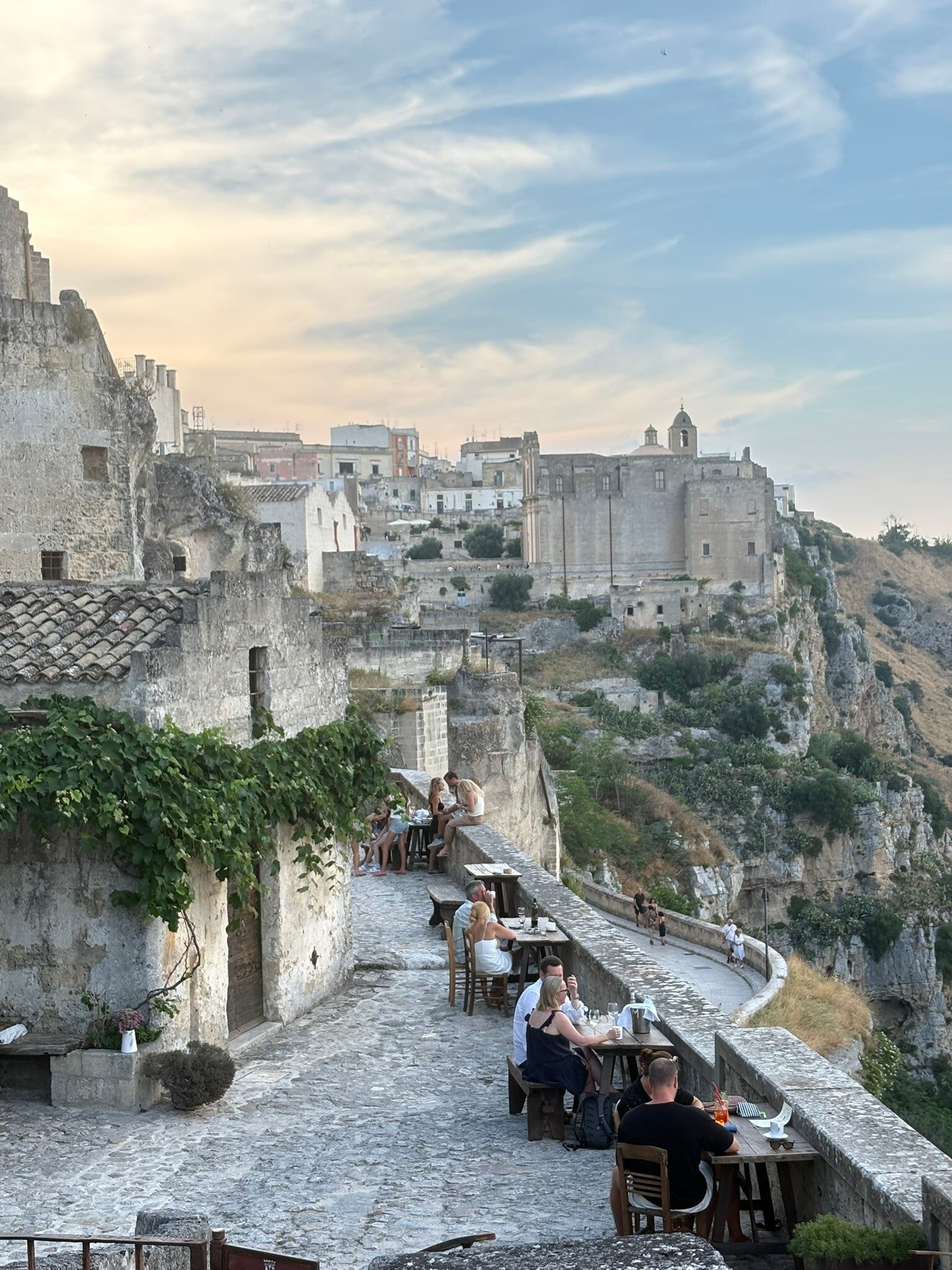
Sasso Caveoso is the more rugged and atmospheric of the two, with dramatic views towards the ravine. Some of the main places to see include:
- Chiesa di San Pietro Caveoso
- Madonna de Idris
- Via Madonna delle Virtù
- Belvedere di Piazza Giovanni Pascoli (beautiful viewpoint!)
Sasso Barisano is more developed, with plenty of hotels, restaurants and shops. Highlights include:
- Piazza Duomo
- Matera Cathedral
- Belvedere Luigi Guerricchio (another beautiful viewpoint)
Spend your first evening wandering through one of the Sassi districts before stopping for a drink or an aperitivo. Crialoss Panoramic Bistrot and Zipa Café both offer beautiful settings and gorgeous views over Matera.
Day 3 – Hike to Murgia Timone and dive deeper into the Sassi
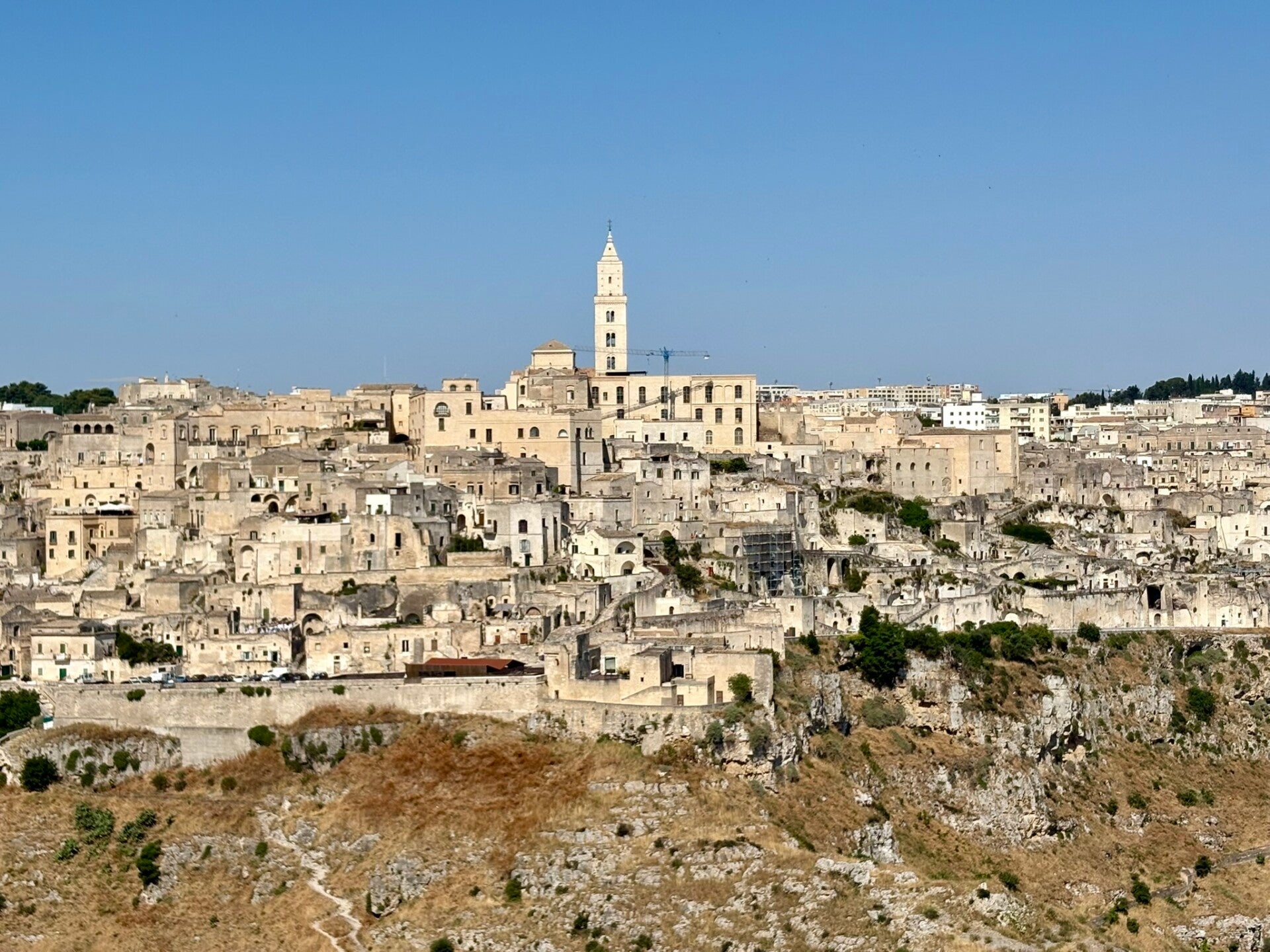
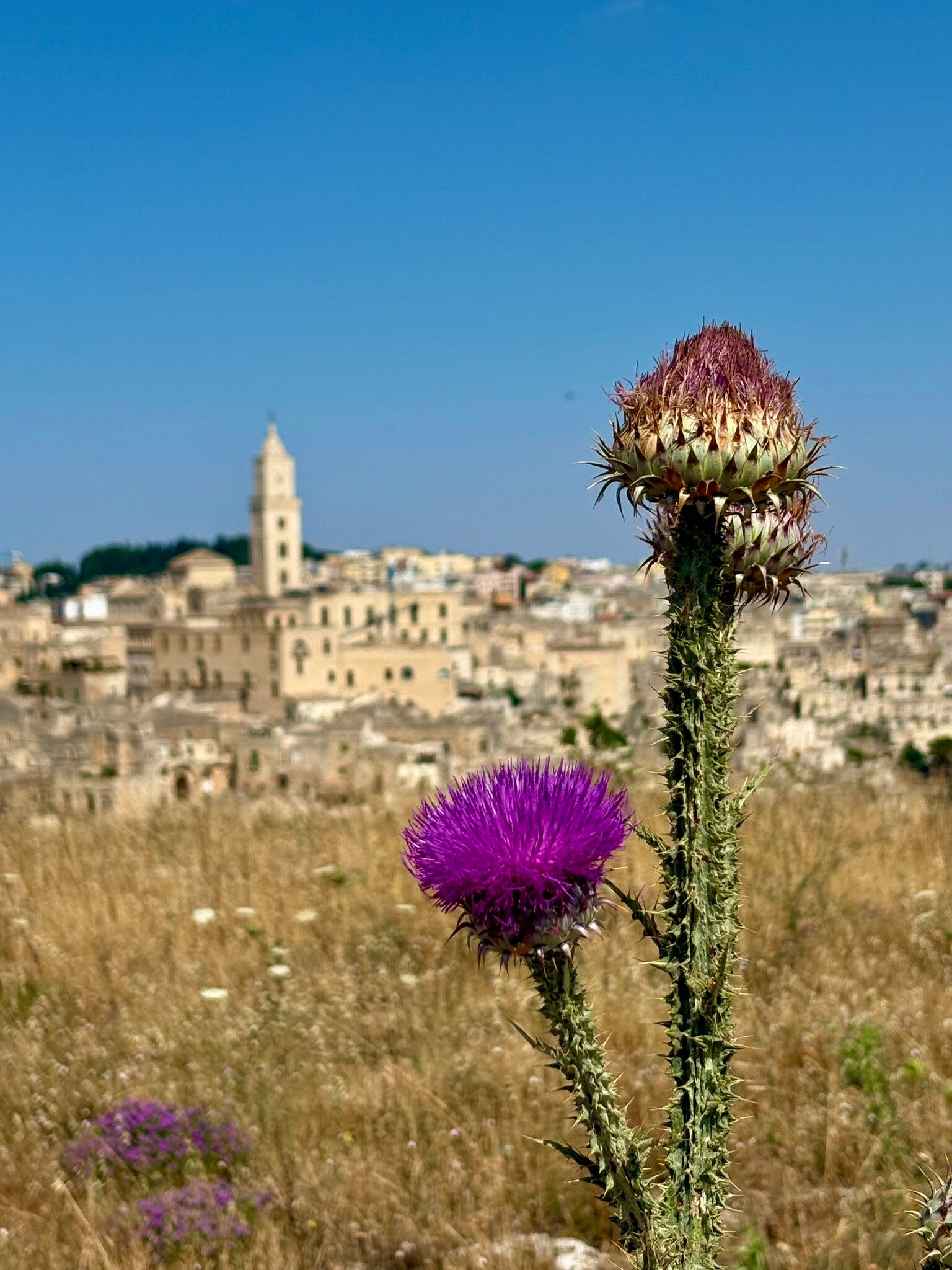
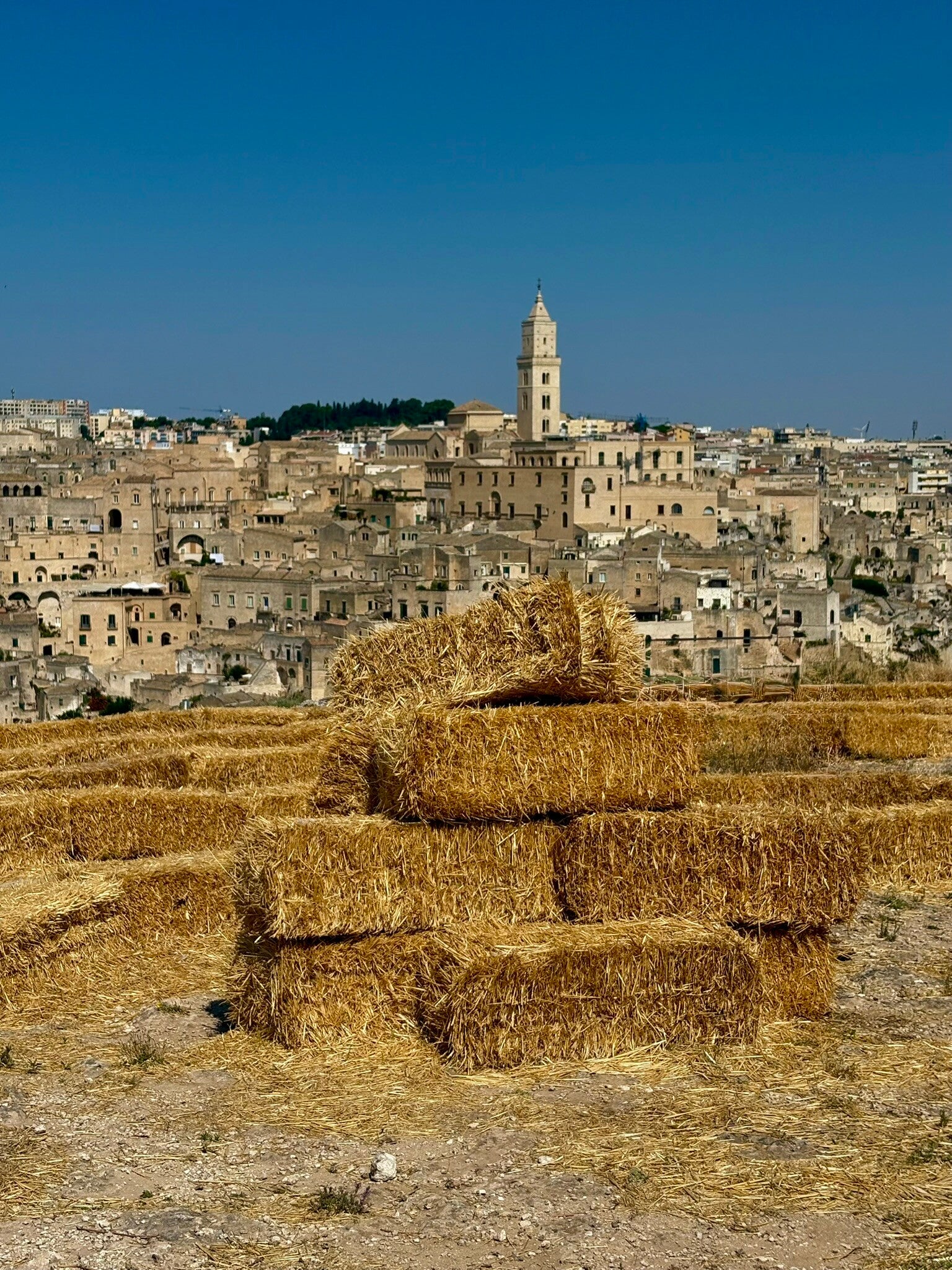
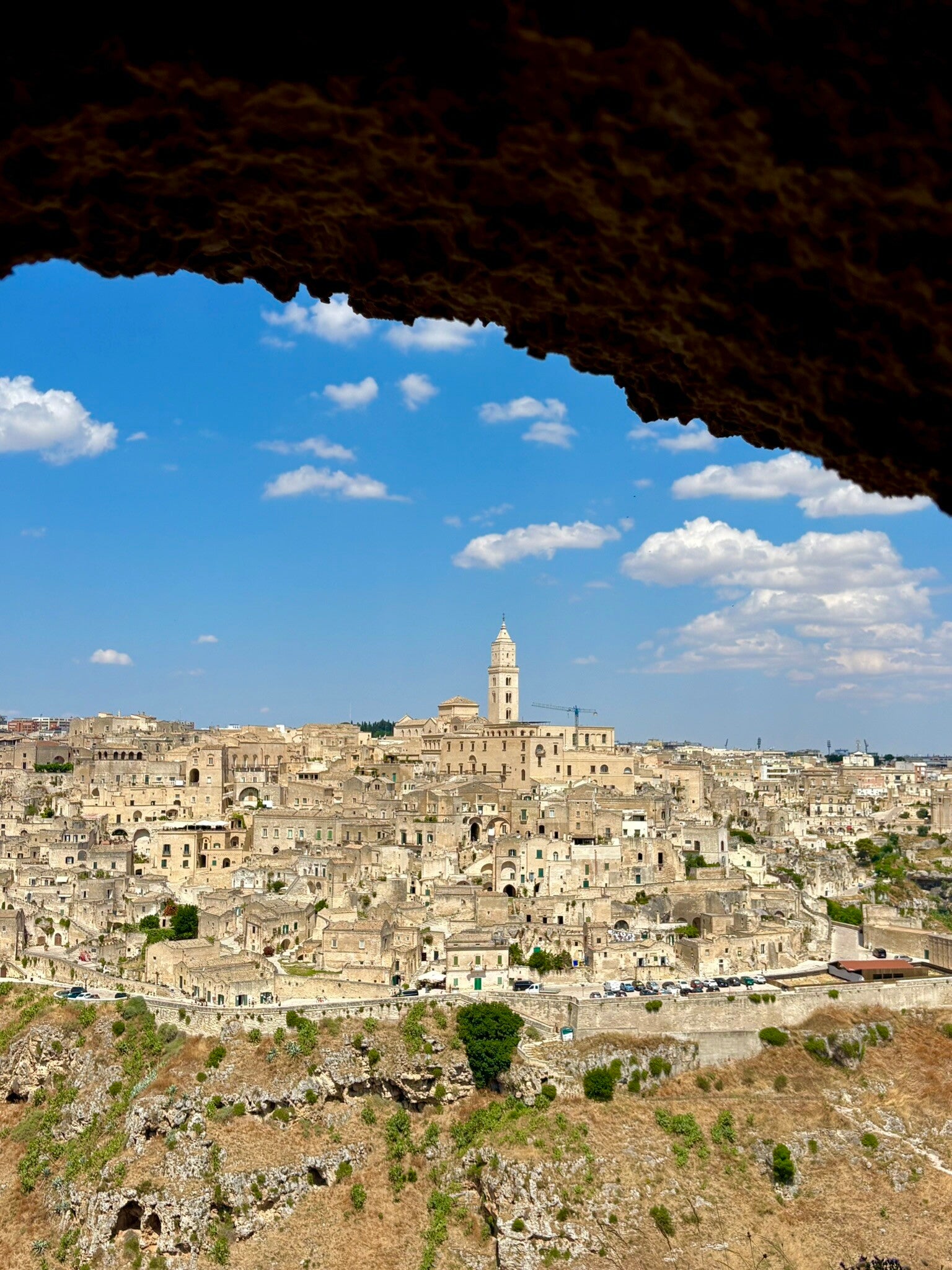
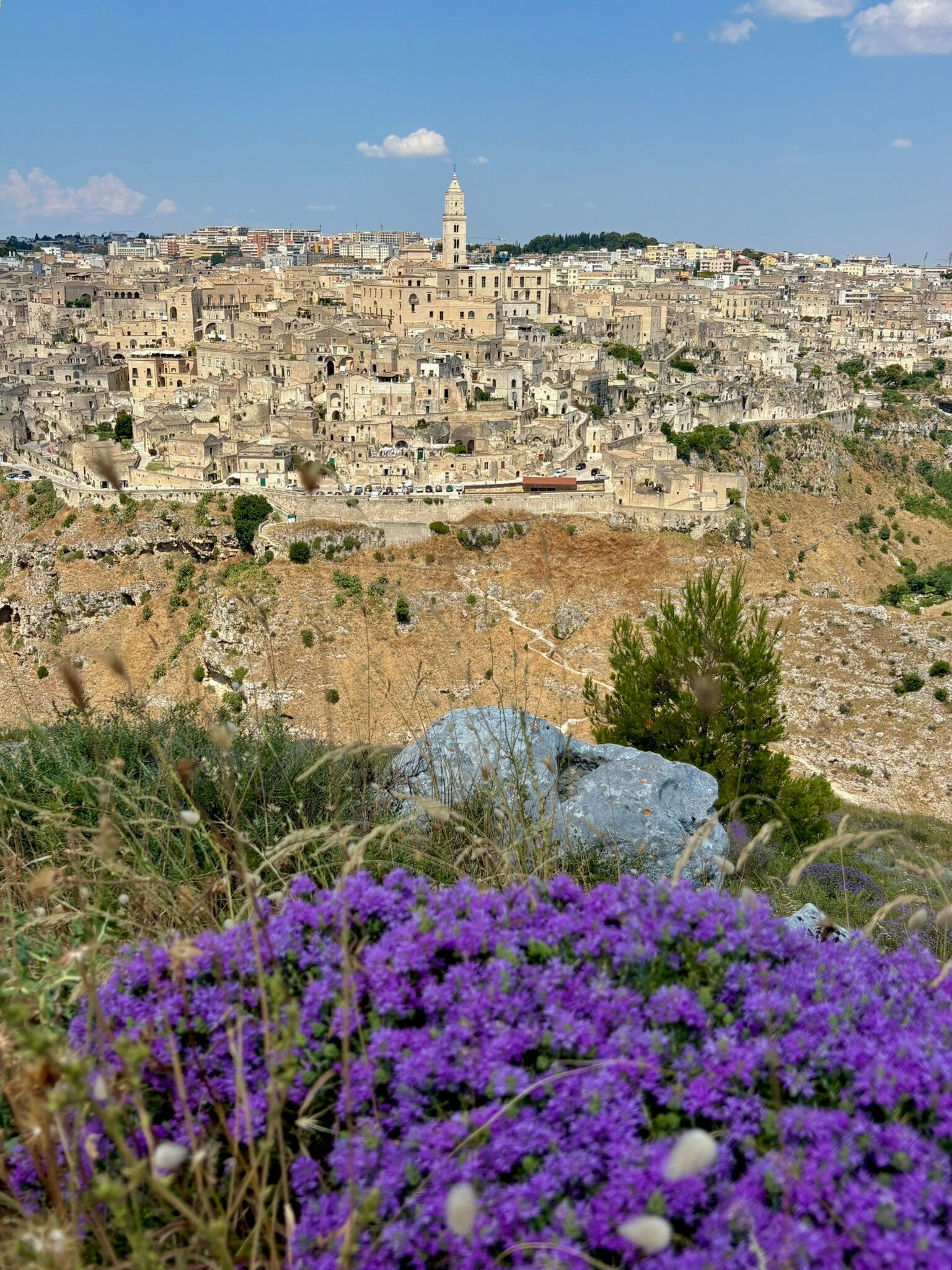
Start your second day in Matera by hiking to Belvedere Murgia Timone, the most iconic viewpoint overlooking Matera and the city's Sassi. It is situated across the canyon from Matera and, while the hike isn't particularly difficult, it is fully exposed to the strong southern Italian sun. Therefore, it's best to hike as early or as late as possible, although you will be somewhat limited by the trail's opening hours.
Disregard Google Maps telling you it's open 24/7 - that was definitely not the case when I visited. The ticket booth opened at 9 am, the ticket cost €15 (cash or card) and access was restricted to certain hours. Unfortunately, I don't remember the exact closing time, so check locally if you're planning an afternoon hike.
There are no places to buy water at the top, so make sure you bring enough with you.
The hike takes approximately one hour up and one hour down, but there are plenty of ruins, caves and viewpoints to explore once you reach the top, so budget around three hours for the whole experience.
Important: The trail is rocky and slippery in places, so proper hiking shoes are recommended, although you can probably get away with sturdy sneakers in dry conditions. They do check the footwear before selling the tickets!
Spend the remaining half of the day relaxing after the hike and exploring whichever Sasso - Barisano or Caveoso - you didn't properly see the previous day.
Finish the day by watching the sunset from Belvedere di Piazza Giovanni Pascoli, one of the most beautiful viewpoints over Matera.
Day 4 - From ancient Matera to whitewashed Ostuni
Spend your final morning in Matera enjoying breakfast with a view - I can highly recommend Crialoss Panoramic Bistrot for this. Once you've had your fill of panoramic views, continue to another of southern Italy's most photogenic towns: Ostuni.
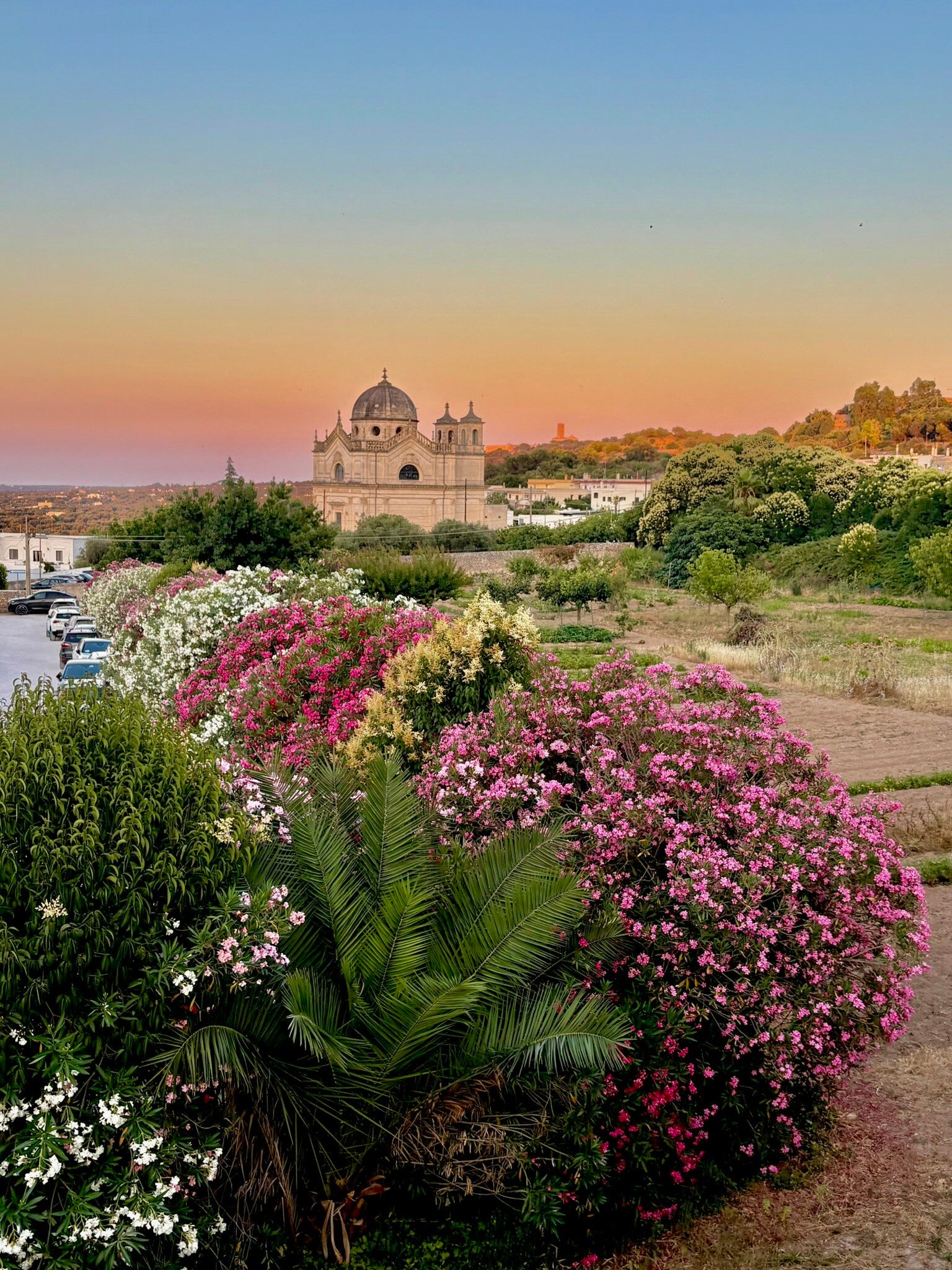
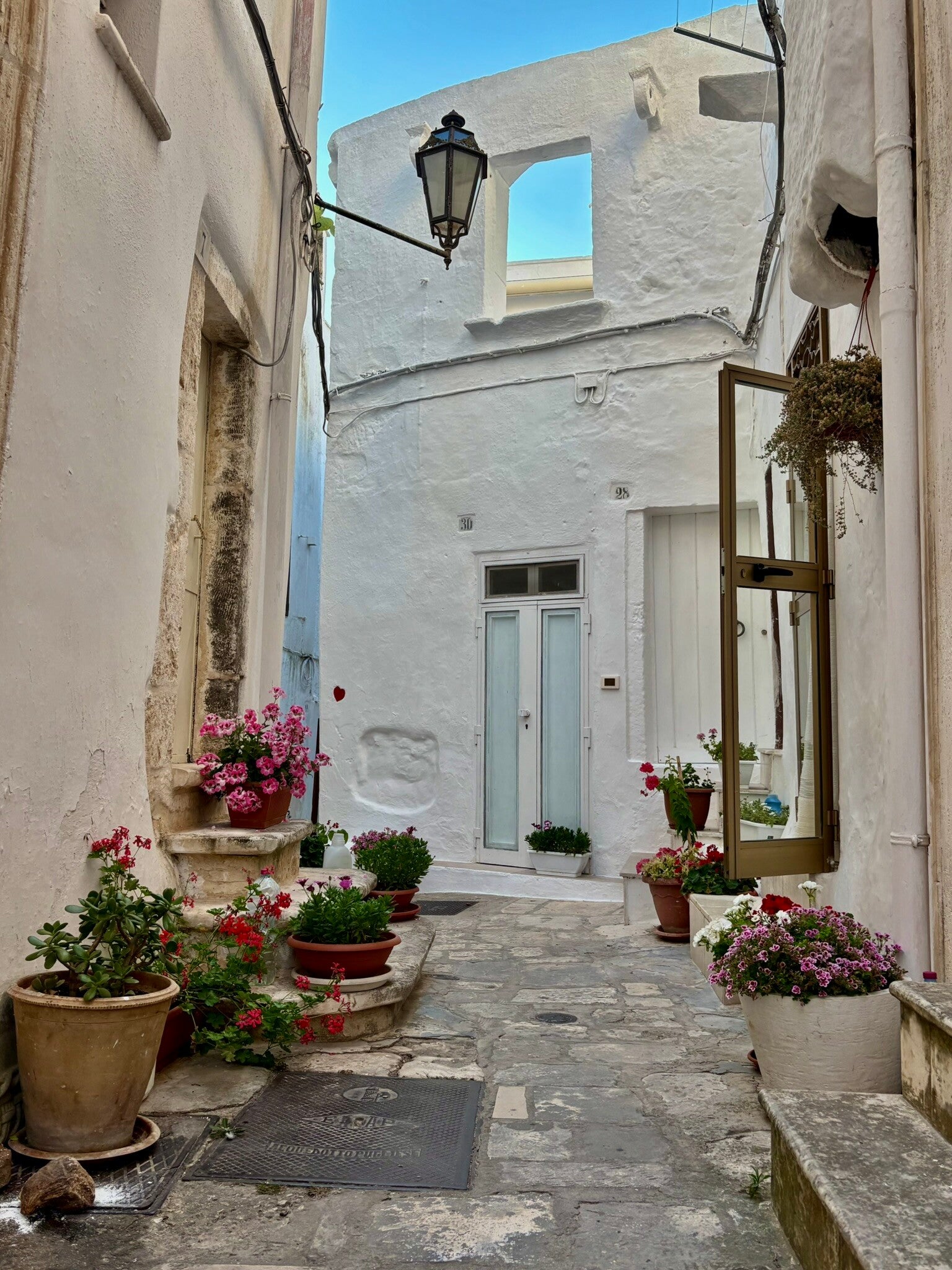
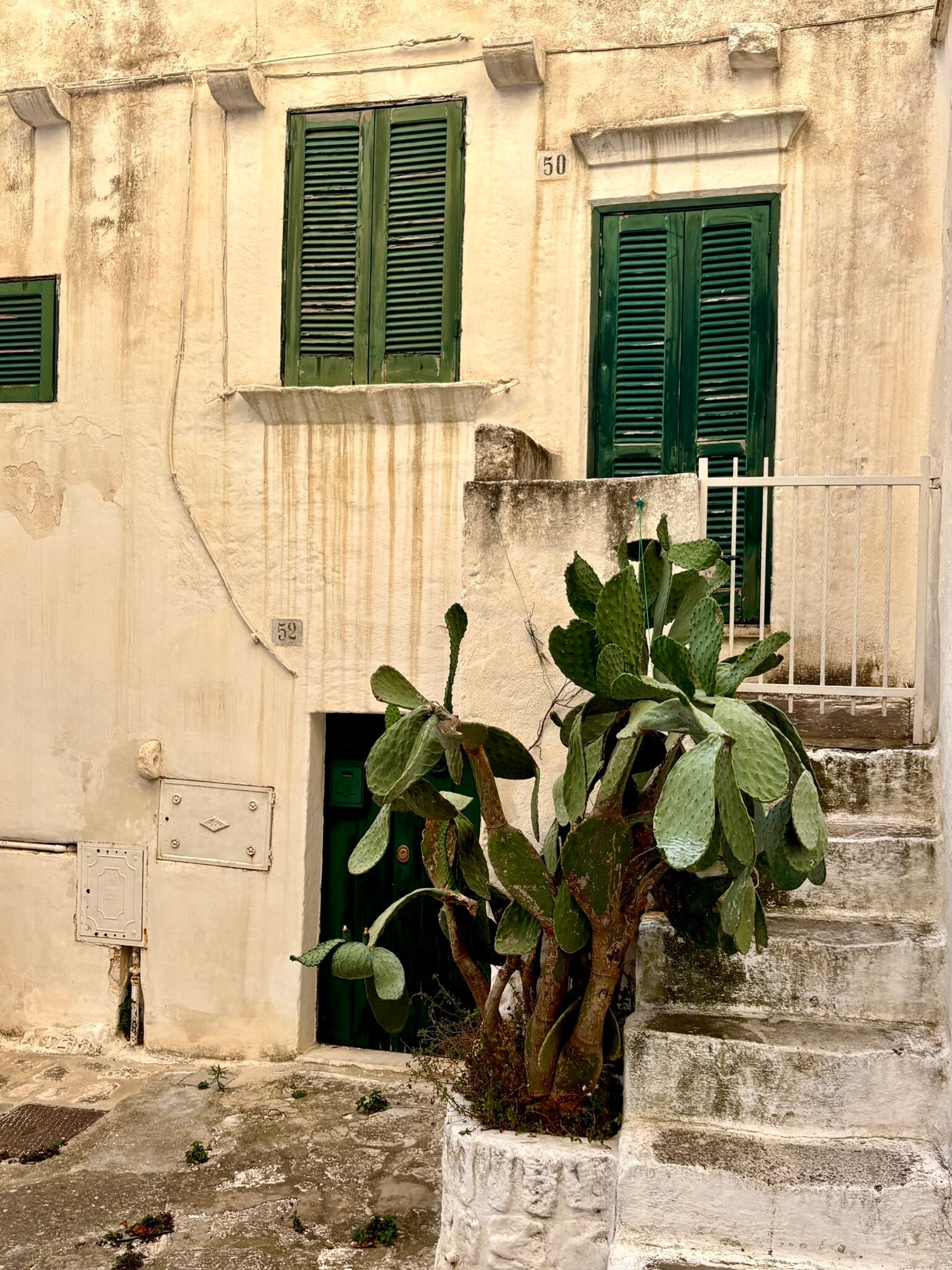
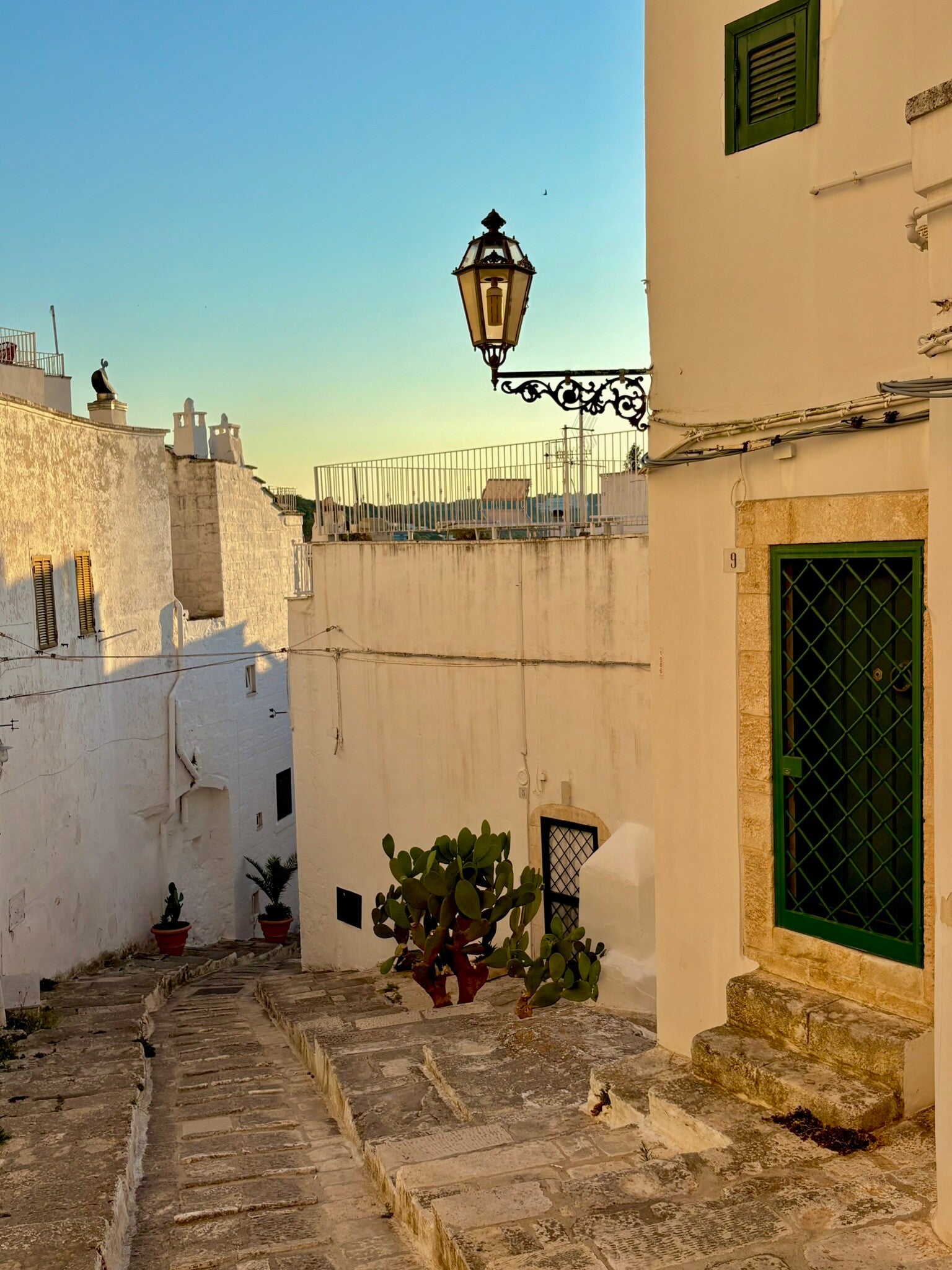
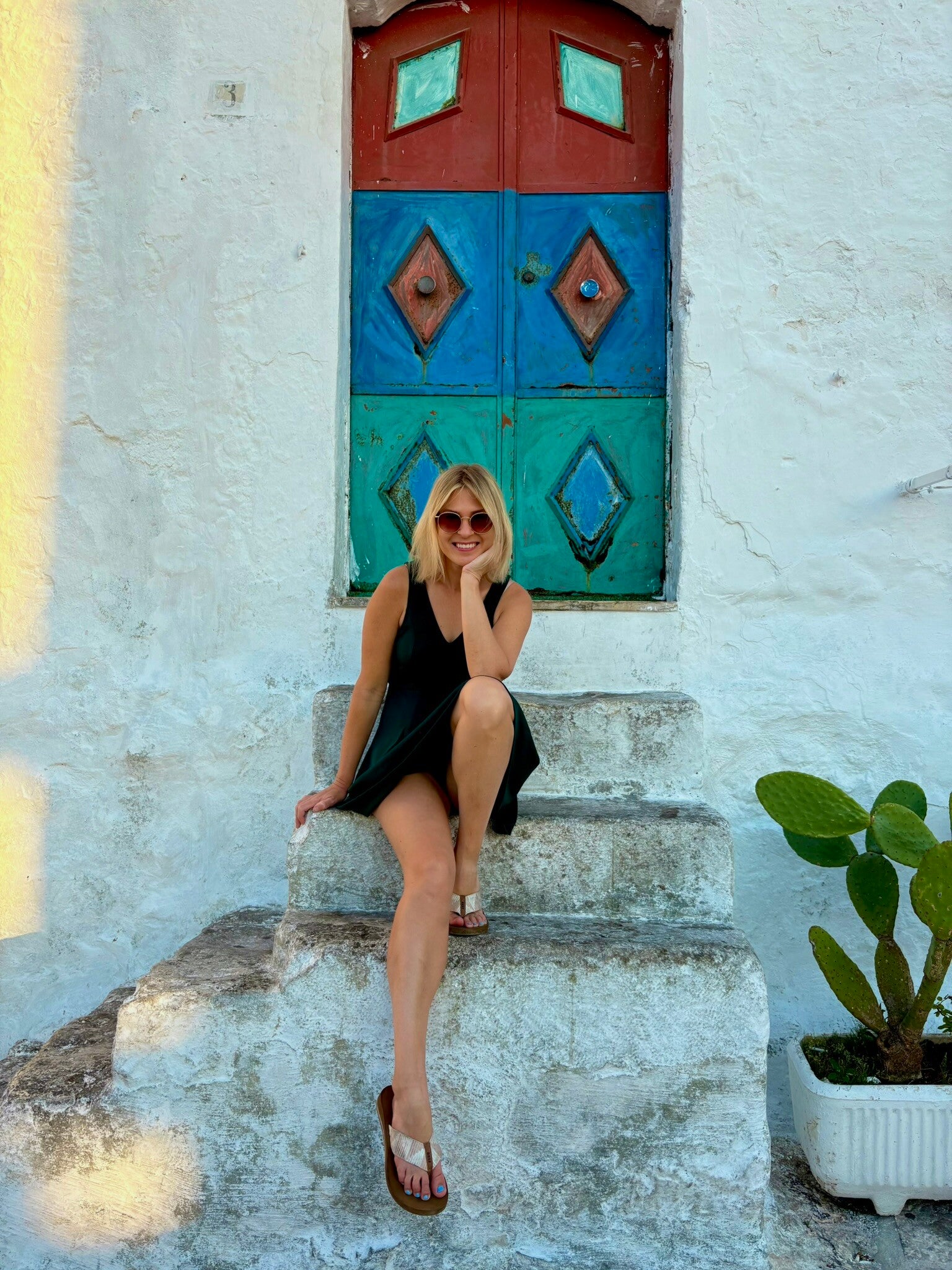
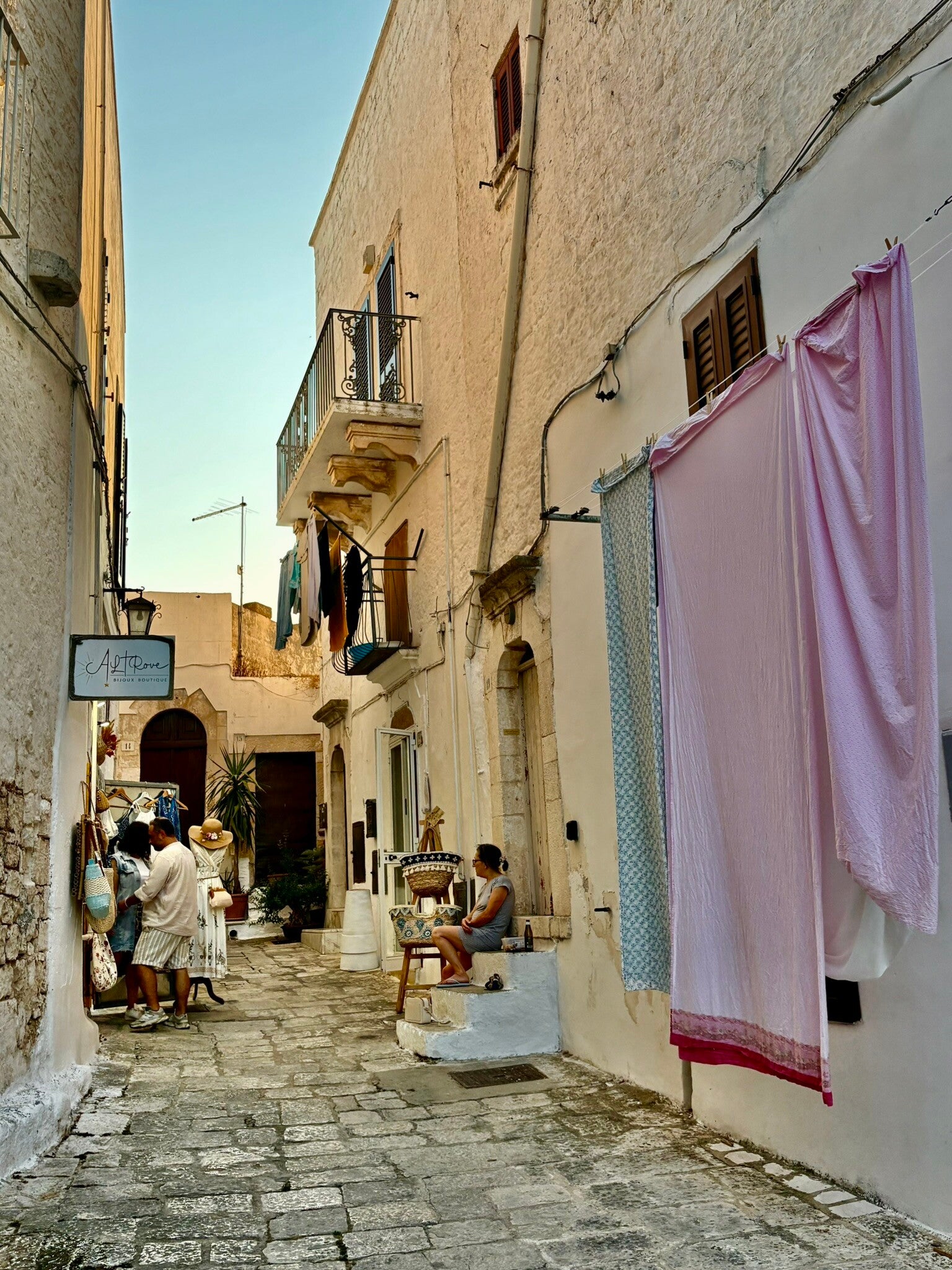
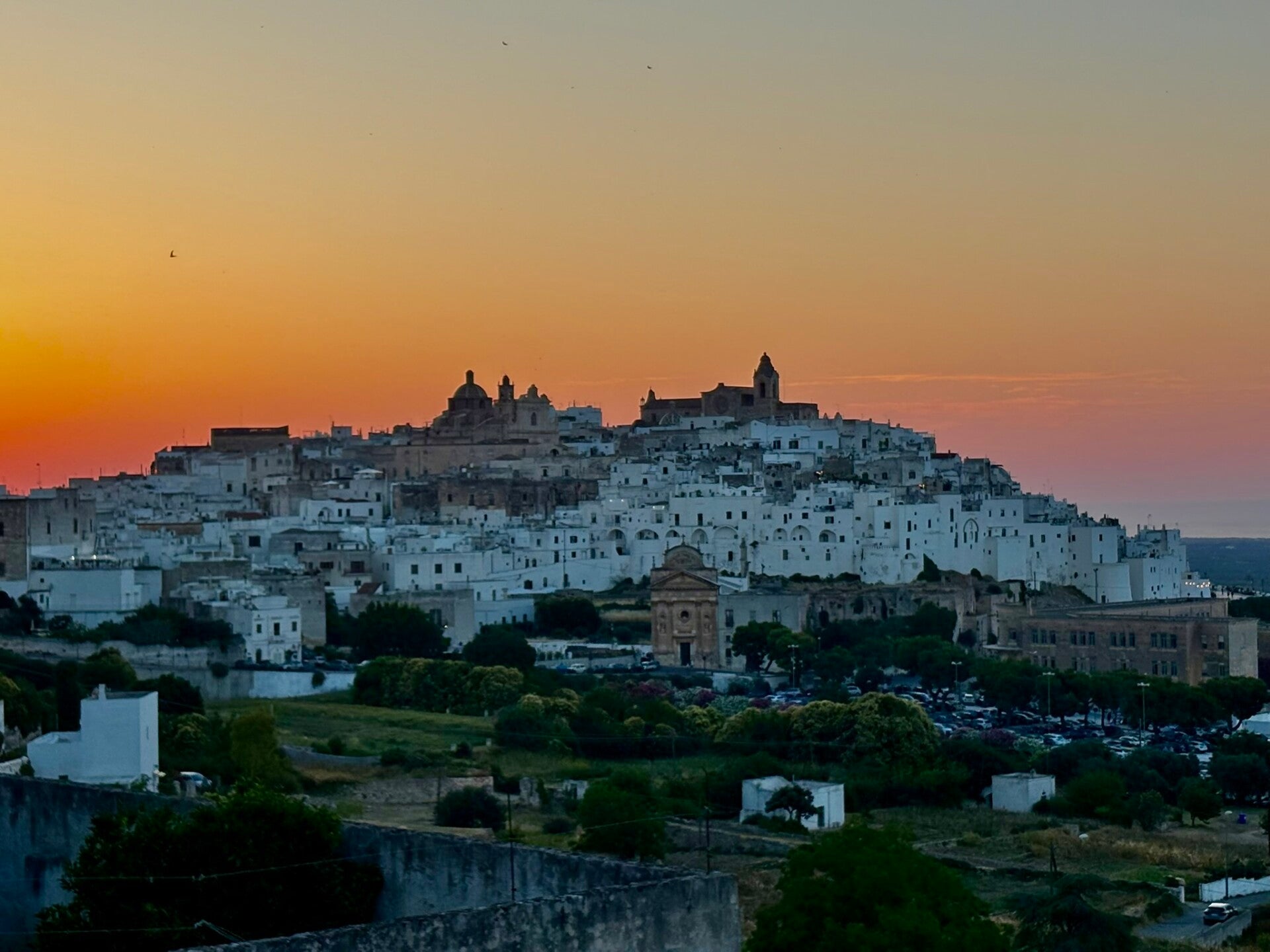
Known as La Città Bianca, or the White City, as its historic centre is almost entirely painted white with limewash, making it one of Puglia’s most photogenic towns. Historically, limewash wasn't just decorative: lime was inexpensive, readily available and valued for its hygienic properties.
The journey from Matera takes around 2h hours by car a approx. 3.5 h by public transport again connecting through Bari.
If you feel like you've already done a fair bit of walking and exploring in Matera, I can assure you that Ostuni will feel much more compact and manageable. You can easily see the historic centre in half a day.
The main sights include:
- Piazza della Libertà
- Via Cattedrale
- Arco Scoppa
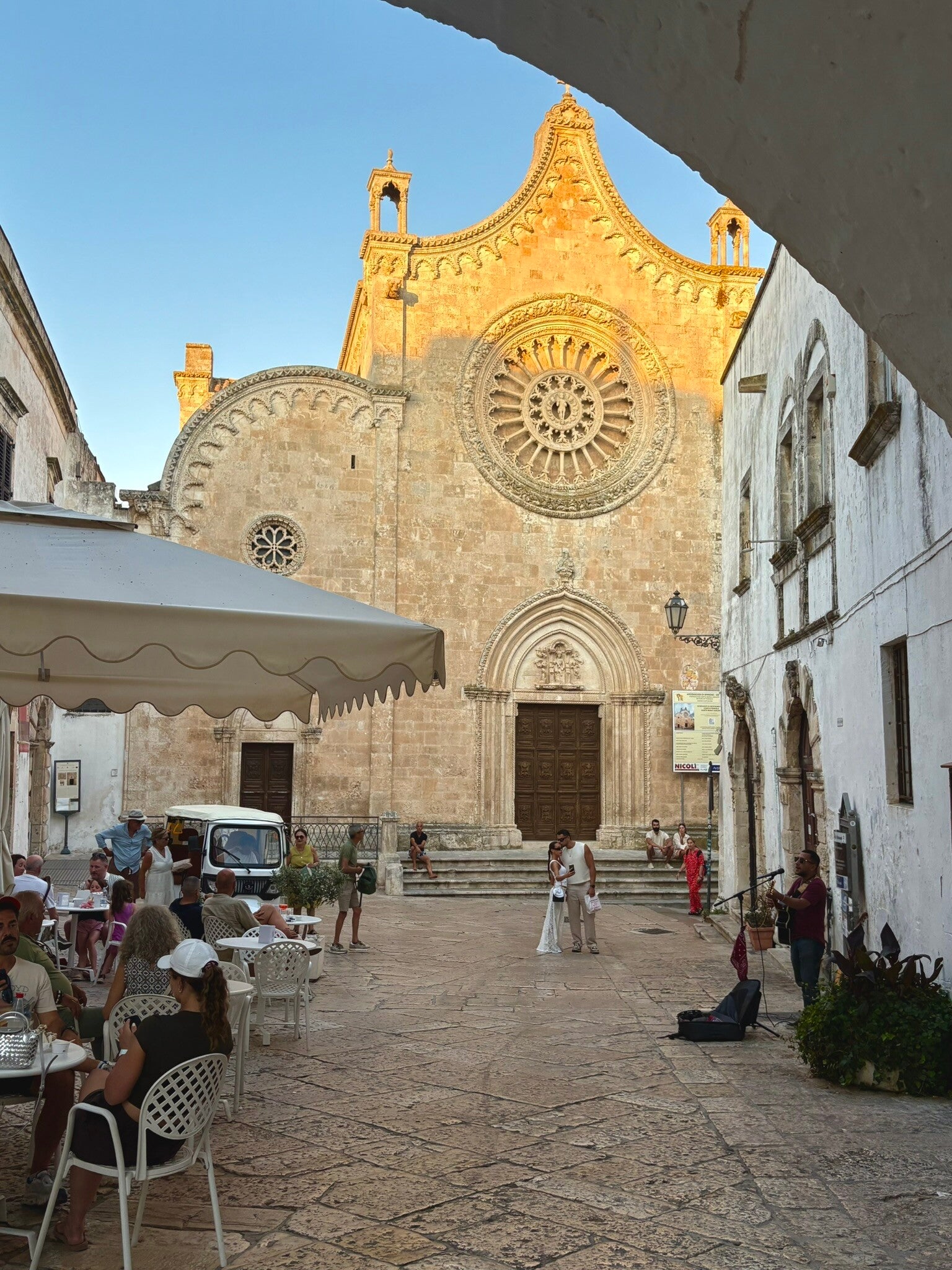
- Ostuni Cathedral
- The old city walls and gates, including Porta San Demetrio
However, Ostuni is less about ticking individual landmarks off a list and more about wandering. Its historic centre feels like a maze, with narrow twisting streets, staircases, arches, sudden turns and dead ends. This layout made it hard for attackers to move quickly in the ancient times, so if you feel slightly disoriented while exploring Ostuni, you're getting the full experience!

Day 5 - Clifftop views and seafood in Polignano a Mare
Ostuni is a great base for exploring other Puglian towns, as it's well connected by train.
My favourite day trip from Ostuni is the coastal town of Polignano a Mare, with the train journey generally taking between 26 and 48 mins, depending if you catch a direct departure.
Polignano a Mare is one of the most spectacular coastal towns in Puglia, with dramatic limestone cliffs, sea caves and a picturesque old town perched above the Adriatic. You can start your exploration by trying the local cuisine, which is quite different from what you'll have eaten in inland Ostuni or Matera.
Two things worth trying are:
- Panino con polpo - an octopus sandwich and one of Polignano's best-known street-food staples. Pescaria is particularly famous for its seafood sandwiches. If you're not into octopus, they have plenty of other fish and vegetarian options, just expect a bit of a wait around lunchtime.
- Caffè Speciale - Polignano's famous sweet coffee speciality, combining espresso with cream, amaretto and lemon zest.
Once you've had your fill of the local delicacies, walk them off by visiting some of Polignano's best viewpoints:
- Lama Monachile - the iconic little beach squeezed between two tall limestone cliffs.
- Lama Monachile viewpoint - enter this into Google Maps for another beautiful view looking down towards the beach.
- Belvedere Terrazza Santo Stefano - another beautiful coastal viewpoint.
- Domenico Modugno statue - a monument to the Polignano-born singer behind Volare. Even if statues aren't your thing, head down the stairs behind the monument to Pietra Piatta, or Flat Stone. In my opinion, this is the best viewpoint in Polignano a Mare.
- The old town - enter through Arco Marchesale and you'll find yourself in a maze of whitewashed alleys, tiny squares and terraces overlooking the sea, perfect for an afternoon drink.
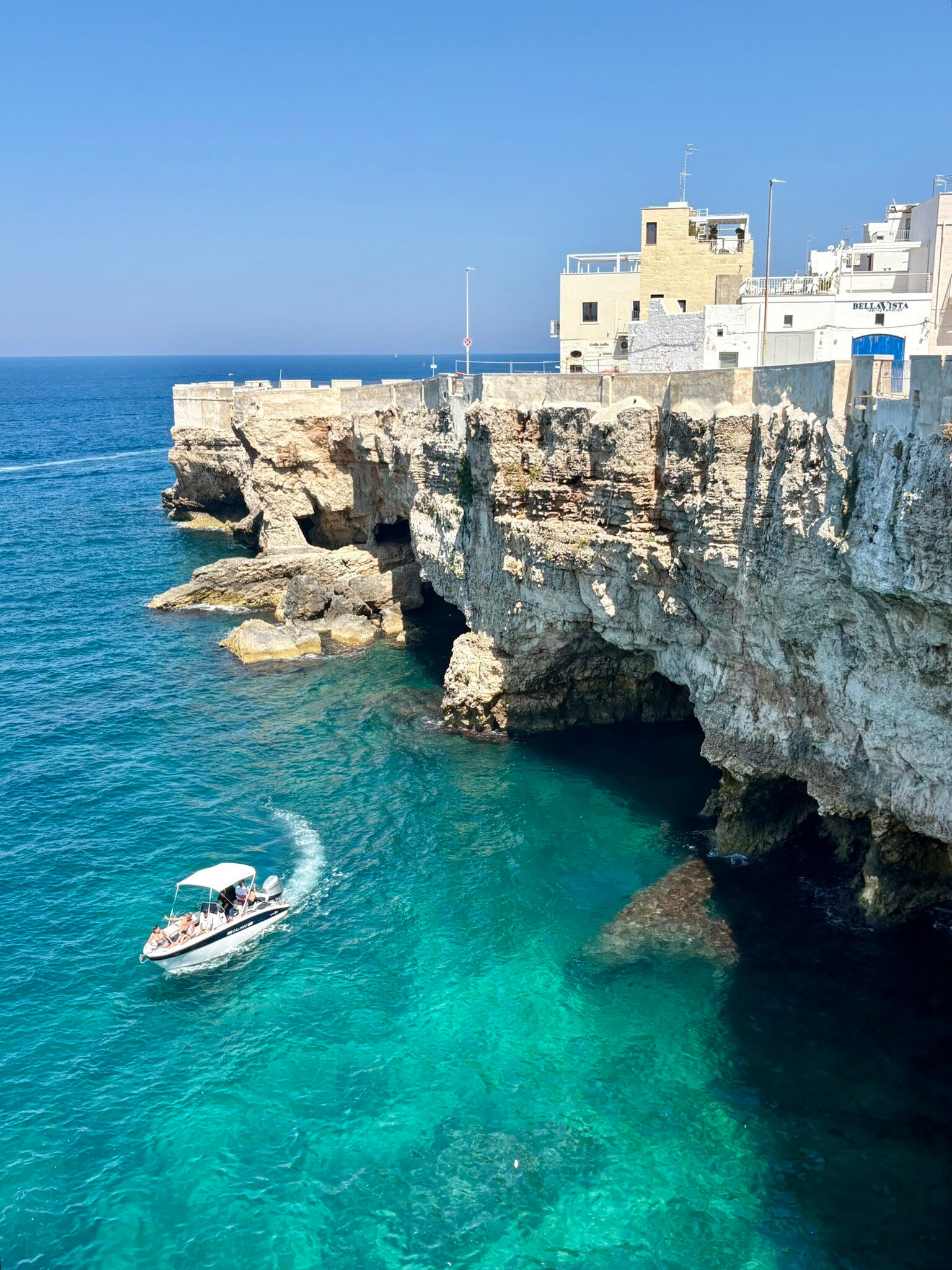
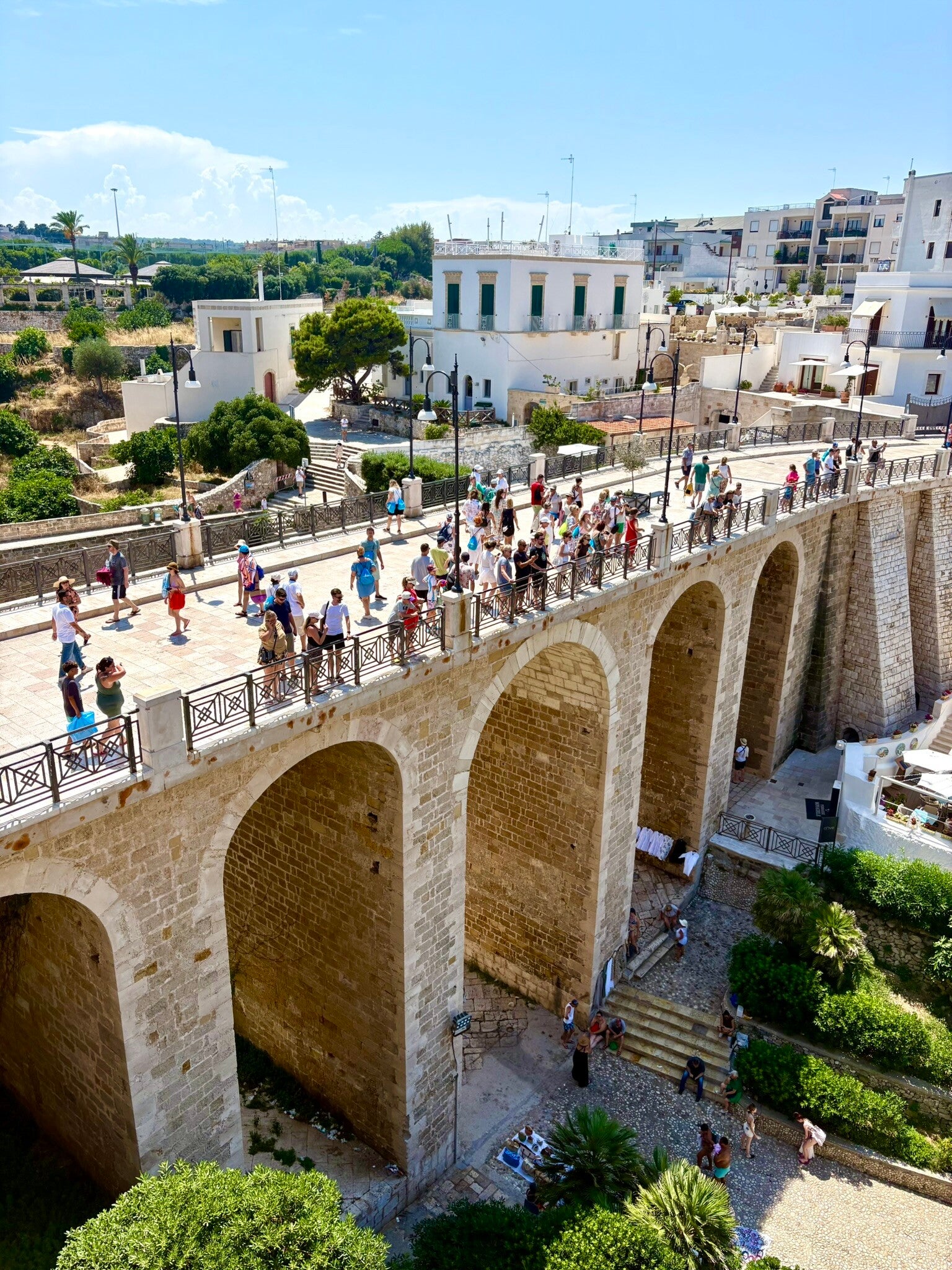
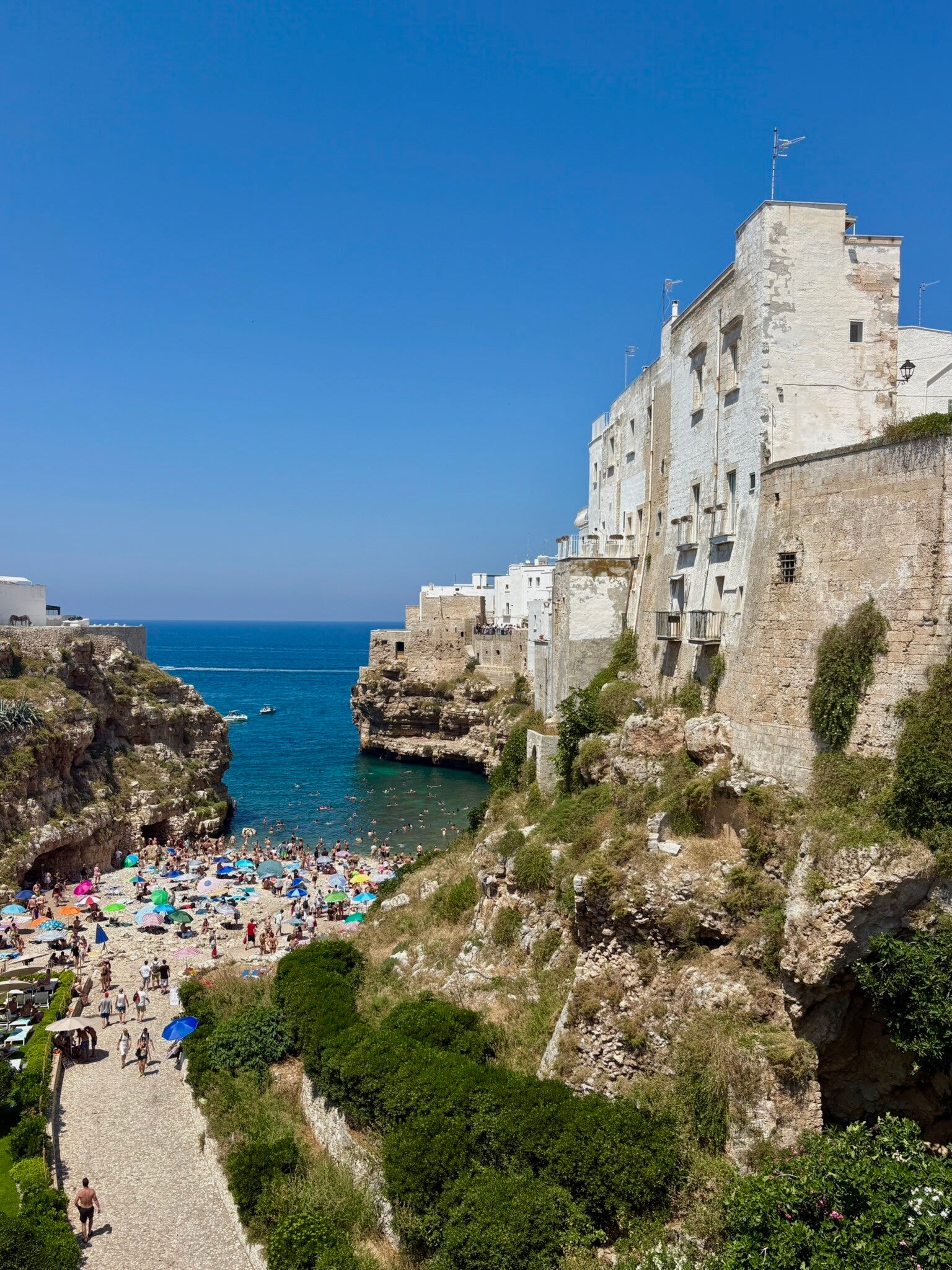
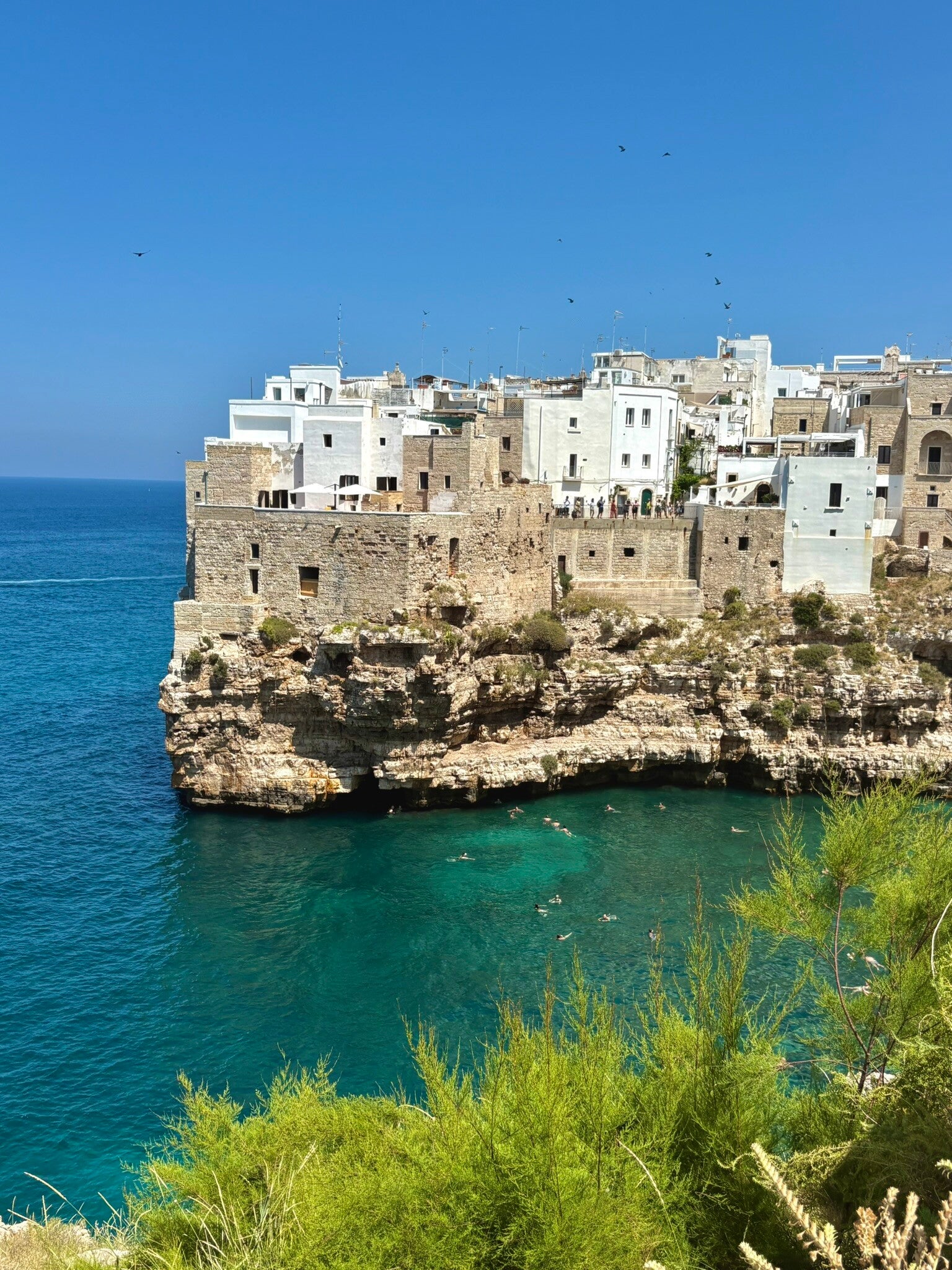
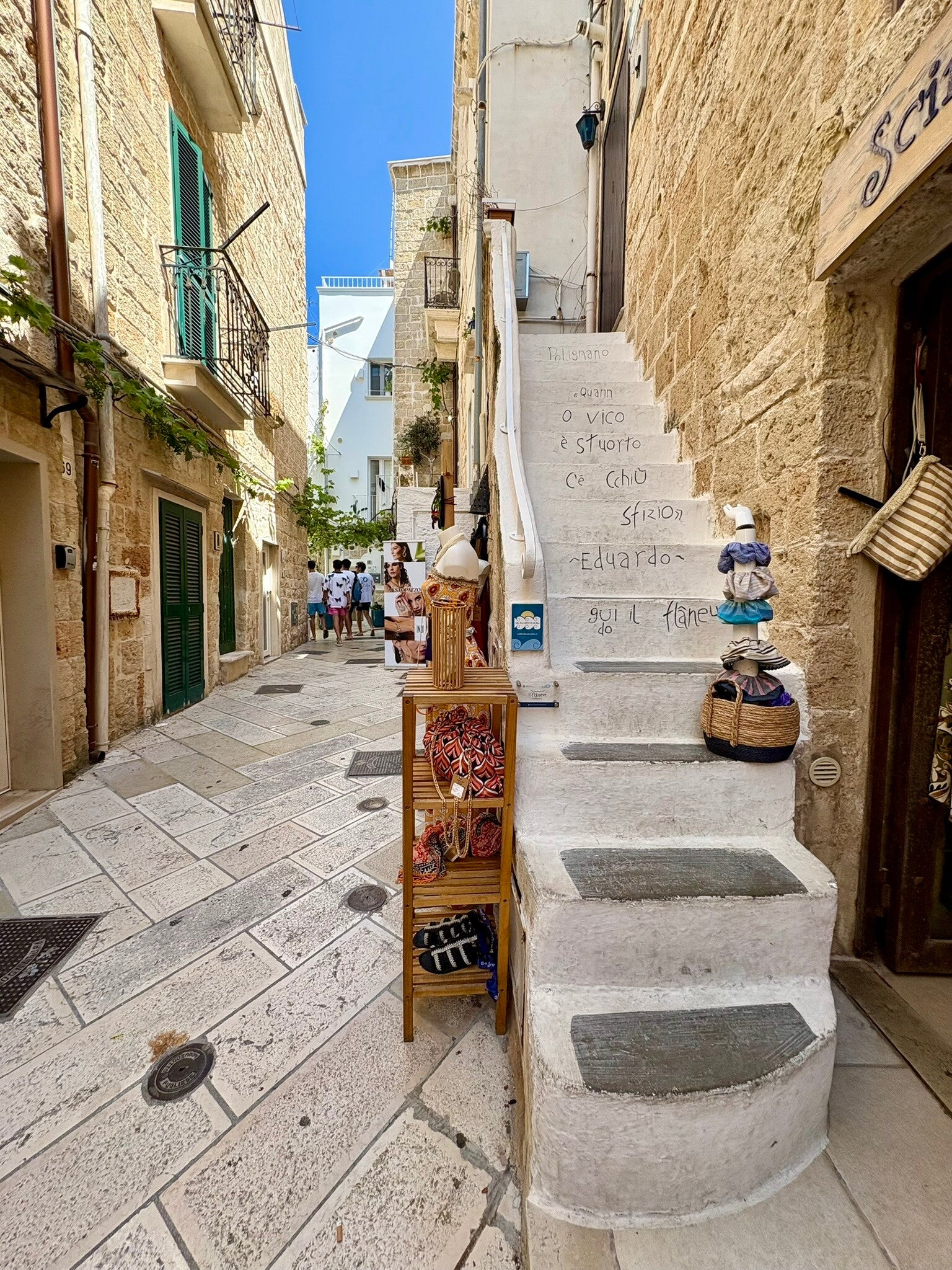
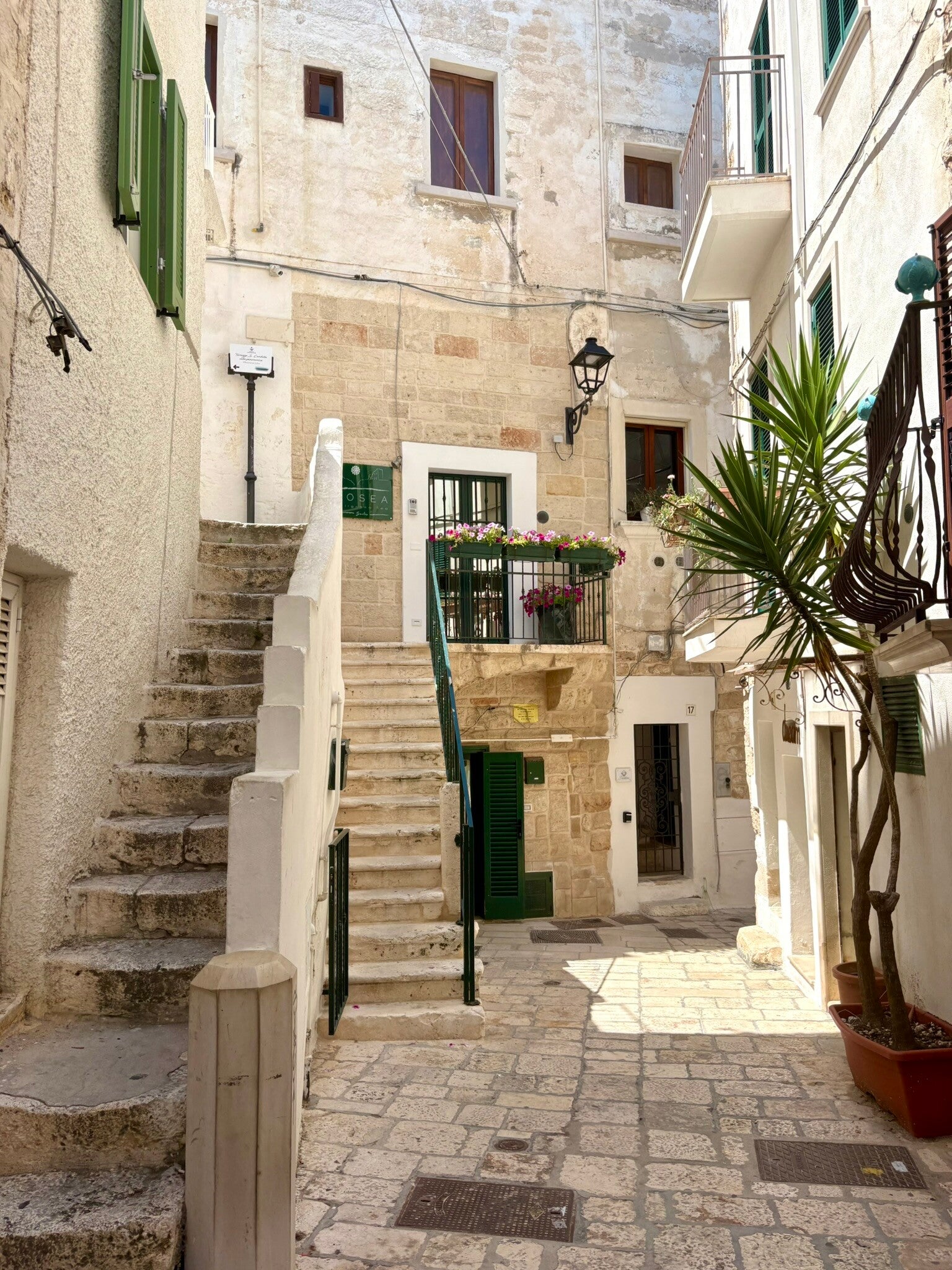
Polignano a Mare also beckons for a refreshing dip in the Adriatic or a jump from the cliffs. If you're visiting during summer, bring your swimwear and allow some time to cool down at the beach. You could also easily extend your stay here beyond a day. It's exactly the kind of place where an intended afternoon stop can accidentally turn into two days.
Alternative: spend another day in Ostuni
If you'd rather stay in Ostuni, spend the day getting better acquainted with the town. If your visit falls on a Saturday, check out the local market. Another interesting stop is the Museum of Pre-Classical Civilisations of the Southern Murgia, home to the remains of Delia, a young pregnant woman who lived around 25,000 years ago and whose skeleton was discovered with the remains of her unborn child still preserved.
Day 6 – Finish with pasta and history in Bari
Getting back to Bari from Ostuni takes around an hour by car or train. If you've decided to stay overnight in Polignano a Mare instead, the journey is even shorter - approx. 30-40 mins.
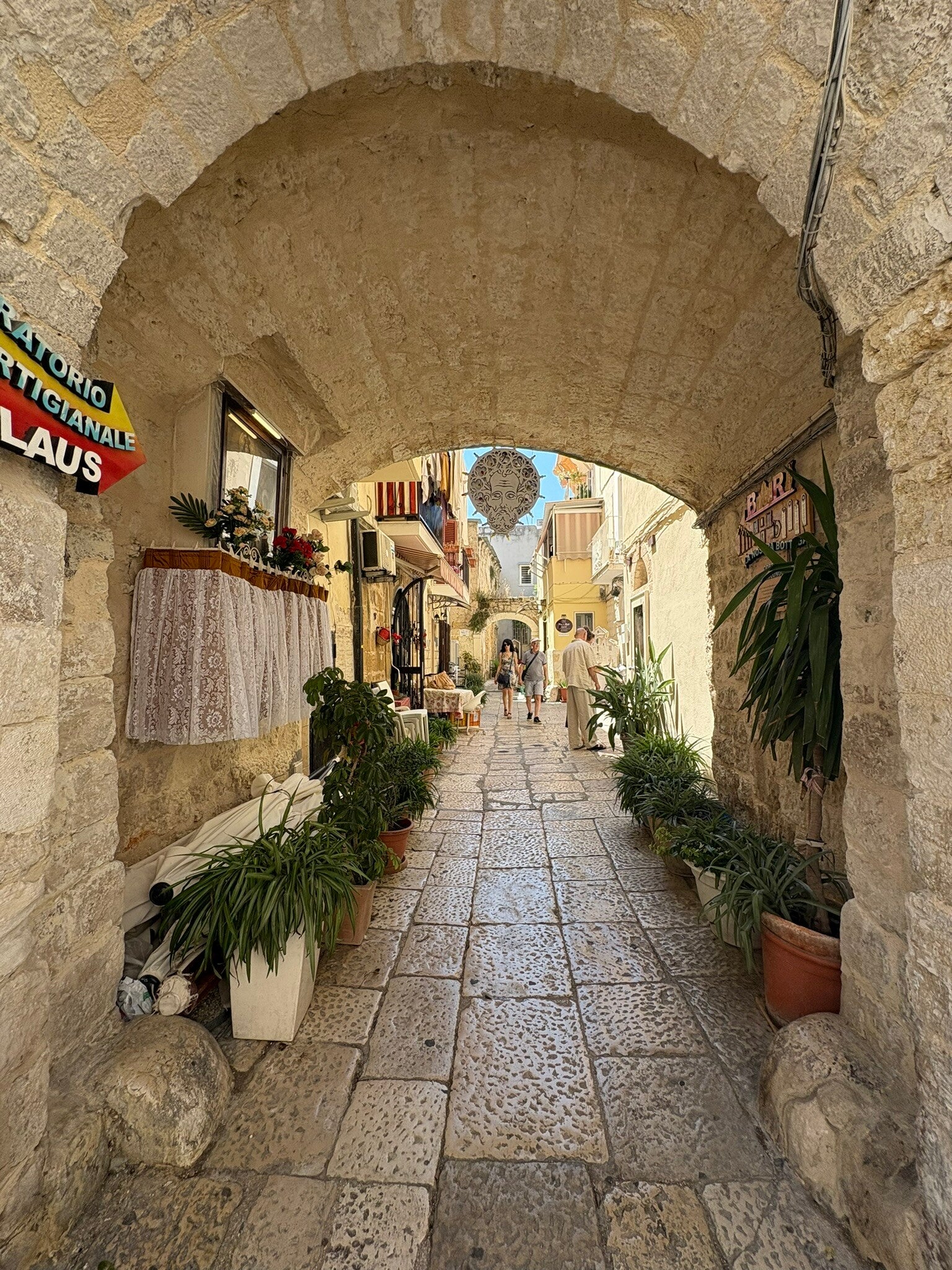
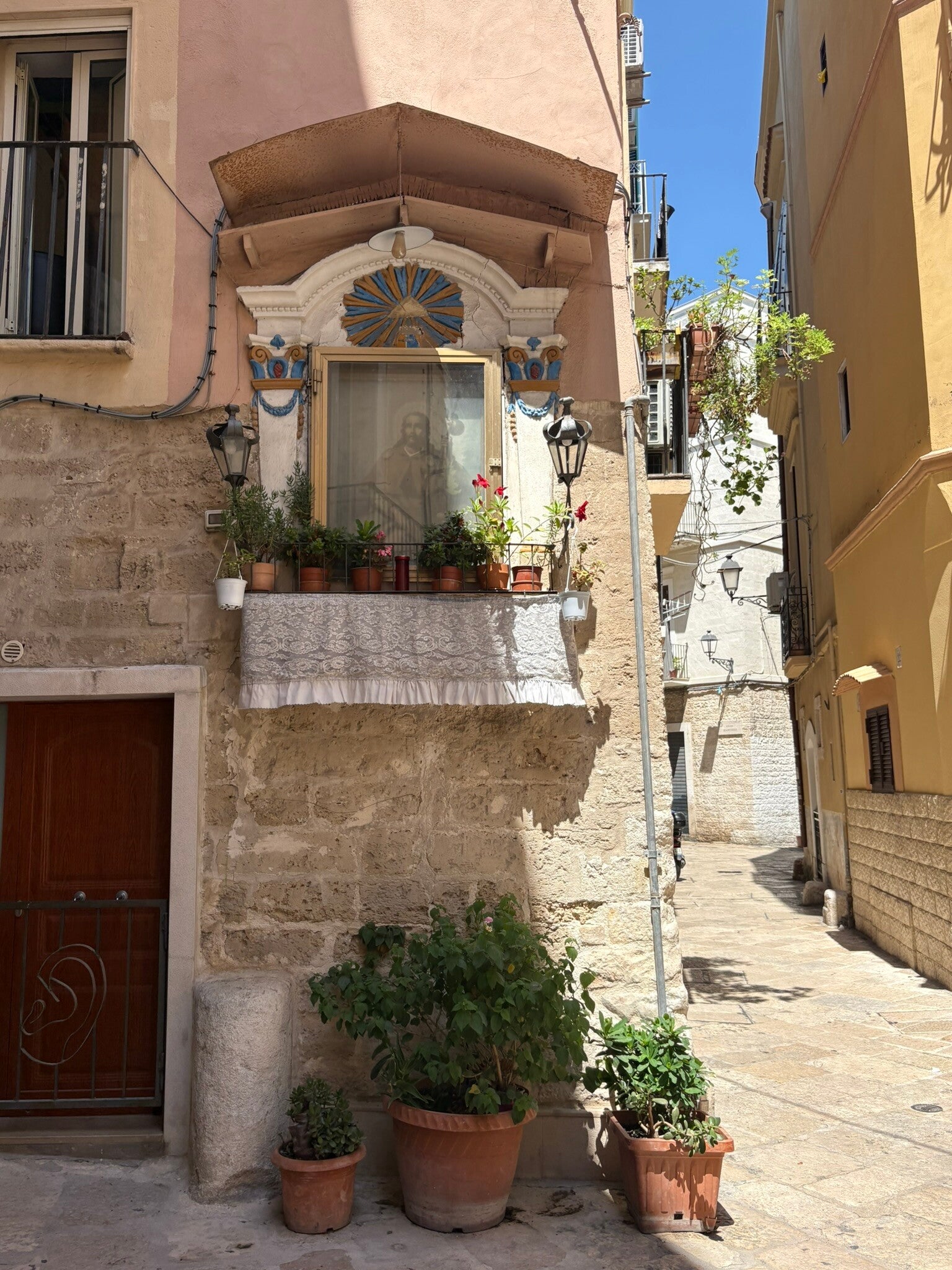
Before catching your onward flight or train, dedicate at least a couple of hours to exploring Bari Vecchia, the city's atmospheric old town.
Some of the best places to visit include:
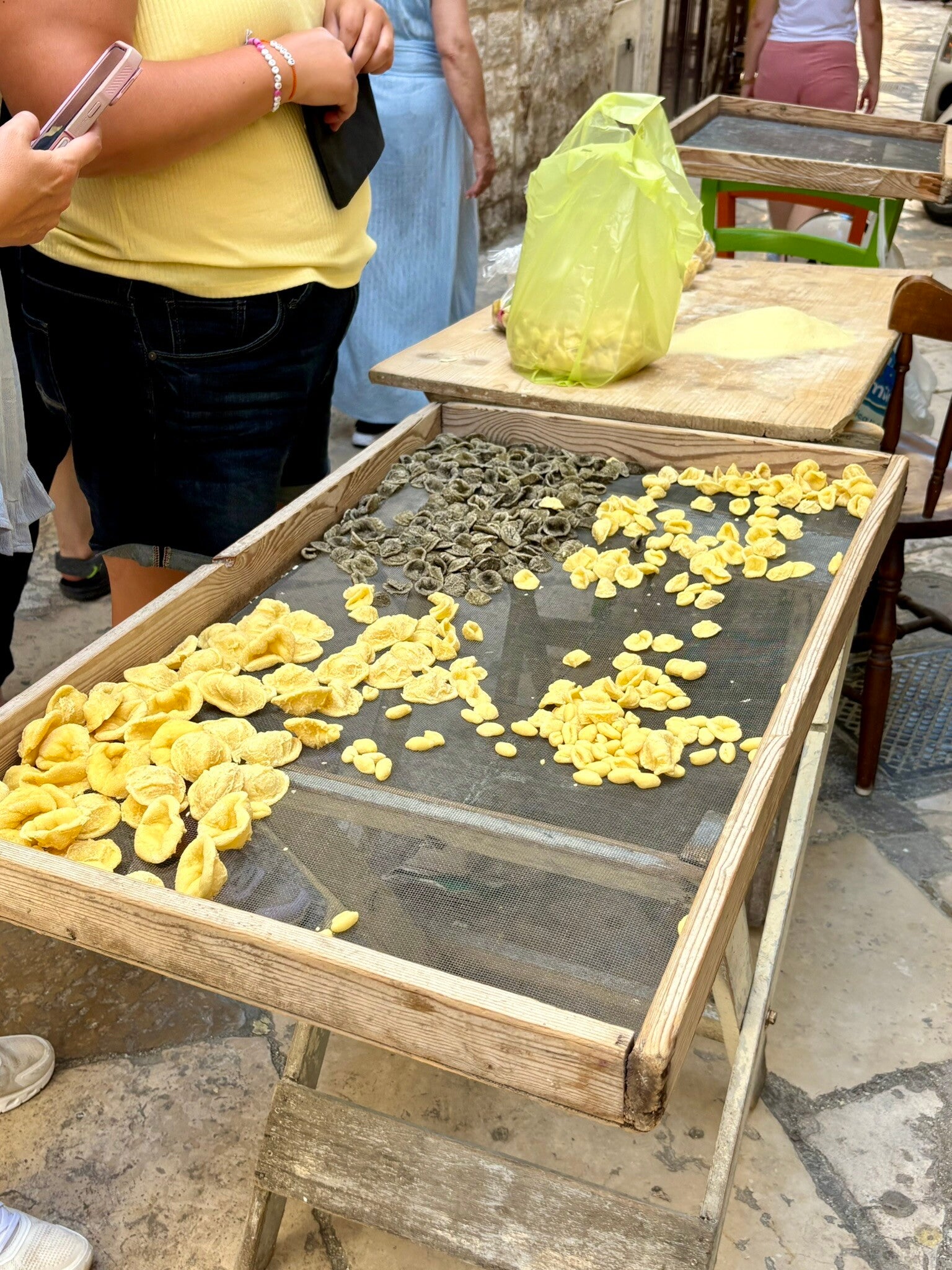
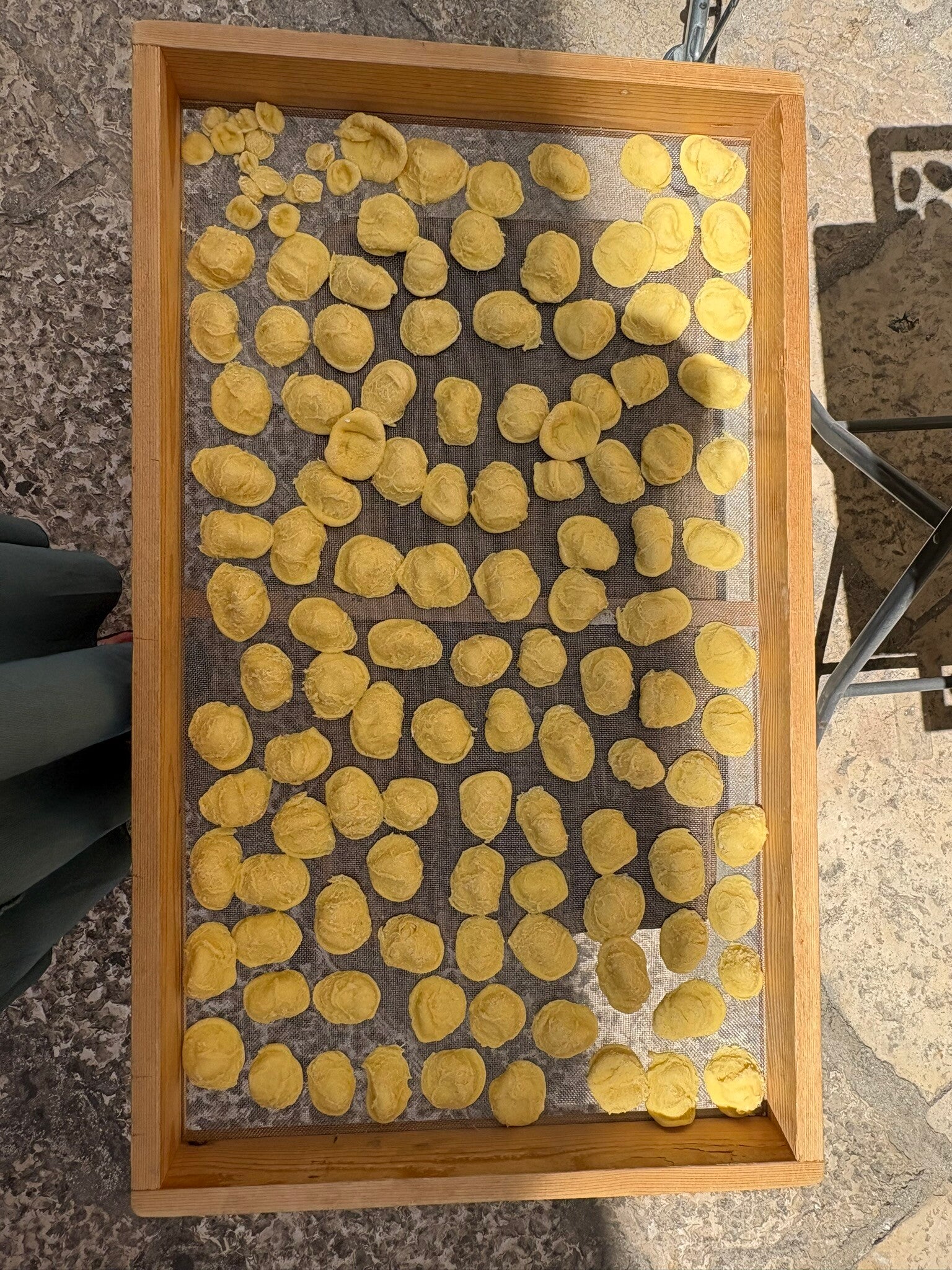
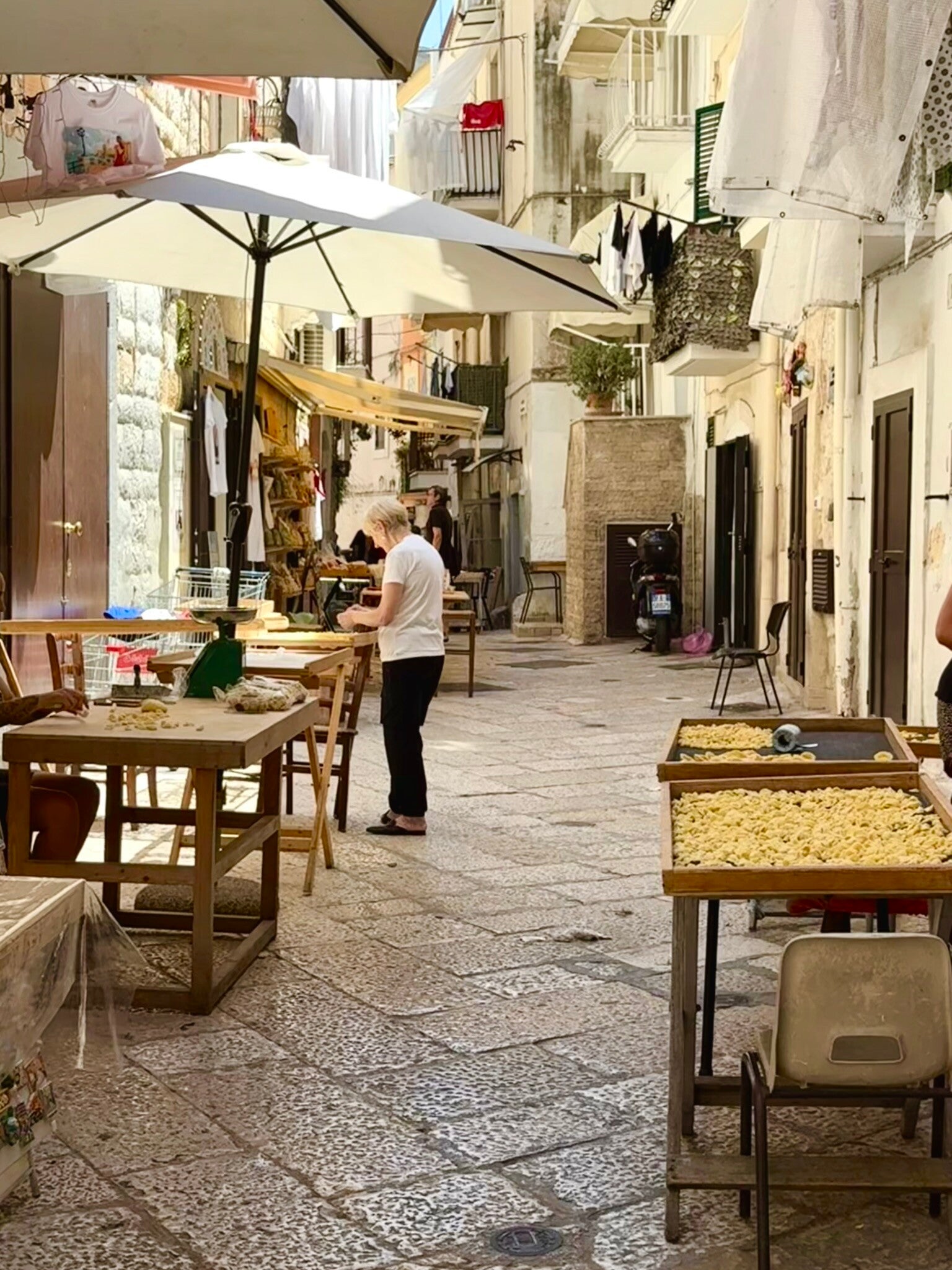
- Via Arco Basso - better known to visitors as Strada delle Orecchiette, one of Bari's most famous streets, where you can see local women making fresh orecchiette pasta outside their homes.
- Basilica di San Nicola - Bari's most famous church and home to the relics of Saint Nicholas, the historical figure behind the Santa Claus tradition.
- Castello Normanno-Svevo- Bari's imposing defensive castle, surrounded by massive stone walls.
- Lungomare - Bari's long seafront promenade, perfect for a final walk by the Adriatic.
- Bari Vecchia itself - forget the sightseeing checklist for a while and simply wander through the maze of narrow alleys and little squares.
And don't leave Bari hungry. Two local staples are particularly worth trying:
- Orecchiette con cime di rapa - Puglia's famous ear-shaped pasta, traditionally served with turnip greens.
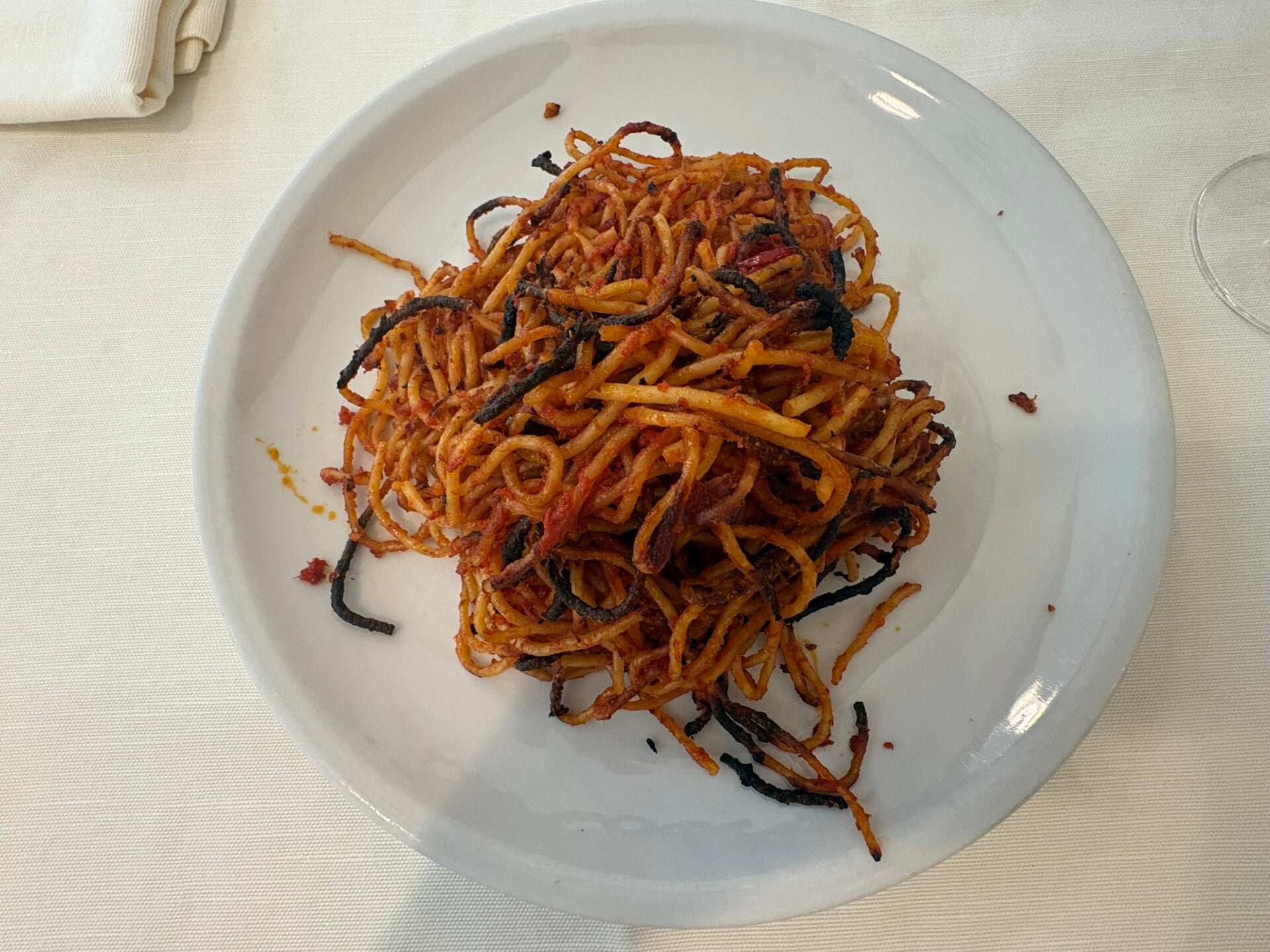
- Spaghetti all'Assassina - one of Bari's most distinctive pasta dishes. Unlike conventional spaghetti, the pasta is cooked directly in a frying pan with a spicy tomato and chilli sauce until parts of it become caramelised, charred and crispy.
It's a suitably dramatic final meal for the trip.
Day 7 – Slow down: beach, city or an extra night in your favourite town
You've covered quite a lot of ground over the past six days, so rather than squeezing another destination into the itinerary, use your final day as a buffer day. Spend another day swimming and relaxing in Polignano a Mare, linger over the views and restaurants in Matera, enjoy a slower day in Ostuni or give Bari more than the couple of hours allocated on Day 6.
This also gives you some flexibility if you're travelling without a car, have a late arrival or early departure, or simply decide that one of the places deserves more time than originally planned.
Personally, if you're travelling during summer, I'd use the extra day in Polignano a Mare. After several days of walking through trulli districts, cave cities and hilltop old towns, a day by the Adriatic is a pretty good way to finish the trip.
Summary - One week of trulli, cave cities and Adriatic views
One week in Puglia gives you enough time to experience several completely different sides of southern Italy. You'll go from the storybook trulli of Alberobello to the ancient cave neighbourhoods of Matera, get lost among the whitewashed streets of Ostuni, eat seafood above the Adriatic in Polignano a Mare and finish among the lively streets and pasta traditions of Bari.
The distances aren't particularly large, but each stop feels completely different from the last, which is probably what I liked most about this itinerary.
Add comment
Comments
Do you have recommendations for hotels/ airb&b
what a fabulous itinerary and your photographs are just beautiful well done and thanks so much I'm in the planning stage
What is the last month you can swim in the Adriatic ? Puglia is on my bucketlist but not just sightseeingg...Thanks
Please send any other great tips!!
Would be interested in hotels you stayed in
I'm planning to visit Puglia next May and love your itinerary thank you . Is it possible to stay in one location and drive daily to sightsee or would you recommend staying in a couple of locations? I'm confused as to where to base myself .
Do you have a driver that you can recommend?
Thank you all so much for ver nice comments and feedback, much appreciated!
I do not provide specific hotels recommendations, as I feel it's a deeply personal choice based on preferences and budget, but where possible I would recommend staying in traditional housing , such as trulli in Alberobello, and other locations in old town to facilitate exploring.
Puglia is quite large, so basing yourself in one city is probably not the best idea, but could in theory be done from Bari. However, day trip from Bari is just normally not enough for most of these locations.
I did not use a driver, so cannot recommend, I did all the transit by public transport.
You can still swim in Adriatic sea in september and october.