Kosovo is unlikely to be the first destination that comes to mind when planning a weekend getaway in Europe. And that's exactly what makes it interesting. One of Europe's youngest countries, Kosovo is still largely off the tourist radar. In some ways, travelling here feels like stepping back in time, with its unpolished streets, traditional cafés and a pace of life that seems far removed from Europe's more polished tourist destinations. But what Kosovo lacks in tourist infrastructure, it makes up for in authenticity, warm hospitality and surprisingly beautiful landscapes.
In this guide, I'll share how to make the most of a weekend in Kosovo, including the best places to visit, what to see and do, and practical tips for planning your trip. Whether you're interested in culture, history, or a bit of adventure, here's how to experience some of Kosovo's highlights in just two days.
Day 1: explore Prishtina and Prizren
Assuming you landed in Prishtina the night before, start your morning with a walking tour of Kosovo's capital. I would highly recommend taking a guided tour rather than exploring on your own, as Prishtina is not your typical picture-perfect, Instagram-friendly European capital. It's gritty, somewhat chaotic, full of concrete and Brutalist architecture, yet undeniably authentic. Having a local guide peel back the layers of history and culture makes the experience so much more worthwhile.
A small breakfast tip: If you're a breakfast person, make sure to eat at your hotel before heading out. On a Saturday morning, we found it surprisingly difficult to find a café serving breakfast before 10 am. Don't get me wrong, plenty of cafés were open, but the traditional local breakfast seemed to consist of coffee and a cigarette!
Our walking tour didn't exactly get off to a promising start. We had booked through Prishtina Free Walking Tours, but after waiting for 15 minutes alongside a group of other travellers, it became clear that our guide wasn't coming. We had been stood up.
Luckily, a guide from a completely different tour company happened to walk past and kindly "adopted" our abandoned group. This little incident became rather emblematic of our experience in Kosovo: things don't always go according to plan, but somehow they always work out in the end. So, my advice would be to book a walking tour, but perhaps via GuruWalk or other reputable provider.
A crash course in Kosovo's complicated history
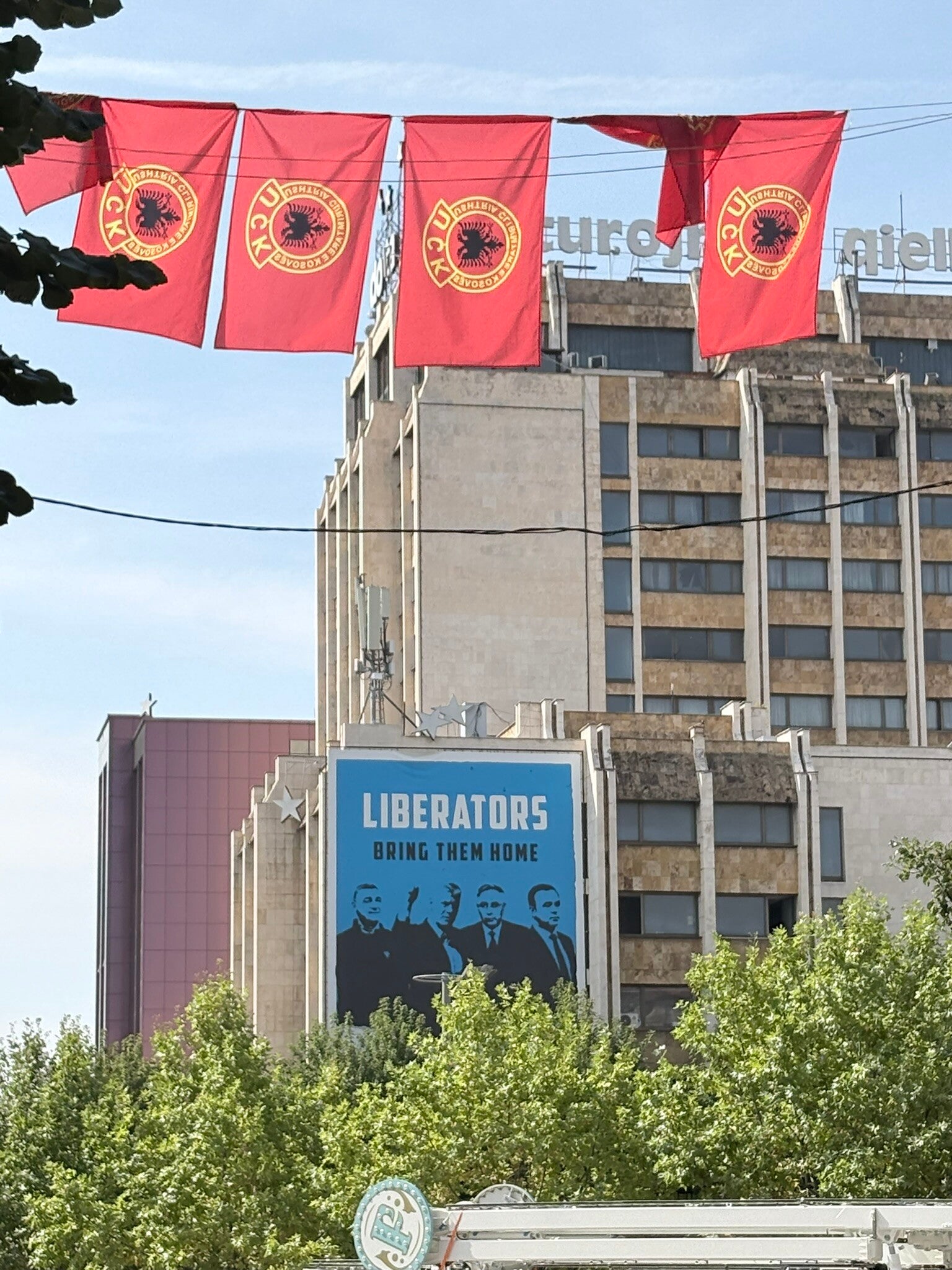
Kosovo may be one of Europe's youngest countries, but its history is anything but simple. After decades as part of Yugoslavia, rising tensions between Kosovo's ethnic Albanian majority and Serbian authorities escalated into the bloody Kosovo War of 1998–1999. NATO intervened, Kosovo came under UN administration, and in 2008, it finally declared independence from Serbia. Not everyone agrees with that last part, though - Serbia still doesn't recognise Kosovo as an independent country.
And this is exactly why having a local guide makes such a difference. Without context, Prishtina's monuments might look like random pieces of concrete scattered around the city.
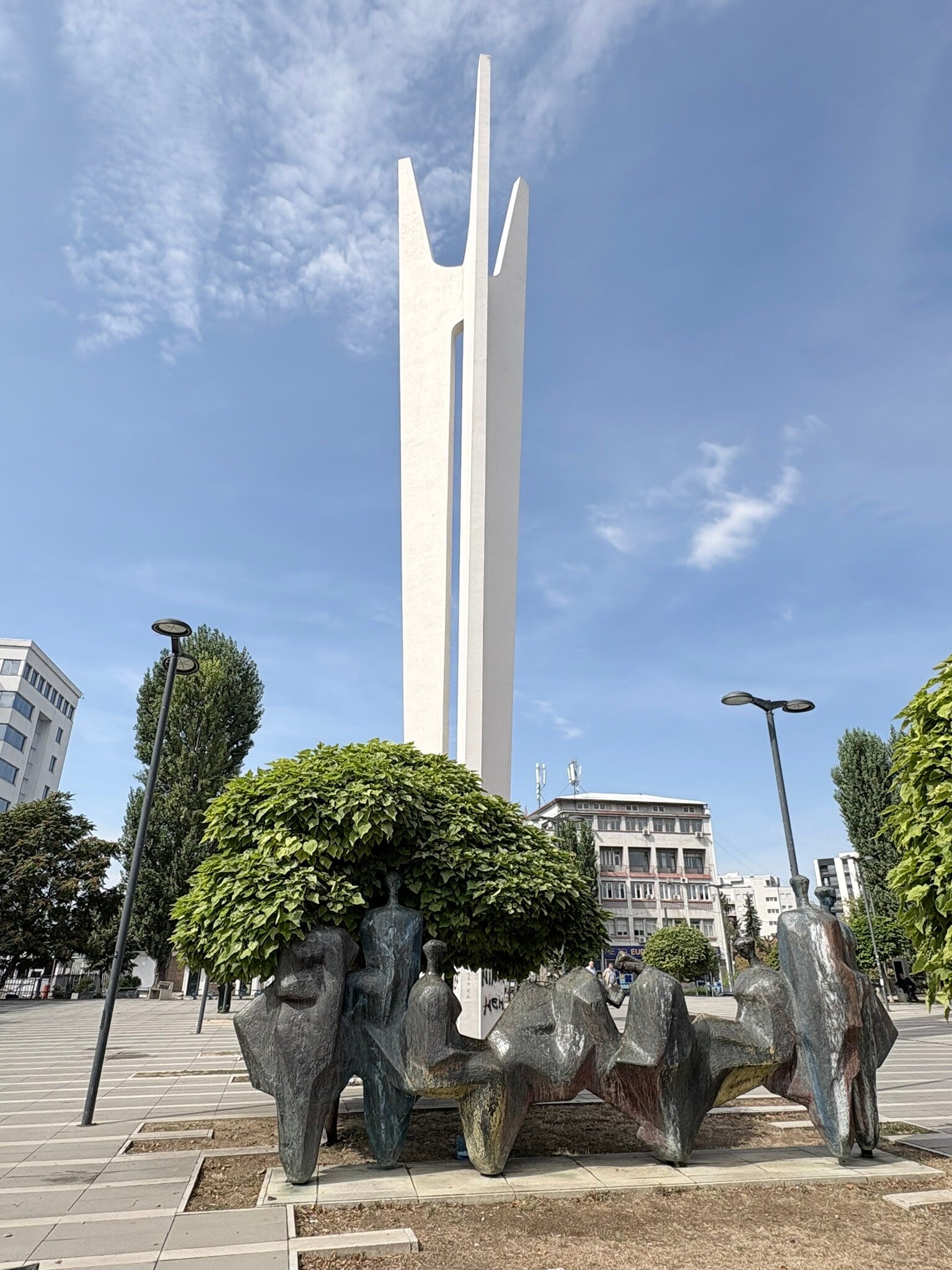
- Take the Monument of Revolution, for example. Built in 1961, its three pillars symbolise the unity of Kosovo's Albanian, Serbian and Montenegrin communities. Given the ethnic tensions and violent conflict that followed, the monument's original message of brotherhood now feels rather bittersweet.
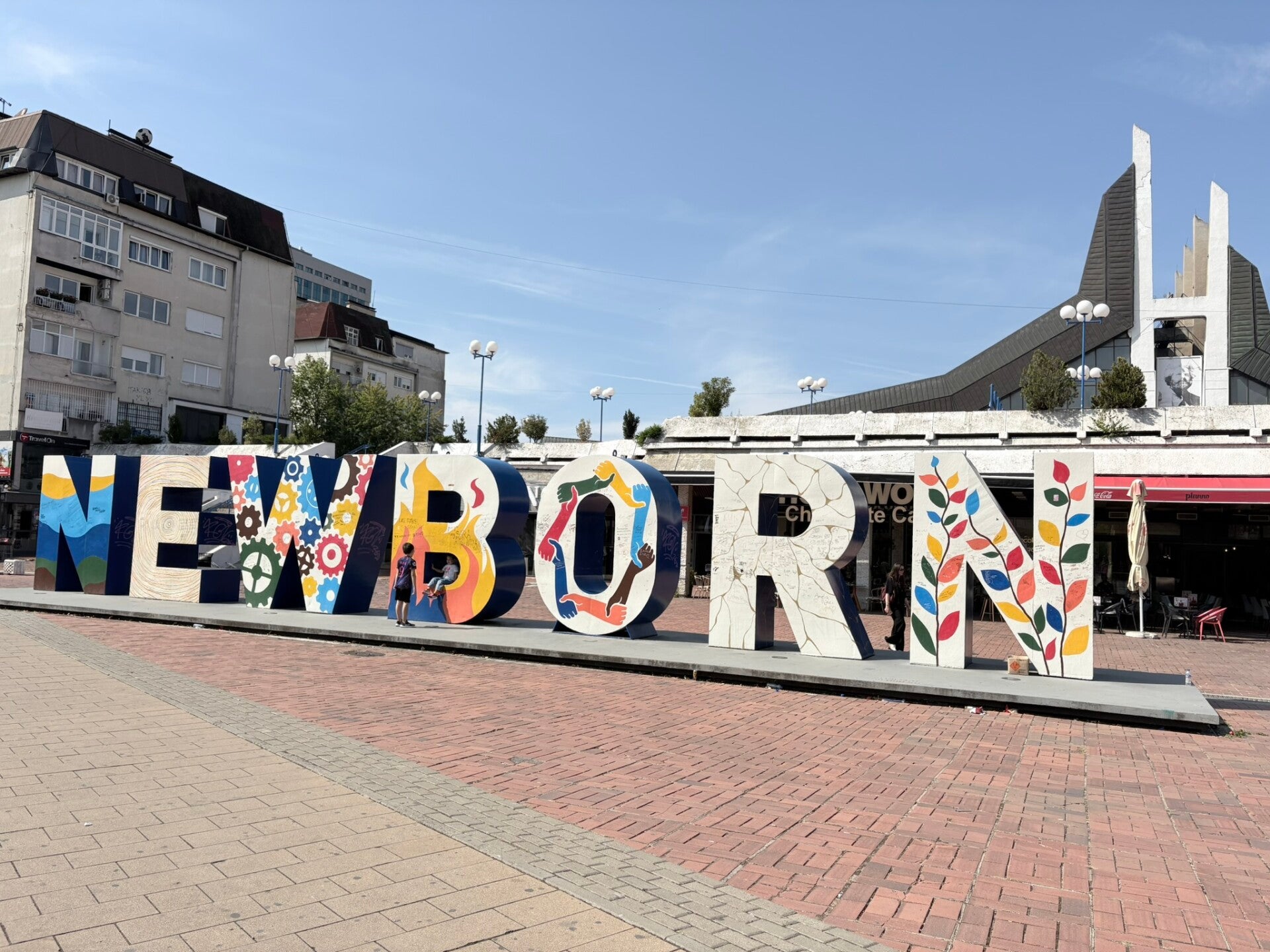
- Then there's the famous NEWBORN Monument, unveiled on the very day Kosovo declared independence in 2008. Its giant letters get a regular makeover, with new colours and designs reflecting the country's political and social mood.
The tour also takes you along Mother Teresa Boulevard, Prishtina's main pedestrian street, named after the famous humanitarian who was ethnically Albanian with family roots in Kosovo. Today, it's a lively promenade lined with cafés and shops, offering a glimpse into the city's everyday life beyond its complicated history.
Prishtina's market: bell peppers and cigarettes as far as the eye can see
Of all the places we visited in Prishtina, however, the one that left the biggest impression on me wasn't a historical monument at all. It was the local market.
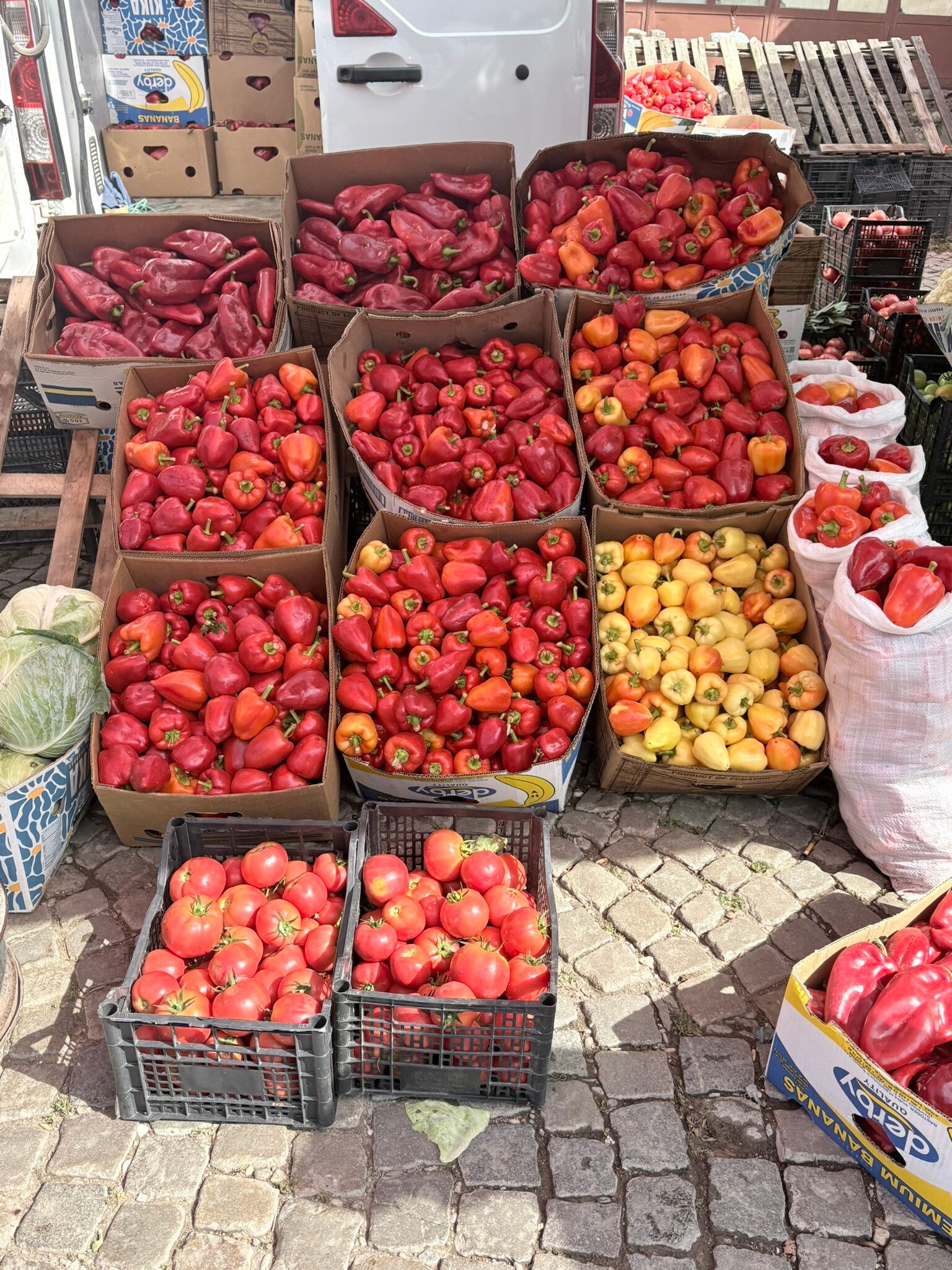
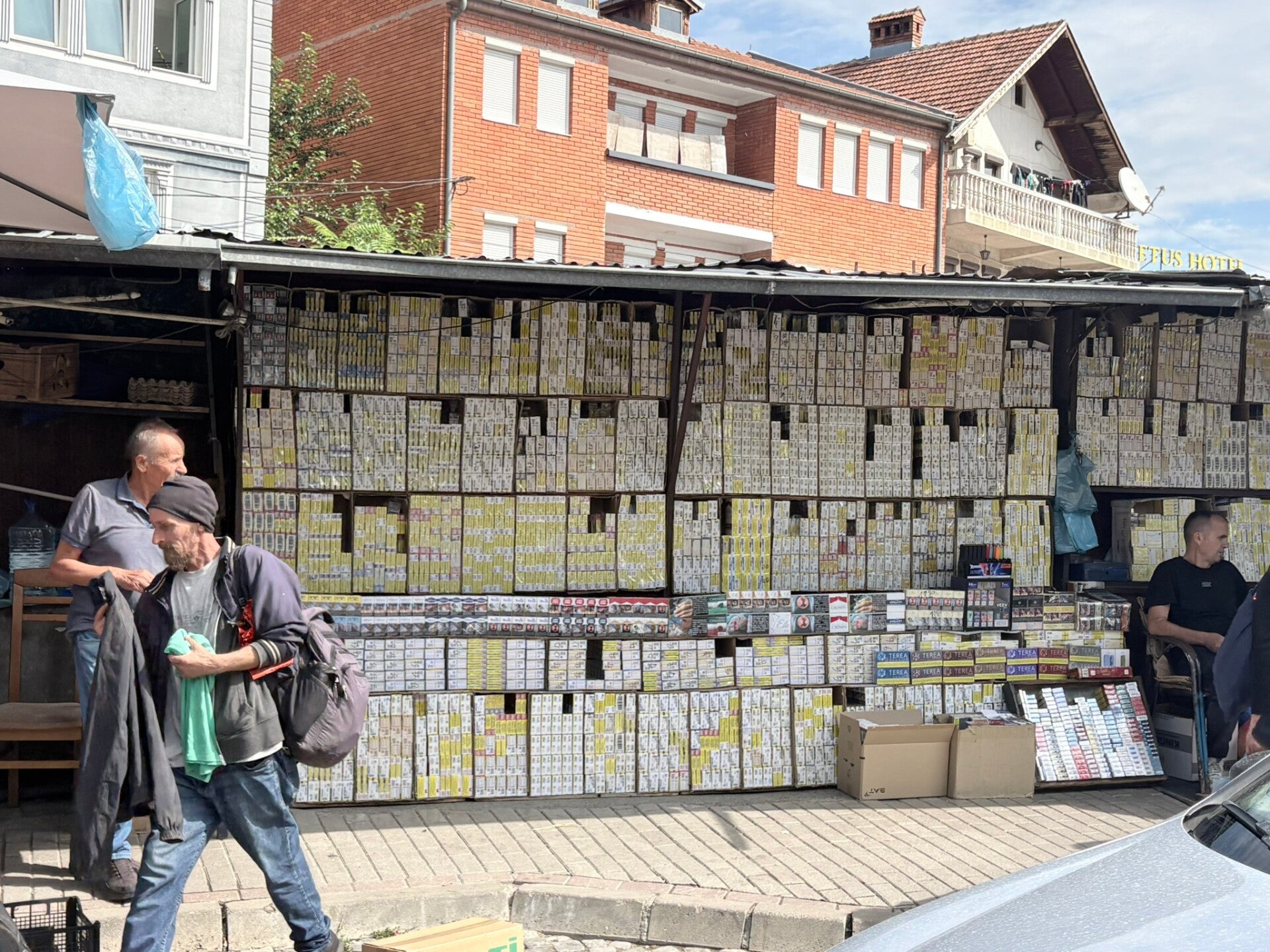
I'm honestly not sure whether to call it a vegetable market or a cigarette market, because those seemed to be the two main products on offer. On one side, boxes upon boxes of fresh bell peppers, or paprika, were stacked high. On the other, there were cigarettes. So. Many. Cigarettes.
Entire kiosks appeared to be constructed from cigarette cartons, with colourful tobacco packaging forming almost impenetrable walls. Sellers were trading from tiny stalls, makeshift displays and the backs of cars, creating a wonderfully chaotic scene.
The abundance of peppers is perhaps less surprising when you consider how central they are to Balkan cuisine. They're a key ingredient in ajvar, the roasted red pepper spread popular across the region, traditionally prepared in large quantities during the autumn to be enjoyed throughout winter.
The cigarettes, meanwhile, offered another glimpse into everyday life in Kosovo, where smoking appears to be practically a national pastime. And I'm only slightly exaggerating: a 2019 survey found that almost half of adult men in Kosovo smoked. Judging by the number of cigarettes we encountered in Prishtina's cafés, streets and markets, I would have guessed the figure was even higher!
For me, the market captured something about Prishtina that its official landmarks couldn't. It was noisy, messy, unpolished and completely unconcerned with presenting itself to tourists. Just everyday life unfolding in front of you. And sometimes, those are the most memorable travel experiences.
The National Library of Kosovo: an architectural masterpiece or an eyesore?
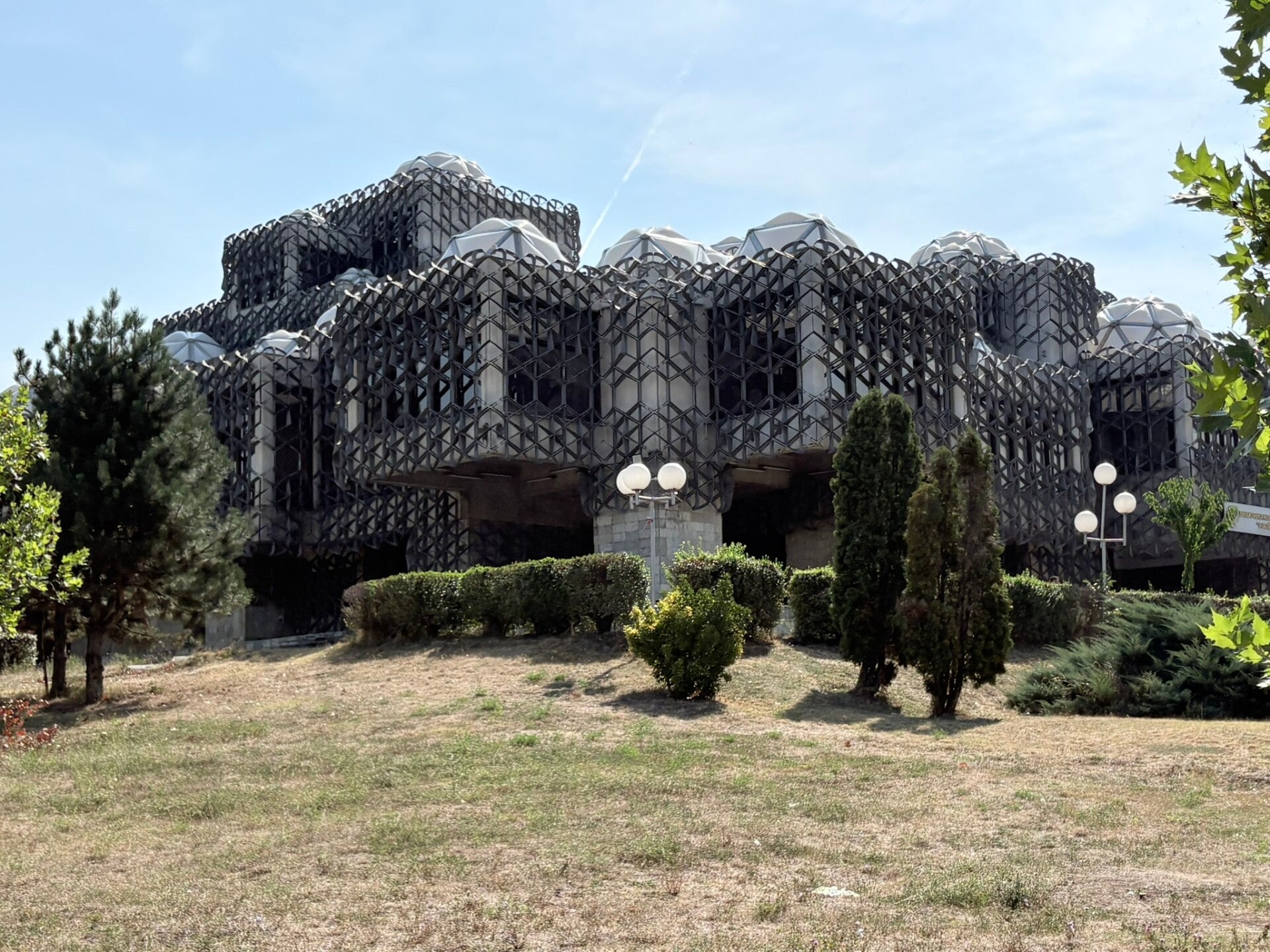
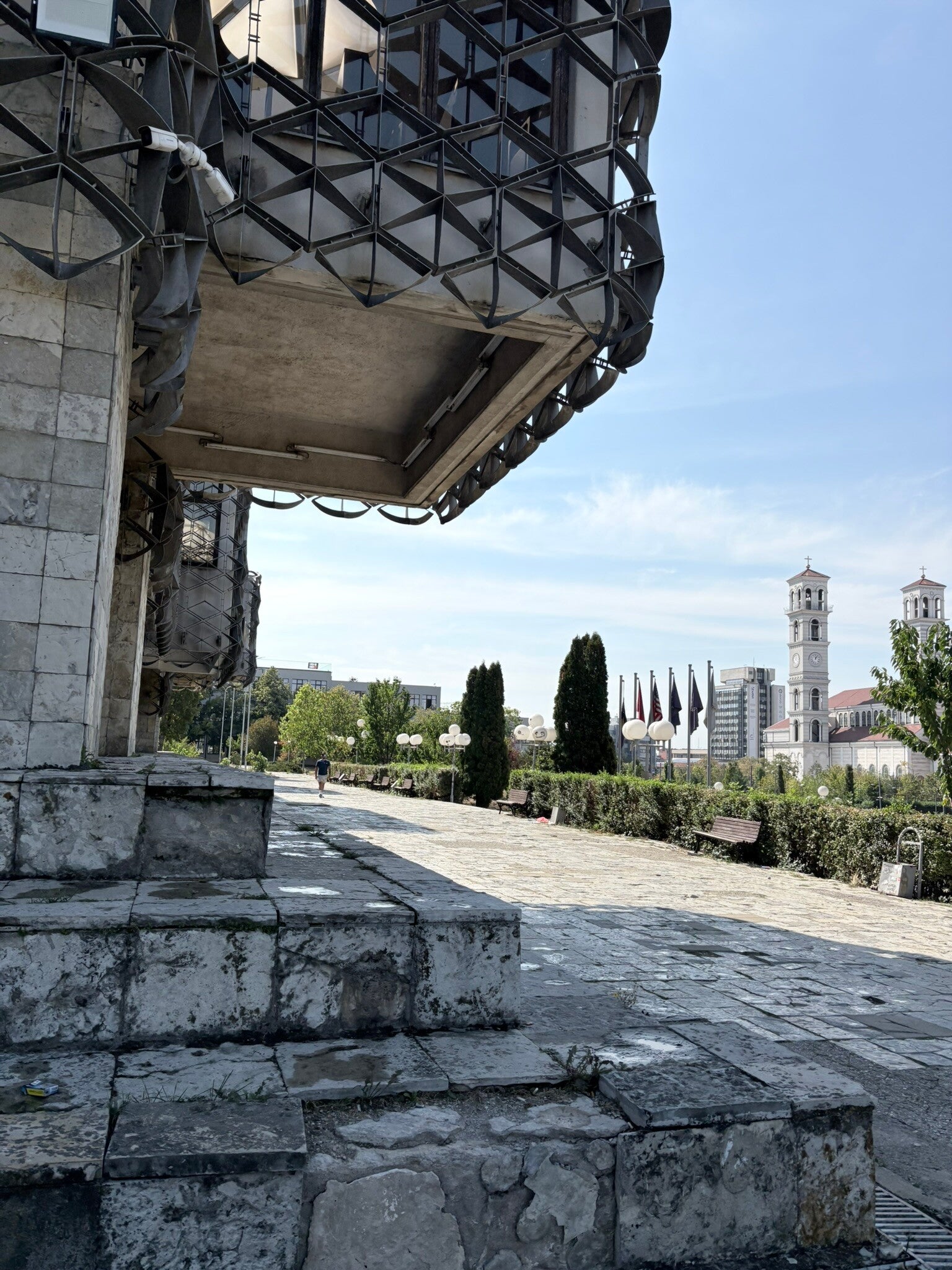
Our walking tour finished at perhaps Prishtina's most unusual landmark, the National Library of Kosovo. Built during the Yugoslav era, this bizarre-looking structure features 99 white domes wrapped in a metal lattice, making it look like something between a spaceship and a giant architectural experiment.
Unsurprisingly, opinions about its appearance are rather divided. The library has appeared on lists of the world's ugliest buildings, including a ranking published by The Telegraph, yet architectural enthusiasts regard it as one of the region's most remarkable examples of late Yugoslav modernism.
Ugly or beautiful? I'll leave that for you to decide. But one thing is certain: it's difficult to imagine a more fitting architectural landmark for a city as unconventional as Prishtina.
Prizren: Kosovo's prettiest town
After the walking tour, pick up your rental car and head towards Prizren. While it's perfectly possible to travel between Prishtina and Prizren by bus, I would recommend renting a car for a weekend in Kosovo. The country is small, distances are short and having your own wheels gives you much more flexibility, especially if you're planning to venture into the mountains the following day.
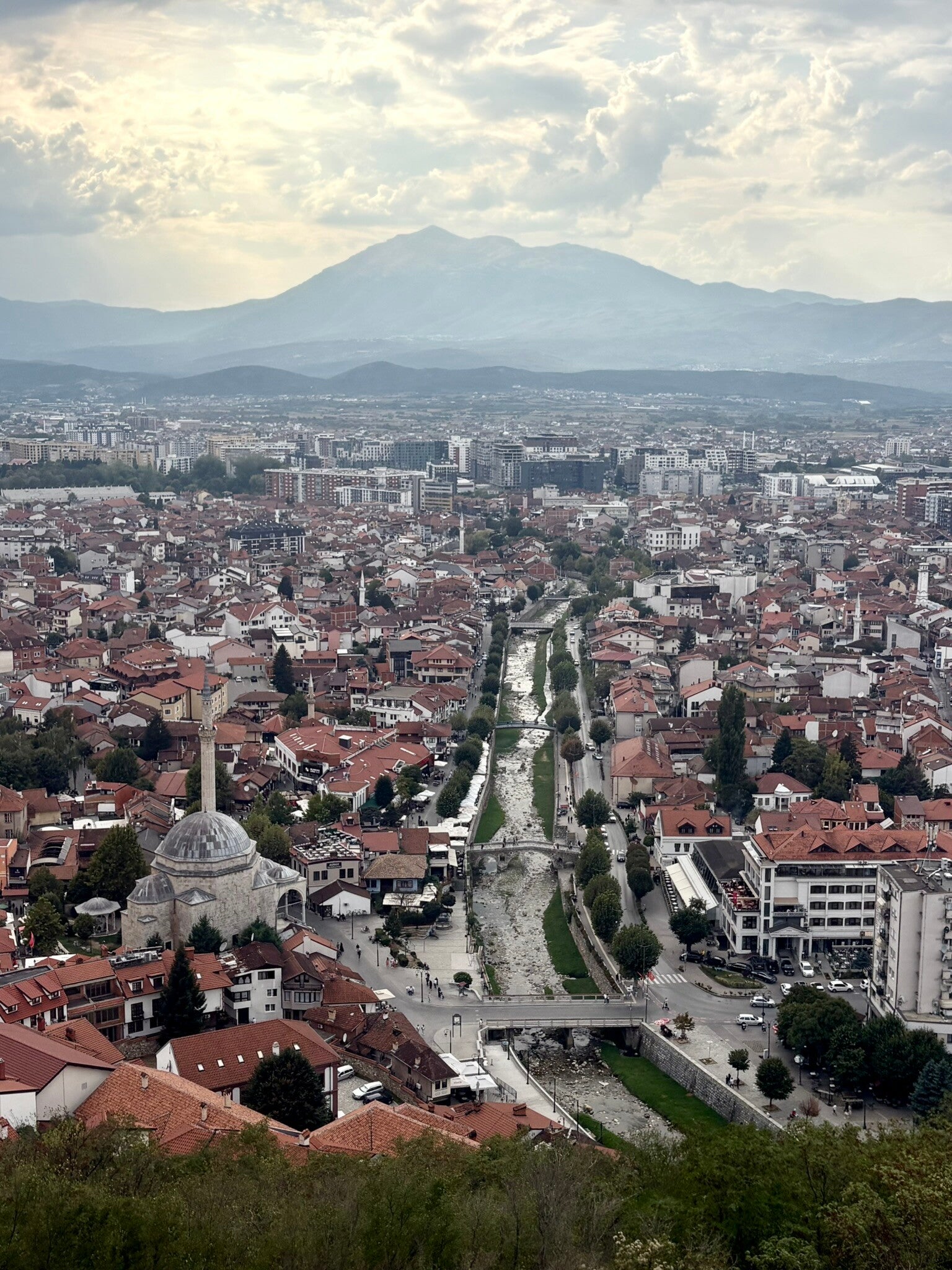
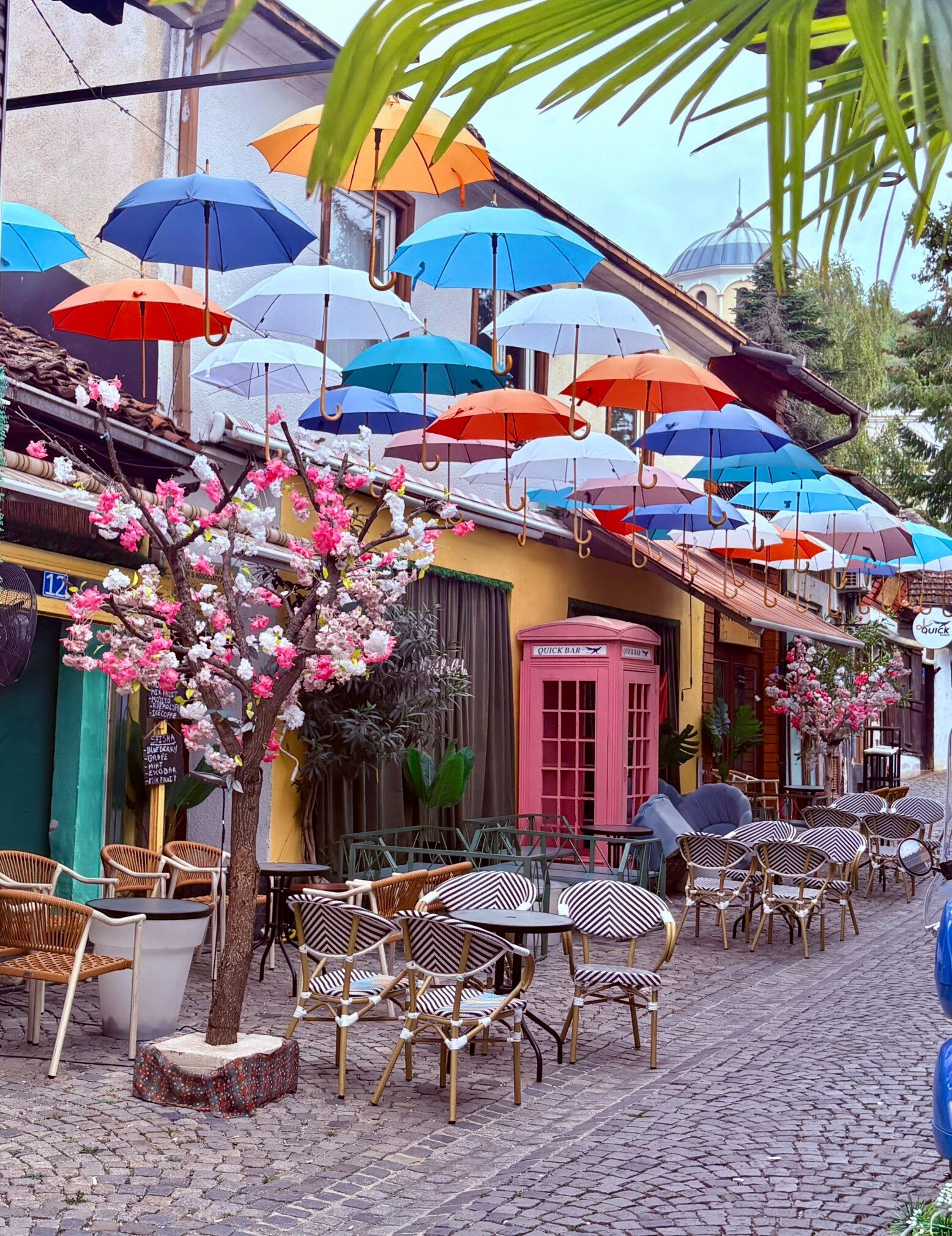
Prizren is only about a 1.5-hour drive from Prishtina, yet the atmosphere couldn't be more different. If Prishtina is gritty, chaotic and dominated by concrete, Prizren is its charming, postcard-worthy counterpart. Think cobbled streets, Ottoman-era houses, beautiful old mosques and stone bridges crossing the Lumbardhi River, with mountains rising in the background.
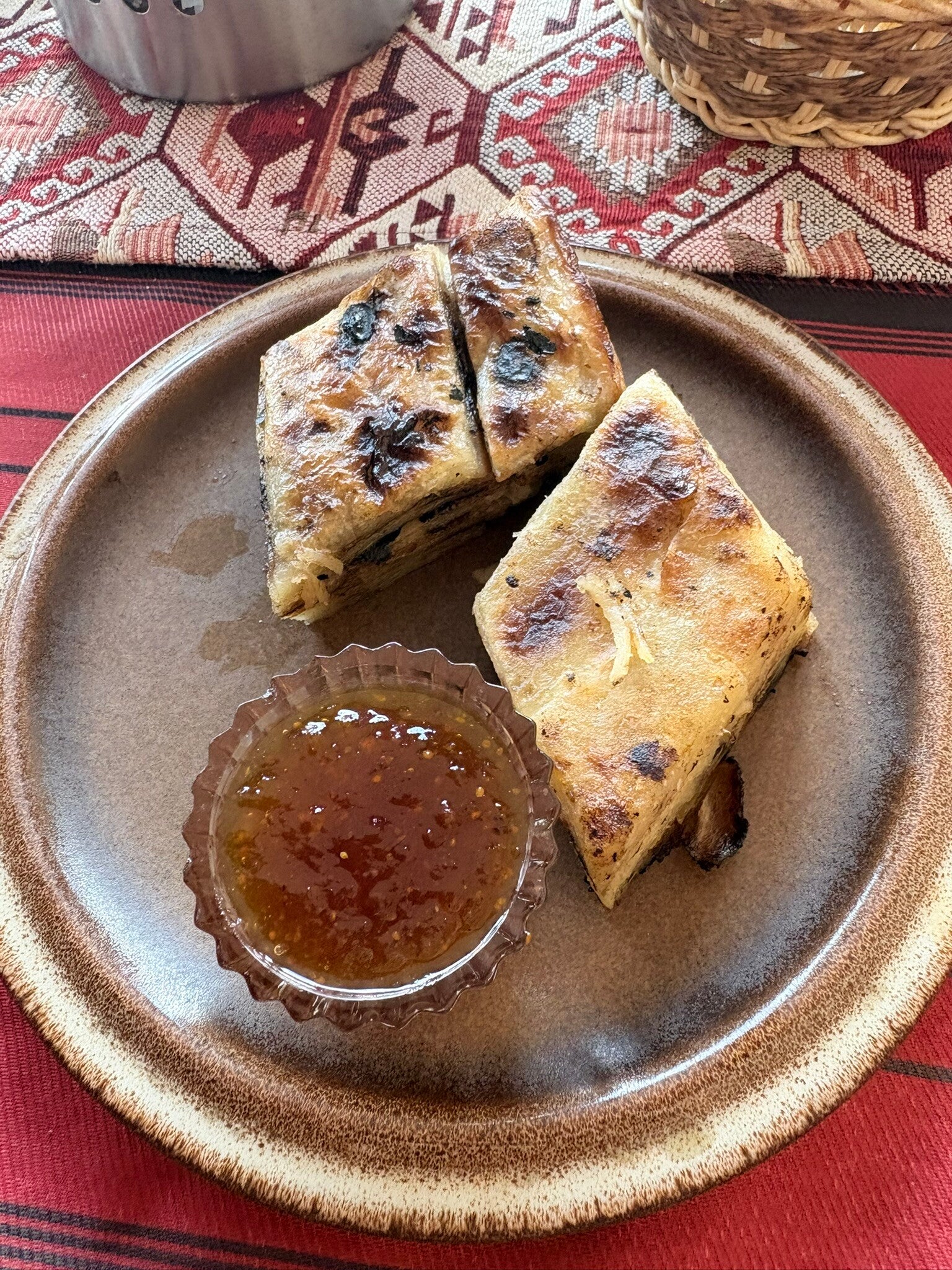
The heart of Prizren is its picturesque old town, where narrow streets are lined with cafés, restaurants and small shops. Start at the iconic Stone Bridge, which offers one of the prettiest views in town, with the impressive Sinan Pasha Mosque overlooking the river. From there, simply wander through the historic streets, soak up the atmosphere and stop for a coffee or something to eat. If you feel low on energy after all the driving, flija, a traditional layered pastry served with cream or cheese is sure to keep you going!
For the best views of Prizren, make your way up to Prizren Fortress, perched on a hill above the old town. The climb takes around 15–20 minutes and is a little steep, but the reward is a beautiful panorama of the town's red rooftops, mosque minarets and surrounding mountains.
After exploring Prizren, it's time to get back on the road and head towards Peja, your base for the night. The drive takes approximately 1.5 hours, and staying in Peja means you'll be just a short drive from Rugova Gorge, ready to kick off your outdoor adventures the following morning.
For dinner, I recommend Taverna 2 Violinat, a cosy restaurant in Peja serving traditional local food. It's a great place to try some hearty Balkan dishes but be sure to bring cash, as card payments aren't accepted!
Afterwards, get a good night's sleep - tomorrow we're swapping historic streets and city sightseeing for dramatic mountain scenery and a bit of adrenaline!
Day 2: Via Ferrata adventure in Rugova Gorge
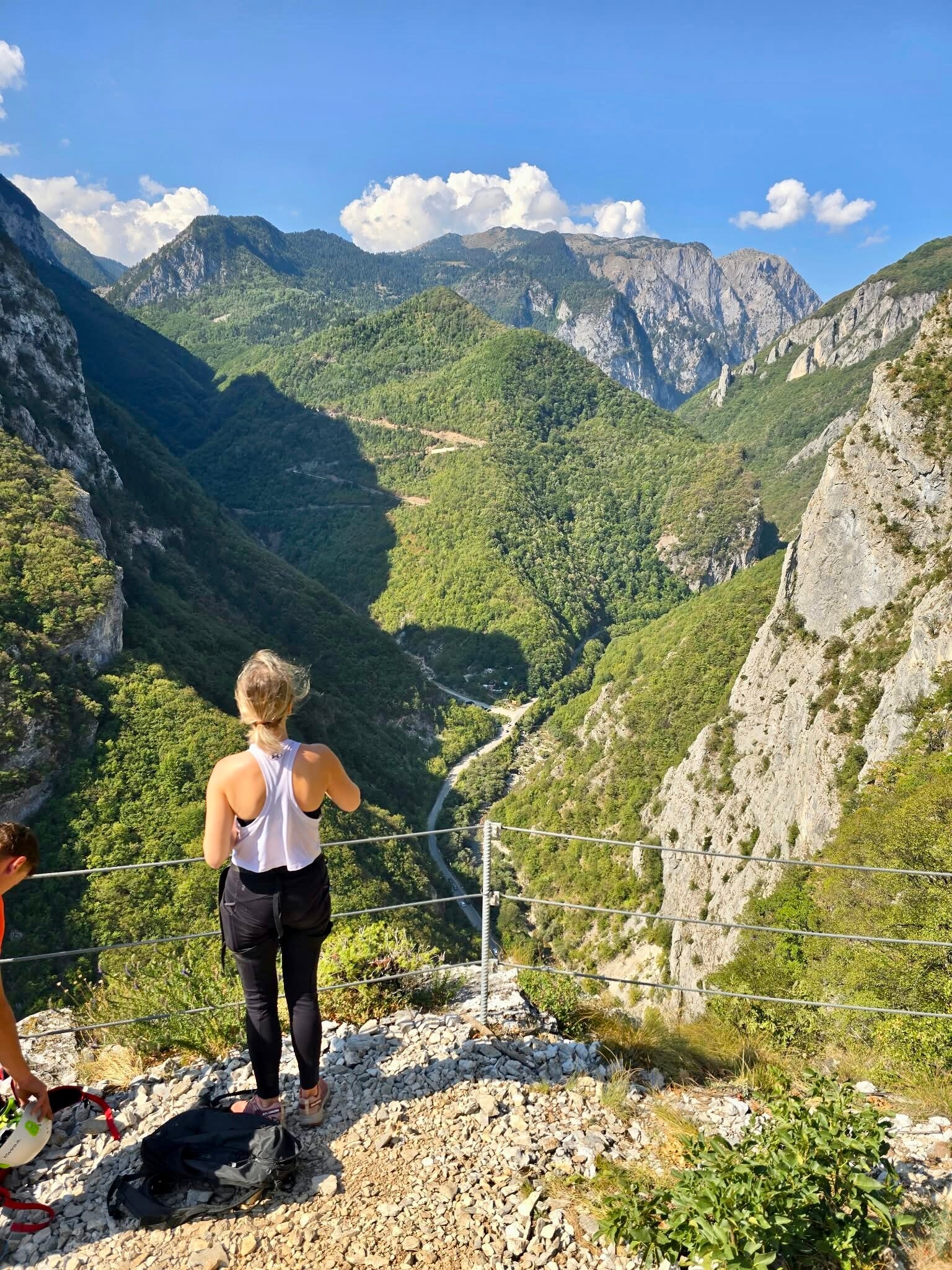
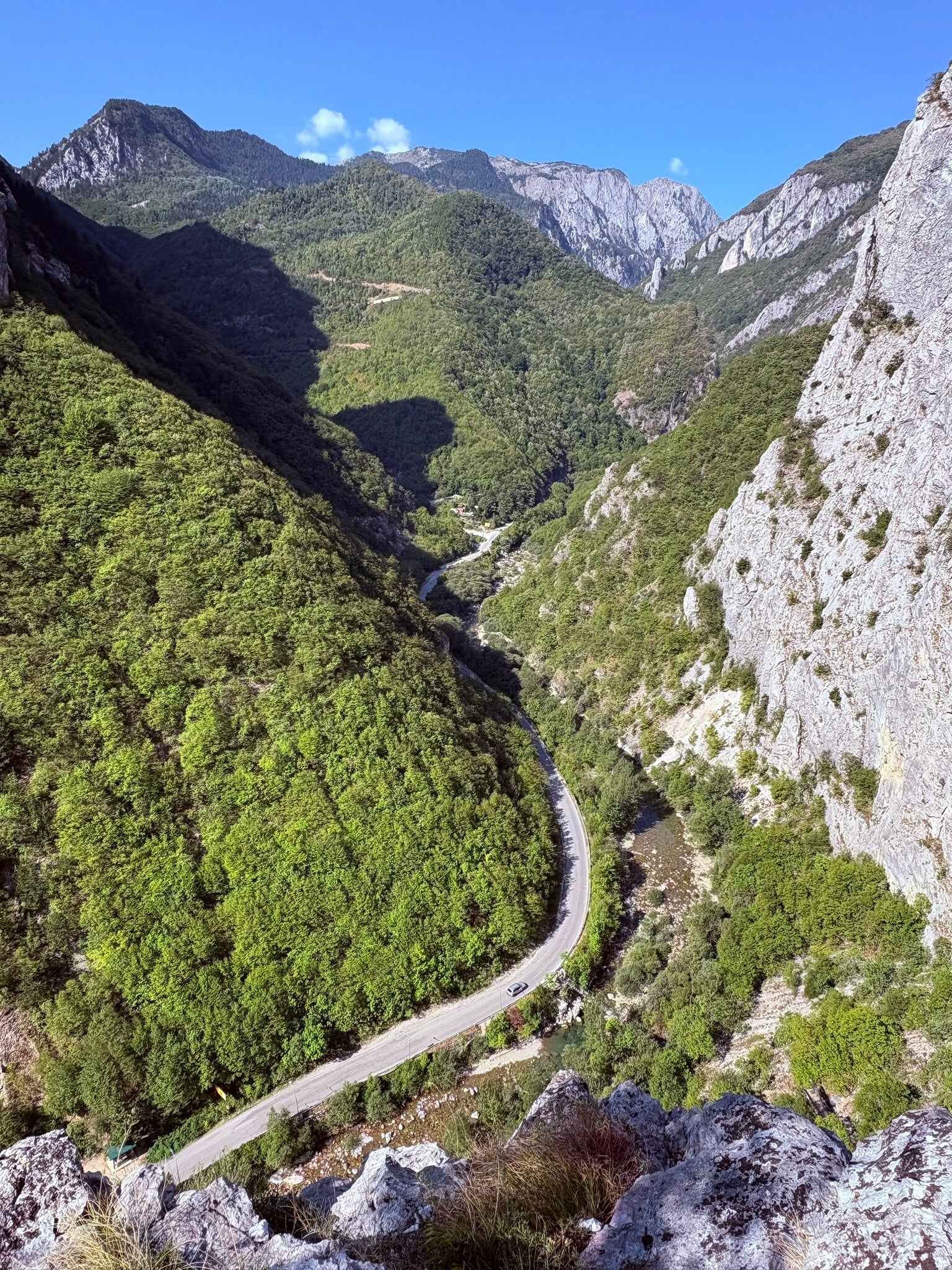
Just outside Peja lies Rugova Gorge, one of the country's most spectacular natural attractions, with towering limestone cliffs, a winding river and dramatic mountain scenery.
And while the scenery alone is worth the trip, we had something a little more adventurous planned: climbing the canyon walls on a via ferrata!
Via ferrata in Rugova Gorge
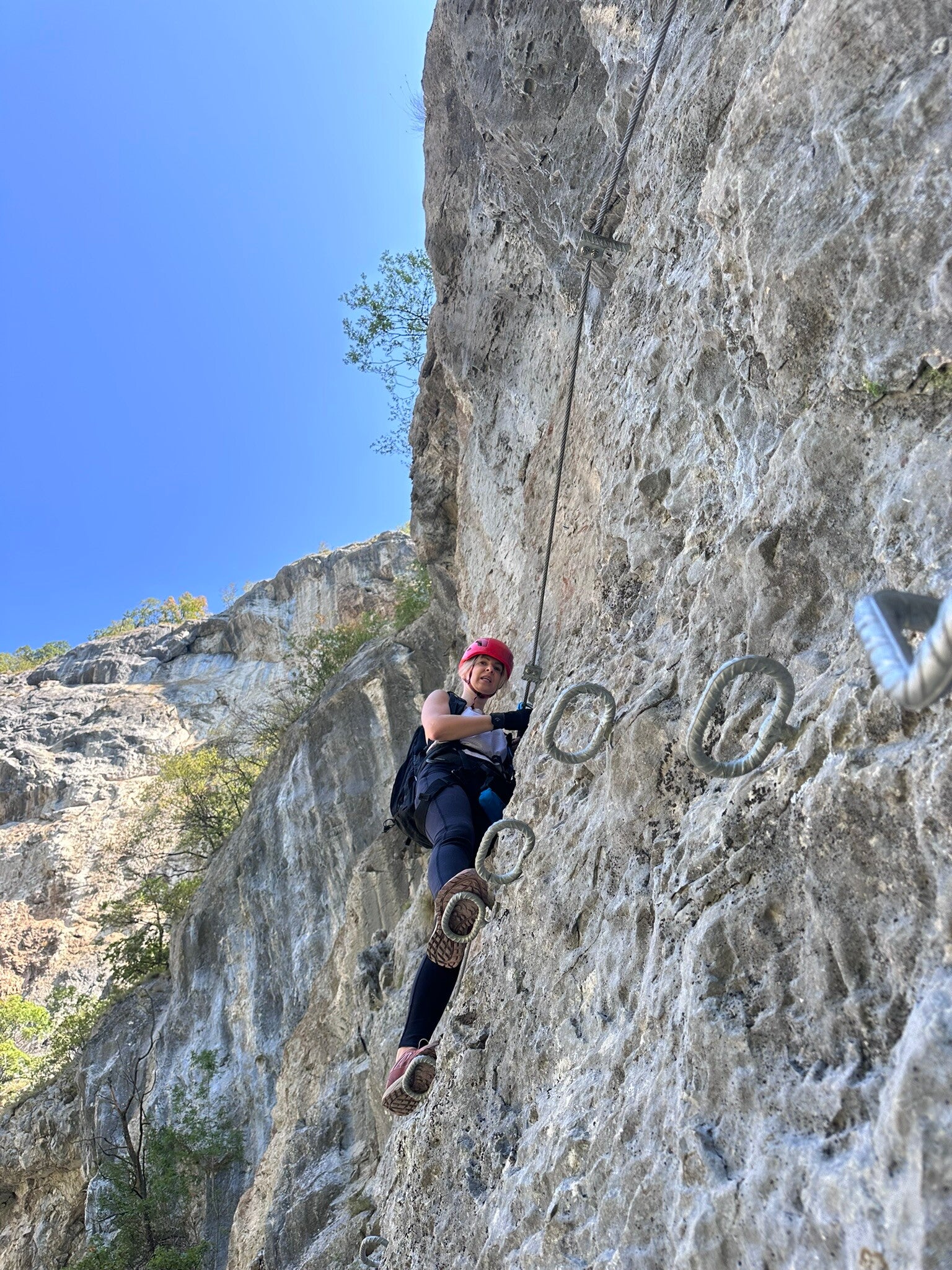
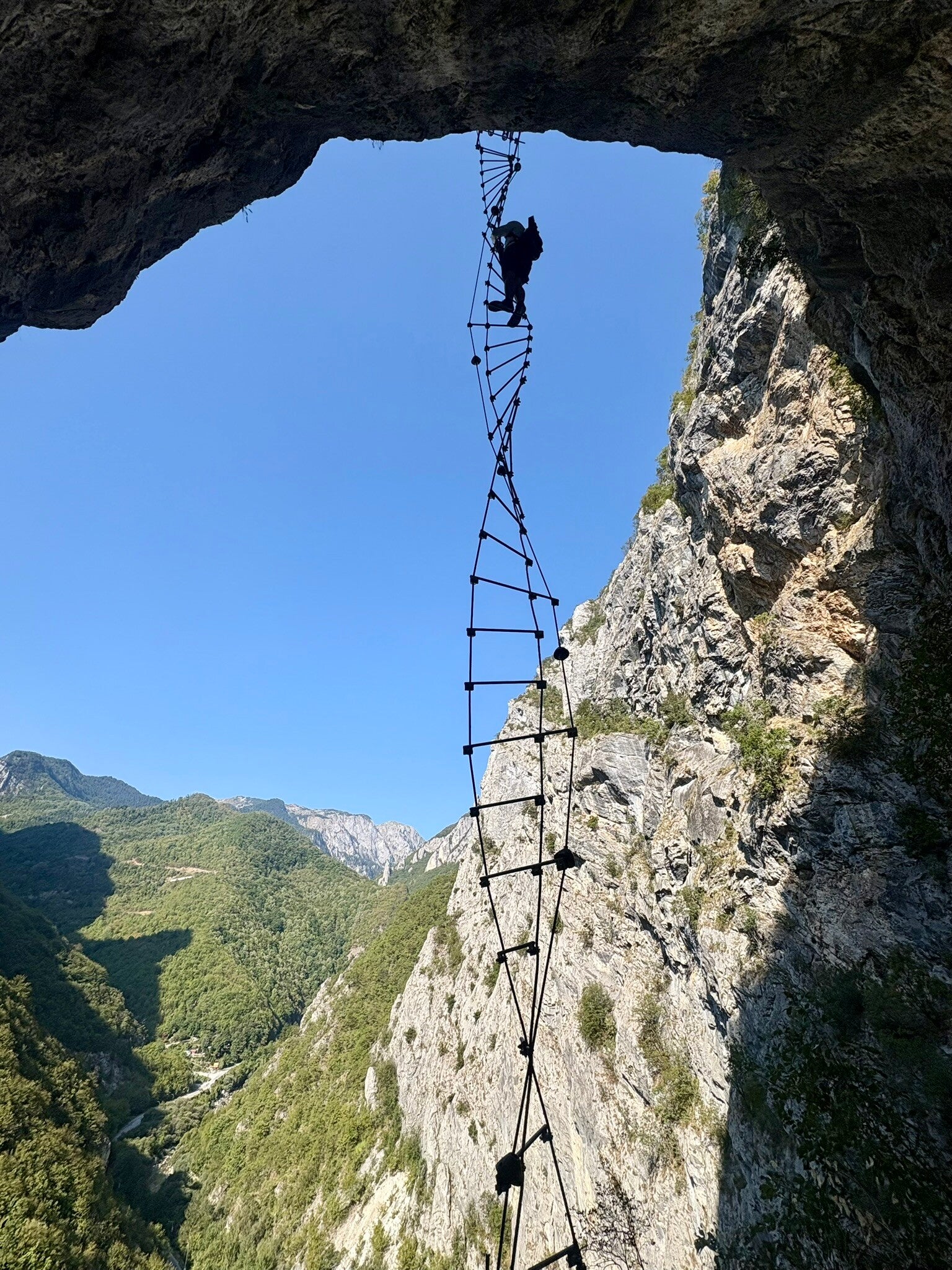
If you've never tried a via ferrata before, think of it as a mix between hiking and rock climbing, where you navigate steep cliffs using metal ladders, footholds and steel cables while secured to a safety line. And the good news? No previous climbing experience is necessary!
We booked our adventure with Balkan Natural Adventure, and I can highly recommend them. For just €35 per person, we got approximately three hours of climbing, professional English-speaking guides, a thorough safety briefing and all the necessary equipment. Excellent value for money!
Rugova offers several via ferrata routes, ranging from beginner-friendly to more adventurous climbs. You can start with an easier route and, once you've got a feel for it, discuss upgrading to something more challenging with your guide.
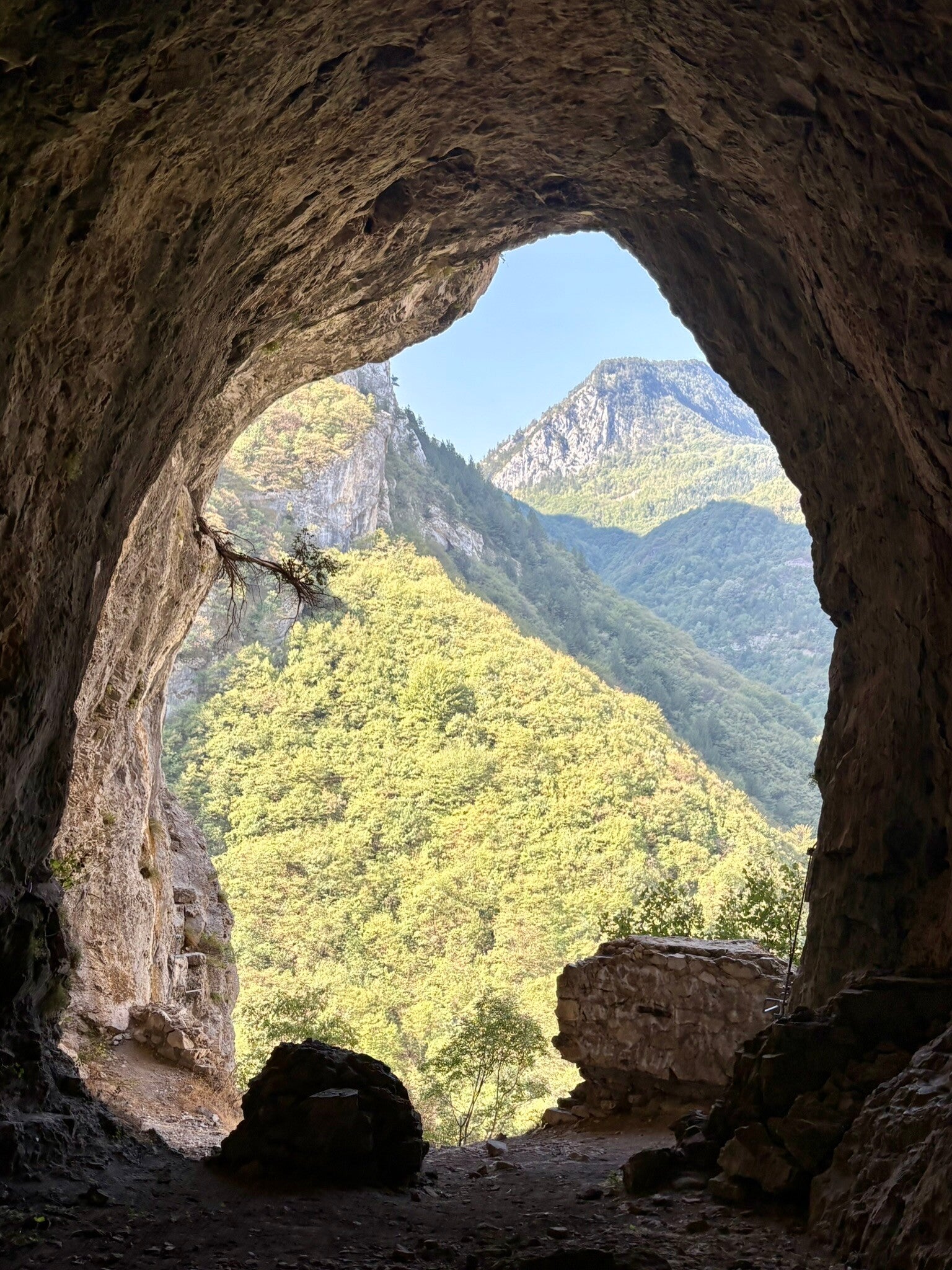
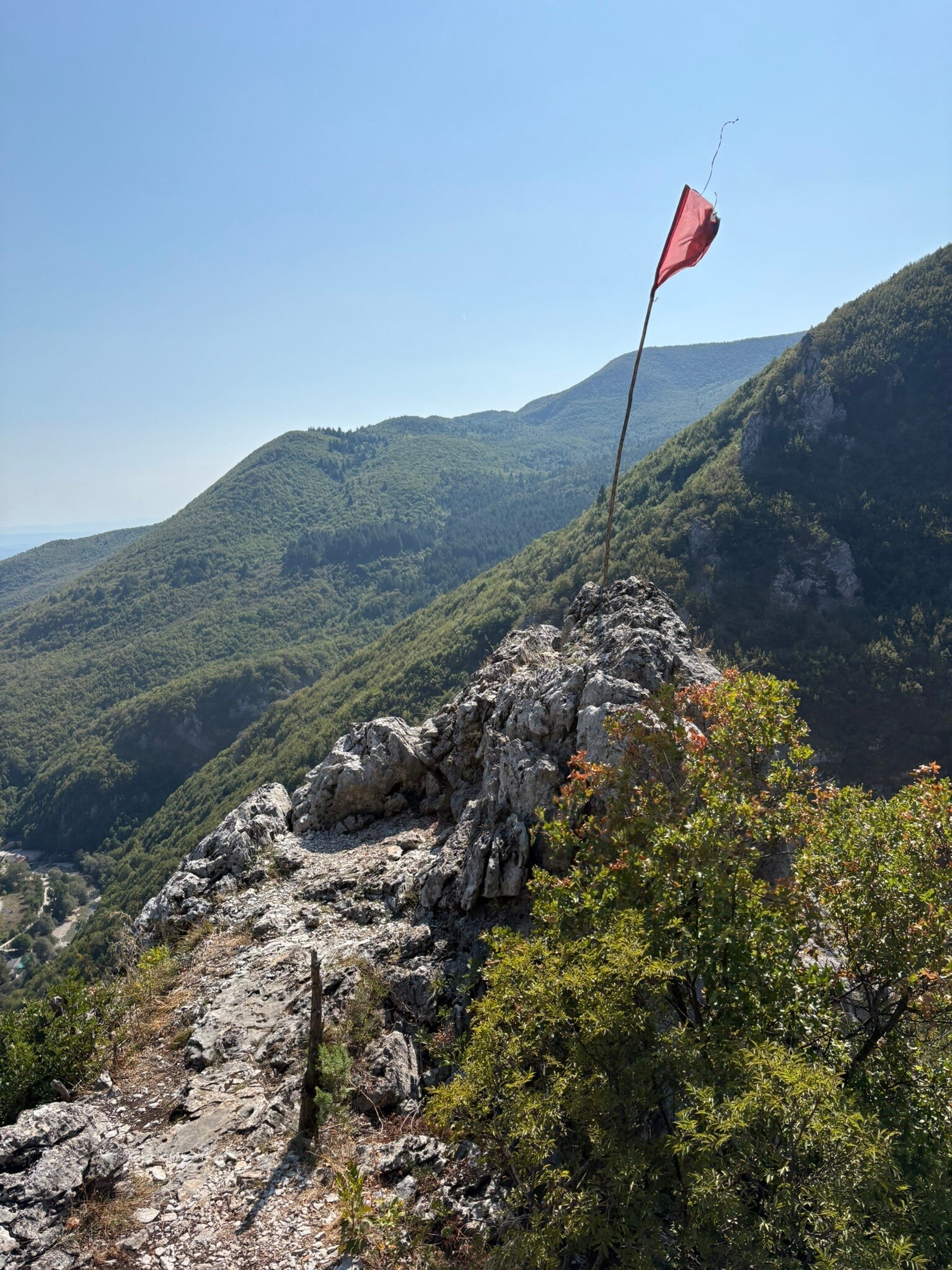
The experience itself was fantastic, with dramatic limestone cliffs, narrow ledges and spectacular views down into the gorge. Easily one of the highlights of our Kosovo weekend and a great activity for anyone looking to add a little adventure to their trip.
Not into climbing? Other things to do around Rugova Gorge
Not everyone dreams of dangling off a cliff, and that's perfectly fine! There's plenty to enjoy around Rugova Gorge without putting on a climbing harness.
- Take a scenic drive through Rugova Gorge. Follow the winding road through the canyon, stopping along the way to admire the towering cliffs, waterfalls and river below.
- Go for a short hike or nature walk. Explore the trails around the gorge and nearby mountain villages, with options for those who prefer a more relaxed pace.
- Visit the Patriarchate of Peć Monastery. Located at the entrance to Rugova Gorge, this UNESCO-listed medieval monastery is famous for its red-painted churches and beautiful frescoes. The interior is particularly impressive, but unfortunately, photography isn't allowed, so you'll have to take my word for it!
- Enjoy lunch with mountain views. Head further into Rugova Valley, where traditional restaurants and guesthouses serve local food surrounded by spectacular scenery.
Wrapping up your weekend in Kosovo
If you're flying home on Sunday evening, you'll have the morning and early afternoon to explore Rugova Gorge before grabbing lunch and making the roughly 1.5-hour drive back to Prishtina Airport.
Have an extra night in Kosovo? If your flight isn't until Monday morning, you can take things at a more relaxed pace. Spend the afternoon exploring more of Rugova Valley, enjoy a longer hike or visit the nearby town of Peja before heading back to Prishtina for the night.
Kosovo turned out to be one of those places that doesn't necessarily impress you at first glance, but grows on you as you explore. It's a little rough around the edges, and things don't always go according to plan, but the people are welcoming, the experiences are memorable, and there's something refreshing about travelling somewhere that hasn't been shaped around tourism. Would I recommend Kosovo for a weekend getaway? Absolutely. Just come with an open mind, a little flexibility and a sense of adventure!
Add comment
Comments