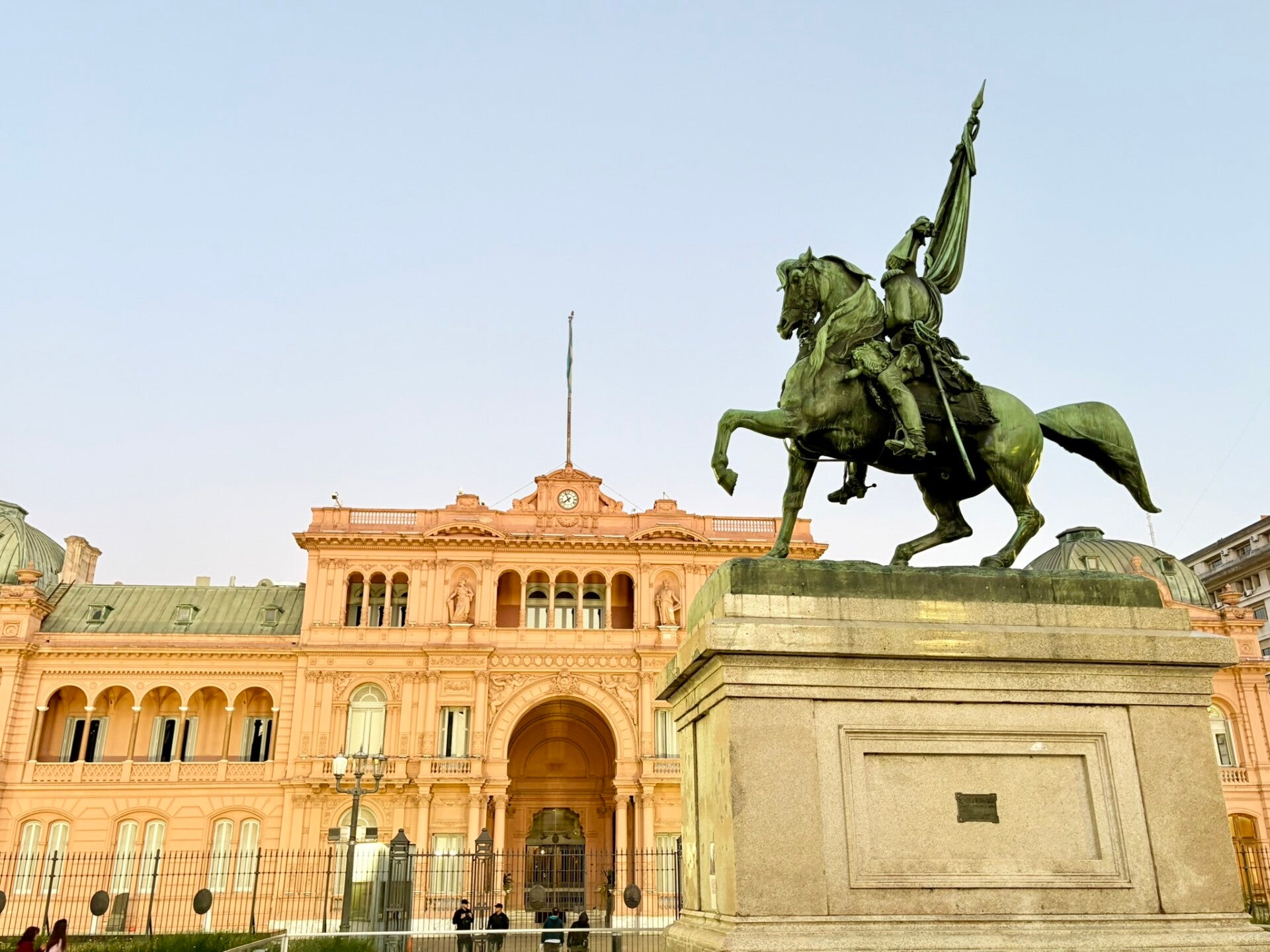
While seven days in Argentina is nowhere near enough to explore this big and diverse country, if you have a week to spare you can visit Buenos Aires - the Paris of South America - and Iguazú Falls, one of the New 7 Wonders of Nature.
Day 1 - Explore the heart of Buenos Aires and treat yourself to a pizza
The City of Buenos Aires is large: about 3 million people live in the city proper, and over 15 million in the greater metropolitan area. This means that it would be ideal to stay in one of the central areas to avoid spending too much time commuting. The safest areas are Recoleta and Palermo, however, if you exercise ordinary caution like in any big city, the city center or San Telmo are also good bases.
Buenos Aires has a lot to offer in terms of sightseeing, culture, museums, and dining. This plan covers the main attractions to help you get the most out of your stay.
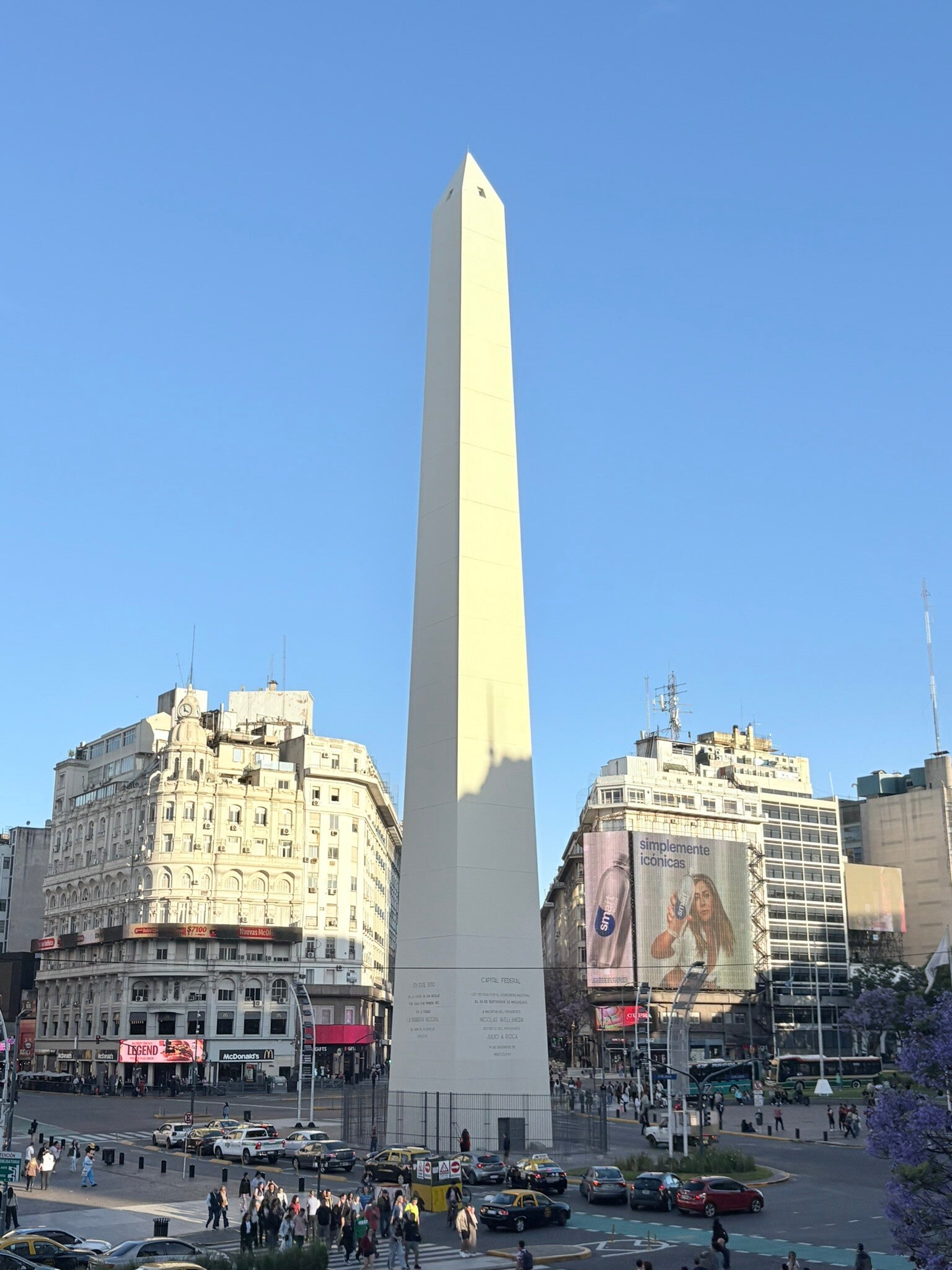
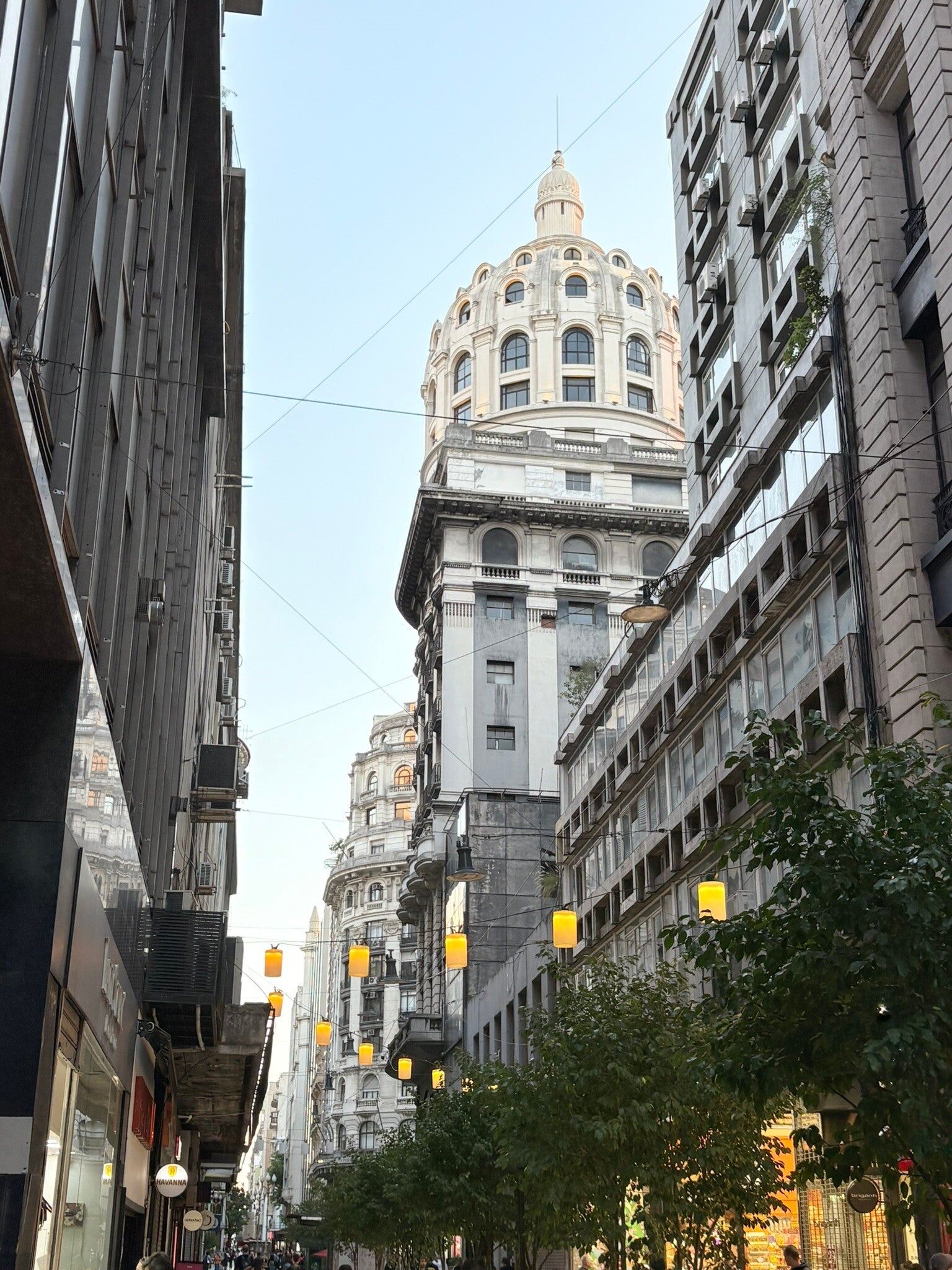
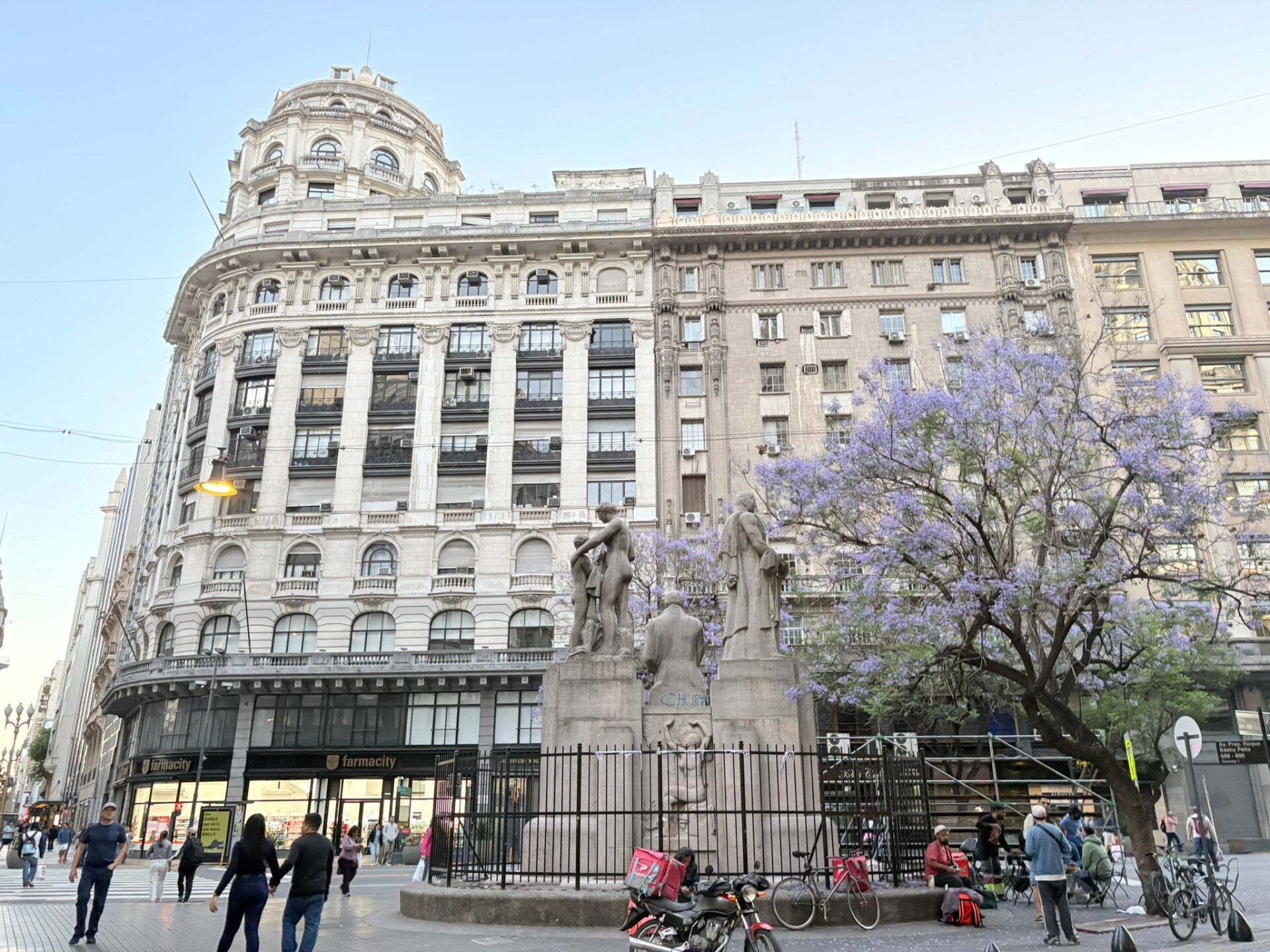
Start the day with a city-center walking tour, and you’ll quickly understand why Buenos Aires is known as the Paris of South America. The city center features buildings from the late 19th and early 20th centuries - the boom years for Argentina. You'll see ornate facades, domes, balconies and marble entrances that uncannily resemble European cities. This was intentional: between 1880 and 1930, Argentina was one of the wealthiest countries in the world, and Argentina’s elite idolized French urbanism. They redesigned Buenos Aires with wide boulevards, symmetrical plazas, neoclassical public buildings and Beaux-Arts-style palaces. Many iconic buildings were designed by French or Italian architects and massive immigration from Europe (mainly Italians and Spaniards) shaped the city’s tastes.
During the walking tour you’ll see the main landmarks from the outside, including:
- Palacio Barolo - designed by an Italian architect and inspired by Dante’s Divine Comedy, with floors representing Hell, Purgatory and Heaven. After the walking tour you can visit the palace on a guided tour (pre-booking required).
- Teatro Colón - a world-renowned opera house famed for its acoustics.
- Avenida de Mayo - a European-style boulevard connecting Plaza de Mayo with Plaza Congreso.
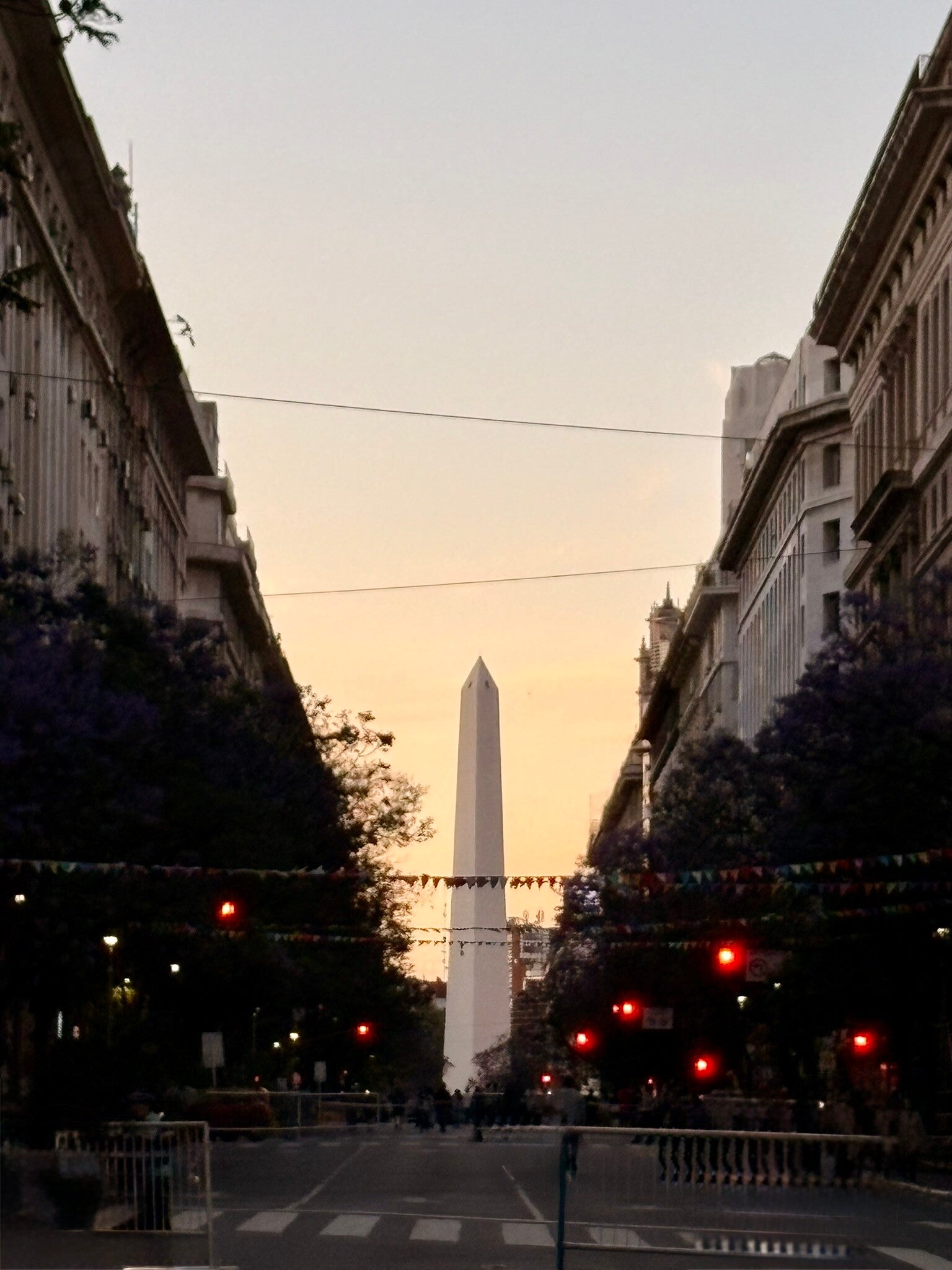
- Obelisco - built to celebrate the 400th anniversary of the city’s founding, the obelisk marks the spot where the Argentine flag was first raised. It remains a gathering place for football celebrations and protests.
After exploring the center’s highlights, stroll along Avenida Corrientes -often described as the street with one of the highest concentrations of bookstores in Buenos Aires. You’ll find shops for every taste - from old to new, mainstream to second-hand.
Buenos Aires has one of the highest numbers of bookstores per capita in the world. Reading is part of the city’s culture, and bookstores often function as social hubs with readings, poetry slams and workshops.

Once you’ve worked up an appetite, it’s time for pizza. The city’s Italian influence is strong, and pizza is a local favorite. In Buenos Aires, fugazzetta is a legendary local style: a thick dough base stuffed with generous amounts of mozzarella and topped with onions and oregano.
It’s a cheese - and calorie -bomb, but you can order it by the slice if you’d rather not commit to a whole pizza (though no one would blame you if you did!).
A great place to try fugazzetta is Pizzeria Banchero, credited as its birthplace. Another good option is Pizzeria El Cuartito; it’s one of the city’s oldest pizzerias and a locals’ favorite. And last but not least, Guerrín - widely regarded as Argentina’s most famous pizzeria - is known for its hearty porteño-style pizza (and 185K google reviews!) .
Day 2 - the most beautiful bookstore in the world and Recoleta neighborhood
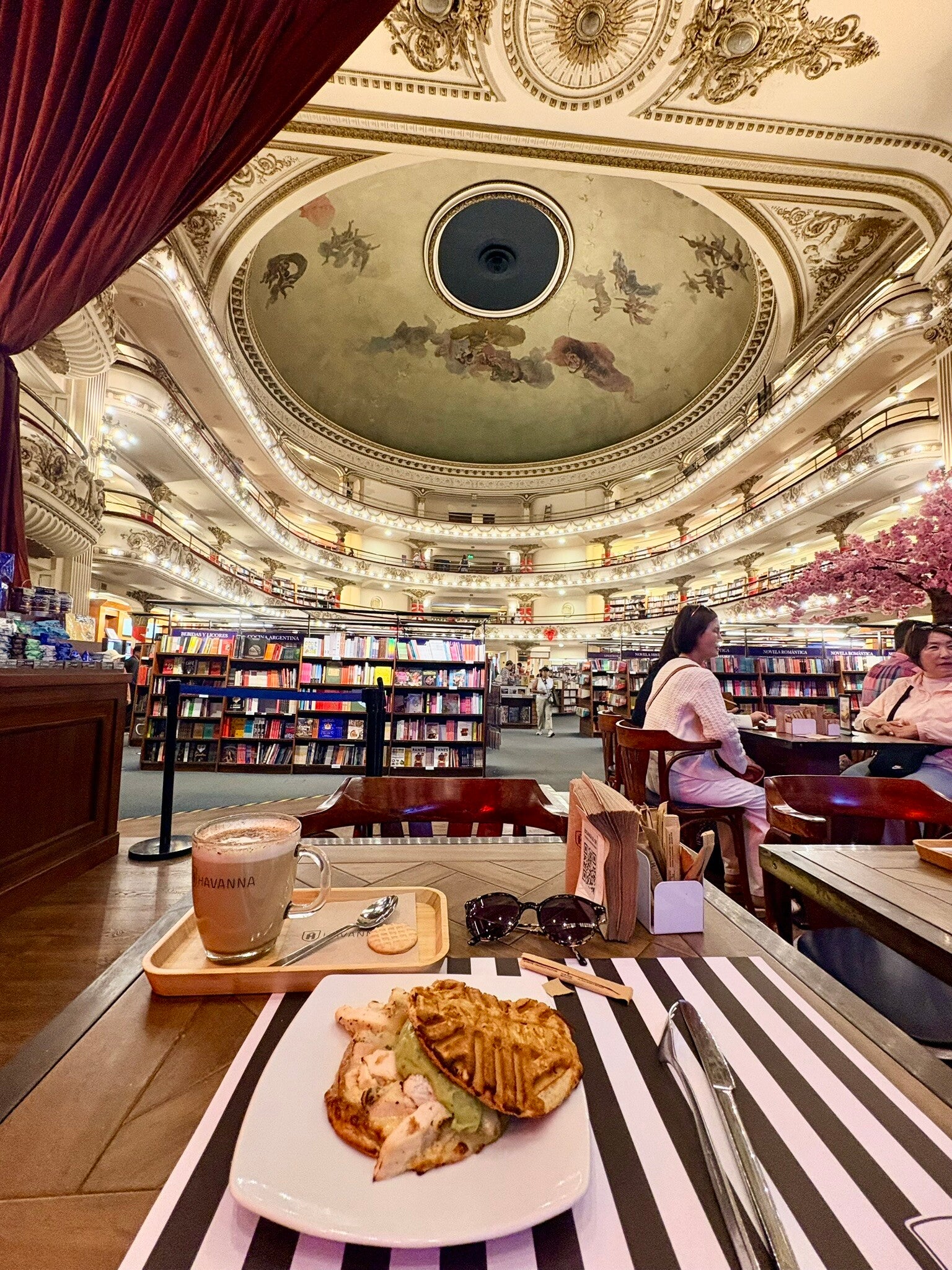
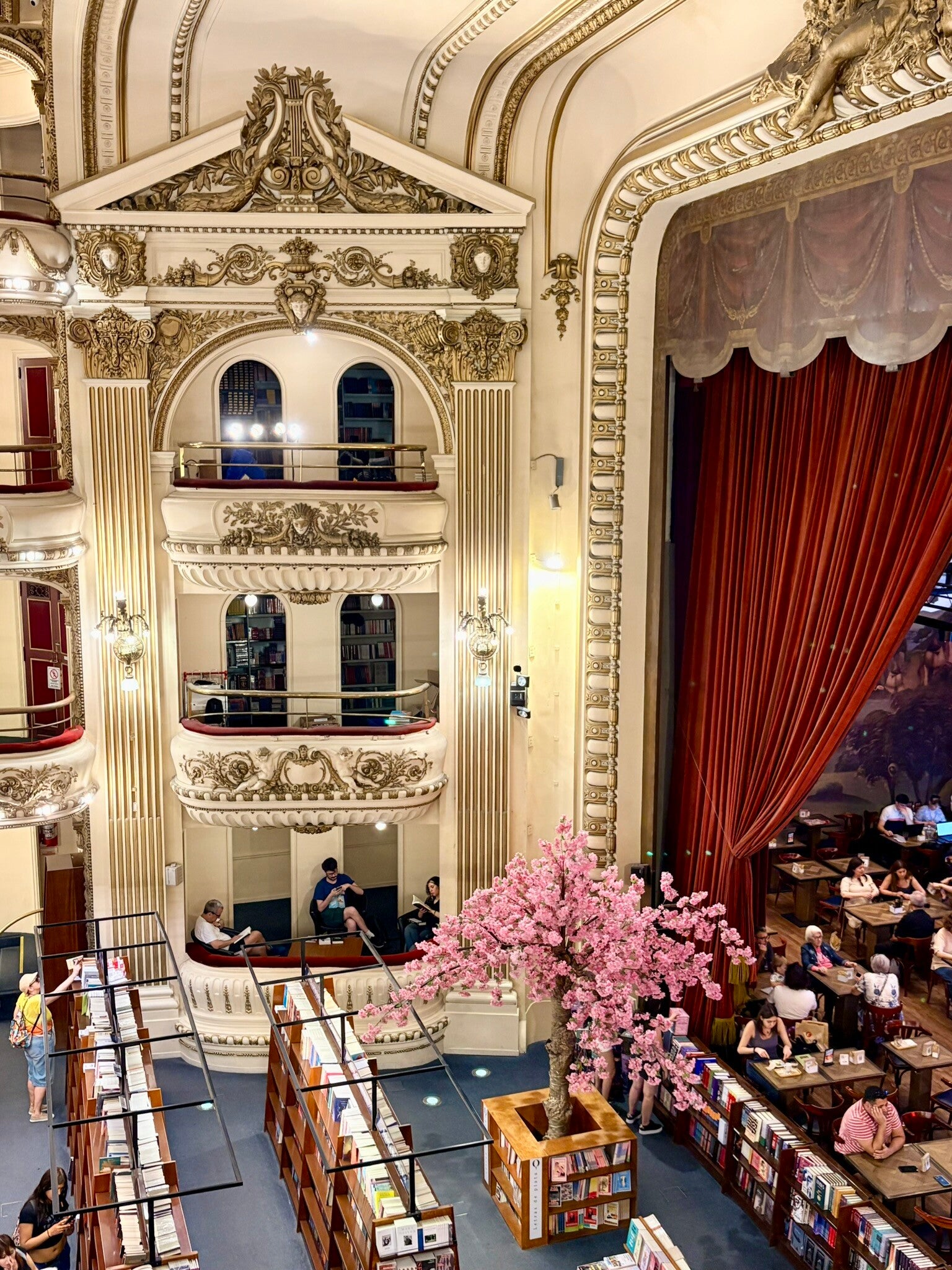
Continuing the bookstore theme from the day before, I have a recommendation for you - and I promise you’ll love it even if you’re not into books (or bookstores). El Ateneo Grand Splendid is often considered one of the most beautiful bookstores in the world. Housed inside a former 1919 theatre, it has preserved much of its original architecture, including the frescoed ceiling, theatre boxes, stage curtains and grand balconies.
Visitors can sit in the theatre boxes to read, or enjoy coffee and sweet or savoury treats on the former stage, which has been converted into a cosy cafe. I’ll let the pictures speak for themselves.

After your morning at El Ateneo, it’s time to explore the nearby upscale neighbourhood of Recoleta. You can do this with a guided tour if you’d like historical context, or on your own if you prefer to stroll and soak it all in. Recoleta is known for its French-style architecture, grand plazas and European atmosphere. It’s refined, walkable, and safe.
The main places to visit include:
- Recoleta Cemetery - stroll through a maze of mausoleums, statues and marble tombs that look like palaces. A must-see is the tomb of Eva Perón (Evita).
- Museo Nacional de Bellas Artes - one of the largest art collections in South America, including works by Goya, Rembrandt, Monet, Degas and more. Best of all, it’s free to enter, so if you’re into art, make time for it.
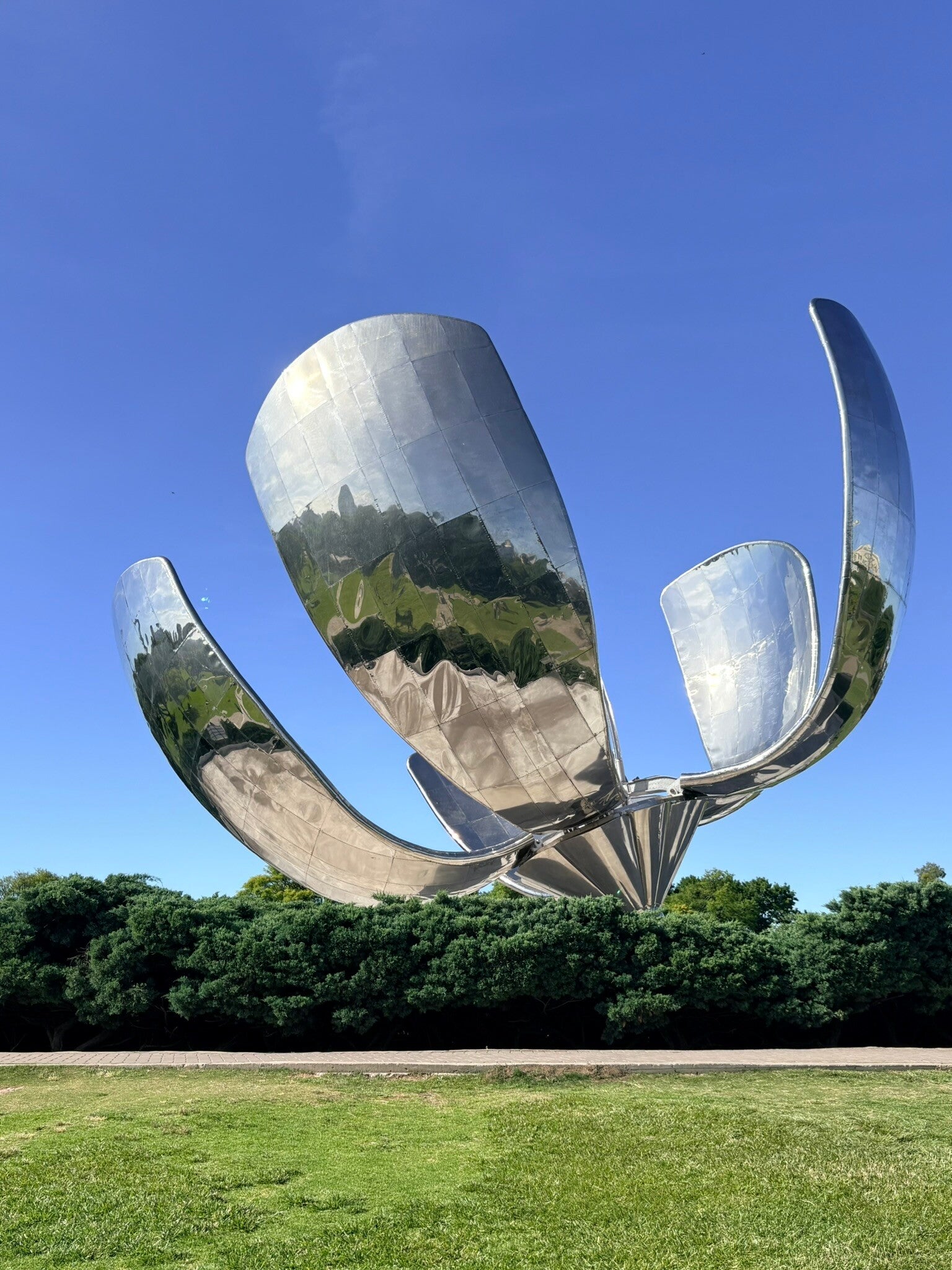
- Floralis Genérica - a striking 20-metre-tall metal flower sculpture whose petals are designed to open and close with the movement of the sun. Unfortunately, during my visit in November 2025, it was under repair and not functioning properly but it was still impressive.
- Biblioteca Nacional - the national library is worth a stop if you want to see a completely different architectural style in Buenos Aires. It has a distinct Brutalist look and resembles a building suspended on pillars.
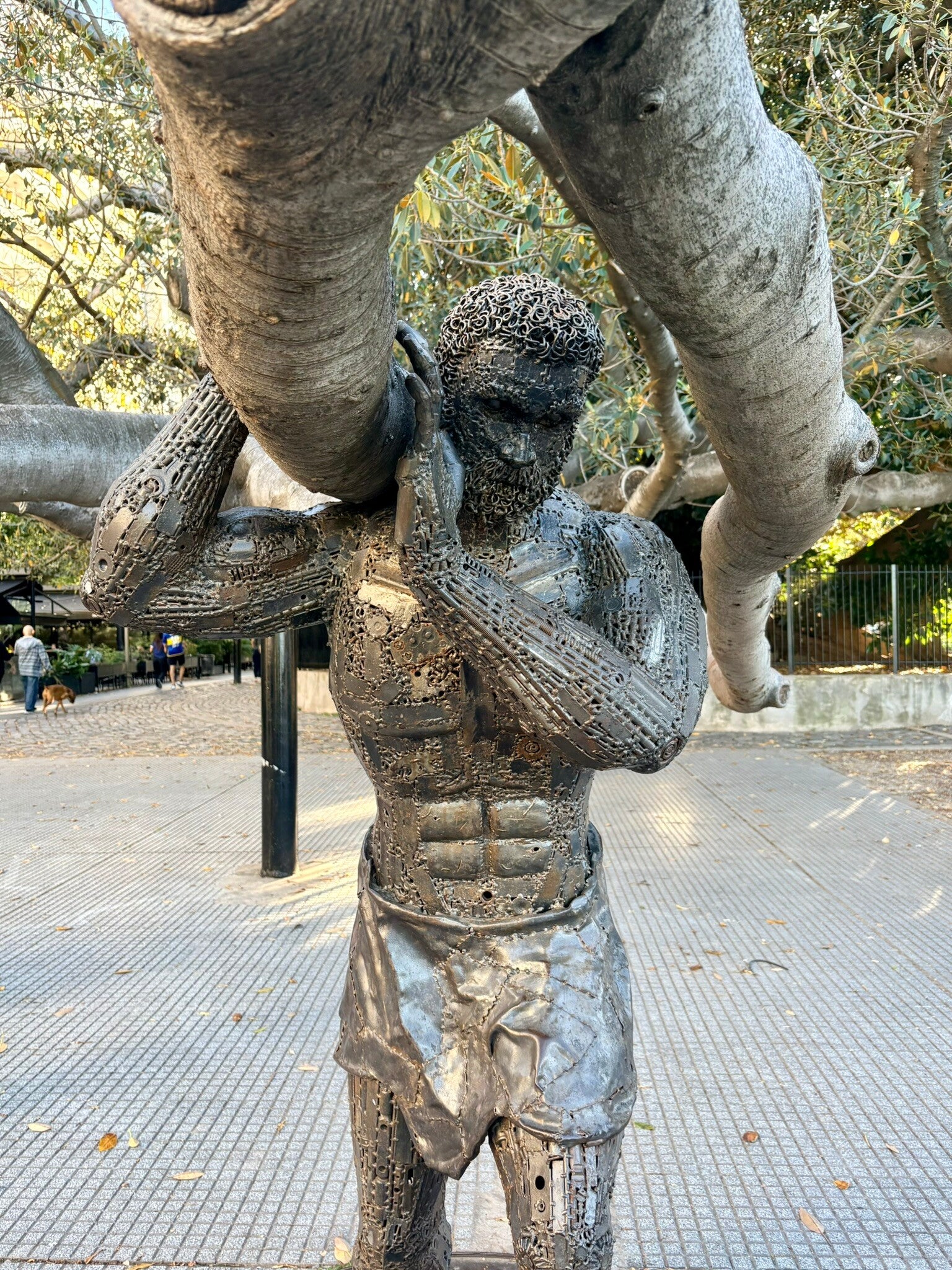
If you still have energy left, you can also visit the nearby neighbourhood of Palermo, famous for its huge green spaces as well as cafes, art and nightlife. Popular spots include Bosques de Palermo, the Rose Garden, and the Japanese Garden.
Day 3 - La Boca: colours, street art and football fever
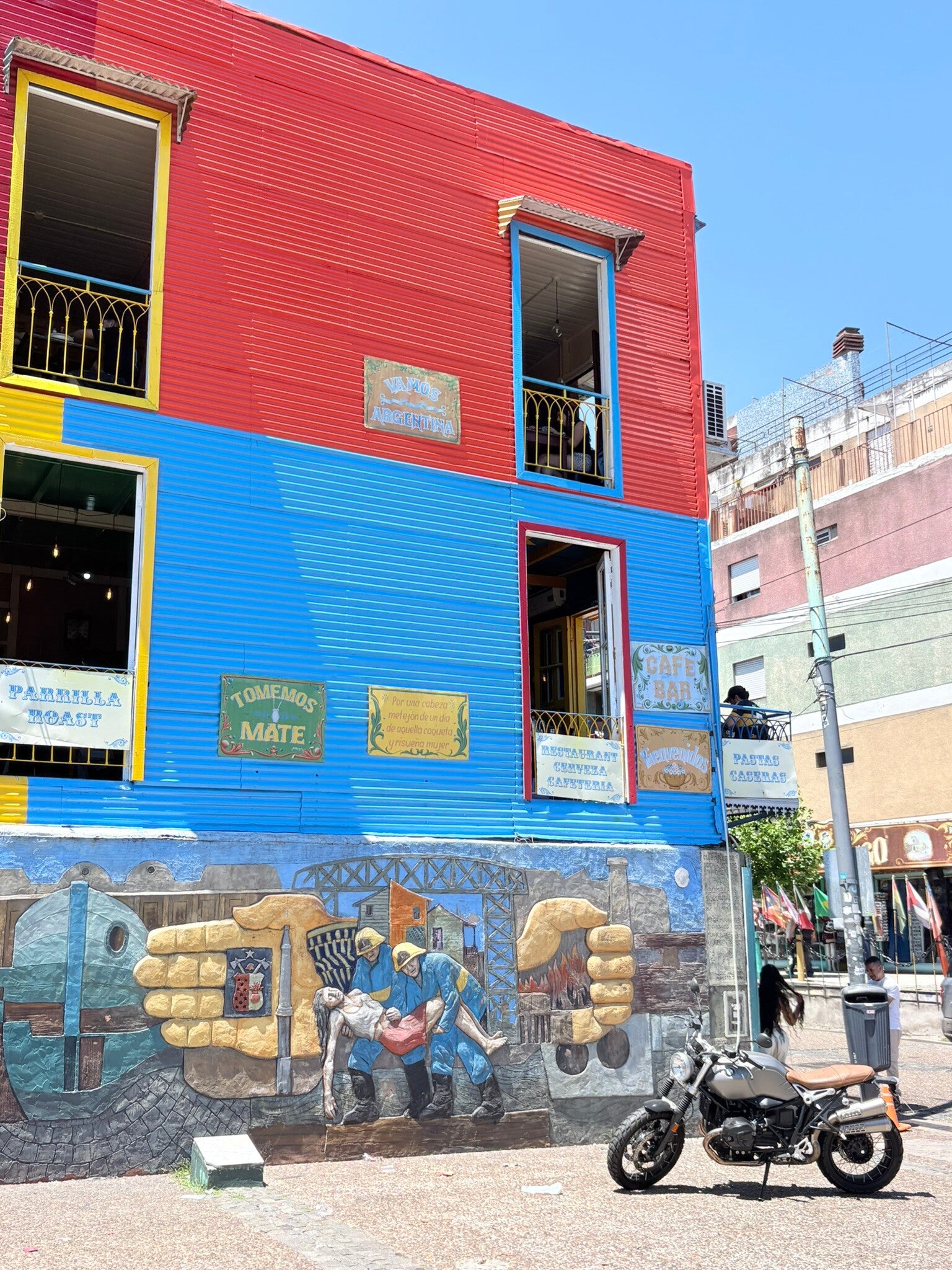
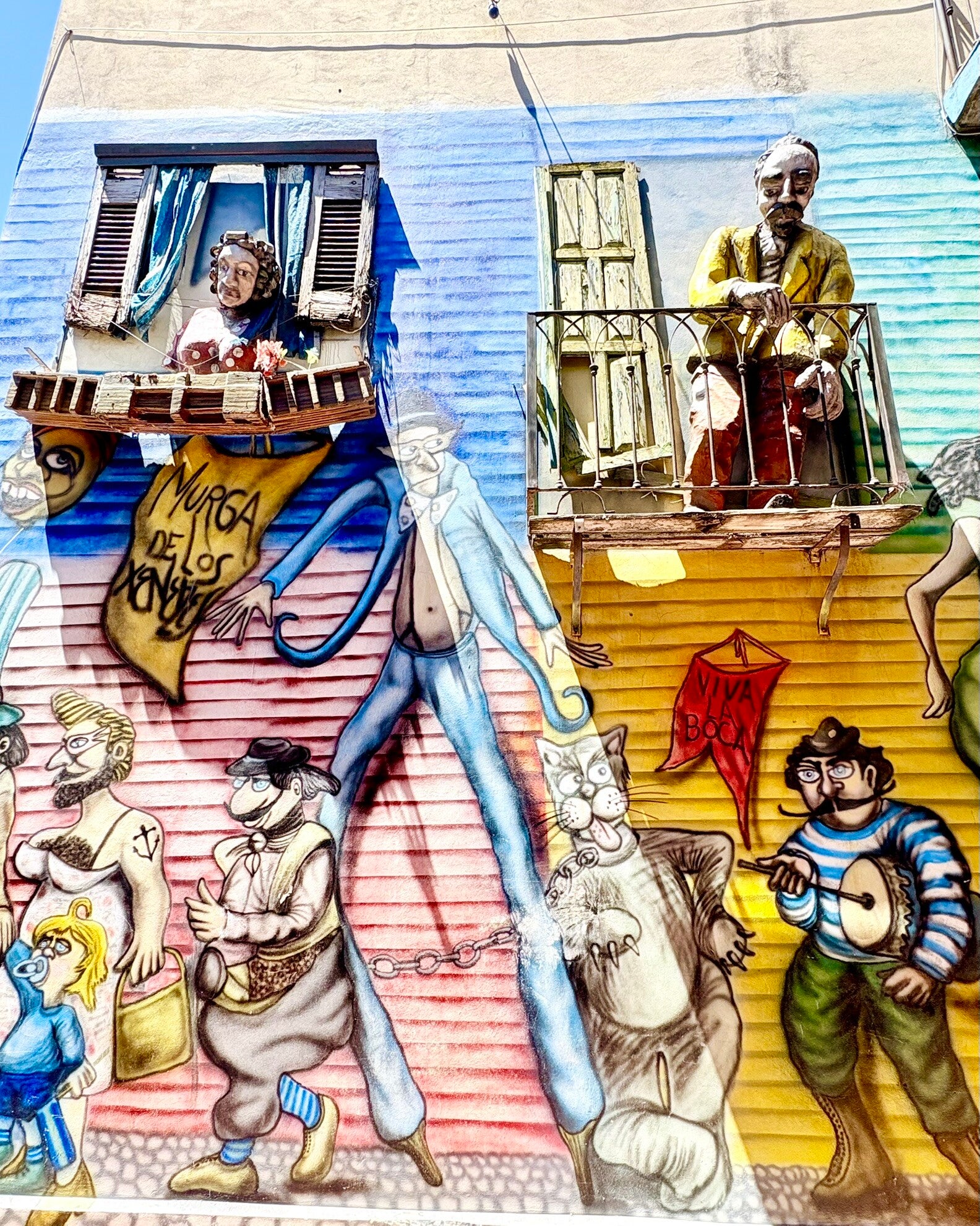
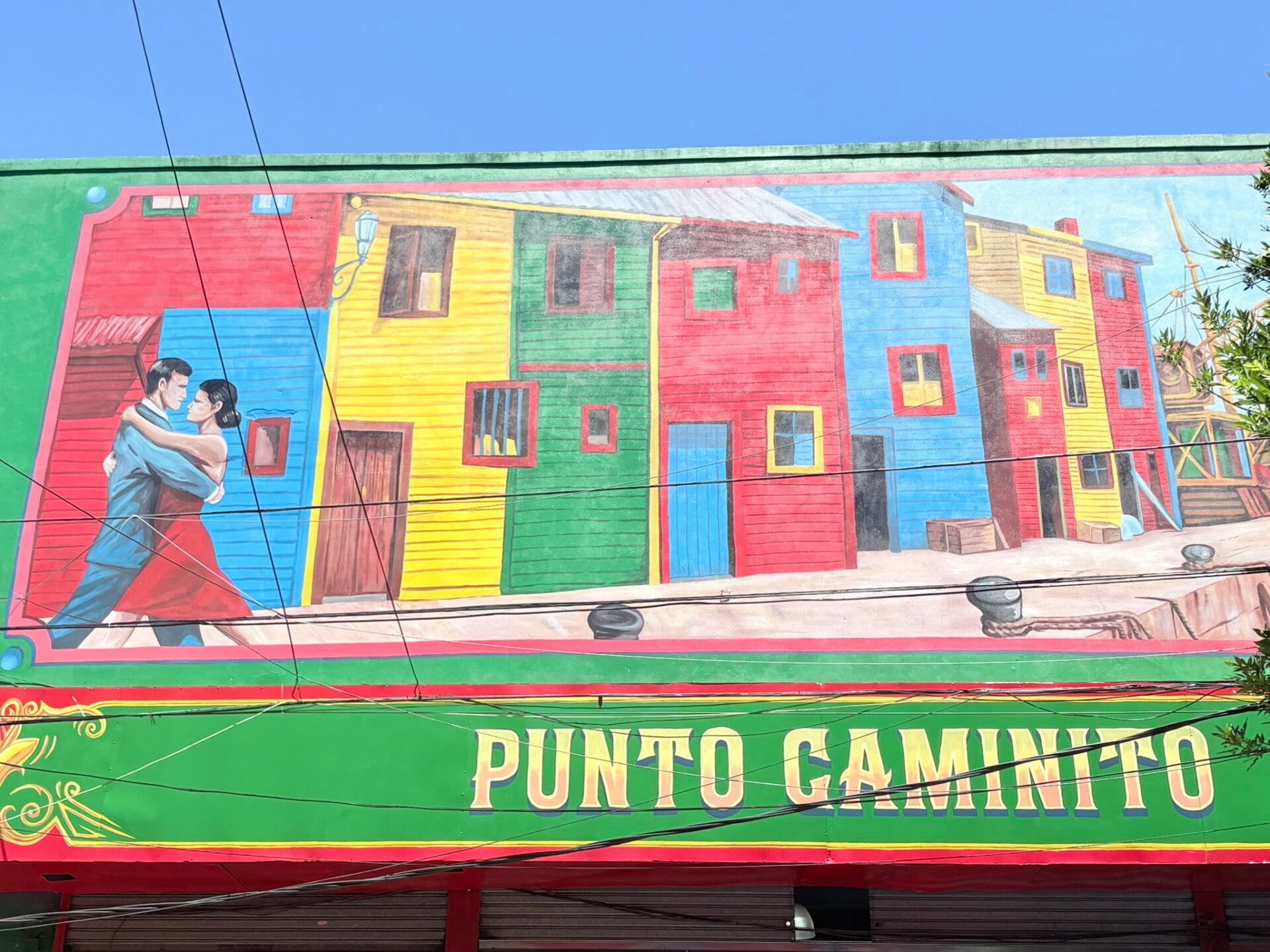
Today, let’s change gears from Buenos Aires’ polished, elegant neighbourhoods to the one that feels grittier - yet still incredibly vibrant and beautiful. La Boca is one of the city’s most colourful and historic areas, famous for the brightly painted houses of El Caminito and as the home of Boca Juniors football club and La Bombonera stadium.
I highly recommend visiting La Boca with a guided tour. It doesn’t just cover the touristy highlights - it also takes you into more local corners and helps you see the neighbourhood from multiple angles. La Boca’s bold art scene is strongly linked to world-famous local artist Benito Quinquela Martín, who loved vivid colours and saw them as symbols of creativity, resilience and immigrant identity. In his honour, El Caminito became a vibrant open-air museum, filled with art, multicoloured buildings and murals.
La Bombonera football stadium adds to La Boca’s eclectic look with its bright blue and yellow - the colours of Boca Juniors club. The story goes that in 1907 the club’s president suggested choosing the team colours based on the first ship to enter the Port of Buenos Aires that morning. The first ship was reportedly Swedish, and that’s how the now-iconic blue-and-yellow kit was born.
If you want to experience Argentina’s true passion for football, you can attend a match at La Bombonera (tickets often start around USD 100). Local tour guides can sometimes help you find tickets at a more reasonable price than what you’ll see online. Just be warned: locals are intensely passionate and there’s a famous saying that La Bombonera doesn’t shake - it beats like a heart, with everyone jumping in unison. Match days also come with pre- and post-game celebrations in the streets, often featuring Fernet-Branca with Coca-Cola (a favourite local drink) shared with friends.
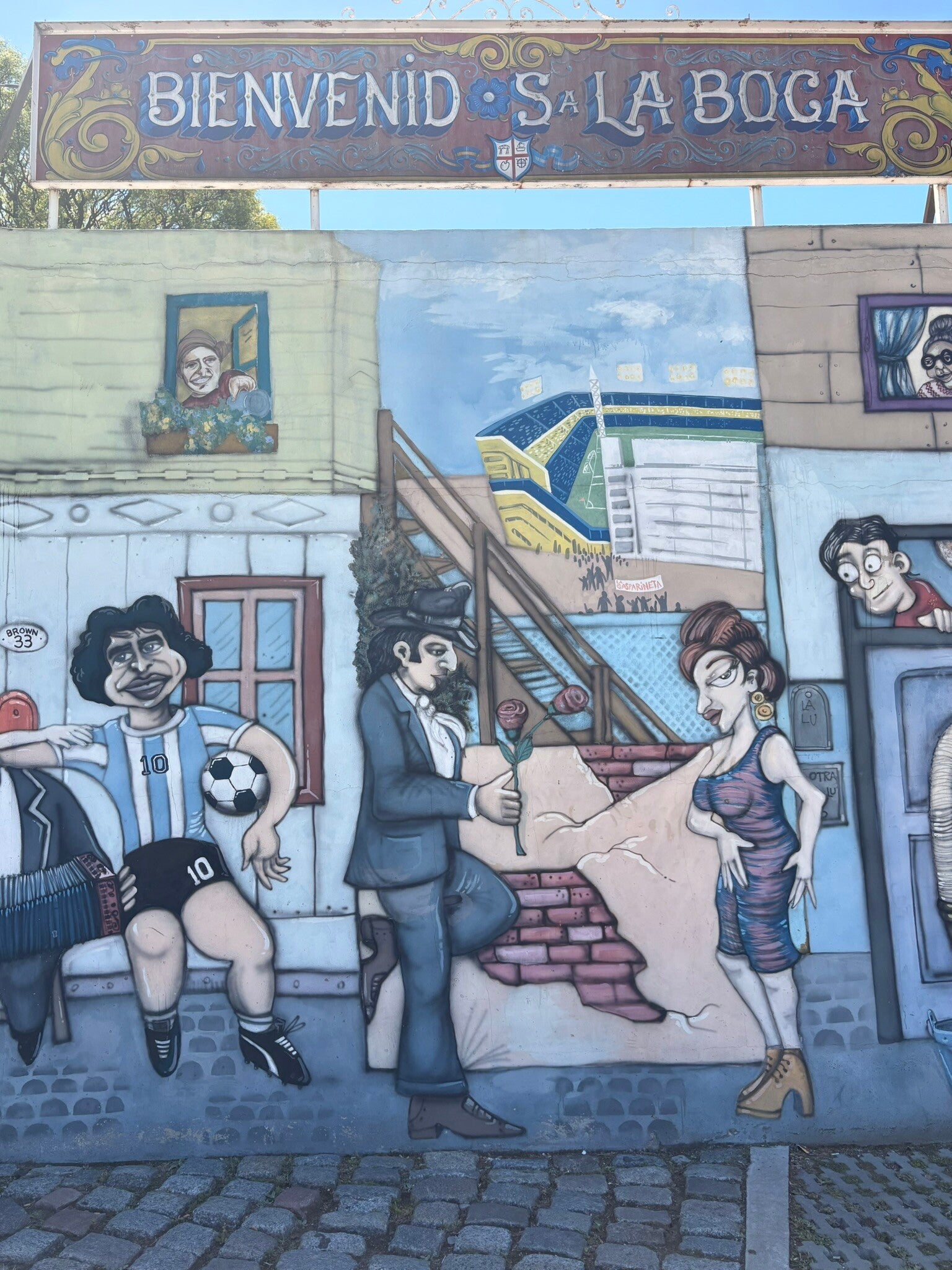
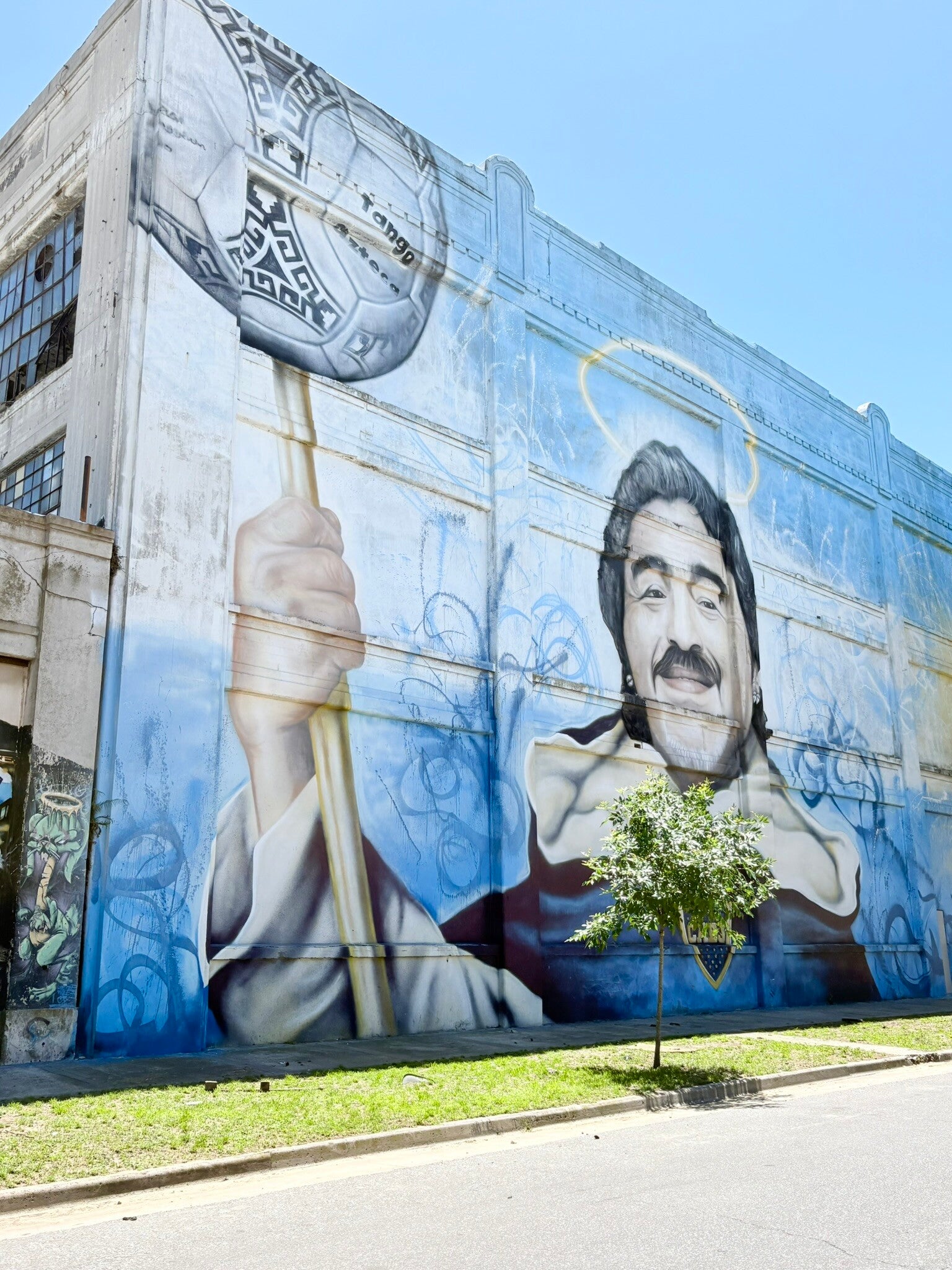
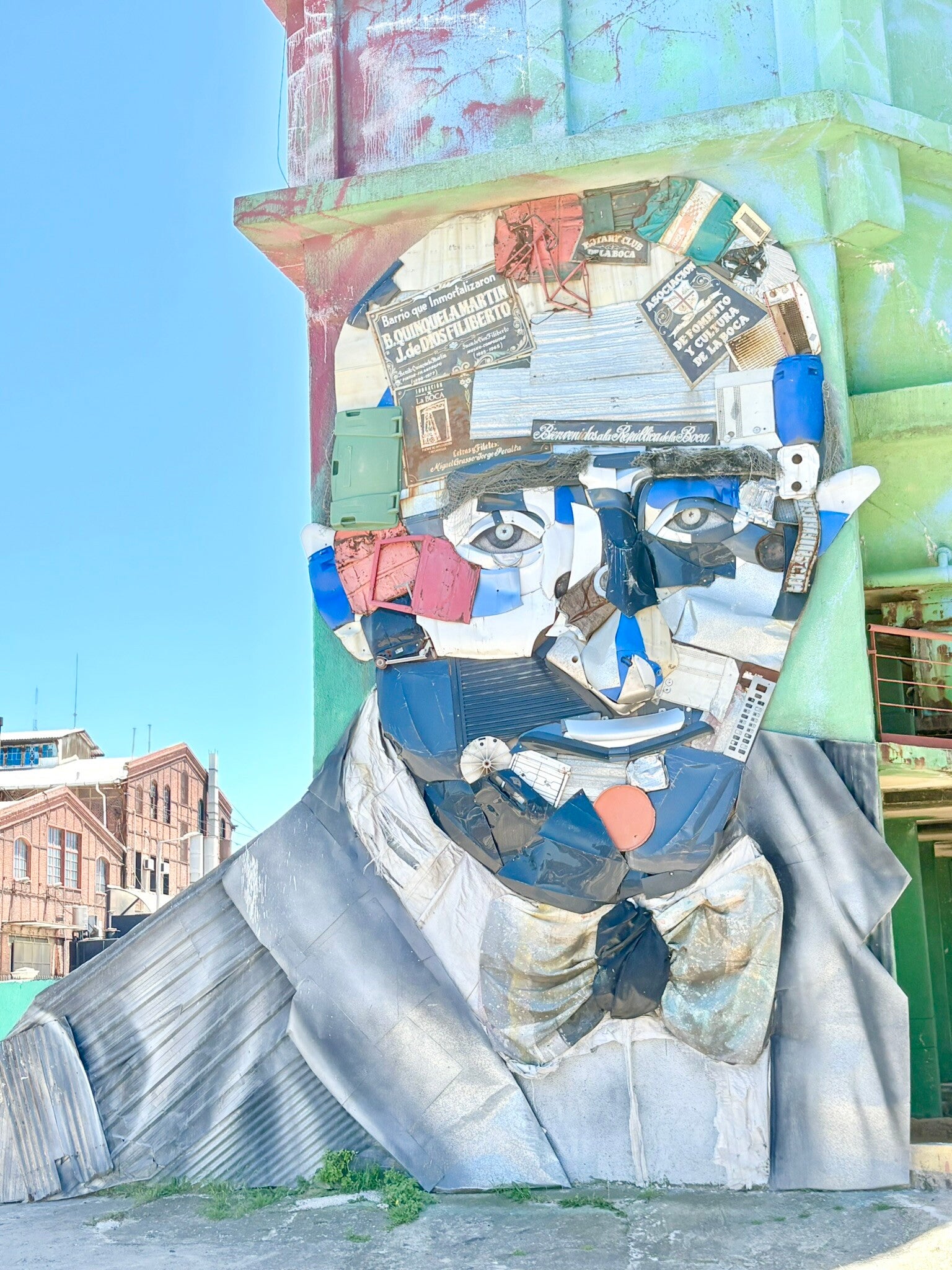
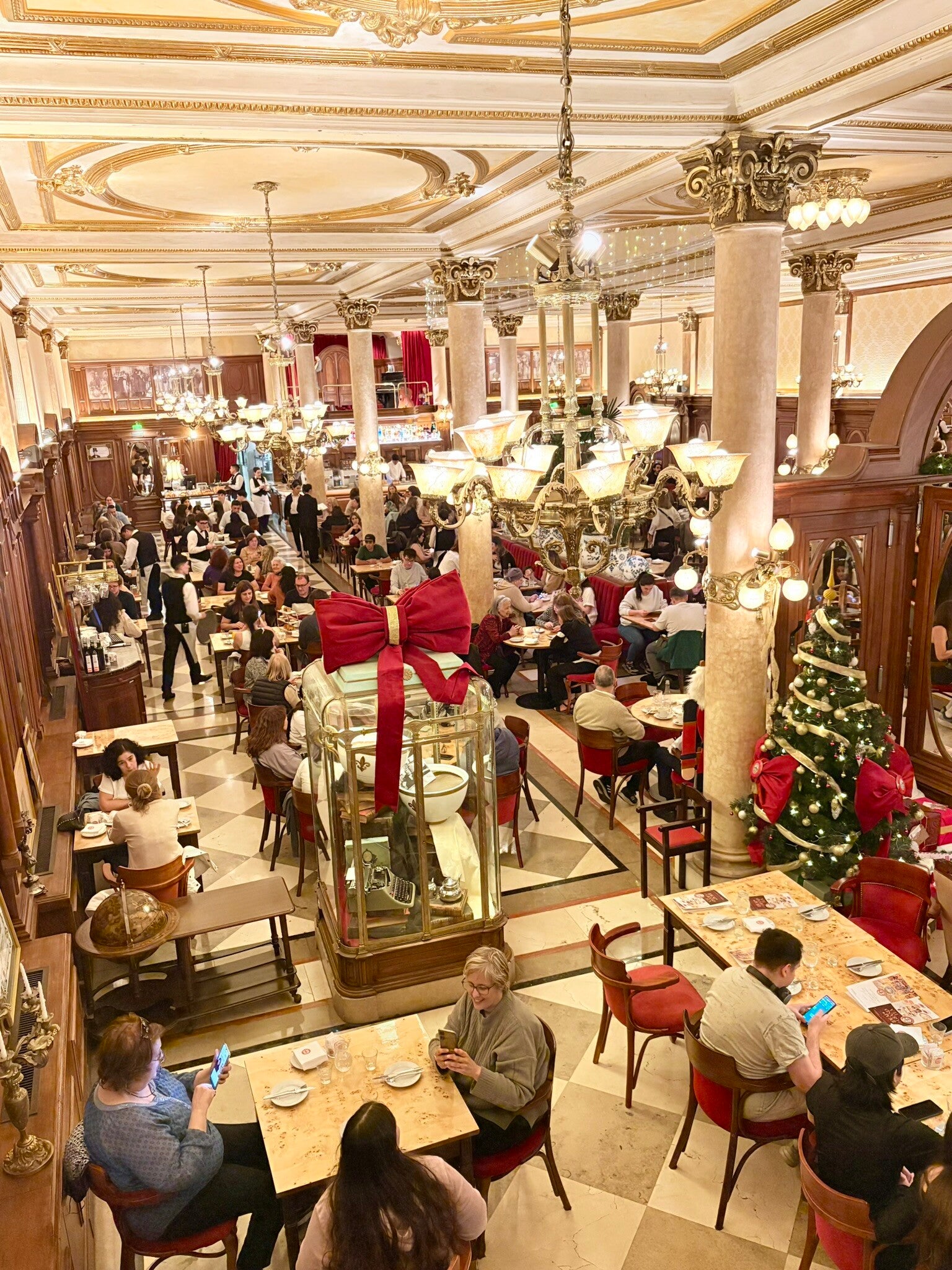
If that doesn’t sound like your idea of fun, here’s a recommendation on the other end of the spectrum: Confitería Ideal, a Belle Époque-style cafe, for a relaxed afternoon tea. With marble columns, chandeliers, ornate ceilings and grand mirrors, it almost transports you back to early 20th-century Buenos Aires. It offers coffee, pastries, classic dishes and live piano music from 5 pm (based on information from November 2025 - double-check the schedule before you go).

Day 4 - bohemian San Telmo, historic cafes and tango
If you still haven’t had your fill of Belle Époque-style buildings, pay a visit to another Buenos Aires institution: Café Tortoni. It’s the oldest and most historic cafe in Argentina, founded in 1858, and feels like a living museum of the city’s classic cafe culture. If you go for breakfast, make sure to order an Argentinian classic: a medialuna (Argentina’s version of a croissant) with cafe con leche. Another great option is hot chocolate with churros. Yes - Argentinians love to start the day on a sweet note. If you visit in the morning for coffee and a snack, you can often get in without a reservation, but it’s best to book ahead if you’re going for dinner (it’s popular and can get crowded!).
In the afternoon, head to San Telmo, one of Buenos Aires’ oldest and most atmospheric neighbourhoods, known for its cobblestone streets, colonial architecture, antique shops and bohemian vibe. You can explore with a guide, or simply wander on your own. Key places to visit include:
- Museo Historico Nacional — housed in a 19th-century mansion, this museum is free to enter and showcases key objects linked to Argentina’s national heroes, including Jose de San Martin (Argentina's independence fighter), as well as other historic figures.
- Casa Ezeiza - a former aristocratic residence turned antique market.
- Galeria Solar de French - a passageway within a shopping gallery decorated with colourful umbrellas as part of a global “umbrella project” aimed at raising awareness of autism and ADHD. It was even visited by Game of Thrones star Emilia Clarke in 2025.
- Mercado San Telmo - hands-down my favourite spot in the neighbourhood. This historic indoor market blends old-world atmosphere with modern foodie culture. You’ll find everything from traditional produce stalls to wine stands, empanada shops and asado grills. At La Casa del Dulce de Leche you can also sample different variations of dulce de leche before choosing which one to buy—and the flavours get surprisingly creative, from orange-infused versions to Malbec-flavoured dulce de leche!
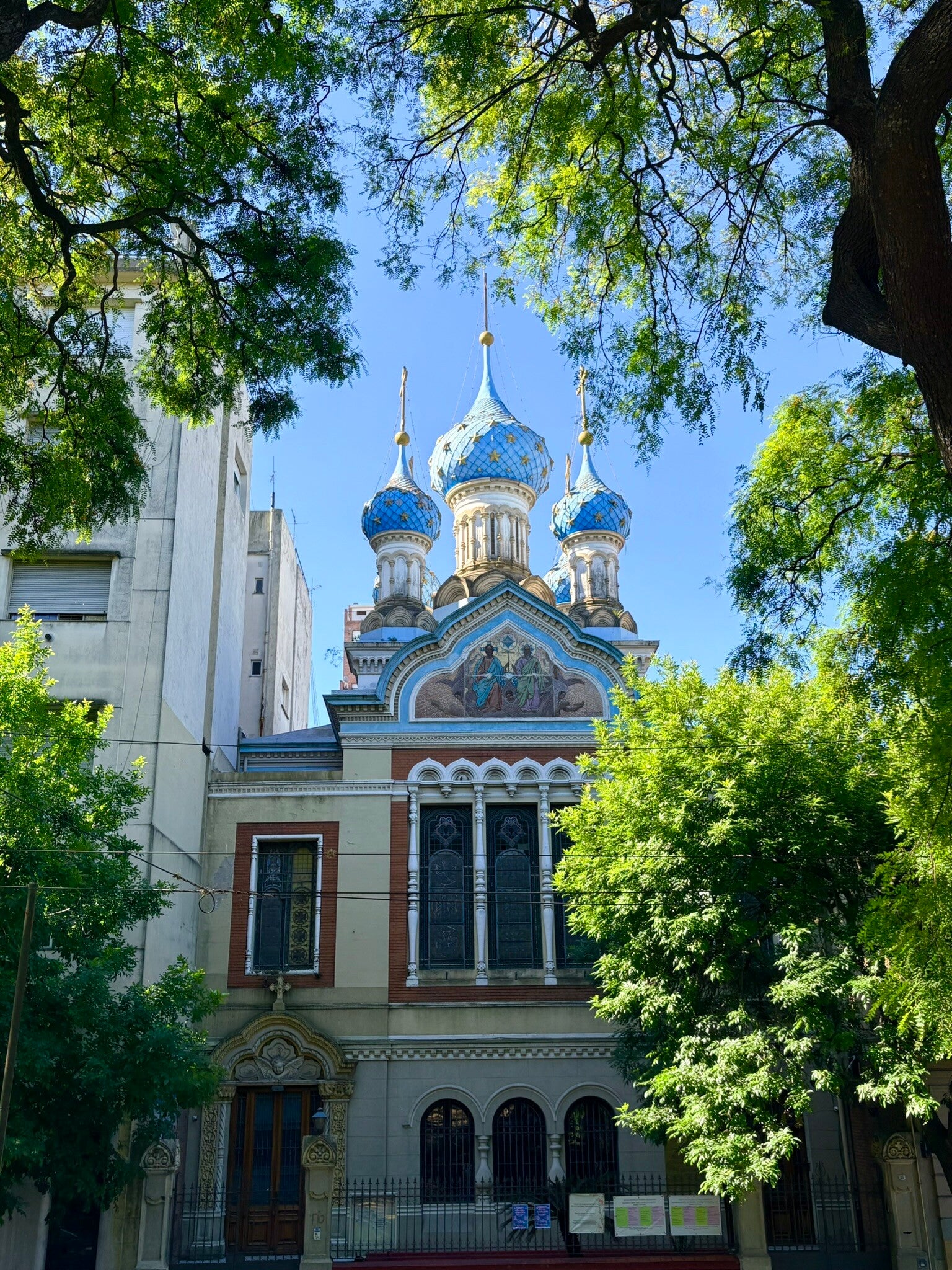
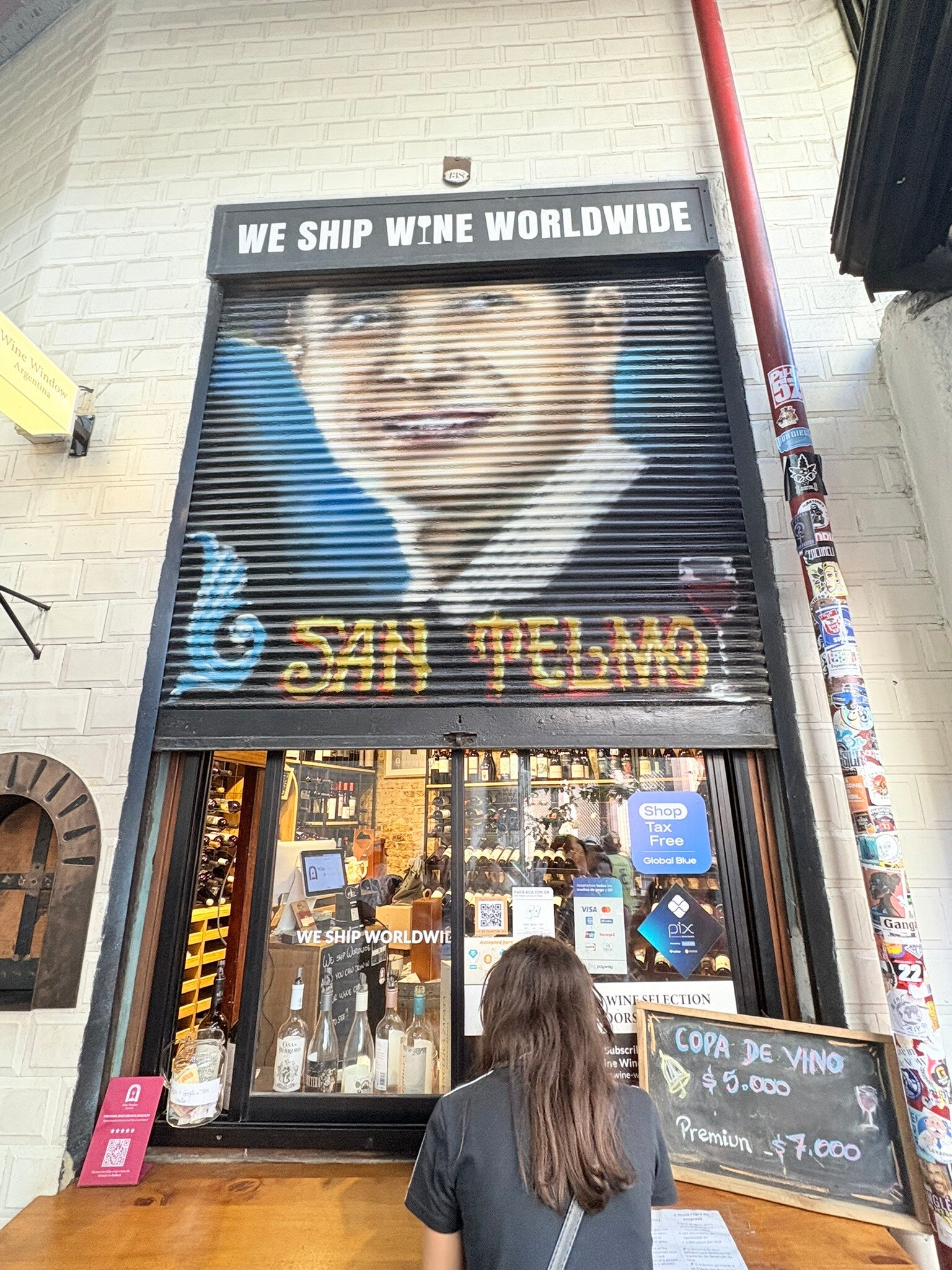
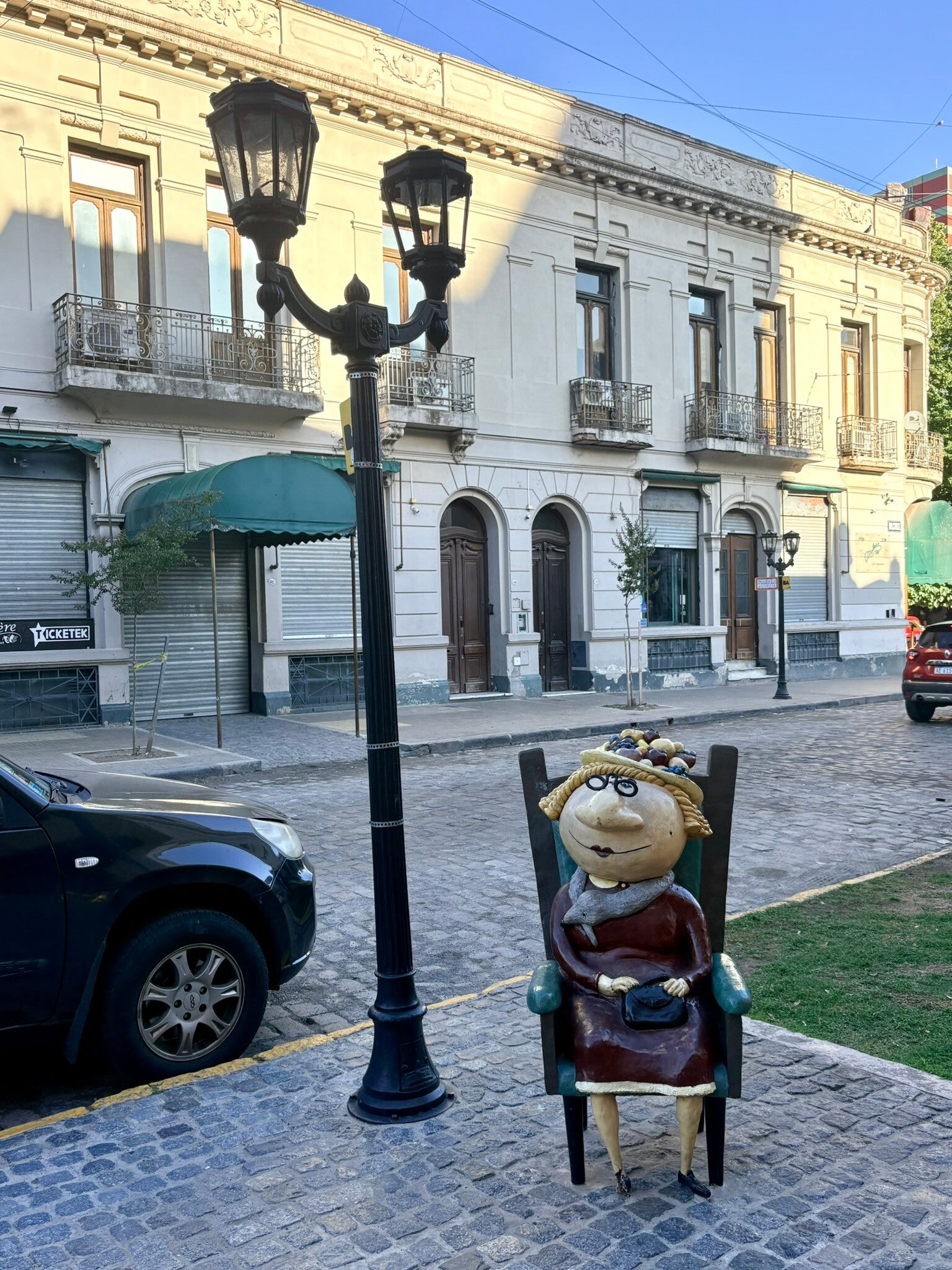
San Telmo also has one of the best tango venues in town. If seeing a tango show is on your bucket list, you can attend a classic, old-school performance at El Viejo Almacen - but be aware it isn’t cheap, with tickets typically around USD 80–120 (without/with dinner). If that’s outside your budget, Tango Madero is a solid alternative, with shows starting at around USD 25. The performance quality is great (even if it leans toward a larger, more “production” feel), and you can decide how much you want to spend on food and drinks.
Day 5 - Nature in the city: Costanera Sur and Puerto Madero
On your last day in Buenos Aires, explore the city’s newest area: Puerto Madero and Costanera Sur.
Costanera Sur Ecological Reserve is a huge protected nature area right in the city, filled with lagoons and walking trails with gorgeous waterfront views. It’s an unexpected slice of nature next to the city’s skyscrapers - especially when you learn about its accidental origins, as nature gradually took over construction debris that was abandoned in the 1970s.
Along the promenade, you’ll find plenty of food stalls serving a classic Argentinian lunch: choripan—a chorizo sandwich traditionally eaten with chimichurri sauce.
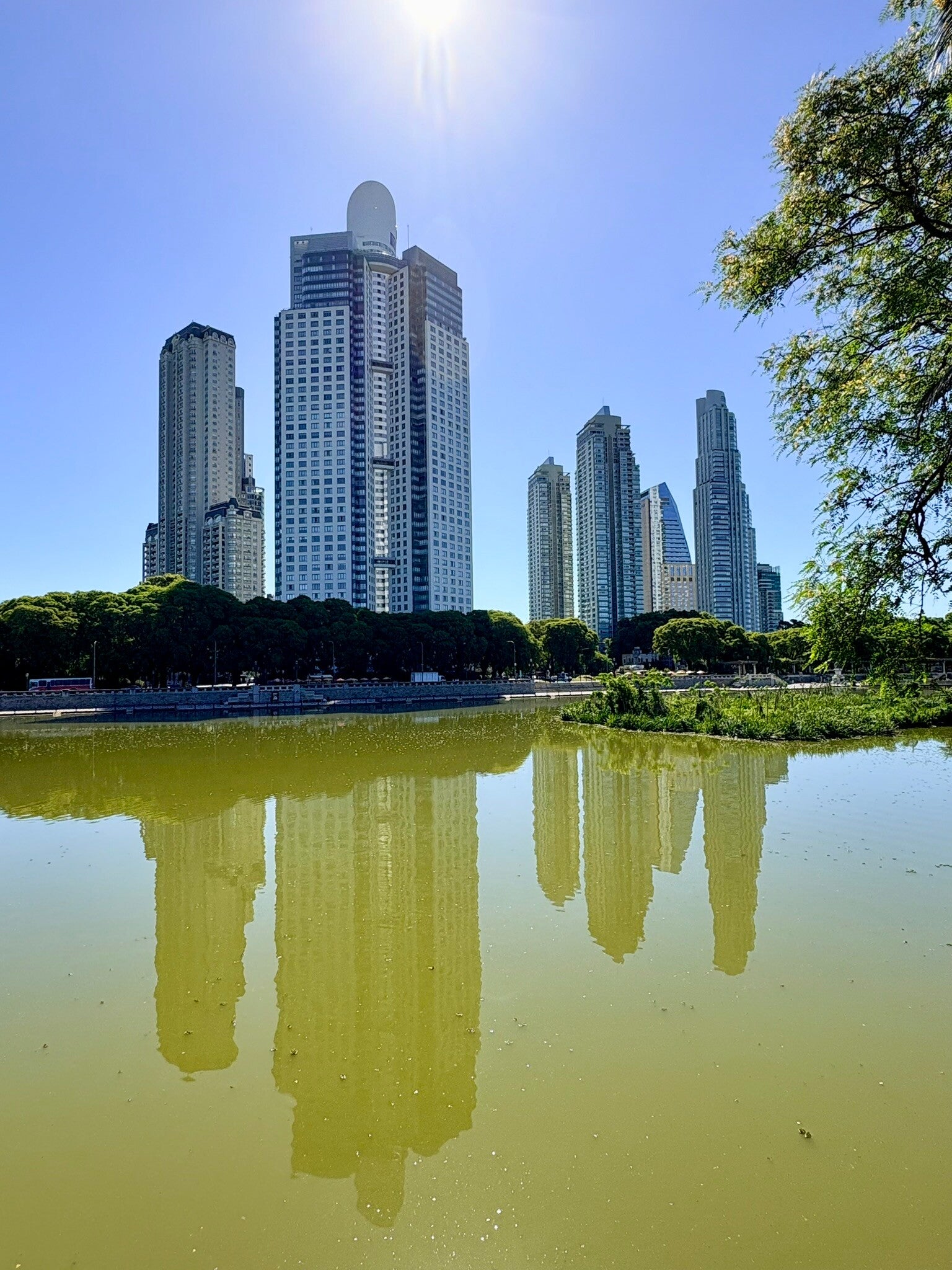


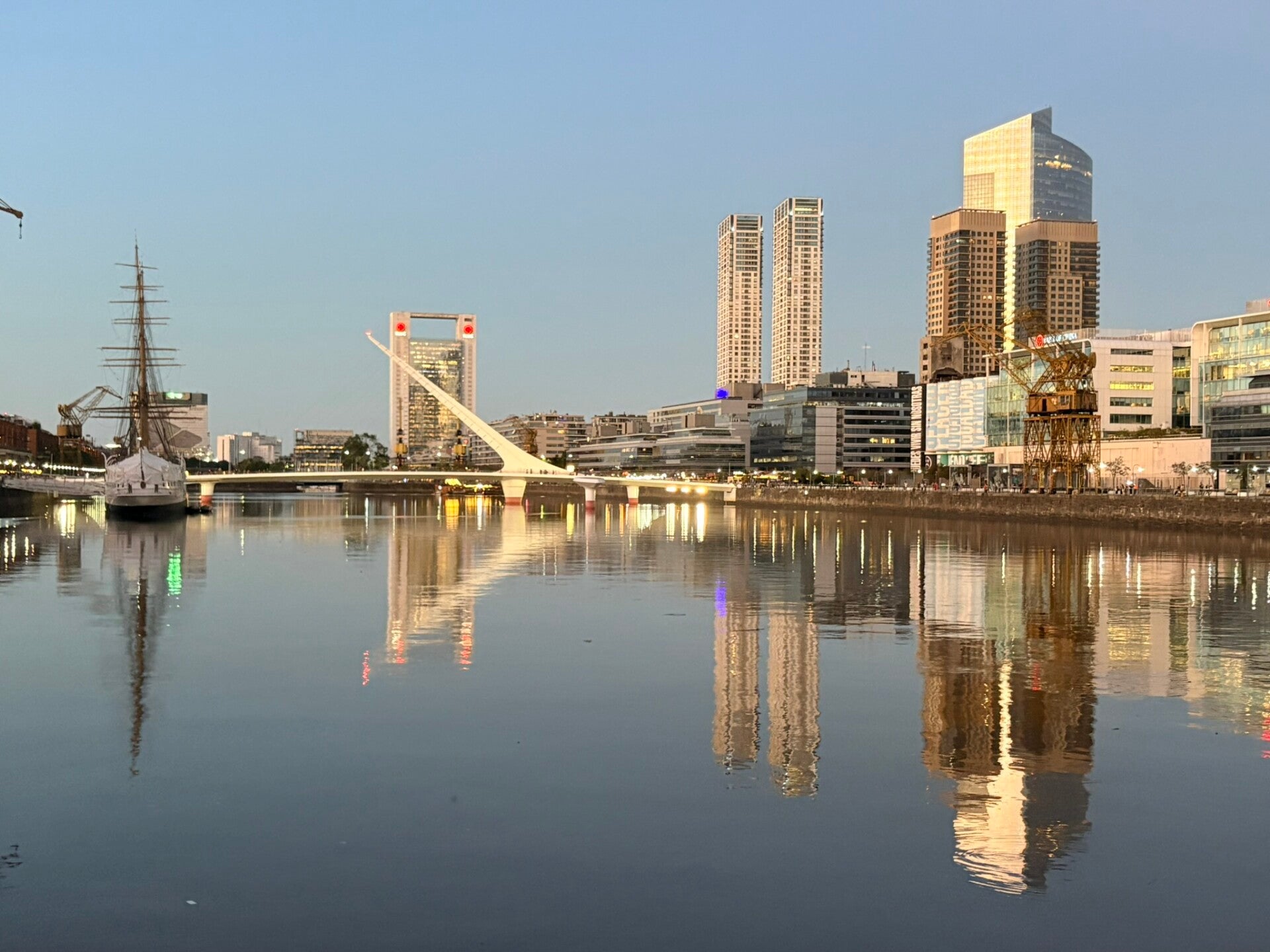
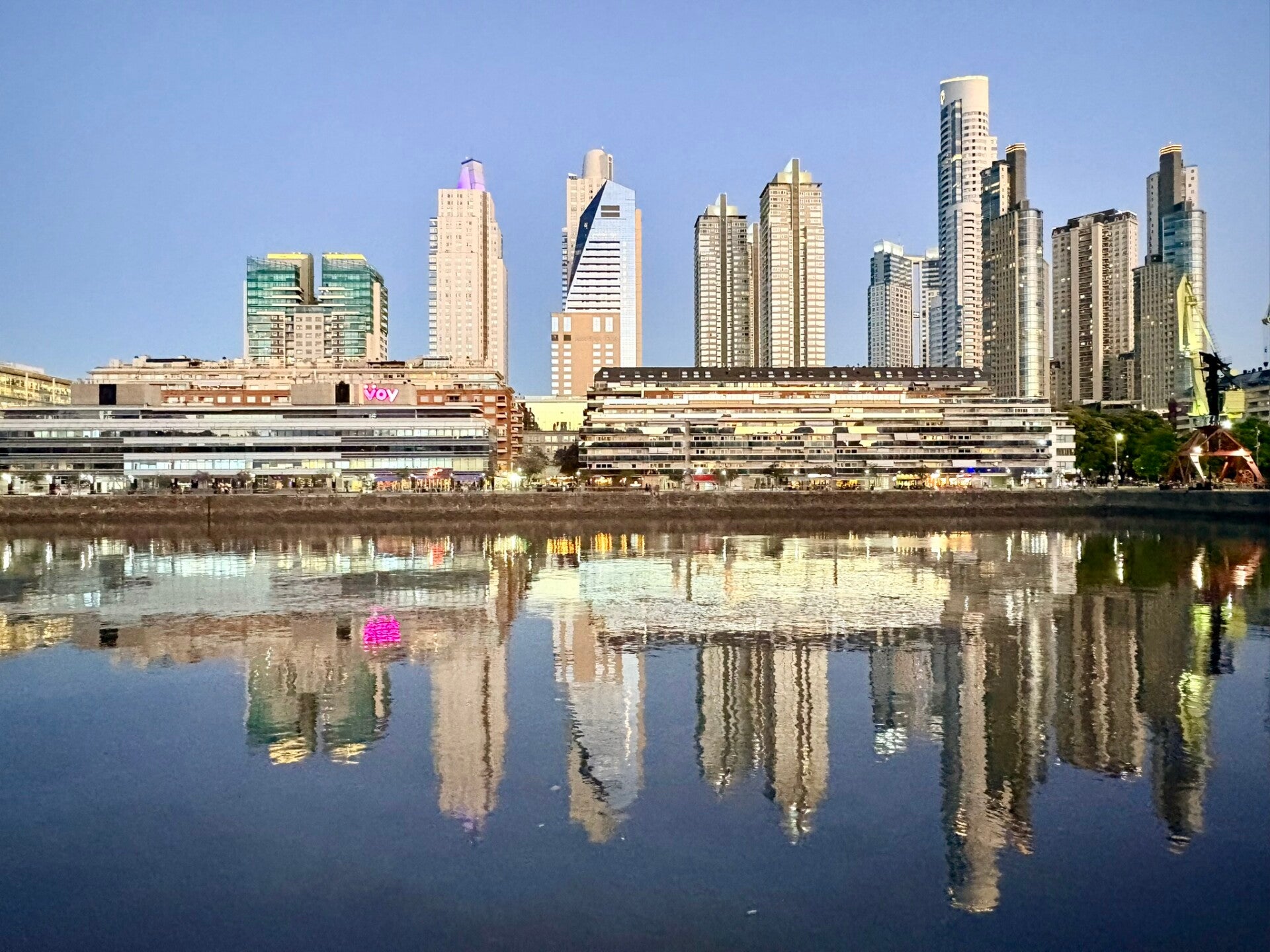
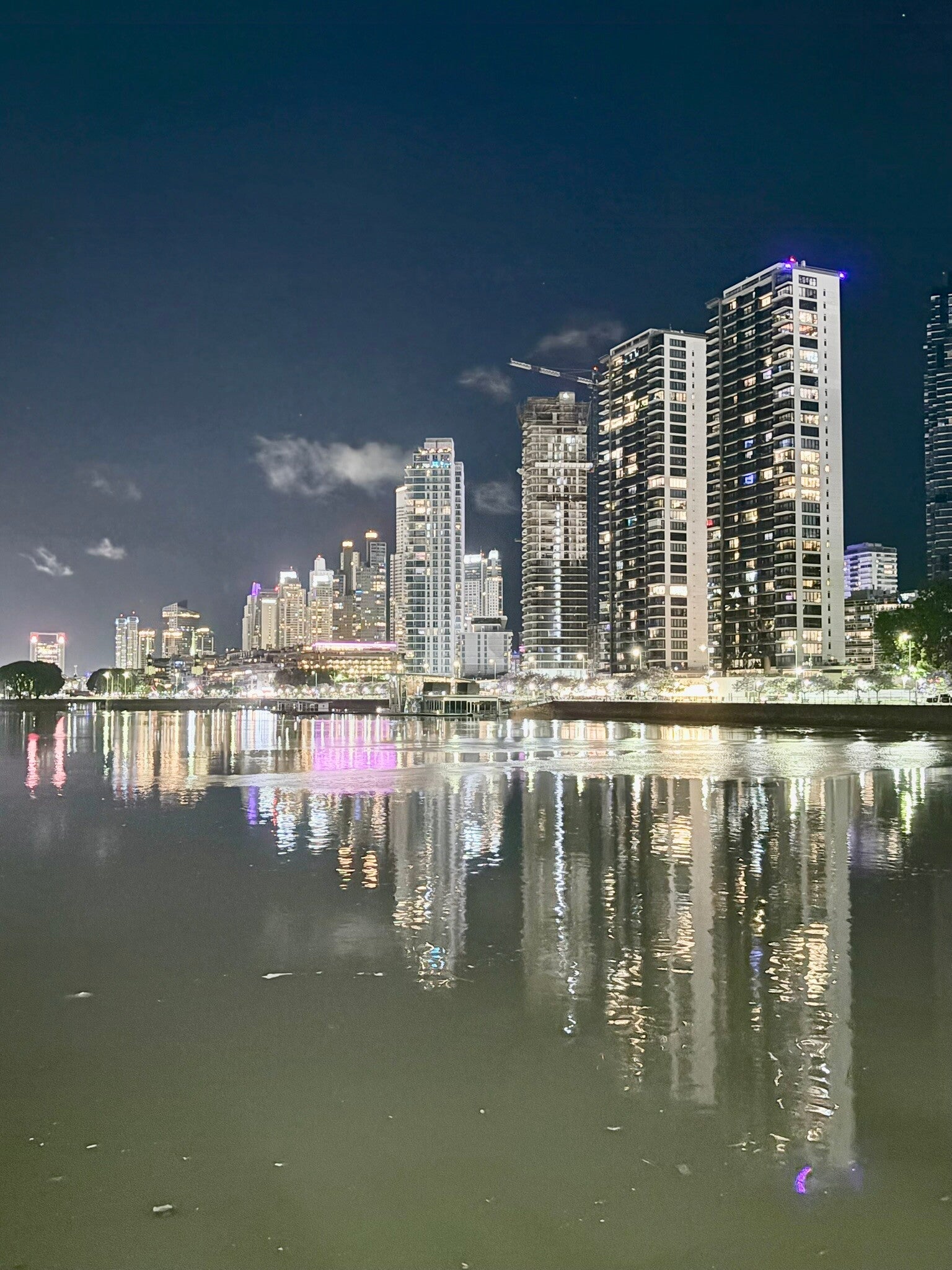
Costanera Sur is best enjoyed during the daytime (the park is free of charge but closes at 18:00), while Puerto Madero is a great evening destination. It’s Buenos Aires’ most modern and upscale waterfront district, filled with high-rises, stylish restaurants and luxury hotels. Originally built as a port, it was abandoned almost immediately after construction because ships became too large to dock there. In the 1990s, an urban renewal project transformed Puerto Madero into a thriving modern neighbourhood. It’s a great spot for dinner, a nightcap, or simply a stroll along the waterfront after dark - when the area lights up and looks truly magical.
Key places not to miss in Puerto Madero include:
- Puente de la Mujer - bridge designed by renowned Spanish architect Santiago Calatrava and said to represent a couple dancing tango (the mast as the man, and the curved walkway as the woman).
- Fragata Sarmiento - an Argentine naval training ship from 1897, beautifully preserved and now operating as a museum ship.
One last sweet tip to finish off your Buenos Aires visit: Rapa Nui is a famous Argentine ice cream and chocolate cafe chain. Here you can try local ice cream flavours (such as dulce de leche), as well as chocolates and alfajores (classic Argentinian treats).



Bonus: Visiting Uruguay
If you have some time while in Buenos Aires, why not visit Uruguay? It's a small but very beautiful country that's definitely worth your time. What you can visit in Uruguay depends on how much time you have, but even if you only have one day, you can visit the beautiful colonial town of Colonia del Sacramento via a quick and easy ferry from Buenos Aires. I'll outline a 3-day itinerary from which you can pick and choose based on your time and interests.
Day 6 - Iguazu falls (Argentinian side) : the three main circuits
After exploring the man-made wonders of Buenos Aires, it’s time to explore the natural ones in Puerto Iguazú, a small Argentine town and the gateway to Iguazú Falls. It’s only a 2-hour flight from Buenos Aires, with plenty of domestic airlines operating the route. Ticket prices are usually very reasonable, especially if you book in advance.
If your itinerary allows, I recommend flying to Puerto Iguazú the evening before and entering the national park as soon as it opens at 8:00 am. The park gets busy, especially in summer (December and January). I visited in November and it was already crowded. You won’t be alone even right after opening, but starting early helps you minimise queueing and maximise time at the waterfalls.
I’d also recommend buying tickets online to avoid lines at the ticket counter (price: USD 32 for foreign nationals, as of November 2025).
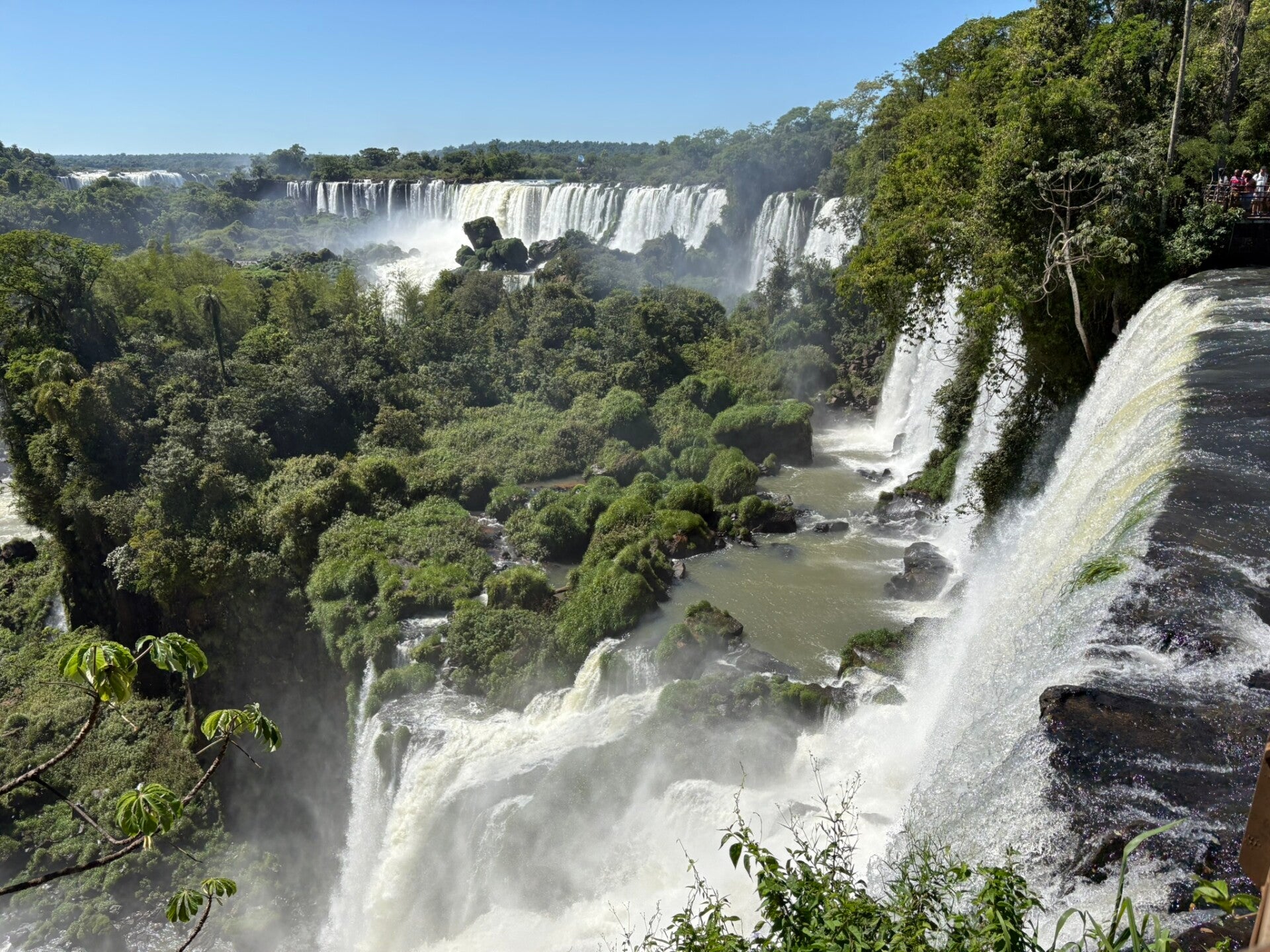
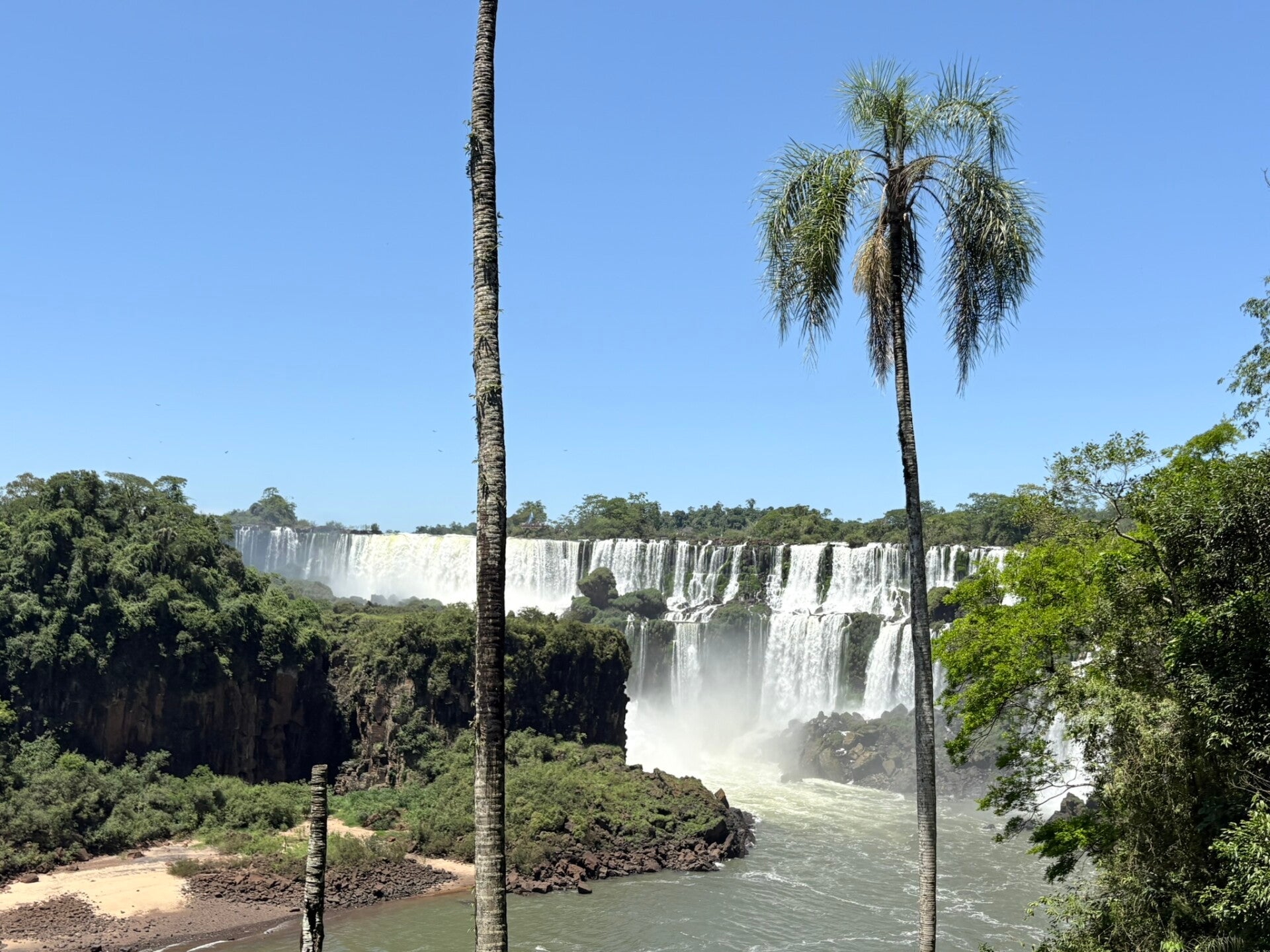
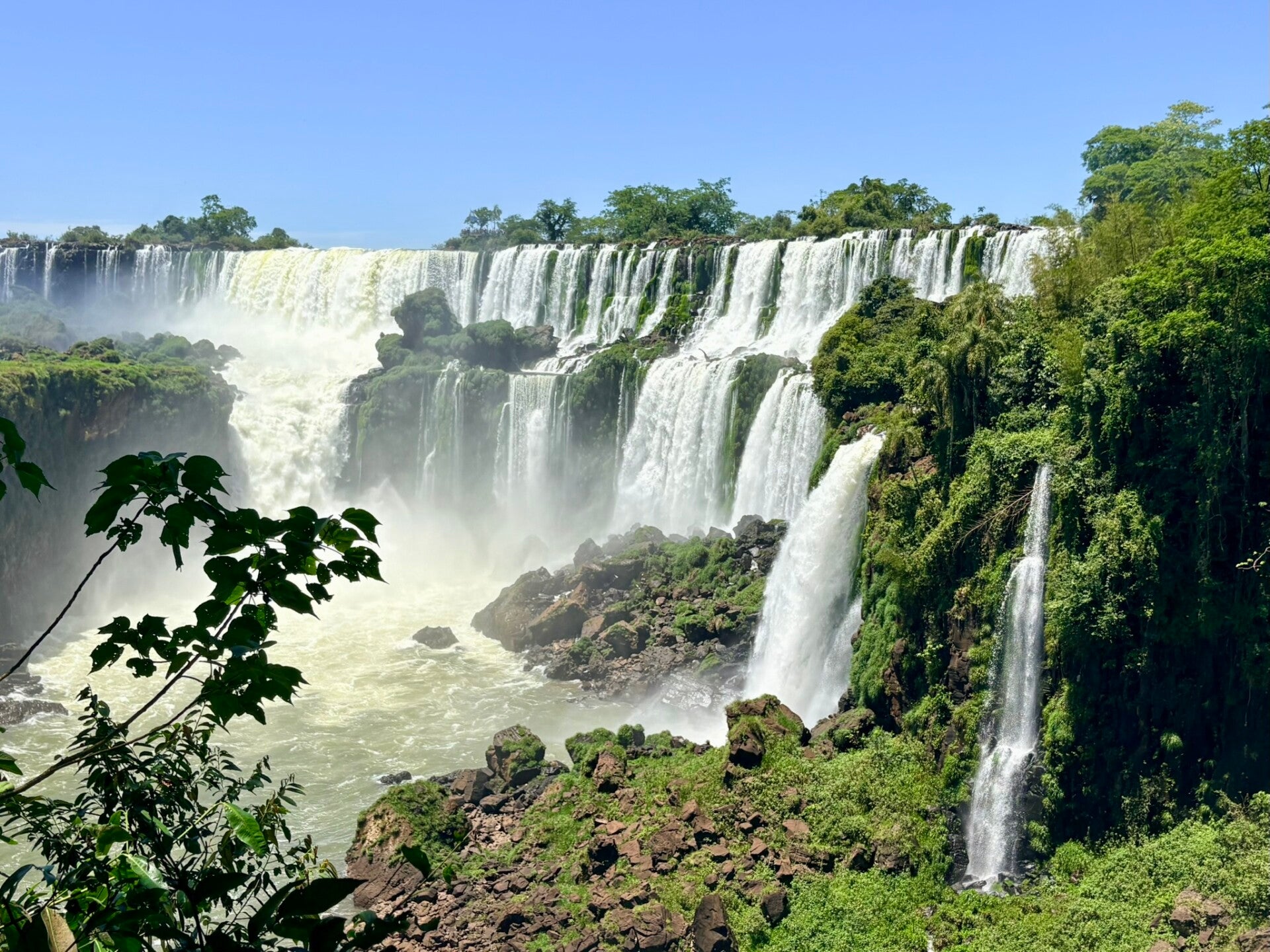
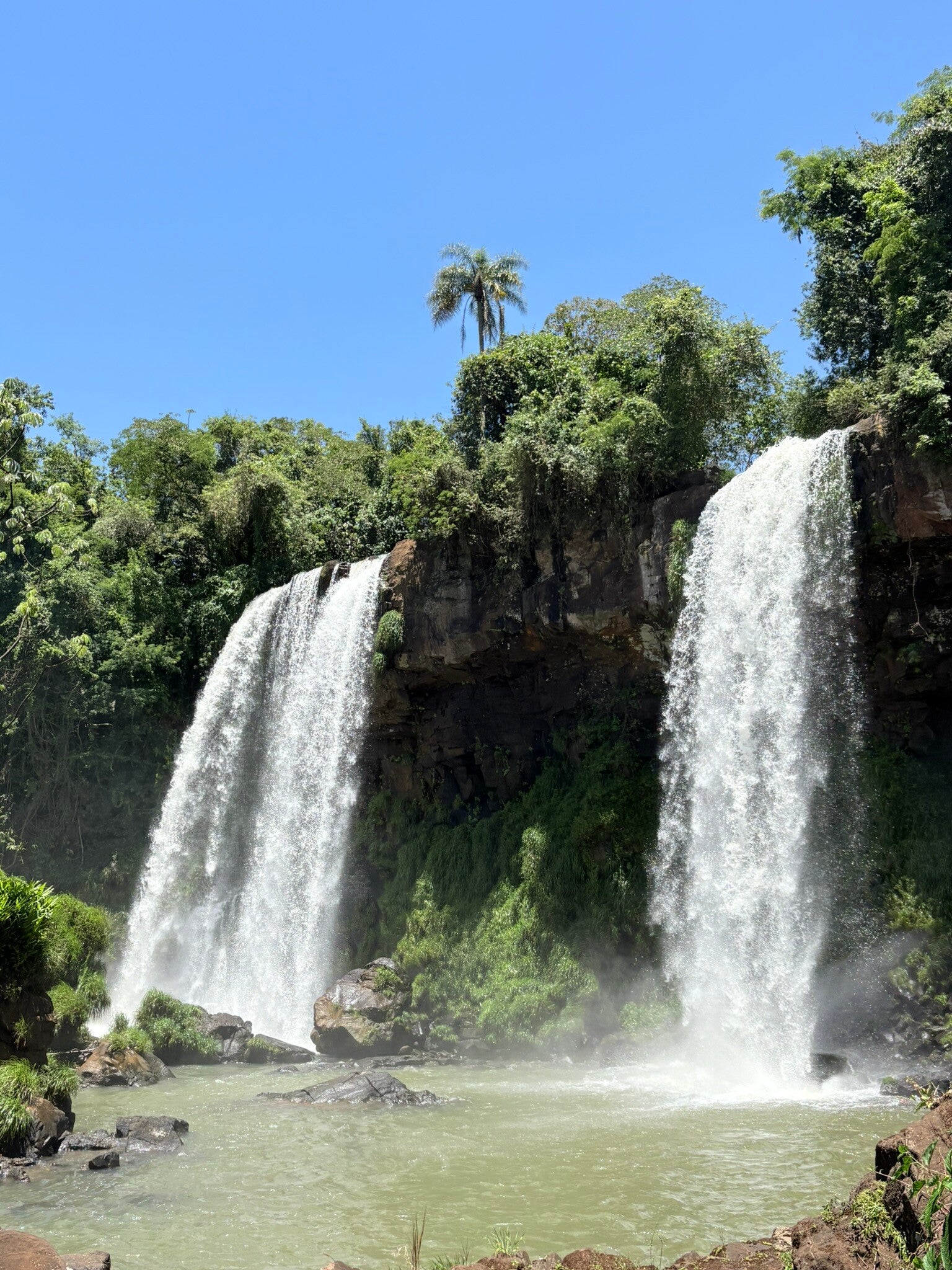
There are three main circuits in Cataratas del Iguazú National Park:
- Garganta del Diablo (Devil’s Throat) - the most iconic walk in the park, leading to the single most powerful viewpoint. Note that you may not spend much time here for two reasons: you get wet very quickly, and there are usually lots of people taking photos, so you may have to “fight” for a good spot at the railing.
You can reach Garganta del Diablo in two ways:- Walk about 60 minutes one way from the park entrance, or
- Take the train (included in the park entry), which runs every 20–30 minutes and takes about 20 minutes to the start of the walkway, followed by another 20-minute walk.
I walked to Garganta del Diablo one way, but I’d recommend taking the train instead- the walk isn’t particularly scenic, and you’ll want your energy for the Upper and Lower Circuits.
- Upper Trail - as the name suggests, this trail lets you view the waterfalls from above. The path is flat and easy, made of metal walkways suspended over the jungle. It’s about 1.7 km (1 mile), and you can take the train from Garganta del Diablo to the start of the Upper Trail.
- Lower Trail - this circuit takes you closer to the base of several waterfalls, offering a more intimate, up-close perspective. It’s around 1.6 km (1 mile) and includes stairs, so expect some up-and-down.
If you’re wondering which trail to start with, here are two good strategies:
- If you want a more secluded, nature-focused experience, start with the Lower Trail right when the park opens. Almost everyone heads to Garganta del Diablo first, so the Lower Circuit can feel surprisingly quiet in the early morning. This was also by far my favorite circuit because it gets you closest to the falls.
- If you want the most dramatic viewpoint first, start with Garganta del Diablo as early as possible, while the crowd is still manageable.


Getting there 🚌
You don’t need a tour guide to visit Cataratas del Iguazú National Park - getting there is quick and easy from the central bus station at Puerto Iguazú. Buses depart every 20 minutes starting at 7:00 am, and tickets cost 15,000 ARS / USD 11 (cash only, as of November 2025). I recommend taking the 7:20 am bus: the ride takes about 30 minutes, and you’ll arrive right before opening time. There’s no fixed return time- you can take a bus back whenever you’re done, with return buses also running every 20 minutes.
Day 7 — Iguazú Falls (Brazil side): panoramic views, rainbows, and Parque das Aves
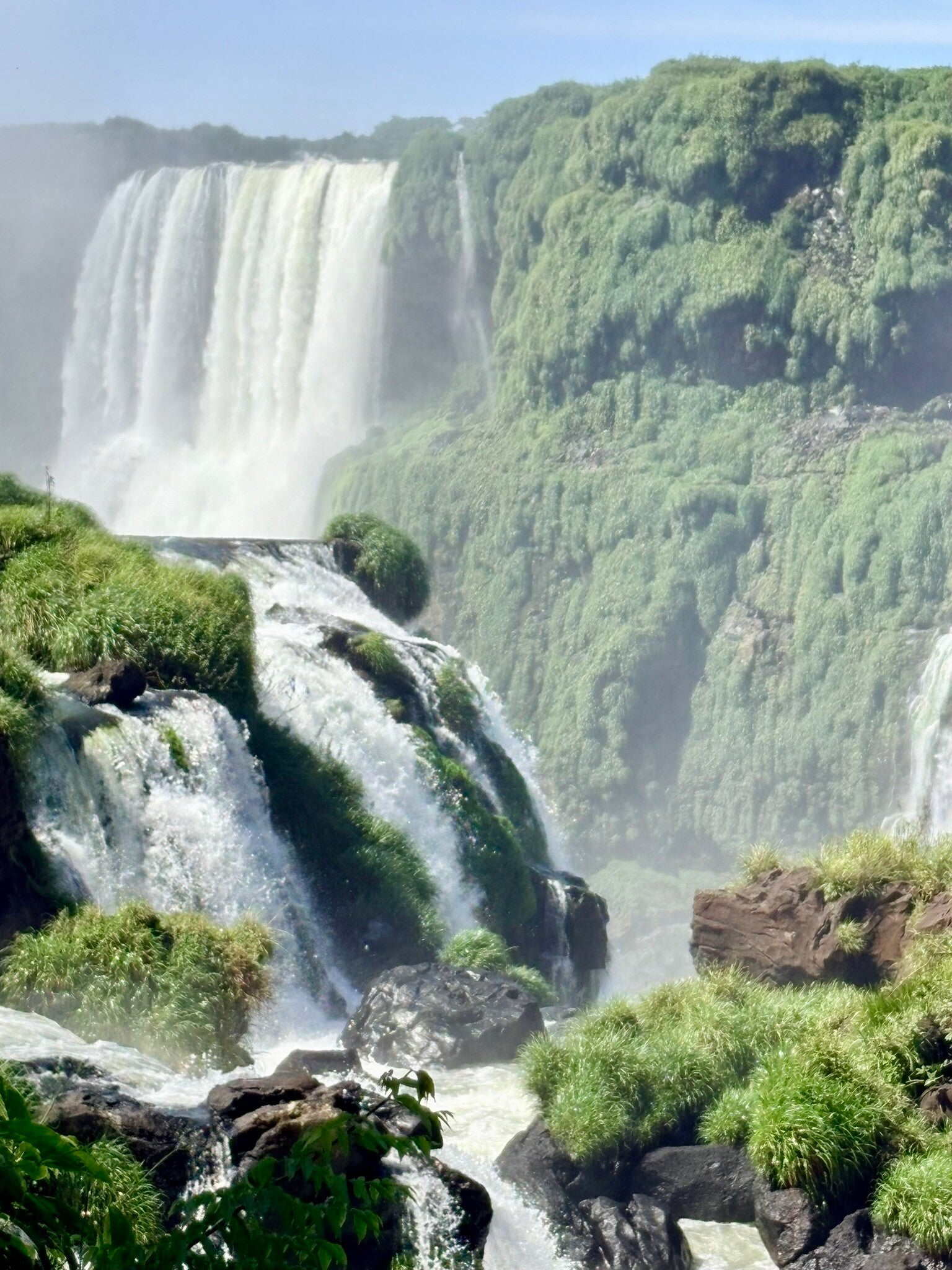
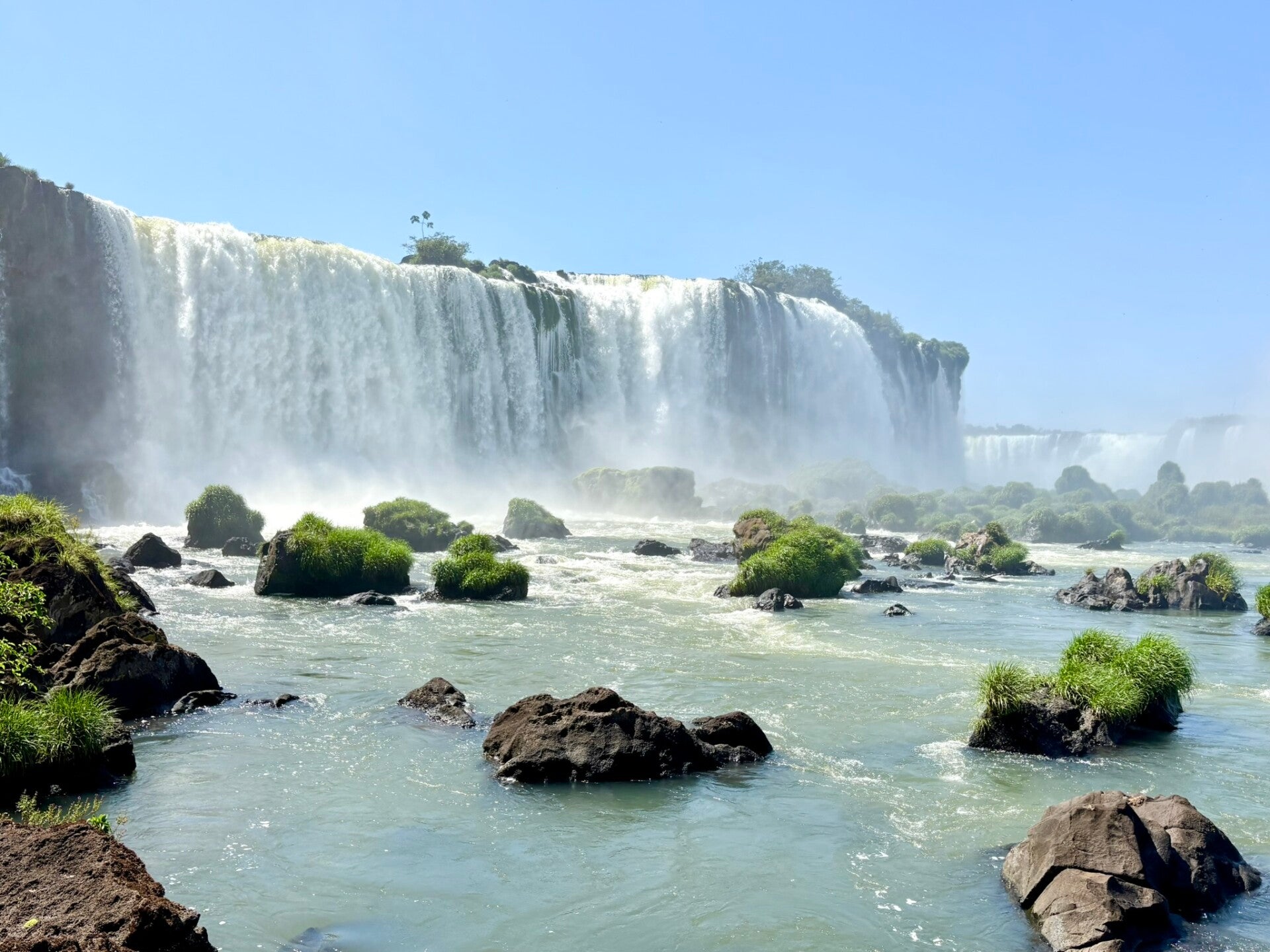
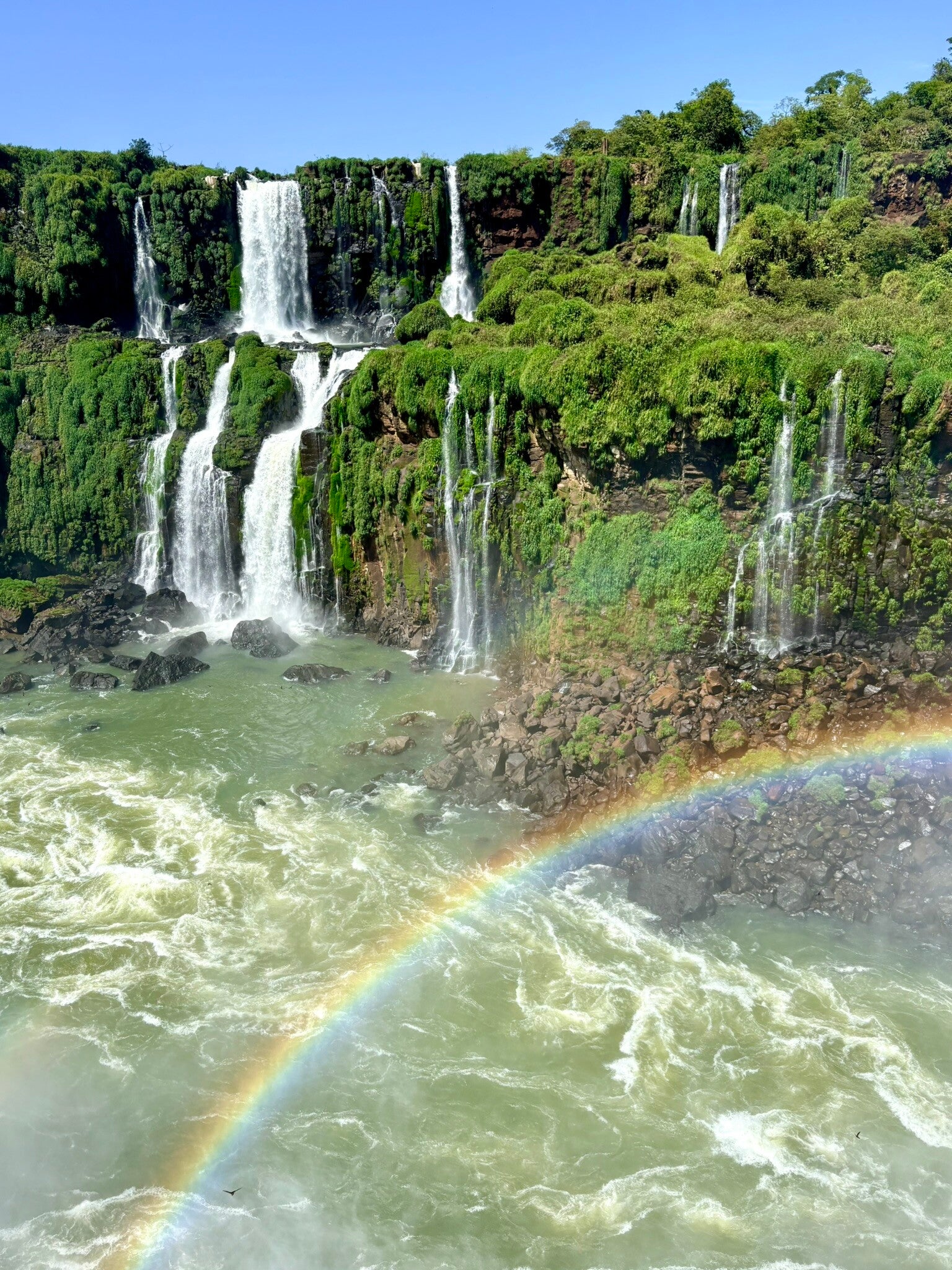
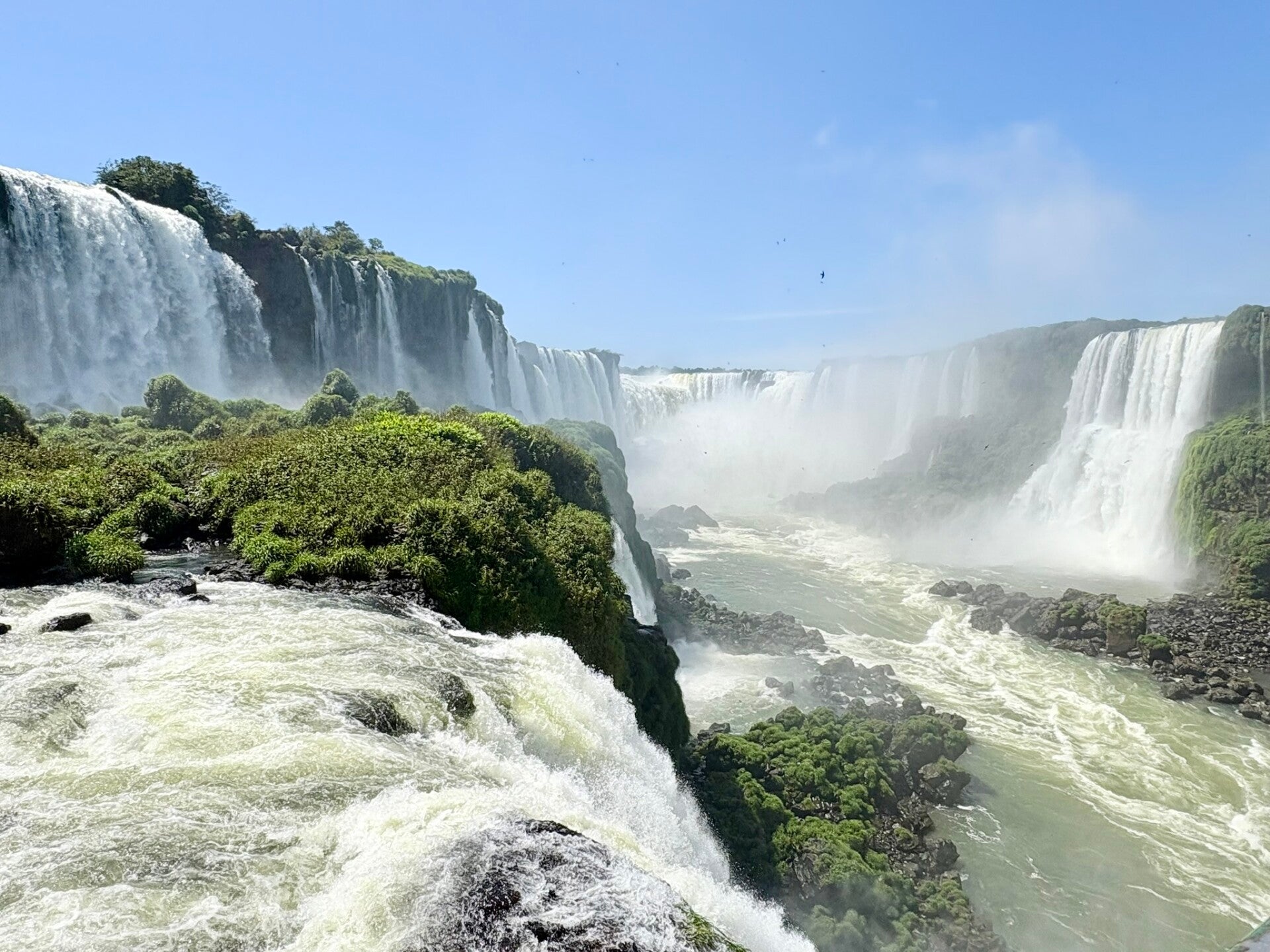
Today it’s time to visit Iguazú Falls from the Brazilian side (the falls form a natural border between Argentina and Brazil). If you’re wondering whether it’s worth seeing the same waterfalls from another country, I can assure you it is. I actually enjoyed the Brazilian side even more than the Argentine one, because you can get right in front of the falls and observe them up close - and I was lucky enough to see the most gorgeous rainbows there.
I would again recommend buying your entry ticket online (around USD 25, as of Nov 2025). Unlike the Argentine side, the Brazilian national park assigns entry time slots, and the early ones sell out quickly. Try to enter right at the opening time - 08:30 on weekends and 09:00 on weekdays - to avoid long lines. I waited only about five minutes when entering at 9:00 am, while the queue when leaving was hundreds of meters long!
There’s only one main circuit on the Brazilian side: the Foz do Iguaçu lookout trail. After ticket control at the entrance, you’ll take a park bus, which takes about 30 minutes to reach the start of the trail. The walk itself is easy - about 1.5 km (0.9 mi) - with a few stairs up and down, plus platforms over the water that bring you very close to the falls (and, if you’re lucky, the rainbows). You’ll also get access to Garganta do Diabo (Devil’s Throat). It’s slightly less wet than the Argentine side, but no less impressive! At the end of the trail, you can either walk back the same way or take a bus back to the entrance.


Getting there 🚍
Getting to the Brazilian side (Foz do Iguaçu) is almost as easy as visiting the Argentine side. From the main bus station in Puerto Iguazú, buses to the falls in Brazil run every hour from 8:00 am. A return ticket costs 12,000 ARS (about USD 9) (as of Nov 2025).
The bus will drop you off at the Argentine border, where you’ll go through passport control, then board another bus after the checkpoint (you’ll recognize it by the Crucero del Norte sign - it’s the only company going to the Brazilian side). Surprisingly, there is no passport control on the Brazilian side: the bus typically passes through Brazilian migration without stopping when entering or exiting. So while passport control is technically required, it often isn’t carried out for day-trippers.
Optional stop: Parque das Aves (Bird Park) 🦜
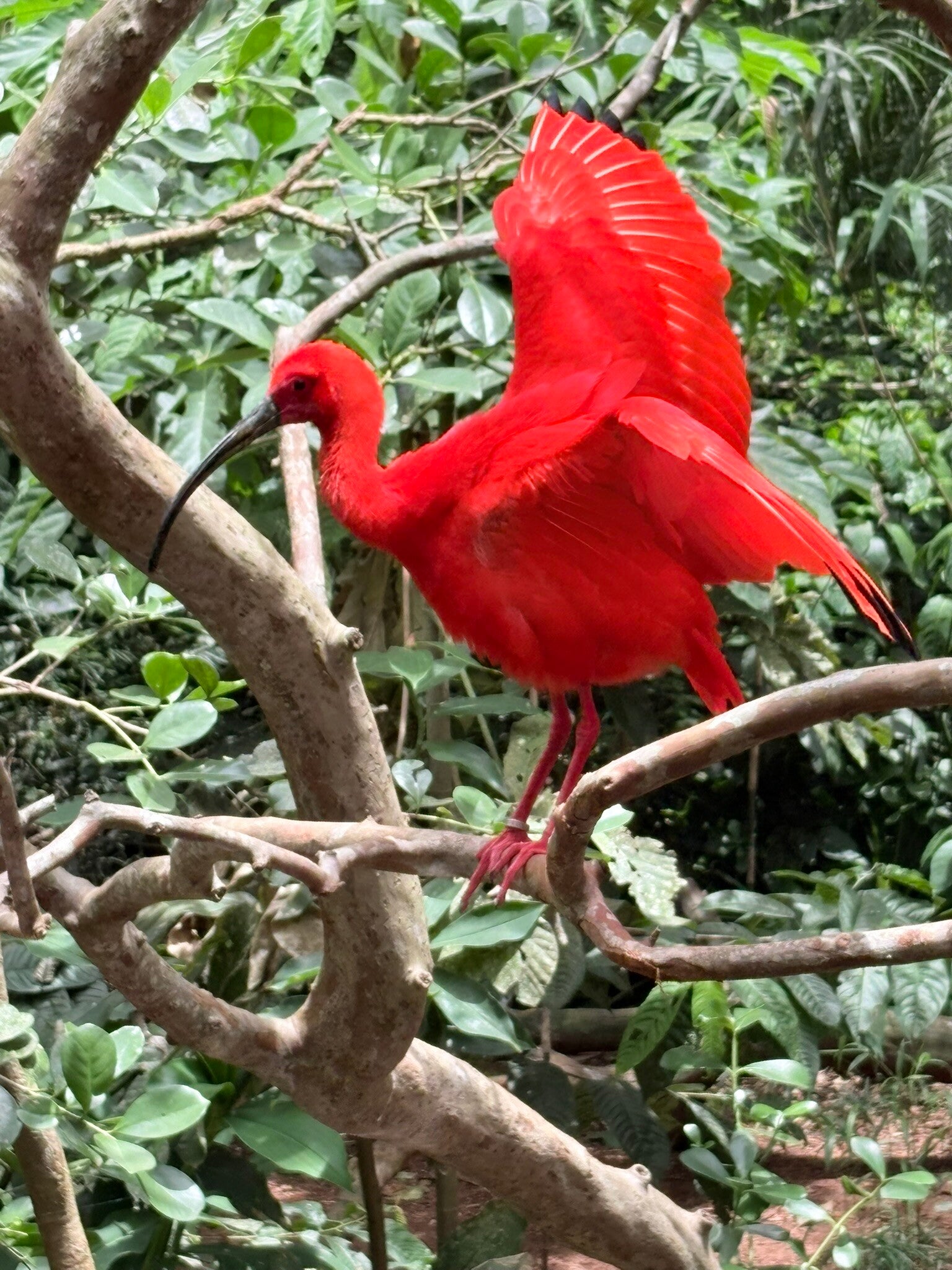
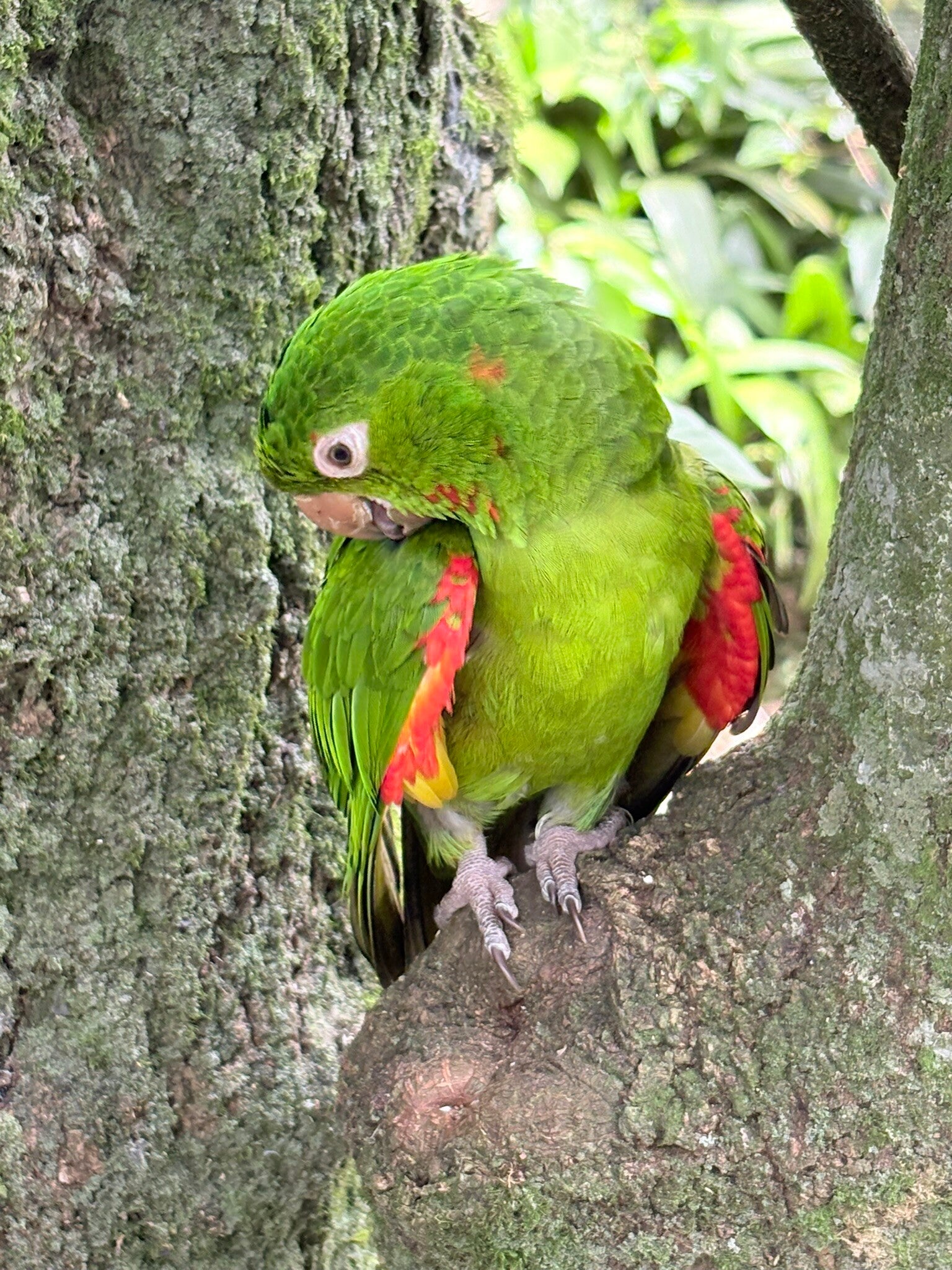
After visiting Iguazú National Park, another great stop is Parque das Aves, located right in front of the park entrance. It’s a popular wildlife sanctuary focused on conservation, rehabilitation and the exhibition of birds native to the Atlantic rainforest. Visitors can walk among free-flying birds such as macaws, toucans and parrots, making it an immersive experience - while also learning about the park’s conservation work.
Plan for 1–2 hours to fully enjoy it. Tickets can be bought on site and cost 90 reais (around USD 17) (as of Nov 2025).
Afterwards, you can catch the bus back to Puerto Iguazú from the national park (buses run every hour) and it also stops at Parque das Aves.

Extra: Tres Fronteras viewpoint 🗺️
If you still have energy after returning to Puerto Iguazú , you can visit the viewpoint and monument at Tres Fronteras—the meeting point of Paraguay, Brazil, and Argentina. Just note that it’s more of a symbolic stop than a “wow” viewpoint (especially after the waterfalls).
Add comment
Comments